Introduction
A productive study room does not need expensive furniture, a complete makeover, or a large footprint. In many homes, the biggest improvements come from small, thoughtful upgrades that make the space easier to use every day. If your study area feels cramped, distracting, or uncomfortable, the right budget-friendly changes can help it work better for reading, homework, remote work, or creative projects.
This guide focuses on affordable study room upgrades that make a difference in real life. Instead of chasing a full redesign, it looks at practical improvements that can improve lighting, reduce clutter, support better posture, and create a calmer atmosphere. Whether you are setting up a corner in a bedroom, refreshing a home office, or improving a shared family study space, these ideas can help you get more value from what you already have.
The best upgrades are not always the most expensive ones. Often, a better lamp, smarter storage, a more comfortable chair cushion, or a few organizing tools can make the entire room feel more functional. The goal is to build a study environment that helps you stay focused, find what you need quickly, and feel comfortable enough to keep working.
Start with the biggest pain points
Before buying anything, identify what makes the current space frustrating. A study room usually feels less effective for one of a few reasons: poor lighting, clutter, uncomfortable seating, limited surfaces, noise, or visual distractions. Fixing the main problem first usually gives the best return on a limited budget.
If the room feels dark, lighting may be the priority. If papers and supplies pile up, storage and organization should come first. If you avoid the space because it is uncomfortable, seating and desk setup may matter more than decorative changes. Making a short list of issues helps you spend money where it will have the most impact.
Ask what you use the room for most
A study room for a student may need room for books, stationery, and laptop use. A workspace for remote work may need better cable management, an improved chair, and a cleaner background. A craft or hobby study zone may need flexible surfaces and easy-to-clean storage. Matching upgrades to your actual routine prevents unnecessary purchases.
Affordable lighting upgrades that improve focus
Lighting is one of the most noticeable improvements you can make in a study room. Good lighting can make reading easier, reduce eye strain, and help the room feel more inviting. You do not need an expensive light fixture to make a difference. In many cases, a simple desk lamp or an improved bulb is enough to change how the room feels and functions.
Choose task lighting first
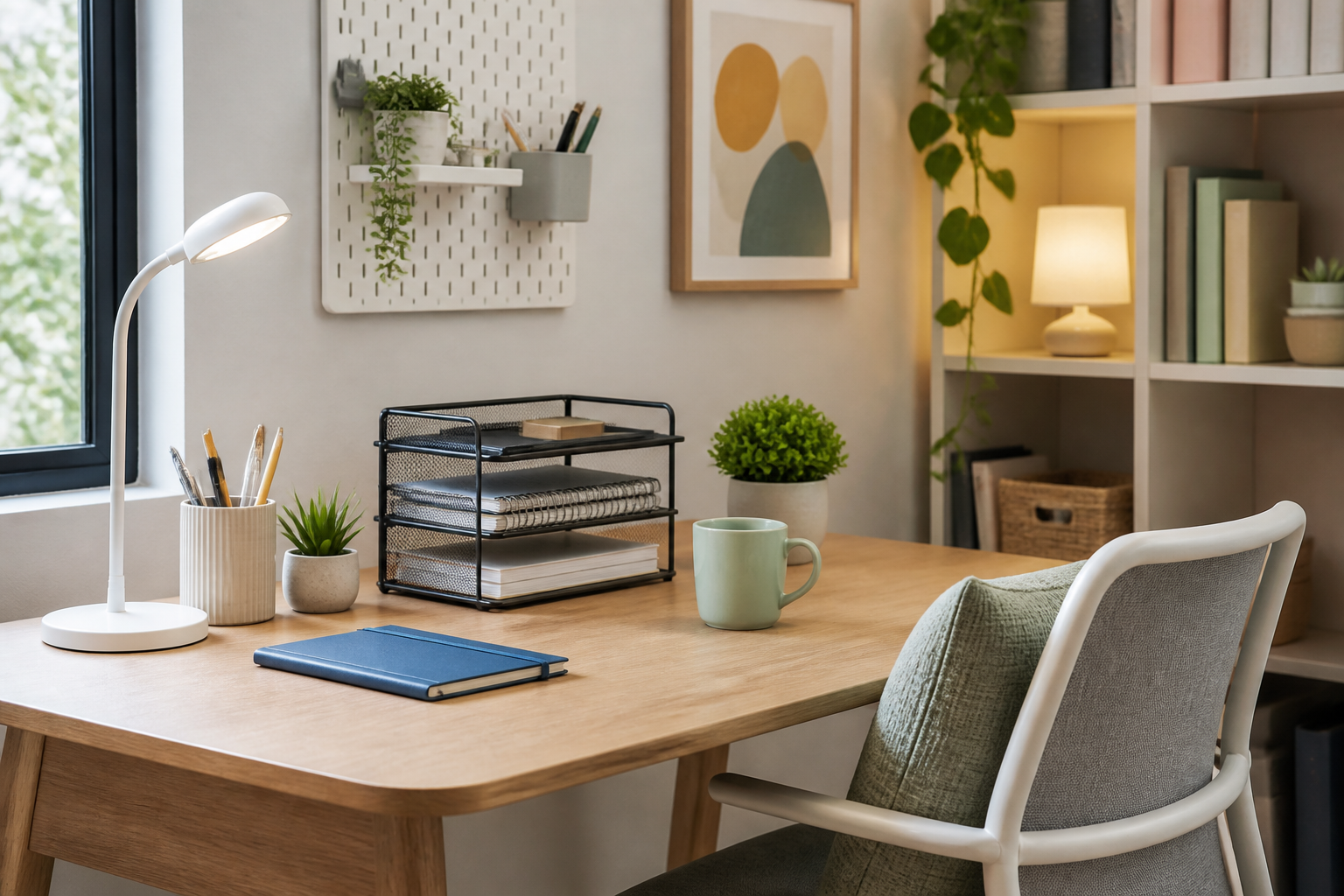
A desk lamp with an adjustable head or arm can direct light exactly where it is needed. That is especially useful for reading, writing, or detailed work. When shopping, look for a lamp that fits the size of the desk and does not block your workspace. A stable base, simple controls, and flexible positioning are often more useful than decorative details.
Use layered lighting when possible
If your study room depends on a single overhead light, the space may feel harsh or uneven. Adding a second light source can make the room more comfortable. For example, combine overhead lighting with a desk lamp and, if needed, a small accent lamp in a darker corner. Layered lighting can reduce shadows and make the room easier to use throughout the day.
Consider light color and brightness
When choosing bulbs or lamps, think about how the room will be used. Bright enough light matters for reading and desk work, but overly harsh light can feel unpleasant. Many buyers find that adjustable or dimmable options are more flexible than fixed settings. The best choice depends on the room size, natural light, and the types of tasks performed there.
Storage upgrades that reduce clutter
Clutter is one of the fastest ways to make a study room feel stressful. Even a tidy room can seem disorganized if supplies do not have a clear home. Affordable storage upgrades help you keep essential items close at hand without crowding the desk. The goal is not to store more things, but to store them more intelligently.
Use vertical space
When desk space is limited, vertical storage can be a smart choice. Wall-mounted shelves, stackable organizers, pegboards, and over-the-desk shelving can free up the working surface. These options are especially useful in small rooms where every inch matters. Before buying, measure carefully and make sure the storage will not make the room feel visually heavy.
Pick organizers that match your items
Different supplies need different storage solutions. Pens and markers may do well in small containers or drawer dividers. Books may fit better on open shelves. Documents and handouts may need folders or file organizers. When storage matches the item type, it is easier to keep everything in order and easier to find it later.
Use drawer inserts and desktop trays
If your desk has drawers, simple inserts can prevent small items from becoming a jumble. If your desk has no drawers, desktop trays or caddies can still keep essentials grouped together. These low-cost upgrades are often more effective than buying larger furniture because they improve daily workflow without taking up much space.
Comfort upgrades for longer study sessions
Comfort matters because a study space that feels physically awkward is harder to use for long periods. You do not need to replace every piece of furniture to improve comfort. Small adjustments can make the desk and chair feel better quickly and affordably.
Improve the chair before replacing it
If your current chair is structurally fine but not very supportive, a seat cushion or lumbar support accessory may help. A cushion can make sitting more comfortable, while a back support can encourage a better sitting position. These are often lower-cost options than buying a new chair. When choosing, consider size, firmness, and whether the accessory stays in place during use.
Check desk height and monitor placement
An uncomfortable setup can come from desk height, monitor position, or the distance between you and your work surface. If a monitor is too low, a stand or stackable riser can improve viewing angle. If the desk feels too high or too low, even a small change in chair height or foot support can help. Sometimes the most affordable solution is simply rethinking the layout.
Add a footrest or small under-desk support
For some users, a footrest can make a big difference in comfort during long sessions. It may help with posture and reduce the feeling of dangling legs if the chair sits high relative to the desk. A simple footrest can be an inexpensive upgrade compared with buying new furniture, especially in a compact study room.
Desk surface upgrades that make work easier
The desk itself is central to the study room experience. Even if you cannot replace the desk, you can improve how it works. The best affordable upgrades make the surface more usable, more organized, and easier to keep clean.
Use a desk mat or writing pad
A desk mat can define your workspace, protect the surface, and create a smoother area for writing or using a mouse. It may also help the desk feel more finished. Choose a size that fits your setup without crowding the room. A simple, neutral style usually works well in shared spaces and is less likely to feel distracting over time.
Add monitor and laptop stands if needed
For people who work on screens, a stand can improve the position of a monitor or laptop and free up space underneath. This can help the desk feel less cluttered and more organized. Before buying, check that the stand is stable and fits the device size. If you use both a laptop and a notebook, choose a setup that leaves enough room for both.
Keep frequently used items within reach
The best desk setup places high-use items in easy reach and stores less-used items elsewhere. A pencil cup, small tray, or single drawer organizer can reduce time spent searching for supplies. This small planning step can make a budget workspace feel much more efficient.
Simple ways to reduce distractions
A study room does not need to be perfectly silent or empty, but it should support concentration. Affordable changes can reduce visual and environmental distractions without major construction or expensive equipment. The right choice depends on the source of the distraction.
Use soft materials to calm the space
If the room feels echoey or visually hard, soft materials can help. A rug, curtains, fabric storage bins, or upholstered chair accessories can make the room feel less stark. These changes also help the room look more intentional. In a shared household, soft furnishings can be especially useful because they can improve comfort without taking over the room.
Control visual clutter
Sometimes the issue is not too much stuff, but too much visible stuff. Closed bins, baskets, and folders can help keep surfaces clean. Even a few matching containers can make shelves and corners look more orderly. This does not require a complete redesign; it just requires a more deliberate way to store items you use regularly.
Separate work from non-work items
If possible, keep study tools separate from unrelated objects. For example, avoid mixing school supplies with hobby materials unless you have clearly labeled sections. This makes it easier to mentally switch into study mode. In smaller rooms, a small storage cart or portable caddy can help create that separation.
Low-cost decor that supports concentration
Decor can help a study room feel pleasant, but it should not overwhelm the space. The most effective decorative upgrades are usually simple, restrained, and functional. A few well-chosen pieces can make the room feel more inviting without making it distracting.
Choose one or two focal points
A small print, a calendar, a corkboard, or a modest plant can give the room a more finished look. The key is to avoid turning the wall into visual noise. In a study room, less is often more. A calm color palette and a few purposeful items can support concentration better than many decorative objects.
Use a wall board for planning
A notice board or whiteboard can do double duty as decor and organization. It can hold reminders, deadlines, to-do lists, or schedules while also helping the room feel structured. For students and busy households, this can be one of the most practical upgrades available at a modest cost.
Make the space feel personal but not busy
A study room should feel like it belongs to the person using it. A favorite quote, framed photo, or color accent can make the room more welcoming. The best approach is to choose details that encourage you to return to the space rather than distract you once you are there.
Buying considerations before you spend
Affordable upgrades only feel affordable if they are chosen well. Before buying, consider the room size, available storage, and how long you expect the item to be useful. A cheap item that does not fit or does not solve the problem can cost more in the long run than a slightly better choice.
Measure the space
Measure desk width, shelf depth, chair clearance, and wall space before ordering anything. This is especially important for lamps, organizers, shelves, and monitor risers. In small study rooms, a few inches can make the difference between a helpful upgrade and a crowded one.
Look for versatility
Items that can serve more than one purpose often offer better value. For example, a storage cart can hold supplies now and later be used for books or project materials. A lamp with adjustable brightness can be useful for reading, homework, or general room lighting. Versatile items are especially useful in shared or changing spaces.
Think about maintenance
Choose upgrades that are easy to clean and easy to keep organized. Surfaces that show clutter quickly, materials that collect dust, or storage systems that are hard to access may not stay useful for long. In a study room, low-maintenance solutions often work best because they are more likely to become part of your routine.
Common buying mistakes to avoid
It is easy to spend money on the wrong study room upgrade when you are focused on appearance instead of function. A few common mistakes can reduce the value of even a well-intended purchase.
- Buying decor before solving function: A pretty room still feels frustrating if the lighting, storage, or seating is poor.
- Choosing items that are too large: Oversized shelves, lamps, or organizers can make a small room feel even smaller.
- Ignoring how the room is used: A student’s needs may differ from a remote worker’s needs, so choose with the actual routine in mind.
- Overfilling the space: More storage is not always better if it creates visual clutter or blocks movement.
- Skipping measurements: A quick measurement can prevent returns and wasted money.
Who these upgrades may suit
These affordable study room upgrades can work for a wide range of users. Students may benefit from better lighting, desktop organization, and wall planning tools. Remote workers may value comfort, cable control, and screen positioning. Parents setting up a homework corner may need portable, easy-to-maintain solutions. People in small apartments may benefit most from vertical storage and multi-use items.
The common thread is practicality. If your room has limited space or a limited budget, these upgrades can still create a noticeable improvement by making the area easier to use every day.
Practical tips for getting the most value
When you are upgrading on a budget, it helps to take a step-by-step approach. Start with one problem, fix it, then see what still feels missing. This prevents unnecessary spending and helps you judge which changes actually matter.
- Begin with the most distracting issue: Often lighting, clutter, or seating discomfort has the biggest effect.
- Buy in stages: A few well-chosen items are usually better than a full cart of small accessories.
- Keep the layout simple: A clean setup is easier to maintain than an overly complex one.
- Use what you already own: Repositioning shelves, lamps, or containers can improve the room before you spend anything.
- Review the setup after a week: Daily use will show which upgrades are truly helpful.
Frequently asked questions
What is the cheapest upgrade that usually makes the biggest difference?
For many study rooms, better lighting or better desk organization gives the quickest improvement. A simple lamp, bulb change, or desktop organizer can make the space easier to use right away.
How do I upgrade a study room on a very small budget?
Start by decluttering, then improve one function at a time. Reuse containers, add one lamp if needed, and use vertical storage before buying larger furniture.
Are decorative items worth buying for a study room?
Yes, if they support a calm and focused atmosphere. However, decor should come after practical needs like lighting, comfort, and storage.
What should I upgrade first in a shared study space?
Focus on items that reduce conflict and clutter, such as labeled storage, desk organization, and good task lighting. Shared spaces usually benefit from simple systems that everyone can follow.
Do I need to replace my desk or chair to improve the room?
Not necessarily. Many affordable improvements can be made with cushions, risers, organizers, lighting, and better layout choices before replacing major furniture.
Conclusion
Affordable study room upgrades work best when they solve a real problem instead of simply adding more items to the room. Better lighting, smarter storage, improved seating comfort, and a cleaner desk setup can all make a study space feel more functional without requiring a major investment. The most effective approach is to start with the biggest frustration, choose practical upgrades, and keep the layout simple.
If your study area needs to work harder, begin with one change that addresses comfort, one that improves organization, and one that reduces distractions. Over time, those small decisions can turn an ordinary corner into a more focused and usable study room. For shoppers looking to make a meaningful difference on a budget, that is often the smartest kind of upgrade.