A well-packed travel bag can make a trip feel calmer, faster, and far less frustrating. Whether you are heading out for a weekend city break, a business trip, or a long-haul vacation, the real challenge is often not what to pack but how to keep everything organized once it is inside your bag. Small items disappear, cables tangle, toiletries leak, and clothing shifts around every time you open the zipper. The right accessories can solve many of these problems without requiring a bigger suitcase or a complete packing overhaul.
This guide looks at the best accessories to keep your travel bag organized, what each one does, and how to choose the right combination for your travel style. Instead of focusing on one perfect product, it explains how different organizers work together so you can build a setup that fits your bag, your habits, and the type of trips you take most often.
Why travel bag organization matters
Good organization is about more than neatness. When your bag has a clear system, you can find essentials quickly, avoid overpacking, and reduce the stress of unpacking and repacking during a trip. This is especially useful when moving through airports, trains, hotels, or multiple destinations in one journey.
Organization also helps protect the items you carry. Electronics can be separated from liquids, clean clothes can stay away from used items, and fragile belongings can be padded or isolated. For many travelers, the right accessories also make it easier to switch between different bags, since packed items can be moved as a group instead of repacked one by one.
Packing cubes: the most versatile travel organizer
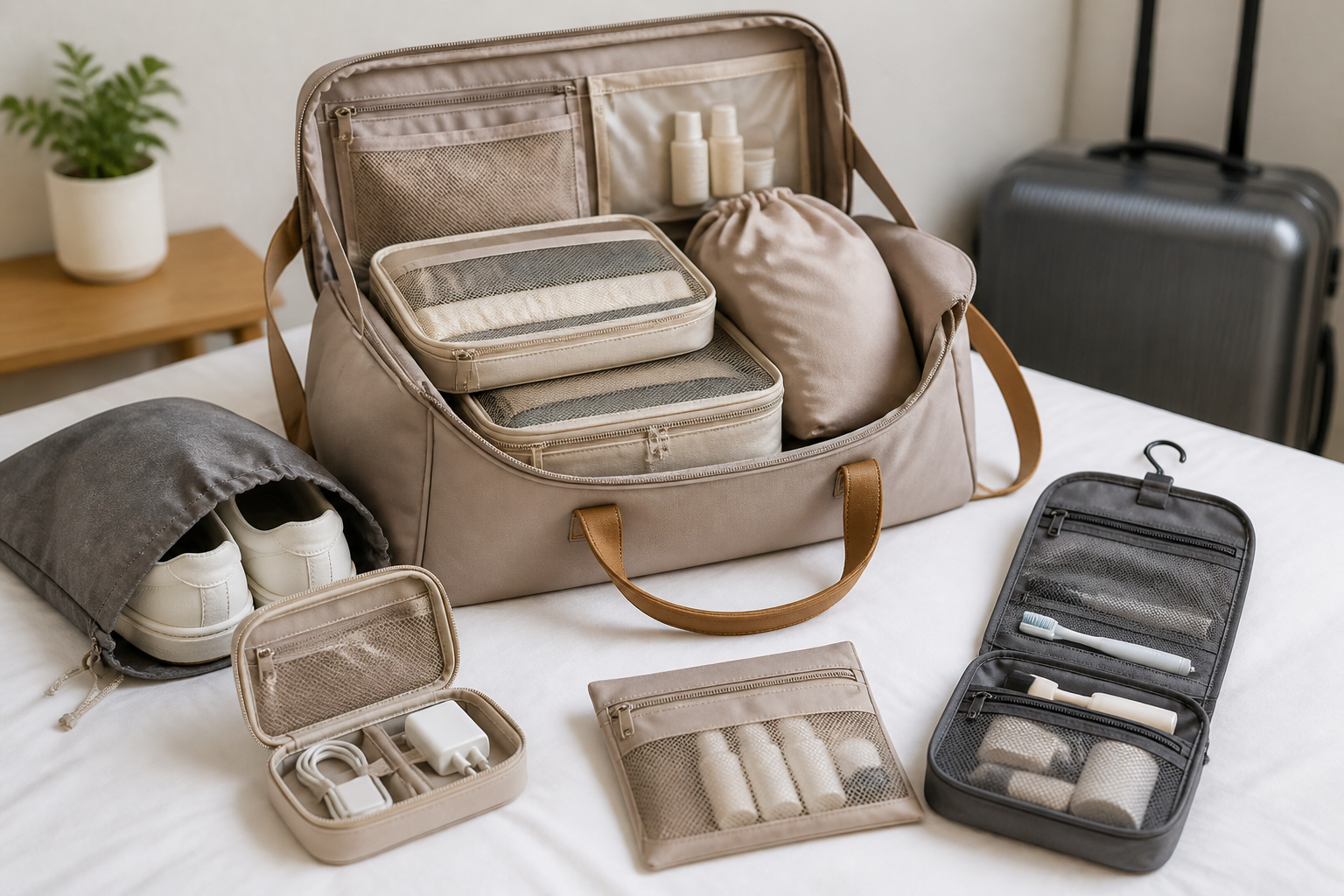
Packing cubes are among the most popular accessories for keeping a travel bag organized, and for good reason. They act like soft compartments for clothing and other folded items, helping you group similar things together. Many travelers use one cube for tops, one for bottoms, one for underwear, and one for activewear or sleepwear.
What to look for in packing cubes
- Shape and size: Choose cubes that fit the dimensions of your bag so you do not waste space.
- Material: Lightweight but durable fabric is useful for frequent use.
- Mesh panels: These can help you see what is inside without opening every cube.
- Compression function: Compression cubes may help reduce bulk, but they work best with soft clothing rather than bulky items.
Who packing cubes suit best
Packing cubes are useful for almost any traveler, but they are especially helpful for people who carry multiple outfits, move between destinations, or like to unpack into hotel drawers quickly. They are also a good choice if you tend to overpack, because they create a natural limit for each clothing category.
Toiletry bags and spill-proof pouches
Toiletries are one of the main sources of travel-bag mess. A dedicated toiletry bag keeps liquids, grooming items, and personal care products in one place rather than scattered through the main compartment. It also makes it easier to remove your toiletries at security checks or when you arrive at your accommodation.
Look for a bag with a shape that suits your routine. Some travelers prefer a hanging toiletry bag with multiple internal sections, while others want a simple zip pouch that fits inside a smaller carry-on. If you carry liquids or creams, choose a bag with a wipe-clean lining or separate waterproof compartment when possible.
Practical features to consider
- Structured compartments: Useful for keeping bottles upright and separate.
- Leak-resistant lining: Helpful if a cap loosens during transport.
- Clear or semi-clear sections: Can make it easier to see small items.
- Hanging hook: Convenient in bathrooms with limited counter space.
For travelers who pack multiple skincare products, makeup, shaving tools, or medication, a toiletry organizer can prevent small items from getting buried under clothing. It also keeps your main travel bag cleaner if any product leaks.
Cable organizers for chargers and electronics
Few things create clutter faster than loose cables. Chargers, earbuds, power banks, adapters, and memory cards can quickly form a tangled pile unless they are stored in a dedicated organizer. A cable case or tech pouch helps separate electronics from clothing and makes it easier to access the right item without emptying your bag.
Tech organizers are especially useful for business travelers, remote workers, digital nomads, and anyone carrying more than a phone charger. They can hold cords, plugs, dongles, small batteries, and other accessories in a compact layout.
Important features for tech organizers
- Elastic loops: Good for securing cables individually.
- Multiple pockets: Useful for separating small accessories.
- Compact structure: Helps the pouch fit inside a travel bag without adding unnecessary bulk.
- Padding: Worth considering if you carry fragile electronics or cameras.
If your travel routine includes several devices, try to group items by function. For example, keep phone charging gear together, work accessories together, and entertainment accessories together. That makes it easier to pack and repack quickly.
Travel pouches for small essentials
Travel pouches are simple but highly effective for organizing the items that otherwise wander to the bottom of a bag. Think passports, boarding passes, pens, headphones, lip balm, hand sanitizer, snacks, tissues, or medication. Instead of letting these items scatter, a pouch gives them one designated space.
These are useful because they are flexible. You can use one large pouch to keep all essentials together or several smaller pouches to divide them by category. Some travelers like color-coding pouches so they can identify items immediately without opening each one.
How to use pouches well
- Assign a category: One pouch for documents, one for snacks, one for personal care items.
- Keep high-use items near the top: That saves time when reaching into your bag on the move.
- Use shapes that match the item type: Flat pouches work well for documents, while boxier pouches suit bulkier items.
Pouches are one of the easiest ways to improve organization without changing your bag. They are also lightweight and adaptable, which makes them suitable for both short and long trips.
Portable document holders and passport wallets
Travel documents are easier to manage when they have their own home. A document holder or passport wallet can keep passports, IDs, printed tickets, hotel information, and travel insurance details together in one place. This can reduce fumbling at check-in desks, border control, and boarding gates.
Many travelers prefer a slim holder that fits into an outer pocket of their bag. Others choose a more structured travel wallet with slots for cards and currency. The best option depends on how many documents you carry and whether you want quick access or extra protection.
Things to check before buying
- Capacity: Make sure it fits the documents you actually carry.
- Closure: Zipper or snap closures can help keep contents from slipping out.
- Accessibility: If you travel often, choose a design that opens quickly and clearly.
- Size: A holder that is too large may be awkward inside a day bag or personal item.
If you prefer a minimalist setup, keep only the documents you need for the current trip inside the holder. Overstuffing it can make it harder to use and easier to damage the contents.
Compression bags for bulky clothing
Compression bags can be useful when you need to reduce the volume of clothing in a travel bag. They are not essential for every trip, but they can be helpful for cold-weather clothing, extra layers, or trips where bag space is limited.
There are two main types: fold-and-roll compression bags and zip compression cubes. Roll-style bags can be useful for separating worn and clean clothes, while compression cubes are better for maintaining a tidier clothing layout inside a suitcase or backpack.
Best uses for compression bags
- Seasonal clothing: Jackets, sweaters, and thicker layers can take up significant room.
- Long trips: Useful when carrying more outfits than usual.
- Shared luggage: Can help organize items by traveler or by category.
Compression accessories work best when used selectively. If everything is compressed, the bag can become harder to unpack and repack. For many travelers, one or two compression pieces are enough.
Shoe bags and separate footwear cases
Shoes can quickly dirty clothing if they are packed loosely. A shoe bag keeps footwear isolated from the rest of your items and helps maintain order inside the main compartment. It is particularly useful if you are carrying more than one pair of shoes or if your travel style includes athletic footwear, sandals, or dress shoes.
Shoe bags are also helpful for keeping the shape of your bag more stable. Shoes can be awkwardly rigid, and placing them in a case can make them easier to arrange within the luggage layout.
What to look for
- Breathable material: Useful if shoes may be slightly damp or worn during travel.
- Size: Make sure the bag fits your largest pair comfortably.
- Easy closure: Drawstring, zipper, or fold-over options all work depending on preference.
Even a simple fabric bag can be enough to separate footwear from clothing and toiletries. That small step often makes the whole travel bag feel much more controlled.
Wet bags and waterproof compartments
Wet bags are useful for swimsuits, damp towels, gym clothes, or other items that should not mix with dry belongings. They are especially valuable for beach trips, active travel, or journeys where laundry may need to be carried home.
Unlike regular pouches, wet bags are designed to contain moisture more effectively. Some include waterproof linings, while others use materials that are easier to wipe clean. They can also be used for unexpected situations, such as storing an umbrella, a leaking bottle, or used travel toiletries.
Who should consider a wet bag
- Families: Helpful for separating wet clothing or snacks that spill.
- Active travelers: Useful for gym gear or sports clothing.
- Beach and pool travelers: Good for swimsuits and damp accessories.
This is one of the most practical accessories if you often return home with mixed clean and dirty items in the same bag.
Bag inserts and organizers for tote-style travel bags
If you travel with a tote or an open-top personal bag, a bag insert can make a big difference. Inserts add structure and create pockets inside a soft bag, so items do not sink to the bottom or shift around constantly. They are especially useful for travelers who use one bag during the day and want the same setup to work on a plane, train, or city walk.
A good insert can keep essentials visible and accessible while preserving the flexibility of a tote. It can also make switching between bags easier because you can lift the insert out and move it as a single unit.
Look for a bag insert that offers
- Enough pockets: For phone, wallet, keys, water bottle, and small extras.
- Stable shape: To prevent the bag from collapsing inward.
- Lightweight design: So it does not add too much extra weight.
Bag inserts are particularly helpful for travelers who dislike rummaging. They create a visual system that makes items easier to find at a glance.
How to choose the right accessories for your travel style
Not every traveler needs every organizer. The best setup depends on how you pack and what usually causes problems in your bag. A minimalist traveler may only need a toiletry bag and one or two pouches, while someone carrying electronics, skincare, and multiple outfits may benefit from a more complete system.
Match accessories to the trip length
For short trips, compact pouches and a simple tech organizer may be enough. For longer trips, packing cubes, a toiletry kit, and a separate wet bag may be more practical. The longer the trip, the more likely it is that categories will shift around unless they are separated clearly.
Match accessories to your bag type
A backpack, carry-on suitcase, tote, and duffel each present different organization challenges. A backpack may benefit more from pouches and compression cubes, while a suitcase can take full advantage of structured cubes and shoe bags. A tote may need an insert to create order.
Match accessories to your habits
If you frequently access certain items, keep them in top-level pouches or outer pockets. If you tend to overpack, use organizers that impose boundaries, such as packing cubes. If you travel with electronics, prioritize cable management. Good organization should fit how you actually travel, not how a product photo looks.
Common buying mistakes to avoid
One common mistake is buying too many organizers at once. It is easy to end up with a system that is more complicated than the trip requires. Start with the essentials and add more pieces only where you notice a real problem.
Another mistake is choosing organizers that are too bulky. Heavy or rigid accessories can reduce the usable space in your travel bag. Lightweight materials are often a better choice unless you need extra protection for delicate items.
A third mistake is ignoring bag dimensions. A cube, insert, or case may look perfect online but still be awkward inside your actual bag. Check measurements when possible and think about how the accessory will sit next to your other items.
Finally, some travelers separate everything so much that packing becomes slow and confusing. The goal is not to create ten different containers; it is to make your items easier to locate and use.
Practical tips for keeping your travel bag organized
Use a consistent layout every time you pack. When items are always stored in the same type of organizer, packing becomes faster and finding things becomes easier. Keep similar items together and avoid mixing categories unless there is a clear reason to do so.
Place the items you use most often in the easiest-to-reach areas of your bag. Reserve deeper sections for clothing and backup items. This reduces the need to unpack your entire bag for a charger, a tissue, or a passport.
Leave a small amount of spare space when possible. A fully packed bag is harder to keep organized because items shift in unpredictable ways. Even a little breathing room can improve accessibility.
Before a trip, check for empty pouches, tangled cables, and items that can be removed. Lightweight organization works best when the contents are reviewed regularly.
Frequently asked questions
What is the most useful accessory for organizing a travel bag?
For many travelers, packing cubes are the most versatile option because they organize clothing efficiently and work in many different types of bags. However, the best accessory depends on what you carry most often. Toiletry bags, pouches, and cable organizers can be just as important for people with more specific needs.
Are packing cubes worth it for short trips?
They can be, especially if you like separating clean clothes from accessories or if you want a faster unpacking process. For very short trips, though, a single pouch system may be enough.
How do I stop cables from tangling in my travel bag?
Use a cable organizer, wrap each cord neatly, and store chargers in a dedicated tech pouch. Keeping cables separate from clothing and other loose items also helps prevent tangling.
Should I buy hard-shell or soft organizers?
Soft organizers are usually more flexible and easier to fit into different bag shapes. Hard-shell organizers can offer more protection for fragile items but may take up more room. Choose based on what you carry and how much structure you need.
What accessories help most with carry-on bags?
Carry-on travelers often benefit from packing cubes, a compact toiletry bag, a document holder, and a small pouch for in-flight essentials. The key is quick access, since carry-on bags need to stay functional during the journey.
Conclusion
The best accessories to keep your travel bag organized are the ones that solve real packing problems without adding unnecessary bulk. Packing cubes can tame clothing, toiletry bags can contain liquids, cable organizers can protect electronics from clutter, and pouches can keep essentials easy to find. Add shoe bags, wet bags, passport holders, or bag inserts as needed, based on the way you travel.
A thoughtful organizer setup does not need to be complicated. The most effective system is usually a simple one that fits your bag, supports your routine, and makes packing and unpacking feel easier. Start with the categories that cause the most mess, choose accessories that match your travel style, and build from there. With the right tools, your travel bag can stay functional, tidy, and much easier to use from departure to return.