Introduction
Small bathrooms can feel crowded fast. Between toiletries, towels, cleaning supplies, hair tools, and everyday essentials, even a neat bathroom can start to feel cluttered when storage is limited. The good news is that a small footprint does not have to mean poor organization. With the right storage pieces, a thoughtful layout, and a few habit changes, you can make a compact bathroom feel more open, easier to use, and much less stressful.
This guide covers the best bathroom organization ideas for small spaces, with a focus on practical solutions you can actually use. Whether you are trying to organize a tiny apartment bathroom, a powder room, a shared family bath, or a rental where permanent changes are not ideal, the goal is the same: create more usable space without making the room feel busy.
Start by organizing for how the bathroom is used
Before buying bins or shelves, it helps to think about how the bathroom functions day to day. A small bathroom usually works best when storage is divided by use, not just by product type. For example, the items used every morning should be easy to reach, while backup supplies can be stored higher up or in less accessible spots.
Group items into simple categories
A useful first step is to sort everything into a few groups:
- Daily essentials: toothpaste, face wash, moisturizer, shaving items, and medications that must remain accessible
- Hair and grooming tools: blow dryers, brushes, curling tools, clips, and styling products
- Cleaning and maintenance supplies: wipes, spray cleaners, toilet brush, and refills
- Backup stock: extra toilet paper, soaps, shampoos, and spare toiletries
- Shared items: family towels, guest items, or items used by multiple people
Once items are grouped, it becomes easier to decide what should stay on the counter, what belongs inside a drawer or cabinet, and what can be moved elsewhere.
Use vertical space whenever floor space is limited
In small bathrooms, the walls are often the most underused storage area. Vertical storage helps free up floor and counter space, which can make the room feel less cramped. This does not always mean installing permanent shelving. There are many renter-friendly options that provide extra organization without major changes.
Wall shelves and narrow ledges
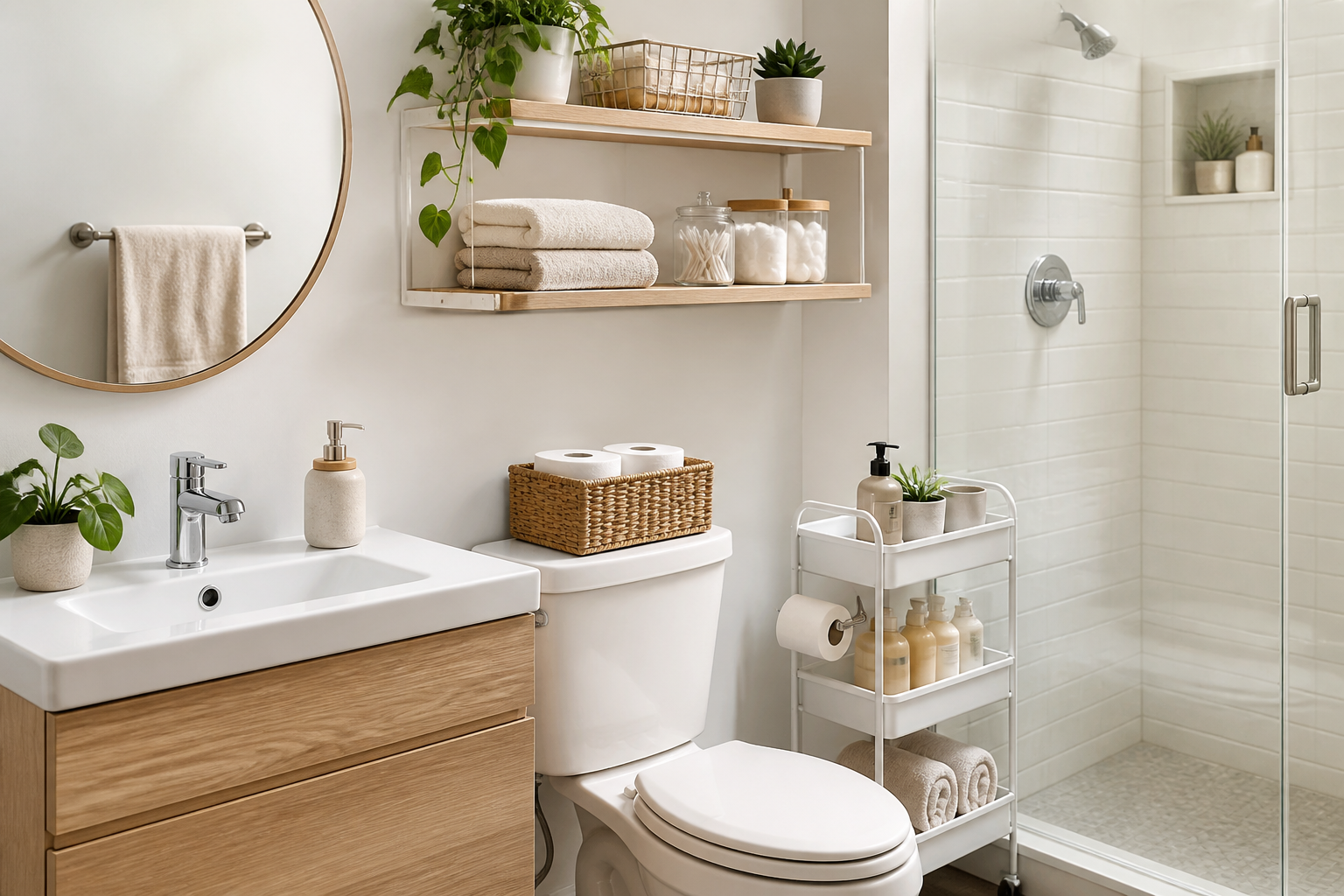
Shallow wall shelves can hold folded washcloths, spare hand towels, jars of cotton pads, or small baskets for daily items. In very tight bathrooms, narrow ledges are often better than deep shelves because they reduce visual clutter. When choosing shelves, look for sizes that fit the wall without blocking mirrors, outlets, or towel bars.
Over-the-toilet storage
Space above the toilet is often ideal for tall, slim storage units or a set of floating shelves. This area can hold extra toilet paper, neatly folded towels, and closed baskets for supplies you want nearby but not visible. If you choose a freestanding over-the-toilet unit, make sure it fits the width of the room and does not feel too heavy visually. A simpler design usually works best in a tiny space.
Door storage and hooks
The back of the bathroom door can be a surprisingly useful storage area. Over-the-door hooks or hanging organizers can hold robes, towels, hair tools, or toiletry pouches. Adhesive hooks can also help with lighter items such as hand towels or washcloths. The main advantage of door storage is that it adds function without taking up precious floor area.
Choose storage pieces that match the size of the room
One of the most common buying mistakes in small bathrooms is selecting storage pieces that are too large or too deep. A big organizer may seem helpful at first, but if it blocks movement or makes the room look tighter, it can create a new problem. For small spaces, the best products are usually slim, stackable, or multipurpose.
Shallow drawers and narrow carts
If your bathroom has little cabinet space, a narrow rolling cart can be a practical option. These carts can fit between fixtures or beside a vanity and provide multiple levels for storage. Shallow drawers and slim bins also work well because they let you store more items without requiring wide shelves. Look for carts that roll smoothly and are easy to clean, since bathroom floors and humidity can make maintenance important.
Stackable bins and clear containers
Stackable containers are useful for organizing shelves and cabinet interiors. They make it easier to separate categories such as hair accessories, skincare, first-aid items, or travel-size products. Clear containers can be especially helpful because you can see what is inside at a glance, which reduces the chance of buying duplicates. However, opaque bins can be better if you want a cleaner, calmer look.
Small baskets for grouped items
Small baskets are a simple way to prevent loose items from spreading across shelves or counters. They work well for family bathrooms, guest supplies, and drawer overflow. Baskets make it easier to pull out a whole category at once, which is useful when you share a bathroom with other people. Try not to use baskets that are too tall or too deep if they make it difficult to see the contents.
Make the most of under-sink storage
The cabinet under the sink is often awkward because plumbing takes up valuable space. Still, this area can be one of the best spots for organized storage when used carefully. The goal is to work around the pipes instead of letting them waste the entire cabinet.
Use organizers shaped around plumbing
Under-sink organizers with cutouts or tiered shelving can help you use the sides and back of the cabinet more effectively. Adjustable shelves are especially useful because sink cabinets vary widely in shape and depth. If a product is too tall, too wide, or too rigid, it may not fit well around your plumbing, so check measurements carefully before buying.
Store by frequency of use
Place the most frequently used items toward the front of the cabinet and backup products toward the back. Cleaning supplies should be easy to access but not loose or unstable. If you store taller bottles, keep them grouped so they do not fall over when you open the cabinet. A small bin or caddy can make the whole area more manageable.
Use pull-out solutions when possible
Pull-out drawers and sliding trays can make a big difference in deep cabinets. Instead of reaching into the back and forgetting what you have, you can slide the organizer forward and access everything more easily. This is especially helpful in bathrooms where storage is limited and every inch matters.
Keep countertops clear with simple daily-use systems
In small bathrooms, the countertop can become cluttered quickly. Even a few bottles and tools can make the space feel busy. A good strategy is to keep only the items used every day on the counter and give each item a dedicated place.
Use a tray or catchall zone
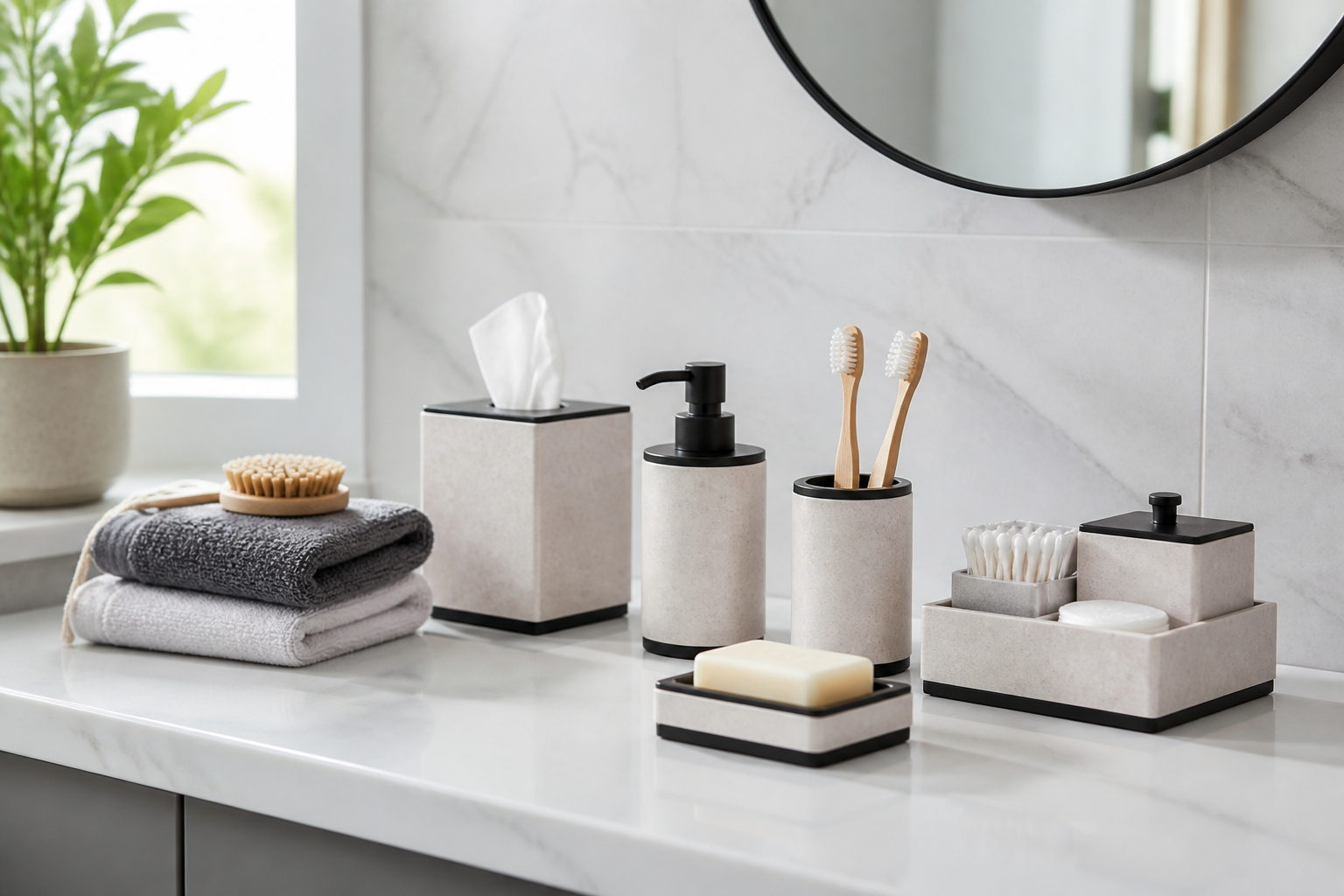
A small tray can help contain frequently used items such as soap, lotion, or a toothbrush holder. Instead of having several products spread across the sink edge, a tray creates a defined area that feels tidier. This also makes cleaning easier because you can move the tray at once rather than picking up each item separately.
Limit duplicates on display
If multiple family members use the same bathroom, it is easy for the counter to become overloaded with duplicate products. Consider storing backup bottles and rarely used items elsewhere. Keep only what is needed for the current routine within reach. This simple habit often has a bigger impact than buying more storage.
Choose wall-mounted alternatives
Some countertop items can be moved to the wall. Wall-mounted toothbrush holders, soap dispensers, and small shelves can reduce visual clutter and free up surface space. These choices are particularly useful in very narrow bathrooms where even a few inches matter.
Think about drawer organization in detail
Bathroom drawers often become catch-alls unless they are divided into smaller sections. Good drawer organization can save time and reduce frustration, especially in a small space where every drawer needs to work efficiently.
Drawer dividers and adjustable inserts
Dividers help keep items from shifting around whenever the drawer opens and closes. Adjustable inserts are often the most flexible choice because they can be customized to fit different drawers and product sizes. They are useful for cosmetics, toiletries, combs, razors, and personal care accessories.
Store items upright when possible
Products that stand upright are easier to see and access than items piled on top of each other. This is particularly helpful for tubes, bottles, and small tools. Upright storage can also reduce the chance of forgotten products getting buried at the bottom of the drawer.
Leave a little empty space
It may seem efficient to fill every inch of a drawer, but a small amount of open space can make the drawer easier to use. Overpacked drawers are harder to maintain and can quickly become disorganized again. In a compact bathroom, organization works best when it is simple enough to keep up with daily.
Make towel storage practical and compact
Towels take up more room than many people expect, so the way you store them matters. In a small bathroom, bulky towel stacks can dominate the room. The best approach is often to reduce the number of towels kept in the bathroom and store them in a way that makes them easy to grab and put away.
Roll or fold towels more efficiently
Rolling hand towels or folding bath towels to a consistent size can make storage look cleaner and fit better on shelves. If you have open shelving, uniform folds create a more organized appearance. For closed cabinets, compact folding can maximize available space.
Use hooks where appropriate
Hooks can be a better choice than towel bars in especially tight bathrooms, since they often allow towels to dry without requiring as much wall space. They can also be helpful for bathrobes or extra hand towels. In shared spaces, having separate hooks for each person can make the room easier to manage.
Reserve only what you need in the room
If space is limited, try storing only the towels currently in use in the bathroom and keeping extras elsewhere. This reduces bulk and prevents the room from feeling overcrowded. For many homes, this is one of the simplest ways to improve bathroom organization without buying anything new.
Use containers that are easy to clean and maintain
Bathrooms are humid, so storage products should be easy to wipe down and resistant to everyday mess. A product that looks attractive but is difficult to clean may not be a good long-term choice. Maintenance matters just as much as appearance in a small bathroom.
Look for simple surfaces
Materials with smooth, wipeable surfaces are generally easier to maintain than heavily detailed designs. In small bathrooms, simple storage often looks better too, because it creates less visual noise. If you choose woven baskets or fabric bins, make sure they are used for items that stay dry and are easy to remove for cleaning.
Avoid overly complicated systems
The more steps a storage system requires, the less likely it is to stay organized. Very complicated organizers can be frustrating when you are in a rush. For most small bathrooms, the best systems are easy to understand at a glance and easy to reset after use.
Match organization to the people using the bathroom
The best bathroom organization ideas for small spaces are not the same for every home. A single-person apartment bathroom has different needs from a family bathroom or a shared guest bath. Before choosing a storage setup, think about who uses the space and what they need to reach quickly.
For one or two people
If only one or two people use the bathroom, you can often keep the setup simpler. A few drawer dividers, one or two wall shelves, and a small under-sink system may be enough. Minimal storage can help keep the room tidy without adding clutter.
For families
Family bathrooms usually need more structure. Separate bins, labeled containers, and individual hooks can help prevent mix-ups. A shared bathroom works better when everyone knows where their items belong. If children use the bathroom, keep the most important and breakable items out of their reach.
For guest bathrooms
A guest bathroom should feel clean and easy to understand. A simple tray with hand soap, a small basket with extra tissue, and a neat towel setup is often enough. You do not need to fill every available space. In fact, a more open look can make a small guest bathroom feel more welcoming.
Common buying mistakes to avoid
When shopping for bathroom storage, it is easy to focus only on appearance. In a small space, though, fit and function matter more than style alone. Avoiding a few common mistakes can save time, money, and frustration.
- Buying before measuring: Always check the width, depth, and height of the available space
- Choosing storage that is too deep: Deep bins can waste space or make items hard to reach
- Ignoring door clearance: Make sure cabinets, drawers, and organizers can open fully without hitting nearby fixtures
- Overfilling every shelf: A crowded storage system is harder to maintain
- Mixing too many container styles: Too many different shapes and colors can make the room look busier than it is
- Forgetting about cleaning access: Storage should not block areas that need regular wiping
Practical small-space bathroom organization tips
Sometimes the biggest improvement comes from a few small habits rather than a major purchase. These simple steps can help keep a compact bathroom organized over time.
- Do a quick reset each day so items return to their designated place
- Keep only current-use products on display
- Store backup supplies together in one area
- Use labels if multiple people share the bathroom
- Rotate out expired or rarely used items regularly
- Choose multiuse products when appropriate to reduce the number of items stored
These habits work best when your storage system is straightforward. If putting things away is easy, the bathroom is more likely to stay organized.
How to choose the right bathroom storage solutions
If you are shopping for bathroom organization products, focus on the basics first. Start with the space you have, then choose storage that supports your daily routine. A product is usually a better fit when it is appropriately sized, easy to clean, and flexible enough to handle changing needs.
Consider these features first
- Measurements: The product should fit the space without blocking movement
- Stability: Freestanding items should not tip easily
- Accessibility: You should be able to reach items without digging or moving several things first
- Cleanability: Smooth, wipeable surfaces are often easier to maintain
- Flexibility: Stackable, adjustable, or multipurpose storage can adapt as needs change
- Visual simplicity: Simple designs can make a small bathroom feel calmer
Frequently Asked Questions
What is the best way to organize a very small bathroom?
Start by removing anything you do not use regularly, then focus on vertical storage, under-sink organization, and small containers for daily essentials. The best solution is usually a mix of wall storage, drawer dividers, and a few well-placed bins or baskets.
How do I keep a small bathroom from looking cluttered?
Limit visible items to the ones used every day, store backups out of sight, and use matching or simple containers when possible. Keeping countertops clear and using wall space can make the room feel much less crowded.
Are rolling carts a good idea for small bathrooms?
Yes, if there is enough clearance for the cart to move and enough room for it to fit without blocking traffic. Slim rolling carts can be helpful for toiletries, hair tools, and cleaning supplies, especially in bathrooms with very little cabinet space.
What should I store under the sink?
Under the sink is usually best for cleaning products, extra toiletries, and backup supplies. Keep frequently used items toward the front and consider organizers designed to fit around plumbing.
How can I organize a shared bathroom?
Use separate bins, labeled drawers, hooks, or small caddies for each person. Shared bathrooms stay more organized when everyone has a defined place for personal items and supplies.
Conclusion
The best bathroom organization ideas for small spaces are the ones that make the room easier to use without adding visual clutter. By thinking vertically, choosing storage that fits the room, organizing by routine, and keeping everyday items easy to reach, you can turn a cramped bathroom into a much more functional space. Small bathrooms often need smart, simple solutions rather than large storage systems, and the right combination can make a noticeable difference.
If you are planning your next bathroom upgrade, start with the basics: measure carefully, choose storage that fits your habits, and keep the setup simple enough to maintain. A small bathroom may never have endless storage, but it can still feel organized, calm, and easy to live with.