Introduction
Starting a home workout routine can feel much easier when you have a few simple accessories that make exercise more comfortable, more consistent, and easier to follow. The best beginner accessories for home workouts are not the most expensive or the most advanced. They are the items that help you move safely, stay organized, and build a routine you can repeat without a lot of setup.
For beginners, the goal is usually not to buy a full gym at home. It is to create a small, practical setup that supports basic movement: strength training, stretching, mobility work, light cardio, and bodyweight exercise. The right accessories can help with posture, floor comfort, resistance progression, and overall motivation. They can also make a small space feel more workable, which matters if you are exercising in a bedroom, living room, or apartment.
This guide focuses on beginner-friendly accessories that are useful, versatile, and easy to understand. Instead of chasing advanced equipment, you will learn which items are worth considering first, what features matter most, and how to choose accessories that fit your space, goals, and budget.
What Makes a Good Beginner Home Workout Accessory?
Before buying anything, it helps to define what “good” means for a beginner. A helpful home workout accessory should be easy to use, adaptable to multiple exercises, and simple to store. It should support learning rather than complicate the process.
The best starter accessories usually share a few traits:
- Versatility: One item should work for several types of exercise, such as strength, mobility, or recovery.
- Ease of use: Beginners should not need a long learning curve just to start.
- Compact size: Home fitness gear should fit small spaces when possible.
- Adjustability: Items that can change resistance, height, or intensity can grow with your progress.
- Comfort: Helpful accessories reduce strain on hands, knees, wrists, or floors where possible.
- Durability: Even basic equipment should feel stable and hold up to repeated use.
A common beginner mistake is buying equipment that looks impressive but is too specialized. For example, a machine or accessory designed for one advanced movement may end up unused. A better approach is to start with a small set of multipurpose items and build from there.
Best Beginner Accessories for Home Workouts
1. Exercise Mat
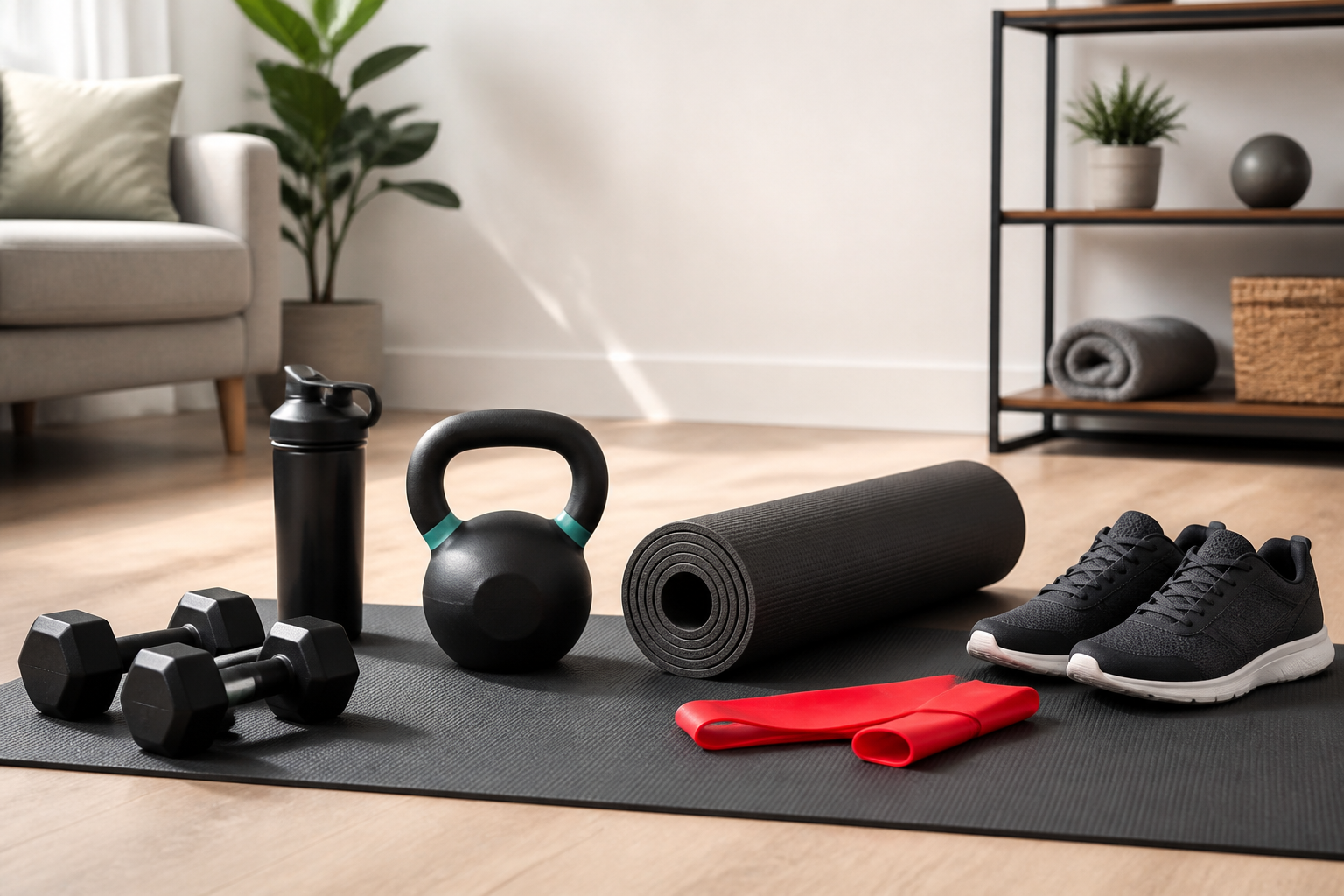
An exercise mat is one of the most practical first purchases for home workouts. It creates a dedicated surface for floor exercises, stretching, Pilates-style movement, yoga, and core work. It can also make bodyweight movements more comfortable on hard floors.
What to look for: thickness, grip, and size. A mat that is too thin may feel uncomfortable on knees and elbows, while one that is too soft may feel unstable for standing movements. A non-slip surface can help the mat stay in place during transitions and light exercise. Size matters too; taller users often prefer a longer mat.
Who it suits: almost every beginner, especially anyone planning to do stretching, mobility routines, or floor-based strength work.
Buying tip: choose a mat that is easy to clean and store. If you plan to use it daily, durability matters more than extra features.
2. Resistance Bands
Resistance bands are among the most beginner-friendly accessories because they are compact, affordable-looking, and useful in many workout styles. They can add resistance to glute exercises, upper-body movements, mobility drills, and assisted stretching. They are also easier to store than many larger fitness tools.
What to look for: band type, resistance level, and material. Loop bands, tube bands with handles, and long flat bands each have different uses. Beginners often benefit from a small set with different resistance levels so they can start light and progress gradually.
Who it suits: people who want low-impact strength training, mobility work, or a portable workout option.
Buying tip: if you are new to bands, start with a straightforward set instead of a large bundle of specialized accessories. Too many pieces can be confusing at first.
3. Light Dumbbells or Adjustable Dumbbells
Dumbbells are a classic home workout staple because they support basic strength training with simple movements. Beginners can use them for presses, rows, squats, deadlifts, arm exercises, and full-body workouts. Light dumbbells are often enough to begin with, while adjustable dumbbells may be a better long-term choice if you want flexibility in one compact set.
What to look for: comfortable grip, secure construction, and a weight range that matches your current fitness level. If you are buying fixed weights, choose a pair that feels challenging but manageable. If you are buying adjustable dumbbells, look for a design that is easy to change and stable during use.
Who it suits: beginners who want to build strength gradually and keep workouts varied.
Buying tip: avoid starting too heavy. Using a weight that is too challenging can make form harder to learn. It is often better to begin lighter and progress in small steps.
4. Stability Ball
A stability ball can be useful for core training, balance practice, mobility work, and certain stretching exercises. It is especially helpful for beginners who want a more engaging way to practice balance and controlled movement. It can also double as a seating option for some users, though exercise should remain its main purpose.
What to look for: the correct size for your height, a durable surface, and a ball that feels stable when properly inflated. A ball that is too large or too small can make exercises awkward.
Who it suits: beginners interested in core exercises, posture awareness, or gentle movement variation.
Buying tip: use a stability ball only on a clear surface with enough space around it. Proper sizing matters more than extra features.
5. Jump Rope
For beginners who want a low-cost cardio tool, a jump rope can be a smart option. It supports quick workouts, coordination practice, and conditioning in a very small space. It is also easy to pack away, which makes it appealing for home use.
What to look for: rope length, handle comfort, and rope material. Adjustable length is useful for beginners, since a rope that is too long or too short can make learning harder. Comfortable handles can improve grip during short cardio sessions.
Who it suits: people who want short cardio intervals, warm-ups, or a compact fitness accessory.
Buying tip: if you are new to jump rope, start with short practice sessions and enough ceiling clearance. A smoother rope is often easier to learn with than a very fast, highly specialized one.
6. Yoga Block and Strap
Although these are often associated with yoga, they are also useful beginner accessories for general home workouts. A yoga block can provide support in stretches, seated positions, and mobility exercises. A strap can help with hamstring stretches, shoulder mobility, and controlled reach during warm-ups.
What to look for: a block with enough firmness to support body weight when needed, and a strap that is long enough to assist flexibility work without feeling awkward. Lightweight materials are generally easier to handle and store.
Who it suits: beginners focused on flexibility, recovery, mobility, or gentle conditioning.
Buying tip: these accessories are especially useful if you are not very flexible yet. They help modify movements so you can work within your current range.
7. Foam Roller
A foam roller is a practical accessory for warm-ups and recovery-focused routines. It can help you work through tight-feeling areas after exercise and support mobility work before a workout. For beginners, it is often enough to choose a basic model and learn a few simple rolling routines.
What to look for: density, length, and surface texture. A very firm roller may feel intense at first, while a softer one may be easier for beginners. Longer rollers offer more surface area and can be easier for full-body use.
Who it suits: people who want a simple recovery tool to use before or after exercise.
Buying tip: keep expectations realistic. A foam roller is a support tool, not a replacement for proper exercise technique or rest.
8. Workout Bench or Step
A small bench or exercise step can add variety to a beginner home routine. It can be used for step-ups, incline push-ups, seated strength exercises, triceps work, and certain lower-body movements. A stable platform can also make some exercises easier to modify.
What to look for: stability, non-slip feet, comfortable surface, and a size that fits your room. If you choose a step platform, check whether it is designed to stay steady during repetitive movement.
Who it suits: beginners who want more exercise variety without moving into bulky gym equipment.
Buying tip: prioritize stability over compact styling. Any platform used for stepping or supported movement should feel secure.
9. Water Bottle and Towel
Basic items like a reusable water bottle and a workout towel are easy to overlook, but they matter more than many beginners expect. Staying hydrated and keeping a small towel nearby can make workouts more comfortable and easier to repeat. These items also help create a routine-like feeling, which can improve consistency.
What to look for: a bottle that is easy to carry and open during exercise, and a towel that is absorbent but not bulky. If you work out in a warm room, these basics become even more useful.
Who it suits: everyone, especially beginners building a regular schedule.
Buying tip: keep these items together with your other workout gear so setting up feels simple.
How to Choose the Right Accessories for Your Goals
The best beginner accessories for home workouts depend on what kind of routine you plan to do most often. You do not need every item on the list. Choosing based on your main goals can keep your setup efficient and affordable.
If your goal is strength training
Start with dumbbells or resistance bands, then add a mat for floor work. A bench or step can be useful later if you want more exercise variety.
If your goal is flexibility and mobility
A mat, yoga block, and strap are often enough to begin. A foam roller may also help support recovery-oriented sessions.
If your goal is cardio in a small space
A jump rope is worth considering if your space allows it. Pair it with supportive footwear and enough room to move safely.
If your goal is an all-around starter setup
A mat, resistance bands, light dumbbells, and a foam roller offer a balanced foundation. This combination covers strength, stretching, and recovery without overloading your space.
Common Buying Mistakes to Avoid
Beginners often make avoidable purchase decisions that lead to clutter or unused equipment. Watching for these mistakes can save time and money.
- Buying too much at once: start with a few useful pieces and add items only when you know you will use them.
- Choosing advanced gear too early: specialized equipment may not be helpful until your routine becomes more specific.
- Ignoring storage space: home workouts work best when setup and cleanup are quick.
- Picking the wrong size: mats, balls, ropes, and steps all work better when sized correctly.
- Prioritizing appearance over function: attractive equipment is nice, but ease of use and stability matter more.
- Forgetting comfort: if something feels awkward to hold or use, you are less likely to stay consistent.
Practical Tips for Building a Beginner Home Workout Setup
A simple, organized setup often works better than a large pile of equipment. Keep your first accessories visible and easy to reach. If your mat, bands, and dumbbells are stored in different places, starting a workout may feel like a chore.
It can also help to match accessories to a routine you can repeat. For example, a short beginner workout might use a mat for floor exercises, bands for glute work, and light dumbbells for upper-body movements. A separate mobility day might only require a block, strap, and foam roller. The simpler the setup, the easier it is to stay consistent.
Another useful approach is to think in layers:
- First layer: mat, water bottle, towel
- Second layer: resistance bands, light dumbbells
- Third layer: foam roller, yoga block, strap, step, or jump rope
This staged approach keeps your home workout accessories manageable while giving you room to grow.
Frequently Asked Questions
What are the most essential beginner accessories for home workouts?
For most beginners, the most useful starting items are an exercise mat, resistance bands, and a pair of light dumbbells. These three cover a wide range of basic workouts and can support strength, stretching, and mobility routines.
Do I need expensive equipment to start working out at home?
No. Many beginners can begin with low-cost, versatile accessories. The most important factor is whether the equipment matches your routine and feels easy to use consistently.
Should I buy resistance bands or dumbbells first?
That depends on your goal. Resistance bands are great for portability, mobility work, and lighter strength training. Dumbbells are often better if you want straightforward resistance for a broad range of strength exercises. Many beginners eventually use both.
How many accessories do I really need at first?
Often, just two or three items are enough to start. A mat plus one or two training tools is usually more practical than buying a full set immediately.
What should I avoid when buying beginner workout accessories?
Avoid items that are too advanced, too bulky, or too specialized for your current routine. Also avoid buying several versions of the same tool before you have used the first one consistently.
Conclusion
The best beginner accessories for home workouts are the ones that help you start easily and keep going. A good mat, a set of resistance bands, light dumbbells, and a few supportive tools like a foam roller, yoga block, or jump rope can create a strong foundation without turning your home into a crowded gym.
When choosing accessories, focus on versatility, comfort, size, and ease of storage. Start with the items that match your current routine, not the gear that looks most advanced. That simple approach makes home fitness more approachable and more sustainable.
If you build your setup carefully, your accessories will do more than fill space. They will make it easier to show up, move well, and create a home workout habit that lasts.