Introduction
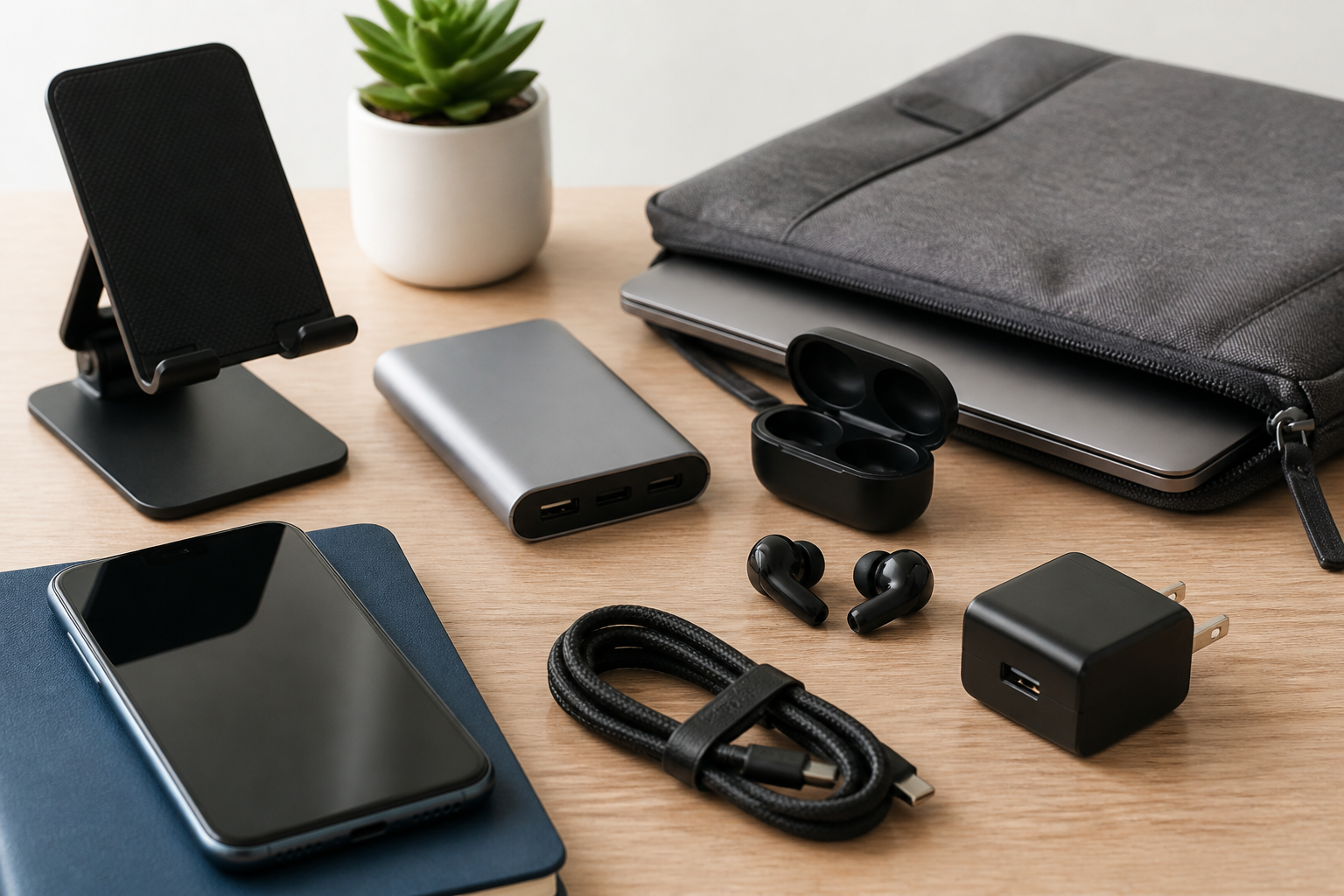
Budget tech accessories can make everyday devices easier to use, more comfortable to carry, and better protected without requiring a large spend. The challenge is that “budget” can mean very different things depending on the category. A low-cost phone charger, for example, may be a smart buy if it is well built and safely compatible with your device, while the cheapest option in another category may simply be too flimsy to last.
This guide focuses on the best budget tech accessories for everyday use in a practical, buyer-first way. Instead of naming specific products, it explains which accessory types are usually worth considering, what features matter most, and where people often overspend or choose the wrong item. The goal is to help you build a useful everyday setup with affordable accessories that solve real problems.
Whether you want to improve your work-from-home setup, make commuting easier, keep your phone charged, or reduce cable clutter, a few low-cost accessories can deliver a noticeable improvement. The key is knowing which features matter and which extras are not worth paying for.
What Makes a Budget Tech Accessory Worth Buying?
Not every inexpensive accessory is a good value. A useful budget tech accessory should balance price, reliability, and everyday convenience. If an item is too cheap to last or does not work well with your devices, it is not really budget-friendly because it will need replacing sooner.
When comparing affordable options, focus on four core questions:
- Will it work with your devices? Compatibility is the first filter for chargers, cables, mounts, hubs, and audio accessories.
- Is it built for regular use? Everyday accessories should handle frequent plugging in, carrying, bending, or adjusting.
- Does it solve a real problem? Good budget accessories improve convenience, reduce friction, or protect devices.
- Are the features practical? Extra functions are useful only if you will actually use them.
For everyday use, the best budget choices are often the simplest ones. A durable cable, a reliable wall charger, or a well-designed stand can be more valuable than a feature-heavy accessory that looks impressive but adds little in daily life.
Best Budget Tech Accessory Categories for Everyday Use
1. Charging Cables and Chargers
Charging accessories are among the most important everyday tech purchases because almost everyone uses them daily. A dependable cable or charger can save time, reduce frustration, and help keep devices ready when needed.
For budget buyers, the most useful features are usually the basics: solid connectors, a length that fits your setup, and compatibility with your phone, tablet, earbuds, or other devices. If you switch between a desk, bedside table, and bag, having one or two spare cables can be more practical than paying for premium extras you will not use.
When choosing a budget charger or cable, consider:
- Connector type: USB-C, Lightning, micro-USB, or another format your device requires.
- Length: Short cables are good for travel and clutter control, while longer cables are better for sofas, desks, or bedside use.
- Build quality: Reinforced ends and flexible jackets often last longer under repeated use.
- Charging needs: Match the charger to the device’s charging requirements rather than assuming any charger will do the same job.
A common mistake is buying a very cheap charger solely because the price is low. If the accessory does not suit your device, charges too slowly for your needs, or feels fragile, it becomes less useful quickly. A modestly priced but dependable charger is often the better budget decision.
2. Phone Stands and Tablet Stands
Stands are one of the simplest accessories that can make a surprising difference in daily comfort. A phone stand on a desk or kitchen counter can make video calls easier, support hands-free viewing, and keep your screen visible while you work or cook. Tablet stands are useful for reading, streaming, note-taking, or following instructions without holding the device the whole time.
When shopping for a budget stand, look for stability first. A stand should keep the device secure without wobbling or slipping, especially on smooth surfaces. Adjustable viewing angles are helpful, but not every user needs a highly flexible design. For everyday use, the best stand is often the one that is easy to place, easy to fold away, and strong enough to hold your device without fuss.
These accessories may suit people who work from home, stream content often, use video calls regularly, or like keeping their desk tidy. They are also useful in kitchens, dorms, and shared spaces where a simple hands-free setup is helpful.
3. Cable Organizers and Management Accessories
Cable clutter is a small problem that can become a daily annoyance. Budget cable organizers, clips, sleeves, straps, and boxes can help keep charging cables, headset cords, and desktop wires under control. These accessories are inexpensive compared with many other tech buys, yet they can noticeably improve how a space looks and functions.
When choosing cable-management items, think about where the clutter occurs. A desk with several devices may benefit from adhesive clips or a cable sleeve, while a bag or travel kit may only need reusable ties. Some solutions are more permanent, while others are better for flexible setups that change often.
Useful considerations include:
- Surface compatibility: Adhesive clips work best on clean, suitable surfaces.
- Capacity: Make sure the organizer can handle the number and thickness of your cables.
- Reuse: Reusable ties are practical if your setup changes frequently.
- Ease of access: Good cable management should organize cords without making them hard to reach.
For many people, cable organizers are a highly effective budget upgrade because they improve everyday usability without requiring a large investment.
4. Portable Power Banks
A power bank is one of the most useful budget accessories for people who spend time away from wall outlets. It can be valuable for commuting, travel, long workdays, school, or weekend outings. Even a basic model can provide peace of mind by giving you a backup charge when your phone battery drops at the wrong time.
To choose a budget power bank wisely, focus on real-world usefulness rather than headline numbers alone. Capacity matters, but so does portability. A very large power bank may hold more energy, yet it can be too bulky for daily carrying. A smaller model may be easier to keep in a bag or pocket, which makes it more likely to be used.
Important features to compare include:
- Capacity: Enough for your typical daily needs without becoming unnecessarily heavy.
- Number of ports: Useful if you need to charge more than one device.
- Input and output speed: Faster charging is convenient, but only if your devices support it.
- Size and weight: Daily carry matters more than theoretical capacity for many users.
Buyers should be cautious about the cheapest possible option here. A power bank is an item where design and reliability matter because it is expected to work when you need it most.
5. Earbud Cases, Sleeves, and Small Carrying Accessories
For earbuds, small headphones, USB drives, adapters, and dongles, a simple carrying case or pouch can help prevent loss and reduce wear. These accessories are easy to overlook, but they can be useful if you frequently carry small tech items in a backpack, purse, or laptop bag.
Budget options often work well if they offer enough padding or internal organization for your needs. A basic zip case may be enough for earbuds and a charging cable, while a more structured pouch may be better for delicate adapters or multiple accessories.
Choose based on how you carry your items:
- Everyday bag use: A compact case that fits easily with other items.
- Travel use: Slightly more protection and room for extras.
- Desk storage: A pouch or tray that keeps small items from getting lost.
If you are tired of digging through a bag for a cable, adapter, or earbud charging case, this is a low-cost upgrade that can save time every day.
6. Laptop Stands and Ergonomic Accessories
Budget laptop stands and ergonomic accessories are often worthwhile for people who work, study, or browse for long periods. Raising a laptop closer to eye level can make a desk setup feel more organized and may improve comfort during long sessions. Even a simple stand can also help free up desk space.
For everyday use, a budget stand should be sturdy enough to support your device and stable enough to stay put while typing if you plan to use it that way. Some users prefer a stand combined with an external keyboard and mouse, while others want only a modest lift for better viewing.
Look for practical details such as:
- Compatibility with your laptop size: Not every stand fits every device equally well.
- Ventilation: Open designs can help keep airflow unobstructed.
- Adjustability: Helpful if multiple people use the same setup or if you switch tasks often.
- Portability: Foldable models are easier to move between home and office.
One common mistake is choosing a stand that looks stylish but is too unstable or awkward in daily use. A simple, secure design is often the smarter budget choice.
7. Mouse Pads and Desk Mats
A mouse pad may seem minor, but it is a useful everyday accessory for anyone who uses a laptop or desktop computer regularly. A good low-cost mouse pad can improve cursor control, provide a more comfortable surface, and make a desk feel more organized. Larger desk mats can also protect the work surface and help unify a setup visually.
When comparing budget options, prioritize size, surface texture, and base grip. If the pad slides around or does not offer consistent tracking, it becomes annoying quickly. A washable or easy-to-clean surface is often practical for long-term use.
These accessories suit home offices, student desks, shared workspaces, and gaming setups with modest budgets. They are also a smart add-on if your desk surface is uneven or not ideal for mouse movement.
8. USB Hubs and Adapters
As laptops and devices become thinner, many users need simple adapters or USB hubs to connect peripherals. Budget USB hubs can be very useful for charging, data transfer, or adding extra ports for accessories like mice, keyboards, flash drives, or card readers.
With this category, compatibility and use case matter more than almost anything else. A hub that looks affordable but does not match your devices or your required ports will not be helpful. Decide whether you need a basic USB expansion tool, a hub with multiple connectors, or a more specific adapter for a particular device.
Before buying, consider:
- Port types: Make sure the hub includes the connections you actually need.
- Power needs: Some accessories require more power than others.
- Travel vs. desk use: Smaller hubs are good for mobility, while larger ones may offer more convenience on a fixed workstation.
- Data use: If you transfer files often, choose a hub suited to that task rather than only basic charging.
Because adapters sit between devices, quality matters. A low-cost but well-reviewed design from a reliable seller is usually preferable to an ultra-cheap, no-name option with unclear compatibility.
How to Choose Budget Tech Accessories Without Regret
The best budget purchase is usually the one that stays useful over time. To avoid disappointment, use a simple checklist before buying:
- Identify the exact problem: Do you need charging, organization, portability, comfort, or protection?
- Check compatibility: Make sure the accessory fits your device type and usage style.
- Think about frequency: Daily-use items should be more durable than occasional-use items.
- Compare practicality, not just features: The most feature-rich product is not always the most useful.
- Consider long-term value: A slightly better build can be worth more than a tiny upfront saving.
It is also wise to avoid buying accessories just because they are bundled together. Bundles can be convenient, but not every item in a bundle will be equally useful. If you only need one or two parts of a set, you may be better off buying those separately.
Common Buying Mistakes to Avoid
Budget shopping is about value, not just the lowest cost. These common mistakes can lead to wasted money even when the original price looked attractive.
- Buying for looks instead of function: Attractive accessories are fine, but everyday usefulness should come first.
- Ignoring compatibility: The wrong connector, size, or power level can make a product unusable.
- Choosing the cheapest option in a critical category: Chargers, power banks, and hubs often deserve a little more attention.
- Overbuying features: Extra functions are not useful if they do not fit your routine.
- Forgetting about portability: Large accessories may be less practical for commuting or travel.
A useful way to think about budget accessories is to match the accessory to the setting. An item for a desk setup can be larger and more specialized, while an item for daily carry should be compact and simple.
Practical Tips for Getting the Most from Affordable Accessories
Small accessories can last longer and work better when used thoughtfully. A few simple habits can improve your experience and reduce unnecessary replacements.
- Keep one setup per location: If possible, leave a charger or cable at your desk, bedside, or travel bag so you are not constantly moving them around.
- Label or color-code cables: This makes it easier to find the right one quickly.
- Use organizers early: Managing cords before they become messy is easier than fixing clutter later.
- Store accessories properly: Small cases and pouches can protect items from being bent, scratched, or lost.
- Review what you actually use: If an accessory sits unused, it may not have been the right purchase for your routine.
These tips are especially useful for people with limited desk space, shared living spaces, or a mix of work, school, and travel needs.
Frequently Asked Questions
What are the most useful budget tech accessories for everyday use?
Some of the most useful categories include charging cables, wall chargers, power banks, phone or tablet stands, cable organizers, laptop stands, mouse pads, USB hubs, and small carrying cases. The best choice depends on your device setup and daily routine.
How do I know if a cheap tech accessory is worth it?
Check compatibility, build quality, and practicality. If the accessory solves a real problem and is likely to hold up under regular use, it may be worth buying even at a low price. If it seems fragile, confusing, or unnecessary, it may not be a good value.
Are budget accessories always lower quality?
Not necessarily. Many affordable accessories are perfectly suitable for everyday use, especially if the design is simple. The key is to avoid items that are too cheap for their category, poorly matched to your device, or missing the basics you need.
Should I buy a bundle or individual accessories?
Bundles can be convenient, but only if you need most of the items included. If you only want one accessory, buying individually is often the better budget choice because you avoid paying for extras you will not use.
Which budget accessory should I buy first?
For most people, a dependable charging cable or charger is the first worthwhile purchase. After that, a stand, cable organizer, or power bank may be the most practical addition depending on how and where you use your devices.
Conclusion
Best budget tech accessories for everyday use are the ones that make routine device use easier, cleaner, and more reliable without adding unnecessary cost. The smartest purchases usually solve a clear problem: charging more conveniently, reducing cable mess, improving comfort, or making portable devices easier to carry and use.
To shop wisely, focus on compatibility, durability, and real daily value instead of flashy extras. A few well-chosen accessories can improve your setup much more than a large number of low-quality items. If you build your collection gradually and choose based on actual needs, budget tech accessories can deliver lasting usefulness while keeping spending under control.