A well-organized kitchen can make daily routines feel easier, faster, and less stressful. When storage works well, you spend less time searching for ingredients, tools, and containers, and more time actually cooking and enjoying the space. The best kitchen storage ideas are not always the most expensive or dramatic ones. In many cases, they are the practical, space-saving solutions that fit your kitchen layout, your cooking habits, and the amount of storage you already have.
If your counters stay crowded, your cabinets feel hard to use, or your pantry turns messy quickly, improving storage can make a noticeable difference. The goal is not to buy every organizer you see. The goal is to choose storage that helps you see what you own, access it easily, and keep it in order over time. This guide walks through the most useful kitchen storage ideas, what to consider before buying, and how to choose options that support better organization without adding unnecessary clutter.
Why kitchen storage matters
Kitchen storage is about more than just making things look tidy. Good storage can improve how your kitchen functions from day to day. When items have clear places, it becomes easier to put groceries away, prepare meals, and clean up afterward. Storage can also help protect food quality by keeping dry goods sealed, reduce damage to dishes and cookware, and make it easier to use the space you already have.
Another benefit of better storage is visibility. When items are hidden in deep cabinets or stacked too tightly, you may forget what you own and buy duplicates. Practical organizers help group similar items together and keep them accessible. That can be especially useful in busy households, small apartments, rental kitchens, and shared spaces where every inch matters.
Start with the main kitchen storage zones
Before choosing products, it helps to think about the different storage zones in a kitchen. Each zone has different needs, and the best storage ideas are usually the ones tailored to a specific area.
Cabinets
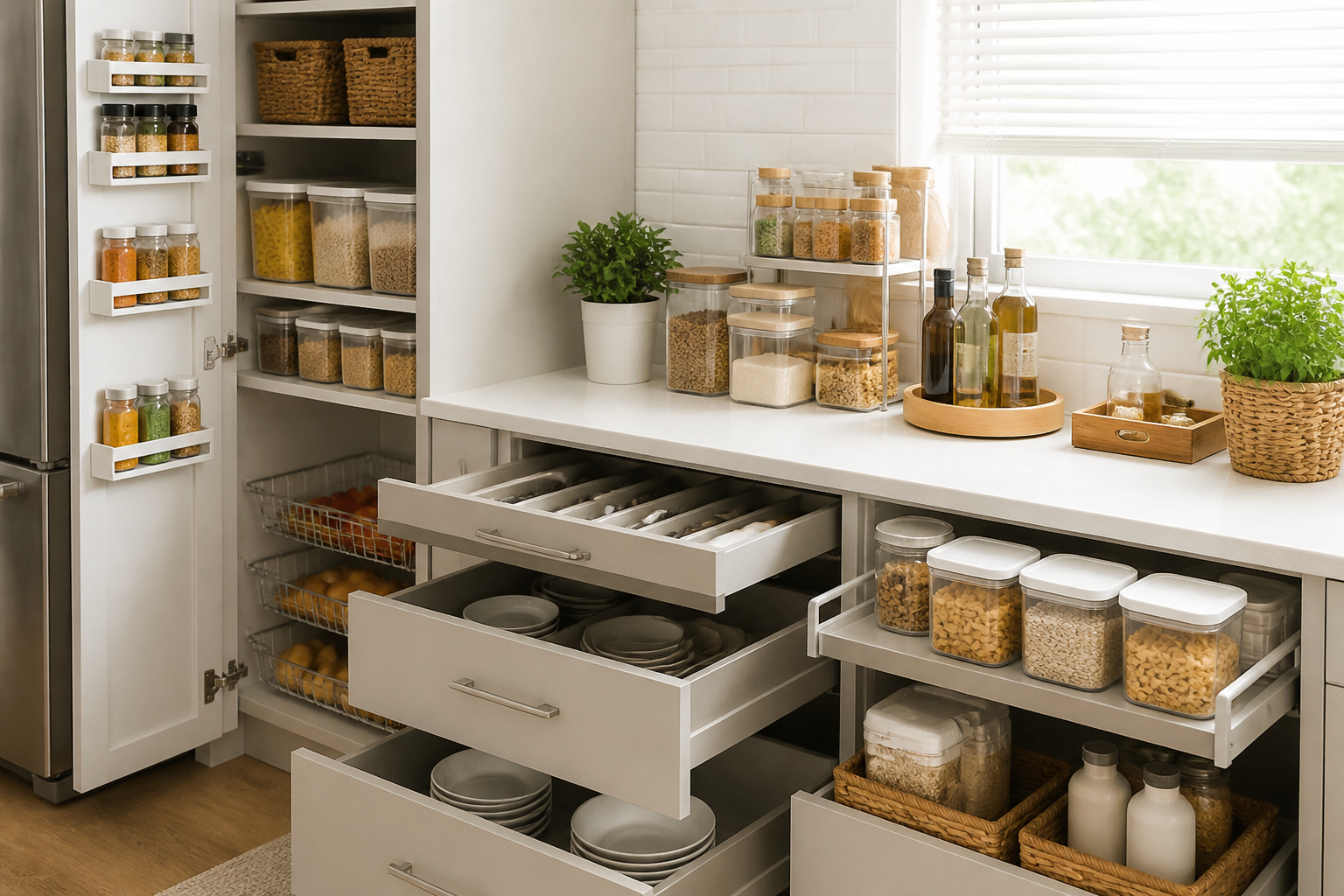
Cabinets often hold the widest range of items, from dishes and glassware to food containers and small appliances. Because cabinet space is often deep and vertical, the best solutions usually improve access. Shelf risers, stackable bins, under-shelf baskets, and turntables can help make cabinet contents easier to see and reach.
Drawers
Drawers are often ideal for utensils, prep tools, wrap supplies, and smaller gadgets. Drawer dividers can keep loose items separated and easier to find. Deep drawers may benefit from organizers that prevent nesting bowls, pans, or containers from shifting around.
Pantry areas
Pantries need systems that keep food visible and easy to rotate. Clear containers, labeled bins, and lazy Susans can help group snacks, baking items, cereals, and dry goods. If your pantry is small or only a cabinet, stackable storage can help you make better use of height.
Countertops
Counter storage should stay limited to the items you use frequently, such as a coffee setup, knife block, fruit bowl, or utensil holder. Overcrowding counters can make a kitchen feel smaller and harder to clean. The best countertop storage choices are compact, attractive enough to leave out, and useful enough to earn their space.
Under-sink space
The area under the sink is often awkward because of plumbing. Adjustable shelves, pull-out bins, and narrow caddies can help make that space more usable for cleaning supplies, trash bags, and backups. Since this area can be damp, it helps to choose storage that is easy to wipe clean.
Best kitchen storage ideas for better organization
There are many storage products available, but a few categories consistently help kitchens feel more organized. The right combination depends on your space and habits.
1. Clear storage containers
Clear containers are useful because they let you see contents at a glance. They work well for flour, sugar, rice, pasta, cereal, coffee, snacks, and other dry goods. When buying containers, look for lids that close securely and shapes that stack efficiently. Square or rectangular containers often fit better than round ones because they use shelf space more efficiently.
Clear containers are especially helpful for people who want a pantry that looks orderly and is easy to maintain. They are less ideal if you prefer to keep packaging visible or if you frequently buy items in different amounts and do not want to transfer everything.
2. Drawer dividers and organizers
Drawer dividers help keep utensils, measuring tools, food wraps, and small gadgets separated. Adjustable dividers are especially useful because they can be customized to fit different drawer sizes. For deeper drawers, modular organizers or trays may work better than fixed compartments.
These are a good choice for households that use many small tools and want to avoid the “junk drawer” effect. A simple divider system can also make it much easier for children or guests to find what they need without creating more mess.
3. Shelf risers
Shelf risers add a second level inside cabinets or pantries, which helps prevent items from being stacked too high. They are useful for mugs, bowls, canned goods, spices, and small plates. By increasing vertical storage, they can make awkward cabinet spaces more efficient.
Look for sturdy risers that fit the height of your items. If the riser is too tall, you may waste space. If it is too short, it may not solve the visibility problem.
4. Lazy Susans and turntables
Turntables are especially helpful for corner cabinets, deep shelves, spices, condiments, and oils. They make it easier to reach items stored in the back without moving everything else. This can reduce forgotten products and improve pantry rotation.
They are a practical solution for people who have limited reach into deep shelves or who want a simple way to organize grouped items. Choose a size that fits the shelf depth and keeps items stable while turning.
5. Pull-out baskets and sliding organizers
Pull-out organizers are useful in cabinets, under sinks, and pantry shelves because they bring contents forward instead of forcing you to reach into the back. They work well for cleaning supplies, produce, snacks, foil and wrap, and small appliances. Sliding access can be especially helpful in lower cabinets that are difficult to see into.
These organizers are a strong choice for kitchens that already have good shelf space but poor accessibility. They are more effective when installed at the right width and height, so measuring first is important.
6. Stackable bins and nesting containers
Stackable bins help separate categories while using height efficiently. They are useful for pantry snacks, packets, tea, baking supplies, and backup items. Nesting containers can also reduce wasted space when not in use.
When choosing stackable storage, make sure the stack remains stable and easy to lift. If stacks become too tall or too heavy, they can become inconvenient instead of helpful.
7. Wall-mounted and vertical storage
When cabinet and drawer space is limited, walls can provide additional storage. Wall-mounted racks, magnetic strips, rail systems, hanging hooks, and shelves can store utensils, pans, knives, and mugs. Vertical storage can free counter space and make often-used items more accessible.
This is especially useful in smaller kitchens or rental spaces where floor space is limited. Before choosing wall-mounted storage, consider whether you need a solution that is easy to install, removable, or suitable for your wall surface.
8. Pot, pan, and lid organizers
Cookware often creates clutter because it is bulky and difficult to stack neatly. Dedicated pot and pan racks, vertical dividers, and lid organizers can make cookware easier to access and protect finishes from excessive scratching. If your cabinets are deep, vertical dividers can be one of the most practical upgrades.
These solutions are especially useful for home cooks who use multiple pans regularly and want to avoid unpacking an entire stack to reach the one at the bottom.
9. Door-mounted organizers
Cabinet doors and pantry doors offer storage opportunities that are often overlooked. Door-mounted racks can hold spices, wraps, cleaning supplies, cutting boards, or small pantry items. Because they use otherwise unused space, they can be a strong option in compact kitchens.
Before buying, measure the door depth and check for clearance so the door can still close properly. Also consider the weight of the items you plan to store there.
How to choose the right kitchen storage products
Not every organizer is right for every kitchen. To buy wisely, focus on function first and style second. A visually appealing product is useful only if it fits the space and makes storage easier to maintain.
Measure before you buy
One of the most common mistakes is buying storage products before measuring cabinets, drawers, shelves, or pantry spaces. Measure width, depth, and height carefully, and account for hinges, handles, pipes, or other obstacles. A product that is slightly too large can make a space harder to use, while one that is too small may shift around and waste space.
Match the organizer to the item
The best storage solutions are designed around what you actually need to store. Dry ingredients need sealed containers. Small utensils need dividers. Deep shelves may need turntables or pull-out bins. Cookware often needs vertical support. Matching the product to the category usually produces better results than buying general-purpose bins for everything.
Consider cleaning and maintenance
Kitchen storage works best when it is easy to clean. Smooth surfaces, removable inserts, and simple shapes are often easier to maintain than complex pieces with many corners. If you store food in a container or bin, choose materials that are suitable for regular washing and daily handling.
Think about visibility
It is easier to stay organized when you can see what you own. Clear bins, labels, open racks, and pull-out drawers improve visibility. Opaque storage can still be useful, but it works best when paired with labels or a consistent system.
Look for flexibility
Your storage needs may change over time. Adjustable dividers, stackable bins, modular systems, and movable organizers can adapt as your pantry contents or family size changes. Flexible storage tends to be a better long-term choice than rigid systems that only work for one arrangement.
Common kitchen storage mistakes to avoid
Sometimes the biggest improvement comes from avoiding a few simple mistakes rather than buying more products.
- Buying storage before decluttering: If you keep items you no longer use, organizers may only hide the clutter instead of solving it.
- Choosing style over function: A pretty bin that is hard to clean or awkward to access may not be worth keeping.
- Using too many container types: Mixing many shapes and sizes can make the kitchen look busier and reduce efficiency.
- Overfilling shelves and drawers: If every storage area is packed too tightly, the system will be difficult to maintain.
- Ignoring workflow: Keep cooking tools near prep areas, dishes near the dishwasher or sink if possible, and dry goods near food prep zones.
- Forgetting labels: Labels help maintain order, especially in pantries and shared kitchens.
Practical organization tips that make storage last
The best kitchen storage system is one you can maintain without much effort. A few simple habits can help keep things organized over time.
First, group similar items together. Keep baking ingredients together, breakfast items together, and cooking tools together. This makes it easier to find what you need and easier to put items away.
Second, use zones that match daily routines. Place everyday items in the easiest-to-reach spots. Store occasional-use items higher up or farther back. This helps prevent the most convenient areas from becoming cluttered with rarely used items.
Third, reassess your layout occasionally. If you notice that an organizer is not being used or that items keep ending up in the wrong place, adjust the system. Good storage should support your habits, not fight them.
Fourth, avoid overbuying duplicates. If your storage is better organized, it becomes easier to see what you already have. That can make grocery shopping more efficient and reduce unnecessary extras.
Who these kitchen storage ideas may suit
Different kitchens benefit from different approaches, but these ideas are especially useful for a few common situations.
- Small kitchens: Vertical storage, door racks, and stackable bins can help maximize limited space.
- Busy families: Labels, drawer dividers, and accessible pantry bins can make everyday routines easier.
- Frequent home cooks: Pot organizers, spice storage, and countertop access points can improve workflow.
- Apartment renters: Removable, non-permanent solutions may be preferable.
- Large households: Larger bins, clear systems, and category-based zones can help reduce confusion.
Frequently asked questions
What is the best kitchen storage idea for a small kitchen?
For a small kitchen, the best storage ideas usually focus on vertical space and better access. Shelf risers, door-mounted racks, pull-out bins, and stackable containers are often practical choices because they help you use more of the available space without crowding counters.
How do I organize a kitchen on a budget?
Start by decluttering and grouping items by category. Then use simple, affordable solutions such as drawer dividers, baskets, labels, and stackable bins. Often, the biggest improvement comes from better placement and categorization rather than expensive organizers.
Are clear containers really worth it?
Clear containers can be worth it if you want better visibility and a more consistent pantry system. They are especially helpful for dry goods and snacks. However, they are not necessary for every kitchen. If they do not fit your routine, another type of labeled bin may work just as well.
How do I keep kitchen storage from becoming cluttered again?
Use a simple system, keep similar items together, and avoid filling every storage area to capacity. Regularly check for expired food, unused tools, and duplicate items. When everything has a designated place, it is much easier to keep the kitchen organized.
Should I choose open or closed storage?
Open storage works well for items you use often and want quick access to, such as mugs or spices. Closed storage is usually better for reducing visual clutter and hiding less attractive items like cleaning supplies or mismatched containers. Many kitchens work best with a mix of both.
Conclusion
The best kitchen storage ideas are the ones that make your space easier to use every day. Whether you need better pantry organization, more efficient cabinet storage, or simple drawer systems, the right solution should save time, improve visibility, and fit the way you cook and shop. Start with the areas that cause the most frustration, measure carefully, and choose organizers that match your real needs. With a thoughtful approach, even small changes can create a kitchen that feels calmer, cleaner, and much more functional.