Introduction
Choosing the best lunch box for office, college, and travel is not just about picking something that looks nice. The right lunch box should fit your routine, keep your meal organized, be comfortable to carry, and suit the kind of food you usually pack. A student may need something lightweight and compact. An office worker may want a more polished, leak-resistant container that fits in a bag. A traveler may care most about durability, insulation, and easy cleaning.
Because lunch boxes come in so many styles, it helps to think about where and how you will use them before you buy. Some are designed for simple dry meals. Others include insulated layers, multiple containers, or built-in compartments for sauces and snacks. The best choice is usually the one that balances portability, capacity, material quality, and convenience for your daily routine.
This buying guide breaks down the most useful lunch box types, the features to look for, and the common mistakes to avoid. Whether you need a lunch box for office use, college life, or travel days, the goal is the same: find a practical option that makes packed meals easier to carry and more enjoyable to eat.
What Makes a Good Lunch Box for Office, College, and Travel?
A good lunch box does more than hold food. It should work with your schedule and the way you eat. In office settings, many people want something compact enough to fit in a desk drawer or tote bag, while still holding a full meal. College students often need a lunch box that is light, simple, and easy to clean between classes. For travel, a stronger, more secure design can be helpful, especially if the container will move around in a backpack or carry-on bag.
The most useful lunch boxes usually share a few qualities:
- Portability: Easy to carry without adding unnecessary bulk.
- Leak resistance: Helps reduce spills from curries, soups, dressings, or sauces.
- Right capacity: Large enough for your meal, but not so large that it becomes awkward.
- Ease of cleaning: Smooth surfaces and removable parts can save time.
- Durability: Materials should handle daily use, packing, and transport.
- Food organization: Compartments can help separate items and keep textures intact.
If you often carry hot meals, look for insulated options or containers designed to retain warmth for longer periods. If you prefer salads, snacks, and sandwiches, a lighter compartment-style lunch box may be a better fit. The “best” lunch box depends less on a single feature and more on how well it fits your routine.
Types of Lunch Boxes to Consider
1. Insulated Lunch Boxes
Insulated lunch boxes are designed to help maintain food temperature for longer periods than standard containers. They can be useful for office workers who do not have immediate access to a fridge or for travelers who want meals to stay fresh during transit. Many insulated lunch boxes include an outer shell, padded lining, and enough space for one main meal plus a drink or snack.
These are often a good choice if you pack foods that are better enjoyed at a stable temperature. They may also be helpful for people who carry meals in a car, on public transport, or between long classes. The trade-off is that insulated models can be slightly bulkier than basic containers.
2. Bento-Style Lunch Boxes
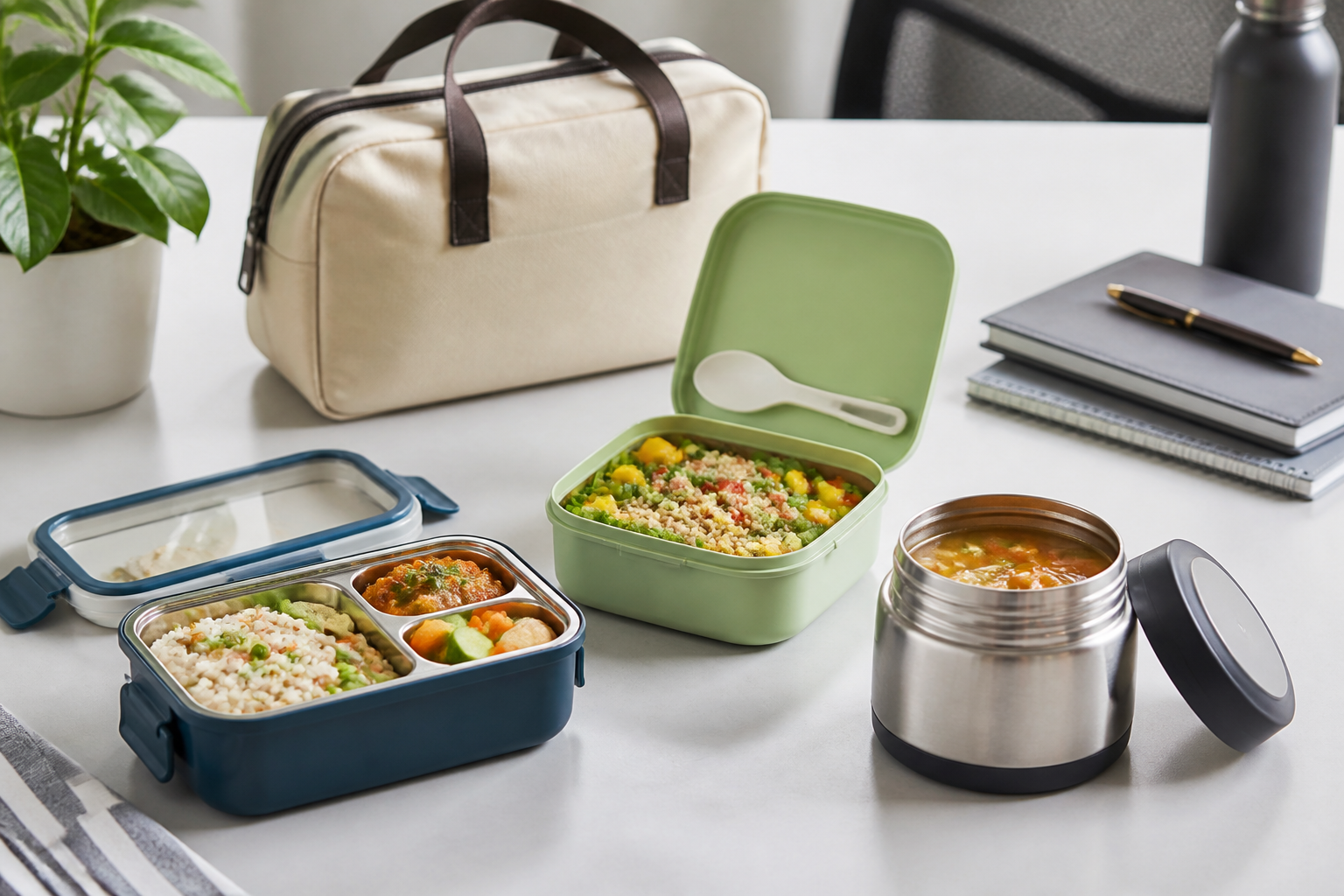
Bento-style lunch boxes use separate compartments to organize different foods. They are popular for packed lunches that include a main item, side dishes, fruit, nuts, or snacks. If you do not like your food mixing together, this style can be a very practical solution.
For office and college use, bento boxes are appealing because they make portioning simple and tidy. They can be especially useful for people who pack leftovers, meal-prepped lunches, or balanced snacks. If you choose one, check whether the compartments are leak-resistant, because not all of them are designed for liquids or very moist foods.
3. Stackable Lunch Containers
Stackable lunch containers are made of multiple separate sections that can be packed together. This style is useful for larger meals or for people who want to keep hot and cold items apart. Some stackable systems are designed for full lunches with rice, vegetables, curry, or snacks in separate layers.
These are often helpful for travel because they can be arranged neatly in a bag. They may also work well for office lunches when you need extra variety. However, they can take a little more time to organize and may be better suited to users who do not mind carrying multiple pieces.
4. Lunch Bags with Container Sets
Some buyers prefer a lunch bag that comes with fitted containers. This can be a convenient option if you want a coordinated solution rather than matching containers separately. A set may include reusable food containers, a bag, and sometimes a small ice pack or utensil compartment.
These sets are practical for college students and office workers who want an all-in-one approach. They can also be good for first-time buyers who want something simple. When comparing sets, look at container quality as well as the bag itself, because one weak part can reduce the usefulness of the whole set.
Key Features to Look For Before Buying
Size and Capacity
Lunch box capacity should match your meal habits. If you usually pack a sandwich, fruit, and a snack, a compact box may be enough. If you bring leftovers or a full meal with sides, a larger container may be better. A lunch box that is too small may crush food or force you to pack separately. One that is too large can feel bulky and waste space in a bag.
Think about whether you need a single-meal container or room for extras like cutlery, sauces, napkins, or a drink. College students often appreciate compact storage, while travelers may need a more flexible layout.
Material
Common lunch box materials include plastic, stainless steel, glass, and fabric-based insulated designs. Each has strengths and trade-offs.
- Plastic: Usually lightweight and affordable, but quality can vary. Look for sturdy construction and food-safe labeling from reputable sellers.
- Stainless steel: Often durable and long-lasting. It may be a good choice for people who want a more robust lunch box.
- Glass: Easy to clean and suitable for many meal types, though heavier and more fragile than other options.
- Fabric insulated designs: Good for portability and temperature support, especially when used with a food container inside.
The best material depends on your priorities. If portability matters most, lightweight designs are usually easier to carry. If durability matters more, metal or reinforced containers may be worth considering.
Leak Resistance
Leak resistance is one of the most important buying considerations, especially for office and travel use. Dressings, sauces, yogurt, and soups can quickly create problems inside a work bag or backpack. A secure lid, tight seal, and well-designed closure mechanism can reduce the chance of spills.
For foods with liquid components, choose lunch boxes specifically designed to handle moisture. If the design seems intended only for dry snacks or sandwiches, it may not be the best option for messy meals.
Ease of Cleaning
A lunch box should be easy to wash after every use. Smooth interiors, removable seals, and fewer small corners can make cleaning much easier. If you pack oily or strongly flavored foods, this matters even more.
Some buyers prefer dishwasher-safe containers, while others clean by hand. Either approach can work, but it is wise to check the care instructions before buying. If you choose a lunch box with multiple parts, make sure the pieces are not so complicated that cleaning becomes inconvenient.
Insulation and Temperature Control
If you pack meals that need to stay warm or cool, insulation is worth paying attention to. Some lunch boxes are designed to help keep food at a more stable temperature for a longer period. While performance varies by design, insulation can be very helpful during commutes, long classes, or travel days.
For best results, many people also pair an insulated lunch box with an ice pack or a thermally suitable food container. The key is to match the design to your needs rather than assuming any lunch box will preserve temperature equally well.
Compartments and Organization
Compartments can make lunches more practical and appealing. They help separate wet and dry foods, keep snacks from getting squashed, and make portioning easier. This can be especially useful for office meals and college lunches, where you may want one tidy container instead of several loose items.
Still, compartments are not always necessary. If you mainly pack one main dish, a simple container might be easier to use. The right answer depends on how you eat and whether food separation is important to you.
Weight and Carrying Comfort
A lunch box may seem small at home, but it can feel heavy after being packed into a backpack or commute bag. This is especially relevant for college students who already carry books, laptops, or notebooks. Lightweight designs can make daily travel more comfortable.
Also consider handles, straps, and bag shape. A lunch box that fits neatly into your normal bag may be more useful than a larger one with extra features you rarely use.
Best Lunch Box Features by Use Case
For Office Use
For the office, the ideal lunch box is usually neat, reliable, and easy to store. A compact insulated container or a compartment-style lunch box is often a strong choice. Many office users prefer a design that looks professional enough to carry in meetings or shared spaces.
Office-friendly lunch boxes often benefit from leak resistance and a tidy layout. If you eat at your desk, easy opening and quick cleanup may matter as much as capacity. If your office has a refrigerator or microwave, you may want a container that works smoothly with those routines.
For College Use
For college, portability is often the top priority. Students may move between classes, libraries, and study spaces, so a lunch box should be light and easy to fit in a backpack. Simple designs with reliable closures are usually the most practical.
Students may also appreciate containers that can hold a snack and a main meal in one place. Because schedules can be unpredictable, a lunch box with flexible storage can make it easier to pack food in advance.
For Travel Use
For travel, durability and spill control become especially important. A lunch box that travels well should handle movement inside luggage or carry-on bags without opening accidentally. Stackable systems or secure insulated lunch bags can be useful here.
If you are packing meals for long trips, it is wise to choose a design that is easy to access during transit. The best travel lunch box is one that fits your route, the climate, and the foods you plan to carry.
Common Mistakes to Avoid When Buying a Lunch Box
Many shoppers choose a lunch box based on appearance alone, then discover that it is too small, hard to clean, or inconvenient to carry. A few common mistakes can be avoided with a little planning.
- Choosing the wrong size: A lunch box that cannot fit your usual meal becomes frustrating quickly.
- Ignoring leak resistance: If you carry sauces or moist foods, this can create avoidable messes.
- Overlooking cleaning needs: A complicated design may be attractive but annoying to maintain.
- Buying for the wrong setting: A travel-focused design may be too bulky for a student backpack, while a very small container may not suit full office meals.
- Forgetting about accessories: Some lunches are easier to manage when the container works well with cutlery, ice packs, or lunch bags.
It also helps to think about your routine honestly. If you rarely have time to wash many parts, choose something simpler. If you pack a variety of foods, compartments may be worth the extra structure.
Practical Tips for Using a Lunch Box More Effectively
A good lunch box becomes even more useful when used well. Packing food in the right order can reduce spills and help keep meals appealing. For example, placing heavier items at the bottom and more delicate foods on top can help protect texture. If your lunch box has compartments, use them to keep wet and dry foods apart.
It is also smart to keep a small routine around cleaning and storage. Wash the box soon after use when possible, let it dry fully, and store it in a clean place. This helps keep the container ready for the next day.
If you use an insulated model, pre-chilling or warming the container, when appropriate for the design, may help improve performance. Likewise, packing food in suitable serving sizes can make lunch easier to carry and eat. A lunch box should support your routine, not complicate it.
How to Choose the Right Lunch Box for You
The easiest way to choose is to start with your main use case. If your priority is office convenience, focus on neat design, leak resistance, and moderate capacity. If you are a student, pick something lightweight, simple, and sturdy enough for daily backpack use. If you travel often, emphasize secure closure, durability, and portability.
Then narrow down the material and structure. If you want low weight, plastic or insulated fabric options may be practical. If you want durability, stainless steel can be appealing. If you want a tidy presentation and easy portion control, a bento style may be best.
Finally, consider how much complexity you actually want. More compartments and accessories are not always better. The best lunch box is the one you will enjoy using consistently.
Frequently Asked Questions
What is the best lunch box for office use?
The best office lunch box is usually one that is compact, leak-resistant, and easy to clean. Many people prefer insulated containers or bento-style boxes because they keep meals organized and convenient for workdays.
What kind of lunch box is best for college students?
College students often do best with lightweight lunch boxes that fit easily in a backpack. Simple designs with secure lids and enough room for a main meal plus a snack are often the most practical.
Are insulated lunch boxes worth it?
They can be worth it if you want help keeping food at a more stable temperature during commutes, classes, or travel. They are especially useful when your meal will not be eaten immediately after packing.
Is a bento lunch box good for travel?
A bento lunch box can work well for travel if it has a secure lid and enough compartment space for the foods you pack. It is especially useful for organized meals and snacks, though very liquid foods may need extra caution.
What size lunch box should I buy?
Choose a size based on your usual meal. A small container may be enough for snacks or a sandwich, while a larger one may be better for full meals with sides. The best size is one that fits your food without taking up too much bag space.
How do I keep my lunch box from leaking?
Use containers with tight-fitting lids and designs meant for moist foods. Avoid overfilling sauces or liquids, and make sure the lid is properly closed before packing the lunch box into your bag.
Conclusion
The best lunch boxes for office, college, and travel are the ones that suit your habits, not just your taste. A good choice should be practical to carry, easy to clean, and sized for the meals you actually pack. For office use, look for neat and reliable designs. For college, prioritize light weight and convenience. For travel, focus on secure closures and durability.
By comparing insulation, leak resistance, capacity, material, and organization features, you can narrow the options quickly and choose a lunch box that fits your routine. A well-chosen lunch box can make packed meals simpler, more organized, and easier to enjoy wherever the day takes you.