Accurate measuring is one of the simplest ways to make everyday cooking easier, more consistent, and less frustrating. Whether you are following a new recipe, portioning ingredients for a family meal, or trying to improve your baking results, the right measuring tools can make a noticeable difference. Good measuring tools do not need to be complicated, but they do need to be reliable, easy to read, and suited to the way you cook.
This guide explains the best measuring tools for accurate everyday cooking, what each tool is for, and which features matter most when choosing between them. It also covers common buying mistakes, practical tips for home use, and answers to frequently asked questions so you can build a simple, useful kitchen measuring setup.
Why measuring tools matter in everyday cooking
Many home cooks rely on sight, memory, or experience when preparing meals, and that works well for plenty of savory dishes. But even when a recipe leaves room for flexibility, measuring tools help keep results more consistent. They are especially useful when you want to repeat a meal, adjust serving sizes, or follow recipes that depend on balance.
In baking, accurate measuring is often even more important because ingredient ratios affect texture, rise, and structure. A cup of flour measured one way can be very different from a cup measured another way. Liquid ingredients, spices, and small amounts of leavening agents also benefit from tools that are clear and easy to use.
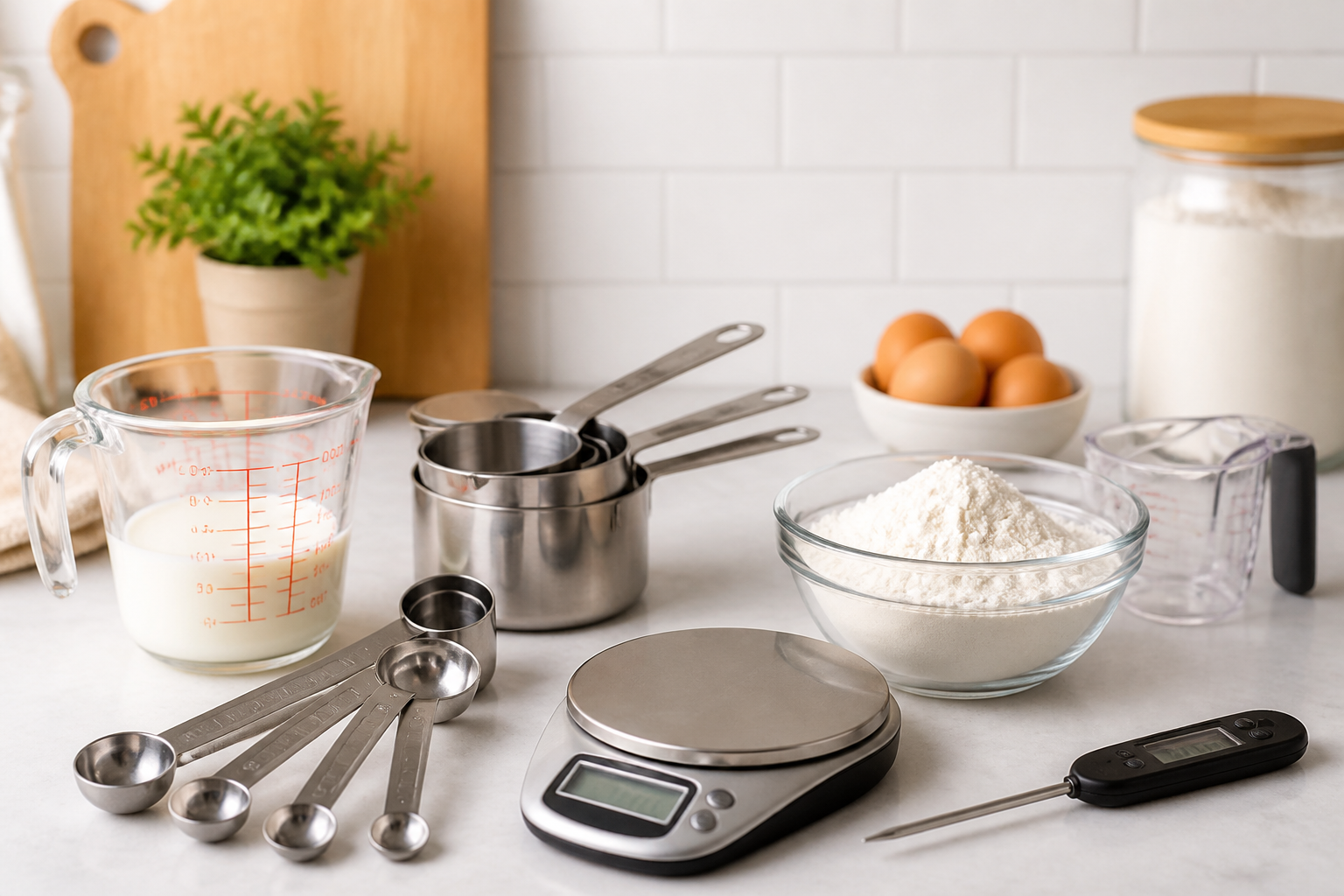
For everyday cooking, the best measuring setup is usually a combination of tools rather than just one item. A kitchen scale, a set of dry measuring cups, measuring spoons, and a liquid measuring cup often cover most needs. Depending on how you cook, a few extra tools may also be worthwhile.
The main measuring tools to consider
Kitchen scales
A kitchen scale is one of the most accurate and versatile measuring tools for home cooking. Instead of estimating volume, it measures weight, which is often more precise for dry ingredients, meats, produce, and even some liquids. If you cook from international recipes or bake often, a scale can simplify conversions and reduce inconsistency.
Key features to look for include a clear digital display, a tare function, and a platform large enough to hold typical bowls or plates. The tare function is especially helpful because it lets you reset the display after placing a container on the scale, so you can measure ingredients directly into it.
Scales can suit bakers, meal preppers, people following structured diets, and anyone who wants fewer dishwashing steps when measuring multiple ingredients into one bowl.
Dry measuring cups
Dry measuring cups are designed for ingredients like flour, sugar, rice, oats, and chopped ingredients that are usually measured by volume. They are typically sold in sets and come in standard sizes such as 1/4 cup, 1/3 cup, 1/2 cup, and 1 cup.
For accurate use, dry ingredients should be leveled off rather than packed unless a recipe specifically says otherwise. The best dry measuring cups are sturdy, easy to read, and shaped so they can scoop ingredients cleanly from containers.
These cups are most useful for home cooks who follow standard recipes and want a fast, familiar tool for everyday prep. They are also helpful in kitchens where a scale is not always convenient.
Measuring spoons
Measuring spoons are essential for small quantities such as baking soda, vanilla extract, salt, spices, oil, and other concentrated ingredients. Even a small variation can affect flavor, so having a dependable spoon set is important.
Good measuring spoons should have clearly marked sizes, comfortable handles, and spoon bowls shaped to fit into spice jars and small containers. Many cooks prefer spoons that nest neatly together but are still easy to separate.
Measuring spoons are especially useful for cooks who season by recipe, bake occasionally, or want more control over flavor balance in sauces, dressings, and marinades.
Liquid measuring cups
Liquid measuring cups are designed for water, milk, broth, oil, and other pourable ingredients. Unlike dry cups, they usually have a spout and measurement lines below the rim so you can read the amount without filling to the top. This helps prevent spills and improves accuracy for liquids.
Glass and clear plastic versions are common, and both can work well if the markings are easy to read. A good cup should have a stable base, a comfortable handle, and measurement marks that remain visible after repeated washing.
Liquid measuring cups are useful for soups, sauces, baking, and general cooking, especially when you need to pour from the cup into a pot or mixing bowl.
Adjustable measuring cups and spoons
Adjustable measuring tools combine multiple sizes into one item, which can save space in smaller kitchens. They are appealing for cooks who want fewer tools in drawers and are comfortable with a little extra care when cleaning and adjusting them.
These tools can be convenient for occasional use, but they may not be as quick or as durable as standard fixed-size sets. The best versions should lock securely in place, show clear markings, and feel solid when filled.
They can suit minimalists, apartment kitchens, or households that want a backup set without buying several separate pieces.
How to choose the right measuring tools for your cooking style
The best measuring tools depend on what you cook most often. A baker may want a scale, dry cups, and precise spoons. A soup and stew cook may rely more on liquid cups and spoons. A meal-prep cook may use a scale for portioning and a set of cups for quick prep work.
Think about how often you cook, what types of recipes you use, and how much storage space you have. A large, complete set is not always better than a small set of tools that you will actually use regularly.
If you bake often
Bakers usually benefit most from a digital kitchen scale because it improves consistency for flour, sugar, cocoa, and other ingredients. Many baking recipes can still be made with cups and spoons, but weight-based measuring is often easier to repeat accurately. A well-made set of dry measuring cups and measuring spoons is still important for recipes that list volume measurements.
If you cook mostly savory meals
For everyday savory cooking, a liquid measuring cup, measuring spoons, and a scale can cover most tasks. A scale is useful for protein portions, vegetables, and ingredient prep, while spoons help with salt, herbs, and seasonings. If you rarely bake, you may not need a large cup set beyond the basics.
If you have a small kitchen
Space matters. Compact nesting sets, collapsible tools, or a scale with a slim profile may be the best fit. An adjustable tool can reduce clutter, but only if it is easy to clean and use. It is usually better to own a few dependable measuring essentials than a crowded drawer of tools that are awkward to reach.
If you are a beginner cook
Beginners often do best with clear, simple tools that are easy to understand. Standard cups and spoons are familiar and approachable, while a digital scale can help build confidence with recipes that seem more precise. Look for large markings, easy-to-hold handles, and tools that match the measurements used in the recipes you follow most.
Important features to look for
Readability
Measurement markings should be easy to see at a glance. This is especially important on liquid measuring cups and measuring spoons. Deep engravings or printed markings that stay visible over time are preferable to faint labels that wear off quickly.
Accuracy and consistency
For everyday cooking, the tool should give the same result each time it is used correctly. Scales should respond consistently and allow reliable tare use. Cups and spoons should match standard sizes and be shaped so they are easy to fill and level.
Material quality
Common materials include stainless steel, plastic, glass, and silicone. Stainless steel often feels durable and lasts well in daily use. Plastic can be lightweight and affordable, though markings may wear down faster depending on quality. Glass is useful for liquid measurement because it is clear and easy to read, but it can be heavier and more breakable.
Ease of cleaning
Measuring tools should be easy to rinse or wash after use. Smooth surfaces, dishwasher-safe labels, and designs without hard-to-reach corners can save time. If you often measure sticky ingredients like honey, syrup, or nut butter, look for tools that clean up without much effort.
Comfort and handling
Handles, grips, and balance matter more than many buyers expect. A spoon that feels awkward or a cup that tips easily can slow down prep. Comfortable tools are more likely to be used correctly and consistently.
Storage and nesting
Most home kitchens benefit from measuring tools that stack, nest, or hang neatly. If storage is tight, look for compact designs. If you cook frequently, choose tools that are easy to grab quickly rather than packed so tightly that they are annoying to separate.
Common buying mistakes to avoid
One common mistake is buying a complete set without considering actual use. A large set may look convenient, but if you only use a few pieces, the rest can become clutter. Focus on the tools that match your cooking habits.
Another mistake is assuming all measuring cups or spoons are interchangeable. Dry and liquid measuring cups serve different purposes. Using the wrong one can lead to messy pouring or less accurate results.
Some buyers also choose tools based only on appearance. Style matters, but markings, durability, and comfort are more important in the long run. A beautiful tool that is hard to read or awkward to wash is unlikely to be satisfying.
It is also easy to overlook the value of a scale. People who cook only by volume may not realize how much easier certain recipes become when ingredients can be weighed. Even if you do not replace all your measuring tools, adding a scale can improve your kitchen workflow.
Practical tips for better measuring at home
Use the right tool for the ingredient. Dry ingredients, liquids, and small seasonings are easier to measure accurately when matched with the correct tool. This reduces confusion and prevents avoidable errors.
Level dry ingredients when the recipe expects it. A straight edge, knife, or spatula can help remove excess from the top of a cup or spoon. For ingredients like flour, do not pack unless the recipe explicitly says to do so.
Read liquid measurements at eye level. Tilting the cup or reading it from above can make the amount seem larger or smaller than it really is. Place the cup on a flat surface and check the marking from the side.
Use the tare function on a scale to simplify multi-ingredient prep. This allows you to measure ingredients one after another in the same bowl, which can reduce cleanup and save time.
Keep a basic set within reach. The tools you use most should be easy to find. If measuring tools are buried in a drawer, you may be more tempted to estimate instead of measure.
What measuring tool set works best for most kitchens
For most households, the most practical setup is a digital kitchen scale, a set of dry measuring cups, a set of measuring spoons, and one clear liquid measuring cup. This combination handles most everyday cooking tasks without creating unnecessary clutter.
If you want to keep things simple, prioritize a scale and measuring spoons first. Add dry cups if you bake or use many volume-based recipes. Add a liquid cup if you often make soups, sauces, or drinks. If your recipes are mostly casual and forgiving, a smaller set may still be enough.
The best measuring tools are the ones you will actually reach for. That means the right balance of accuracy, convenience, and storage size for your kitchen.
Frequently asked questions
Are kitchen scales better than measuring cups?
Kitchen scales are often more accurate, especially for dry ingredients. Measuring cups are still useful and widely used, particularly for quick cooking and recipes written in volume measurements. Many home cooks benefit from having both.
Do I need separate cups for dry and liquid ingredients?
Yes, if you want better accuracy and less mess. Dry measuring cups are made to be filled to the top and leveled. Liquid measuring cups are made to be read at the markings below the rim and are easier to pour from.
What size measuring spoon set is most useful?
A standard set usually covers the most common needs, including small amounts for seasonings and baking ingredients. Look for a set with clearly labeled spoon sizes and a shape that fits into spice jars.
Is stainless steel better than plastic for measuring tools?
Stainless steel is often more durable and may hold up well over time, while plastic can be lighter and less expensive. The better choice depends on your budget, how often you cook, and whether you prefer a lighter or heavier tool.
How do I know if a measuring cup is accurate?
Look for clear markings, stable construction, and a design intended for the type of ingredient you are measuring. For the most consistent results, use the correct cup type and a level surface for liquids.
Can adjustable measuring tools replace standard sets?
They can replace some tools in a compact kitchen, but many people still prefer standard fixed-size cups and spoons because they are faster and simpler. Adjustable tools are best seen as a space-saving option, not always a full replacement.
Conclusion
Choosing the best measuring tools for accurate everyday cooking comes down to matching the tool to the task. A kitchen scale offers precision and flexibility, dry measuring cups support familiar recipe prep, measuring spoons handle small quantities, and liquid measuring cups make pourable ingredients easier to manage. Together, these tools form a practical foundation for home cooking.
For most kitchens, the smartest approach is not to buy the most expensive or most complicated set. Instead, choose durable, readable, easy-to-clean tools that fit the way you cook most often. With the right measuring basics on hand, you can save time, reduce guesswork, and make everyday recipes more consistent and enjoyable.