Introduction
A smartphone is one of the most-used items in daily life, which also makes it one of the most exposed to accidental damage. It gets carried in bags and pockets, placed on desks and counters, used outdoors, and handled dozens of times a day. That constant use creates everyday risks such as drops, scratches, scuffs, cracked screens, and lens damage. The good news is that a well-chosen set of protective phone accessories can reduce those risks without making the phone difficult to use.
The best protective phone accessories for everyday use are not necessarily the toughest-looking or most expensive. They are the ones that balance protection, comfort, compatibility, and convenience. For many people, the right setup includes a case, a screen protector, and maybe one or two practical extras such as a grip or a camera lens cover. The key is to choose accessories that suit how you actually use your phone rather than adding unnecessary bulk or features.
This guide breaks down the most useful protection options, what to look for in each category, and common mistakes to avoid. It is designed to help you make a sensible buying decision whether you want light daily protection, more complete coverage, or a simple upgrade to keep your phone looking newer for longer.
Why everyday phone protection matters
Most phone damage does not happen in dramatic accidents. It happens in ordinary moments: a short drop onto a hard floor, a coin in the same pocket as the phone, a key scratching the screen, or a table edge rubbing against the camera bump. Even when a device keeps working after a small accident, minor damage can affect appearance, resale value, and long-term usability.
Everyday protection is about reducing the chance that normal life turns into avoidable repair costs or inconvenience. It can also make a phone easier to hold, easier to clean, and less slippery in daily use. For many users, that means better handling and fewer worries rather than just damage prevention.
The most useful protective phone accessories
1. Protective phone cases
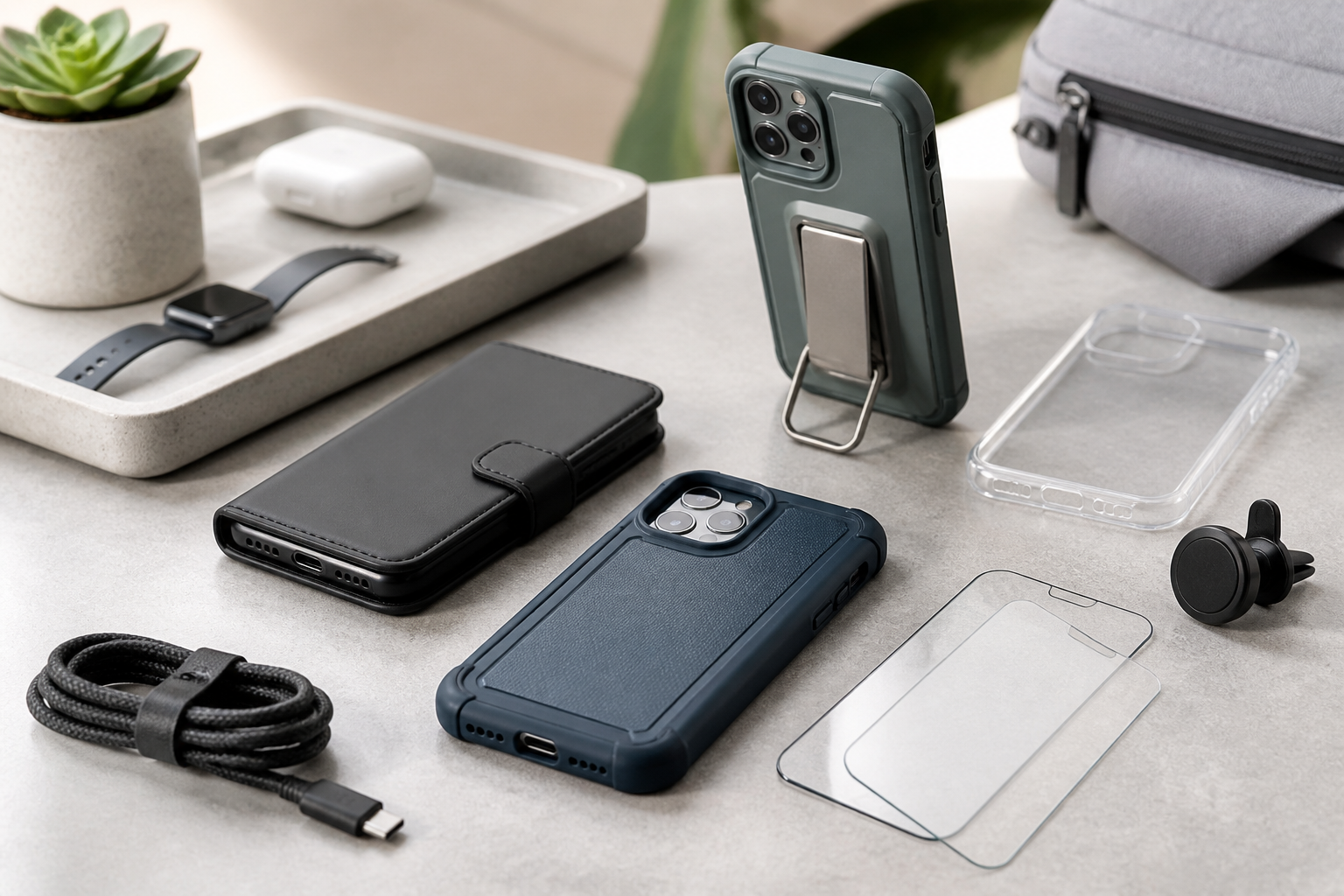
A phone case is usually the first and most important protective accessory. It surrounds the phone and helps absorb impact if the device is dropped. Cases also help protect the back, corners, and edges from scratches and wear.
When choosing a case for everyday use, focus on the balance between protection and practicality. A very rugged case can offer strong drop protection, but it may also make the phone heavier, larger, and less comfortable to carry. A slim case may feel better in the hand, but it may provide less impact resistance. Many buyers are best served by a mid-range case that adds grip, raised edges, and corner protection without excessive bulk.
Helpful features to look for in a daily case:
- Raised edges around the screen and camera
- Corner reinforcement for impact absorption
- Textured sides or a grippy finish
- Button covers that still feel responsive
- Precise cutouts for charging ports and speakers
- Compatibility with wireless charging, if needed
Who it suits: Most phone users, especially anyone who carries a phone one-handed, uses it outdoors, or wants a simple all-in-one protective layer.
2. Screen protectors
The screen is one of the most vulnerable parts of a smartphone, so a screen protector is a smart everyday accessory. It helps reduce scratches from pocket debris, keys, bags, and tabletop contact. Some protectors also add a small buffer against minor impacts, although they should not be treated as a replacement for a case.
There are two common types. Tempered glass protectors are popular because they usually feel more like the original screen and may offer better impact resistance than thin film protectors. Film protectors are thinner and less noticeable, and they can be useful for people who prioritize a very light setup or want basic scratch protection.
What to consider before buying:
- Touch sensitivity and clarity
- Ease of installation
- Compatibility with phone cases
- Anti-fingerprint or smudge-resistant coating
- Fit for curved or flat displays
Who it suits: Anyone who wants to preserve screen condition, especially those who place phones face-down, keep them in bags, or use them heavily during the day.
3. Camera lens protection
Modern phones often have prominent camera bumps that can collect scratches when set down on rough surfaces. A camera lens protector or camera bump case design can help reduce this risk. Some cases include a raised lip around the camera array, while others use separate lens covers.
For everyday use, a case with a raised camera edge is often the simplest and least intrusive option. Separate lens protectors may be useful for added peace of mind, but they should be chosen carefully to avoid issues with fit, glare, or image quality. If a phone already has a large camera module, protecting the camera area is especially important because it is easy for that part to contact desks, counters, and other hard surfaces.
Who it suits: Users who place their phone on tables often, carry it in a bag with other items, or own a device with a camera bump that sits above the back surface.
4. Grip accessories and phone straps
One of the biggest causes of damage is simply dropping the phone. Grip accessories help make the phone easier to hold securely, which can reduce accidental slips during messaging, photography, or one-handed use. Common options include adhesive finger grips, foldable stands with grip functions, wrist straps, and phone loops.
These accessories are especially helpful for larger phones that are harder to hold comfortably. A grip can improve handling while also making it easier to prop the phone up for watching videos or taking video calls. However, it is important to choose a grip that does not interfere with wireless charging or case compatibility if those matter to you.
Who it suits: People with larger phones, users who often operate their phones one-handed, and anyone who wants a more secure feel in daily use.
5. Phone wallets and card-holder cases
Phone wallet cases combine protection with storage for cards or small essentials. They can be convenient for people who want to carry fewer items. However, they are not always the best fit for everyone because they may be bulkier than standard cases and can affect the way the phone sits in a pocket or on a table.
If you choose this category, look for a wallet case that still offers good corner protection and a reliable closure. Make sure the card section does not make the phone awkward to hold. For some users, a separate slim case plus a small wallet may actually be a better everyday setup than a built-in card holder.
Who it suits: Minimalists, commuters, and users who prefer carrying a few cards with the phone instead of a separate wallet.
6. Charging cable and port protection
Charging cables and ports are not usually thought of as protective accessories, but they matter for everyday durability. Frequent plugging and unplugging can create wear over time, and dust or debris in a charging port can make connections less reliable. While not every user needs extra port covers, some cases include dust protection features that can help in dusty environments or travel situations.
It is also useful to use cables that fit securely and do not put unnecessary strain on the port. A cable that fits poorly can be more annoying to use and may wear out faster. If your phone supports wireless charging, that can reduce physical port wear for everyday top-ups.
Who it suits: Frequent travelers, outdoor users, and anyone who charges their phone many times a day.
How to choose the right level of protection
Not every phone needs heavy-duty protection. The right choice depends on how, where, and how often you use your device. A simple approach is to think in terms of risk and convenience.
Light daily protection
If you mostly use your phone at home, in an office, or in calm settings, a slim case and screen protector may be enough. This setup preserves the phone’s shape and feel while guarding against scratches and minor mishaps.
Balanced everyday protection
For most people, this is the best middle ground. A well-made case with raised edges, a quality screen protector, and perhaps a grip accessory offers practical protection without making the phone hard to carry. This is often the most sensible option for commuting, travel, and general daily use.
More robust protection
If your phone is exposed to frequent drops, outdoor work, active travel, or harsh environments, a more rugged case may be worth considering. In that situation, protection should take priority over slimness. Still, even rugged setups should remain functional enough for everyday charging, pocket use, and screen access.
Important features to compare before buying
When shopping for protective phone accessories, it helps to compare more than appearance. A product can look sturdy and still be inconvenient or poorly fitted. These are the main factors worth checking.
- Compatibility: Make sure the accessory is made for your exact phone model, especially for camera shape, button placement, and port access.
- Material quality: Look for materials that feel durable and comfortable, such as TPU, polycarbonate, tempered glass, or well-constructed synthetic materials.
- Grip: A case that is too slippery can be risky even if it looks premium.
- Bulk: Extra protection is helpful, but too much bulk can make the phone awkward to hold or carry.
- Screen fit: Screen protectors should align properly and work with the case you plan to use.
- Finish: Matte finishes may resist fingerprints better, while glossy finishes may look cleaner at first but show smudges more easily.
- Ease of installation: Accessories that are difficult to install can lead to bubbles, misalignment, or frustration.
- Wireless charging support: If you use wireless charging, check that the case or grip does not interfere.
Common buying mistakes to avoid
Some of the most common mistakes happen when people buy protection based on appearance alone.
- Choosing style over function: A thin clear case may look great, but it may not be the best choice if the phone slips easily from your hands.
- Buying a screen protector that does not fit the case: Some protectors are too large or too close to the edge, which can cause lifting.
- Assuming all rugged cases are equally useful: Some are simply bulky without offering noticeably better everyday handling.
- Ignoring camera protection: The camera bump is often one of the first areas to show wear.
- Over-accessorizing: Too many add-ons can make the phone uncomfortable and less practical to use daily.
- Forgetting about comfort: A protective accessory only helps if you actually enjoy using it every day.
Practical tips for everyday phone protection
Accessories work best when paired with simple habits. Small daily actions can reduce wear and help your phone stay in better condition.
- Place the phone face-up or on a soft surface when possible.
- Keep keys, coins, and other hard items separate from the phone in pockets or bags.
- Clean the case and screen protector regularly to remove grit that can cause scratches.
- Check that the case has not loosened over time.
- Replace a damaged screen protector promptly, since chips and cracks can reduce its usefulness.
- Use a grip accessory if the phone feels insecure in one hand.
- Choose a charging setup that avoids strain on the port.
Who may benefit most from each accessory type
Different users have different priorities, so the best protective phone accessories for everyday use can vary.
- Commuters: A case, screen protector, and grip can help with crowded transport and frequent handling.
- Students: A case and screen protector are usually the best starting point because phones often move between desks, bags, and outdoor use.
- Parents: Grip accessories and easy-to-clean cases can be especially practical.
- Travelers: A more protective case with camera coverage and dependable screen protection can be a smart choice.
- Minimalists: A slim, well-fitted case plus a quality screen protector may be enough.
- Active users: A rugged case, secure grip, and good screen protection may be worthwhile.
Frequently asked questions
Do I really need both a case and a screen protector?
For most users, yes. A case helps protect the phone body and corners, while a screen protector helps reduce screen scratches and minor surface damage. Together, they cover the areas most likely to be affected in normal use.
Are rugged cases always better?
Not always. Rugged cases can offer stronger protection, but they may be heavier, thicker, and less convenient for everyday use. A balanced case is often a better choice unless your phone faces higher-than-normal risk.
Will a screen protector affect touch sensitivity?
It can, depending on quality and installation. A well-made protector should preserve normal use, but lower-quality options may feel less responsive or affect clarity.
Is a camera lens protector necessary?
Not for everyone. Many users are well served by a case with a raised camera edge. A separate lens protector may be helpful if the camera area is especially exposed or if you want extra coverage.
What is the best protection for a large phone?
A large phone often benefits from a grippy case, a screen protector, and possibly a strap or grip accessory. Larger devices can be harder to hold securely, so handling support matters as much as impact protection.
Conclusion
The best protective phone accessories for everyday use are the ones that fit your habits, not just your phone model. For many people, the most practical setup is a quality case, a reliable screen protector, and a simple grip or camera protection solution if needed. This combination offers a strong mix of durability, comfort, and daily convenience.
When comparing options, focus on fit, grip, coverage, compatibility, and overall usability. Avoid buying accessories that look protective but make the phone awkward to use. A good everyday protection setup should feel natural while quietly reducing the risk of scratches, slips, and minor damage. With the right choices, you can keep your phone more secure and more enjoyable to use throughout the day.