Finding a good place to store shoes can be surprisingly difficult in a small home. A couple of pairs at the door quickly turns into a pile, and before long the entryway, bedroom, or closet starts feeling crowded. The challenge is not just about hiding shoes away; it is about creating a system that keeps everyday pairs easy to reach while protecting the rest from dust, damage, and unnecessary clutter.
The best shoe storage ideas for small homes are usually the ones that make the most of overlooked spaces. That may mean using vertical height, choosing furniture that serves more than one purpose, or selecting storage that fits the way your household actually uses shoes. The right solution depends on how many pairs you own, whether you rent or own, and how much room you can dedicate to storage.
This guide breaks down the most practical shoe storage options for compact spaces, what to look for when choosing one, and how to avoid common mistakes. Whether you live in a studio apartment, a narrow townhouse, or a small family home, you can create a cleaner, more organized space without giving up convenience.
Why Shoe Storage Matters in a Small Home
Shoes are one of the easiest items to leave out and one of the hardest to keep tidy. They come in awkward shapes, are used daily, and are often placed right where people enter the home. In a small space, this can create visual clutter very quickly.
Good shoe storage solves more than an organization problem. It helps define an entryway, makes cleaning easier, and prevents shoes from being mixed into unrelated storage areas. It can also make daily routines smoother. When frequently worn shoes have a clear home, getting out the door becomes faster and less stressful.
The key is choosing a storage method that matches your space rather than forcing a large, bulky solution into a tight area. Small homes usually benefit from slim, flexible, or multi-use shoe storage rather than oversized furniture.
Best Shoe Storage Ideas for Small Homes
1. Slim Shoe Cabinets for Entryways
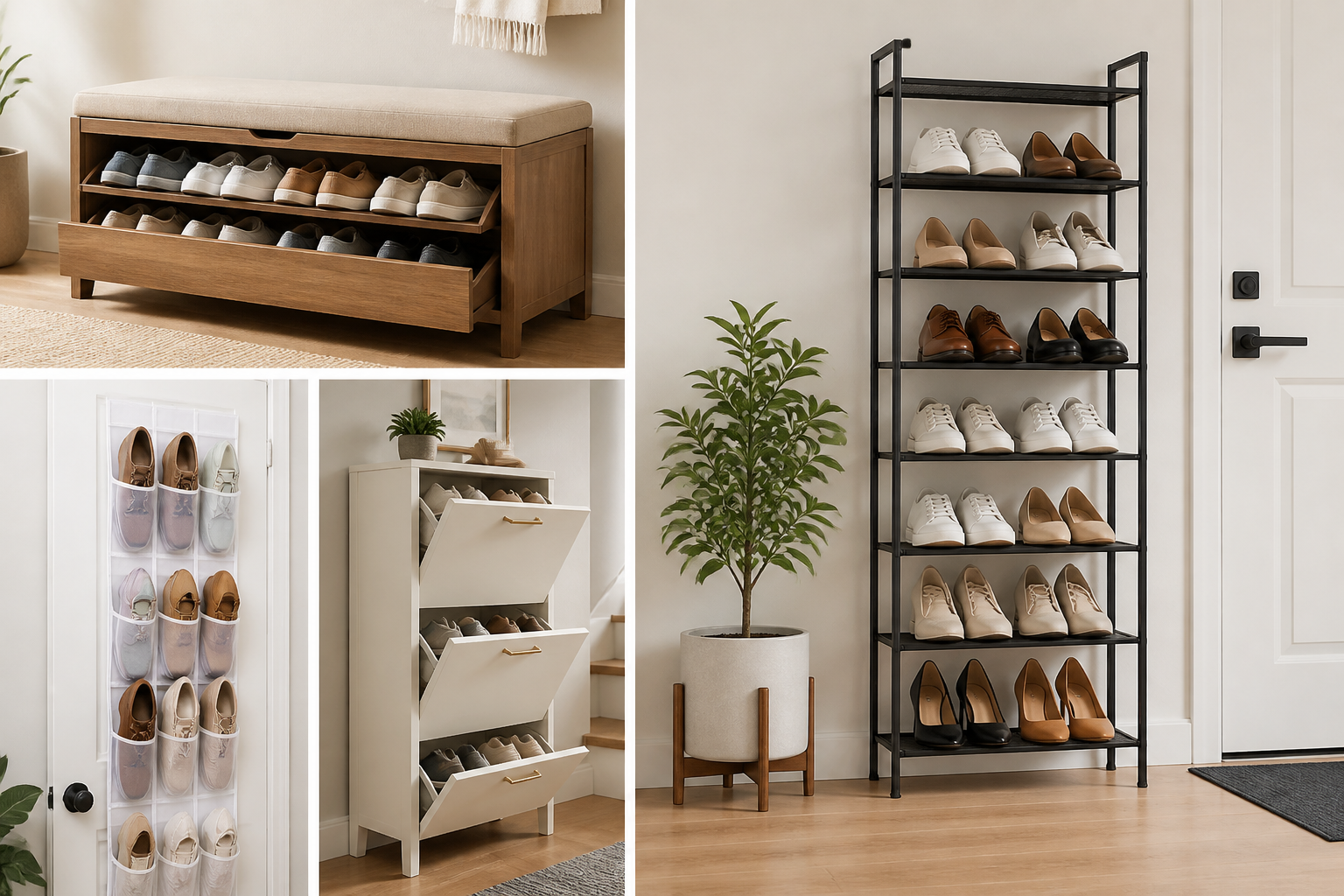
Slim shoe cabinets are one of the most popular shoe storage ideas for small homes because they use very little floor depth while still holding several pairs. Many open with tilt-out compartments or narrow shelves, allowing shoes to sit almost vertically rather than flat. This makes them especially helpful in narrow hallways or compact entrances.
These cabinets work well for households that want shoes hidden from view. They create a cleaner look than open racks and can double as a surface for keys, mail, or decorative items. If your entryway is small but visible from the living area, a slim cabinet can improve the overall appearance of the home.
When choosing one, look at depth carefully. A cabinet may be narrow enough for a small space but still too shallow for larger shoes if the interior compartments are not well designed. Check whether boots, sneakers, or wider shoe styles will fit before buying.
2. Under-Bed Shoe Storage
The space under the bed is often wasted, yet it can be ideal for seasonal or less frequently worn shoes. Flat under-bed boxes, zippered containers, and pull-out trays can keep shoes organized without taking up visible space.
This method suits people who want to store off-season footwear such as sandals in winter or boots in summer. It is also useful in bedrooms where closet space is limited. Shoes stored under the bed stay close by but out of sight, which is helpful in small apartments where every inch matters.
For best results, use containers that keep dust out and allow you to see what is inside. Clear lids or labeled bags can make a big difference when you need to find a specific pair quickly.
3. Over-the-Door Shoe Organizers
Over-the-door organizers are a smart choice when floor space is limited. They hang from the back of a door and use vertical space that would otherwise go unused. Many versions use pockets or shelves to hold multiple pairs of lightweight shoes.
These organizers are particularly useful in bedrooms, closets, laundry rooms, or even utility spaces. They can work well for flats, sandals, kids’ shoes, or lightweight everyday pairs. They are less suitable for heavy boots or bulky athletic shoes unless the organizer is specifically designed for that weight.
One advantage is that they are usually easy to install and remove, making them a good option for renters. However, check whether the door closes smoothly once the organizer is in place, especially if the door has limited clearance.
4. Wall-Mounted Shoe Racks
Wall-mounted racks are excellent for small homes because they free up floor space and use vertical storage instead. They can be installed in entryways, closets, mudrooms, or even inside wardrobe doors, depending on the design.
These racks are a strong choice if you want shoes visible and accessible. They can also work well in minimalist homes where functionality matters more than concealment. Some wall-mounted systems hold shoes by the heel or sole, while others use slim shelves.
Before installing one, think about wall type, mounting method, and whether you want a permanent or removable solution. Renters may prefer lightweight adhesive or tension-mounted options, while homeowners may be comfortable with more permanent hardware.
5. Bench Storage with Hidden Compartments
A shoe storage bench combines seating and storage, which is especially helpful in small entryways. You can sit down to put shoes on or take them off, while the inside of the bench holds everyday pairs, slippers, or accessories.
This type of furniture works well for households that want practicality without sacrificing comfort. It can also make a small entry feel more finished and welcoming. In a compact home, furniture that serves two purposes is often more valuable than a storage unit alone.
Look for a bench that fits the width of your entry without blocking movement. It should be sturdy enough for daily use and roomy enough inside to hold the shoes you actually reach for most often. A bench that stores just two pairs may not be enough for a family, while a very large one may overwhelm a narrow hallway.
6. Stackable Shoe Boxes or Clear Containers
Stackable shoe boxes are useful when you want a neat, modular system. They can be arranged vertically in a closet, under a bed, or on a shelf. Clear boxes or labeled containers make it easier to identify pairs quickly, which is especially helpful for people who own more shoes than they have visible storage space.
This option is a good fit for collectors, people with special-occasion footwear, or anyone trying to keep shoes protected from dust. It works best when shoes are stored by category or frequency of use. For example, you might keep everyday sneakers separately from dress shoes or seasonal pairs.
Be mindful that some boxes take up more space than the shoes themselves. If space is extremely tight, measure carefully and consider whether you need rigid boxes or a softer, collapsible style.
7. Adjustable Shelving in Closets
Closets are often underused when it comes to shoe storage. Adjustable shelving can turn a basic closet into an organized shoe zone without adding extra furniture to the room. Because the shelves can be spaced to fit different shoe heights, this is one of the more flexible storage options.
It is especially useful if your household has a mix of footwear types, such as sneakers, heels, loafers, and boots. You can dedicate lower shelves to everyday shoes and higher shelves to occasional pairs.
When using closet shelving, think about access. If shoes are hidden too far back or stacked too tightly, the system may be harder to maintain. A good layout should make it easy to put shoes away after use instead of encouraging them to pile up elsewhere.
8. Rotating Seasonal Storage
One of the simplest ways to manage shoes in a small home is not to store everything at once. Seasonal rotation means keeping only the footwear you need now in the easiest-to-reach place and storing the rest elsewhere in the home.
This strategy reduces clutter and helps prevent overfilling your main storage area. It is especially useful for households in climates with obvious seasonal changes. Winter boots, summer sandals, and specialty shoes may only need to be accessible for part of the year.
Seasonal rotation works best when paired with labeled containers, under-bed storage, or a top closet shelf. It also encourages you to review what you actually wear, which can reveal pairs that no longer deserve valuable space.
How to Choose the Right Shoe Storage for Your Space
Measure First, Not Later
In a small home, measurements matter more than style alone. Before buying any shoe storage, measure the available height, width, and depth carefully. Consider not only the footprint of the unit but also how much room is needed to open doors, drawers, or lids.
It is also helpful to measure the shoes you own. Boots, high-tops, and wider athletic shoes may need more depth or height than flat shoes. Storage that seems compact on paper may not actually suit your household if the compartments are too small.
Match the Storage to Shoe Type
Different shoe types need different storage approaches. Lightweight everyday shoes can work well in door organizers or open racks. Boots may need taller shelves or dedicated vertical space. Special-occasion shoes may benefit from boxes or dust-protected storage. Children’s shoes often fit best in low, accessible compartments that make it easy for them to put shoes away independently.
The more closely the storage matches your shoe collection, the easier it will be to keep things organized over time.
Think About Visibility and Access
Some people prefer to see their shoes at a glance, while others want everything hidden. Open storage makes it faster to grab a pair and can help you remember what you own. Closed storage creates a cleaner look and often feels calmer in a small room.
If you wear certain shoes almost every day, place them where you can reach them quickly. Less-used pairs can go in more hidden or higher storage. A good system supports your routine instead of making it harder.
Choose Materials That Fit Your Lifestyle
The best material depends on how the storage will be used. Wire and metal racks are often lightweight and practical. Wood and wood-look cabinets can blend into the room more easily. Fabric or soft-sided organizers may be easier to move or store when not in use.
If you need a long-term solution in a busy household, durability and stability matter. If you rent or move often, portability may be more important than a heavy furniture-style unit. Think about whether the storage needs to stay in one place or move with you later.
Common Mistakes to Avoid
Many small-home shoe storage problems come from choosing a solution that looks good but does not fit real life. One common mistake is buying storage that is too small for the actual number of pairs in the home. This creates overflow and brings clutter right back.
Another mistake is focusing only on concealed storage without considering convenience. If shoes are difficult to reach, people may stop using the system and leave pairs on the floor instead.
A third issue is ignoring shared household habits. A storage setup that works for one person may fail in a family home with several daily users. Children may need low shelves. Adults may need room for larger shoe sizes. Guests may need a temporary spot near the door.
Finally, do not overlook cleaning. A good shoe storage system should make it easier to vacuum, sweep, or mop nearby areas. If storage sits directly on the floor without enough clearance, dust and dirt can build up quickly.
Practical Tips for Keeping Shoes Organized in Small Homes
- Create a daily pair zone: Keep the shoes you wear most often in the easiest-to-reach location.
- Use one system consistently: Mixed storage methods can quickly become confusing and cluttered.
- Group shoes by purpose: Work, casual, sports, and seasonal shoes are easier to manage when separated.
- Rotate and review regularly: Remove worn-out or unused pairs so storage does not become overstuffed.
- Keep a small tray or mat nearby: This helps control dirt at the entrance and gives wet shoes a designated place.
- Make it easy to put shoes away: The best system is the one your household can maintain every day.
Who These Shoe Storage Ideas Suit Best
Slim cabinets and wall-mounted racks are often ideal for people with narrow entryways or apartments where every inch of floor space matters. Under-bed storage suits those who want to keep seasonal or extra pairs out of sight. Over-the-door organizers are a practical choice for renters and anyone who wants a low-commitment solution.
Bench storage can be especially useful for families or households that need seating near the entrance. Closet shelving may suit people with more built-in storage space, while stackable boxes work well for those who like a tidy, categorized system. There is no single best option for everyone; the right choice is the one that fits your layout and habits.
Frequently Asked Questions
What is the best shoe storage for a very small entryway?
A slim shoe cabinet or wall-mounted rack is often the best fit because both options use limited floor space. If the entryway is extremely narrow, an over-the-door organizer may be even more practical.
How do I store shoes in a small bedroom without making it look cluttered?
Use under-bed storage, closet shelving, or closed boxes to keep shoes out of sight. Keep only the pairs you wear regularly in easy-to-reach places and move seasonal shoes to hidden storage.
Are open shoe racks better than closed cabinets?
Open racks make shoes easier to access and can work well in highly functional spaces. Closed cabinets create a cleaner appearance and reduce visual clutter. The better choice depends on whether convenience or concealment matters more in your home.
Can shoe storage also help with cleaning?
Yes. A dedicated storage area helps keep shoes off the floor, reduces pileups near doors, and makes it easier to sweep or vacuum around the entry. Using a mat or tray can also help contain dirt.
How many pairs should I keep in my main shoe storage area?
That depends on your space and routine. A helpful rule is to keep only the pairs you wear regularly in the most accessible storage and move the rest to seasonal or secondary storage.
Conclusion
The best shoe storage ideas for small homes are the ones that fit your space, your habits, and the number of shoes you actually own. Slim cabinets, under-bed organizers, over-the-door solutions, wall-mounted racks, storage benches, stackable boxes, closet shelving, and seasonal rotation all offer different advantages. The most effective system often combines more than one approach.
Start by measuring your available space and identifying which shoes need daily access. Then choose a solution that makes it easy to put shoes away consistently. In a small home, good shoe storage is not just about having a place for every pair. It is about creating a simple, maintainable system that helps your home feel more open, organized, and comfortable.