Living in an apartment often means making the most of every square foot. Whether you are dealing with a studio layout, a compact one-bedroom, or a shared space with limited storage, the right products can make a big difference. The goal is not simply to own fewer things. It is to choose items that do more than one job, fit into awkward spaces, and help your home stay organized without feeling crowded.
This buying guide looks at the best space-saving products for apartments and explains how to choose them based on your layout, daily habits, and storage needs. Instead of focusing on trendy gadgets, the guide highlights practical categories that can improve comfort and convenience in real homes. You will also find common buying mistakes to avoid, useful feature checklists, and answers to frequently asked questions.
If your apartment feels smaller than it should, the solution is often not a major renovation. It is a series of smart product choices that create better storage, easier movement, and more flexible living.
Why Space-Saving Products Matter in Apartments
A small apartment can become cluttered quickly because every item has to compete for the same limited surfaces, closets, and floor area. When storage is inefficient, even a tidy home can feel cramped. Space-saving products help solve this by reducing visual clutter, making better use of vertical space, and allowing furniture or storage to serve more than one purpose.
The best products for apartments usually share a few traits. They take advantage of unused areas such as walls, doors, corners, and under-bed space. They are compact but functional. They often fold, stack, nest, or mount to reduce the amount of space they occupy when not in use. Most importantly, they support the way you actually live, rather than forcing your routine to adapt to awkward storage.
Before buying anything, it helps to think in terms of “space function.” Ask where clutter builds up most often. Is it in the entryway, kitchen, bathroom, closet, or living room? Once you identify the problem area, you can choose products that address it directly instead of adding more items that need storage themselves.
Best Space-Saving Product Categories for Apartments
1. Multi-Use Storage Ottomans and Benches
Storage ottomans and benches are among the most useful apartment-friendly purchases because they combine seating, hidden storage, and sometimes even a footrest or coffee table alternative. In a small living room or bedroom, a piece like this can replace multiple items at once.
These products may suit people who need a place to stash blankets, shoes, board games, or seasonal accessories. They are especially useful in studio apartments where furniture needs to define zones without taking up too much visual space. A bench near the entryway can help organize everyday items, while a storage ottoman in the living room may act as a compact replacement for a bulky coffee table.
When comparing options, look for sturdy construction, easy-to-open lids, and dimensions that fit your room without blocking walkways. Upholstery and finish matter too, since the item will likely be visible every day.
2. Wall-Mounted Shelves and Vertical Storage
Wall-mounted shelves are a classic space-saving choice because they use vertical space that often goes unused. They can hold books, decor, toiletries, spices, office supplies, or small plants without occupying valuable floor area.
This category is ideal for apartments where floor space is tight but wall space is available. Floating shelves can help create storage in a bedroom, kitchen, bathroom, or home office. Pegboards, wall grids, and mounted organizers may also work well when you need flexible storage that can change over time.
When shopping for wall storage, consider the wall type, the weight the shelf must support, and whether you want a decorative or purely functional look. In rental apartments, it is also worth thinking about installation requirements and whether a damage-minimizing option is important to you.
3. Under-Bed Storage Containers
One of the most overlooked areas in an apartment is the space beneath the bed. Under-bed storage containers turn that dead space into a practical home for linens, off-season clothing, shoes, gift wrap, or sentimental items you do not need daily.
This category can be especially helpful for people with limited closet space. Low-profile bins with lids, rolling drawers, or zippered fabric containers can keep items protected while making them easy to access. Clear containers may help if you prefer quick visibility, while opaque containers can create a cleaner look if the bed area is visible.
Important buying considerations include container height, durability, handles, and whether the bed frame leaves enough clearance. If your bed sits low to the floor, measure carefully before assuming standard containers will fit.
4. Foldable and Stackable Furniture
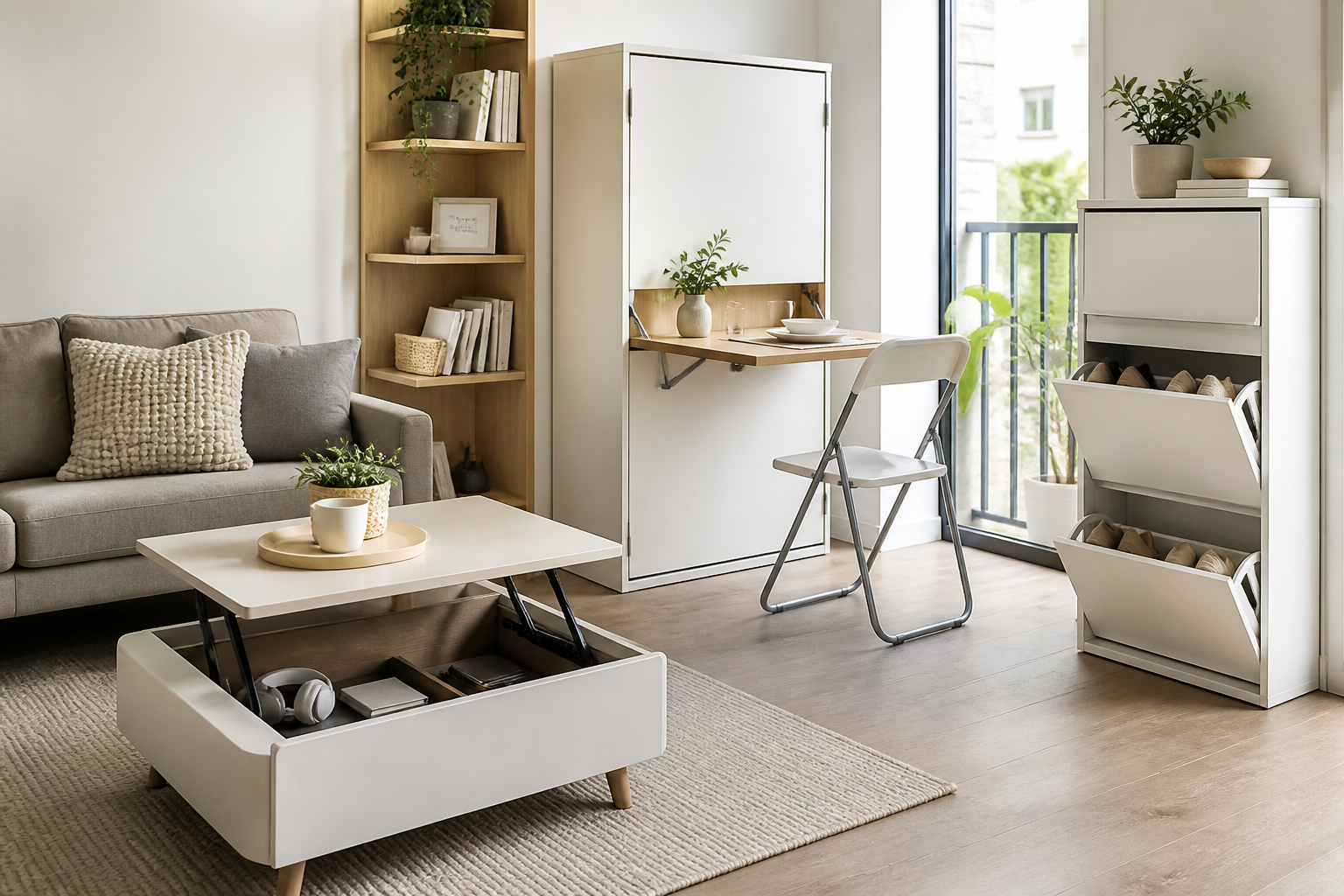
Foldable and stackable furniture gives apartments more flexibility. Folding dining chairs, collapsible tables, nesting stools, and stackable side chairs can be stored away when not in use, then brought out when guests arrive or when you need extra surface area.
This is a strong choice for renters or anyone with an unpredictable schedule and changing space needs. If you work from home, a foldable desk or drop-leaf table can function as a workstation during the day and a dining or hobby surface later. Stackable furniture is also useful in shared apartments, where the same room may need to serve multiple functions.
Look for products that balance compact design with stability. Folding furniture should feel secure when in use, and stackable pieces should still be comfortable enough for regular seating if that is how you plan to use them.
5. Over-the-Door Organizers
Doors offer valuable storage potential in apartments, especially in bathrooms, bedrooms, and closets. Over-the-door organizers can hold shoes, cleaning supplies, toiletries, pantry goods, accessories, or small household items that might otherwise clutter drawers and shelves.
These products are appealing because they are often easy to install and remove, making them practical for renters. They can help free up cabinet space and reduce countertop clutter. Some designs use pockets, while others use hooks, baskets, or hanging bins.
When choosing an over-the-door organizer, check the thickness of the door, the clearance around the frame, and the amount of weight it can support without shifting. A good organizer should close properly without causing the door to catch or bang.
6. Modular Closet Organizers
Closets in apartments are often smaller than people expect, so modular organizers can make a major difference. Shelf dividers, hanging organizers, drawer inserts, and adjustable rods can help transform a cramped closet into a more efficient storage system.
This category works well for clothing, shoes, bags, and accessories. It can also help people who share a closet or need separate zones for work clothing, casual wear, and seasonal items. Modular systems are especially useful because they can evolve as your storage needs change.
Before buying, evaluate your closet’s dimensions and decide what you need most: more hanging space, better shelf organization, or smaller compartments for folded items. A modular approach is usually more effective than buying one oversized organizer that does not match your layout.
7. Slim Rolling Carts
Slim rolling carts are one of the most versatile space-saving products for apartments. They can fit beside a refrigerator, between a toilet and a wall, next to a desk, or in other narrow gaps that are hard to use otherwise.
These carts are useful in kitchens, bathrooms, offices, craft corners, and laundry areas. Their mobility makes them convenient when you need to move supplies around, and their vertical design means they offer storage without using much floor space. Some people use them as mobile pantry storage, while others use them to organize beauty products, cleaning tools, or hobby materials.
When comparing models, focus on wheel quality, shelf depth, and overall stability. A slim cart should be narrow enough to fit the intended space but sturdy enough not to wobble when loaded.
8. Nesting Tables and Compact Side Tables
Nesting tables and compact side tables provide surface space without permanently taking up a large footprint. When you need room for a laptop, drinks, books, or lamps, these pieces can be moved into position easily. When you do not need them, nested designs can be tucked together to save space.
They are especially helpful in living rooms and bedrooms where every surface must earn its place. A small side table can substitute for a larger coffee table in tight layouts, and nesting sets can offer flexibility for entertaining or working from different spots in the apartment.
For best results, measure the area where the tables will sit and think about height. Tables that are too tall or too short can feel awkward beside sofas and beds, even if they save space.
9. Compact Kitchen Organization Tools
Kitchens in apartments often need extra help because cabinets and counters fill up fast. Space-saving kitchen products may include stackable food containers, pan organizers, hanging utensil holders, slim trash bins, magnetic spice racks, and adjustable shelf risers.
These products help separate frequently used items from rarely used ones and can reduce the need to hunt through crowded cabinets. They also make it easier to keep counters clear, which can make a small kitchen feel more open and manageable.
When buying kitchen organizers, prioritize items that are easy to clean and sized appropriately for your cupboards, refrigerator, or pantry. Avoid oversized containers that look efficient online but waste vertical space once you place them in your actual cabinet.
10. Multipurpose Storage Baskets and Bins
Storage baskets and bins are simple, but they remain one of the most effective apartment storage tools when chosen carefully. They can be used inside closets, on shelves, under sinks, beside sofas, or in entryways to collect items that would otherwise create clutter.
Multipurpose bins work well for laundry supplies, pet items, throws, toys, chargers, and household odds and ends. The best ones are easy to lift, sized to fit their storage location, and visually consistent if you plan to use several together.
Although baskets may seem basic, they often solve the problem of small loose items in a way that more rigid storage cannot. They are particularly useful for renters who want a quick, low-commitment organizing solution.
How to Choose the Right Space-Saving Products
Not every space-saving product is the right fit for every apartment. A useful item in one home may be a poor match in another because layouts, habits, and storage challenges are different. Choosing carefully can help you avoid buying things that end up creating new clutter.
Measure Before You Buy
Always measure the area where the product will go. This matters for shelves, carts, organizers, and furniture alike. Check width, depth, height, and any clearance needed for doors, drawers, or lids to open fully. Measurements should also account for outlets, vents, heating elements, and traffic paths.
Focus on the Problem You Actually Have
It is easy to be drawn to attractive organizers that look useful in theory. A better approach is to identify your real pain point. If shoes pile up near the entrance, buy an entry solution. If your kitchen counters are crowded, look for vertical kitchen storage. A product that addresses a specific issue is more likely to help long term.
Choose Flexibility When Possible
Apartment life can change quickly. You may move, switch rooms, or need to reconfigure a layout. Products that fold, stack, roll, or adjust tend to offer better long-term value because they can adapt to new spaces and routines.
Balance Storage With Access
Good storage should not hide items so well that they become difficult to use. If a container is too deep, a shelf is too high, or a drawer is too awkward to reach, you may stop using the system altogether. The best products make common items easy to access while still keeping them out of the way.
Think About Appearance and Visual Clutter
In a small apartment, the look of storage matters almost as much as the storage itself. Open shelves and visible bins can be helpful, but too many mismatched items may make a room feel busy. Choosing a limited color palette or consistent materials can make a compact space feel calmer and more intentional.
Common Buying Mistakes to Avoid
One common mistake is buying storage before decluttering. Adding more organizers to a home that already has too many unused items usually creates the same problem in a different form. It is often better to sort belongings first, then choose products based on what remains.
Another mistake is overestimating how much a product can hold. A slim cart, basket, or shelf may look larger in photos than it is in real life. Check dimensions carefully and compare them to the items you actually want to store.
People also sometimes choose products that are difficult to clean or maintain. In apartments, especially small ones, items that collect dust, trap moisture, or require complicated assembly may become frustrating over time. Simple, durable designs are often the most practical.
Finally, avoid buying too many separate organizers for the same category. A drawer insert, shelf bin, hanging pouch, and basket may all seem useful individually, but using all of them at once can waste space and make storage harder to manage.
Practical Tips for Making a Small Apartment Feel Bigger
Space-saving products work best when paired with a few simple habits. First, keep the floor as clear as possible. Even a well-organized room can feel tight if the floor is covered with extra items.
Second, use vertical storage whenever reasonable. Walls, doors, and the space above furniture are often underused in apartments. Third, choose furniture with legs or slimmer profiles when possible, since visual openness can help a room feel less crowded.
Fourth, group small items into containers instead of leaving them scattered. A collection of loose items can make even a tidy apartment seem more chaotic than it really is. Finally, review your storage every few months. As seasons and routines change, your apartment may need different solutions.
Frequently Asked Questions
What are the best space-saving products for a studio apartment?
Studio apartments usually benefit most from multipurpose furniture, wall-mounted shelves, under-bed storage, slim rolling carts, and foldable tables or chairs. The best choice depends on whether you need more seating, more storage, or more defined zones for sleeping and living.
Are space-saving products worth it in rentals?
They often are, especially if they are easy to move, install, or remove. Renters generally benefit from products that improve storage without requiring major changes to the apartment. Over-the-door organizers, rolling carts, and modular bins are especially renter-friendly.
How do I know if a storage product will fit my apartment?
Measure the available area first and compare it with the product dimensions. Do not forget to account for opening doors, drawer clearance, and walking space. It is also useful to measure the items you plan to store, not just the empty space itself.
What should I buy first if my apartment feels cluttered?
Start with the area that causes the most daily frustration. For many people, that is the entryway, closet, kitchen, or bathroom. Choose one simple solution that solves the biggest problem before buying multiple organizers at once.
Can space-saving products make a small apartment look less crowded?
Yes, when chosen well. Products that reduce visible clutter, use vertical space, or combine multiple functions can make rooms feel more open and organized. However, buying too many small organizers can have the opposite effect, so it helps to keep solutions simple.
Conclusion
The best space-saving products for apartments are the ones that fit your space, support your routine, and help you use every area more efficiently. Storage ottomans, wall shelves, under-bed containers, foldable furniture, over-the-door organizers, slim carts, and modular closet systems all solve different problems, but they share a common purpose: making small homes easier to live in.
Before buying, measure carefully, focus on your real storage challenges, and choose items that balance compact design with everyday usefulness. A few well-chosen products can do more for an apartment than a room full of mismatched organizers. With the right approach, even a small space can feel more open, practical, and comfortable.