Introduction
Travel can be exciting, but even a well-planned trip can become stressful if your essentials are hard to find, your luggage is disorganized, or your comfort is repeatedly interrupted by small inconveniences. The best travel accessories are not necessarily the most expensive or the most trendy. They are the items that help you move through airports, hotels, train stations, and road trips with less friction and more confidence.
If you are building a travel kit from scratch or refining what you already carry, it helps to think in terms of comfort, organization, convenience, and adaptability. Some accessories make long journeys feel more manageable. Others help keep documents, chargers, toiletries, and clothing sorted so you spend less time searching and more time enjoying the trip. A good travel setup also depends on the type of trip you take, how you pack, and how much you prefer to keep with you during transit.
This guide breaks down the most useful travel accessories, what features matter most, who each category suits, and common mistakes to avoid when buying. The goal is not to recommend a single perfect setup for every traveler, but to help you choose practical items that fit your travel style.
Why Travel Accessories Matter
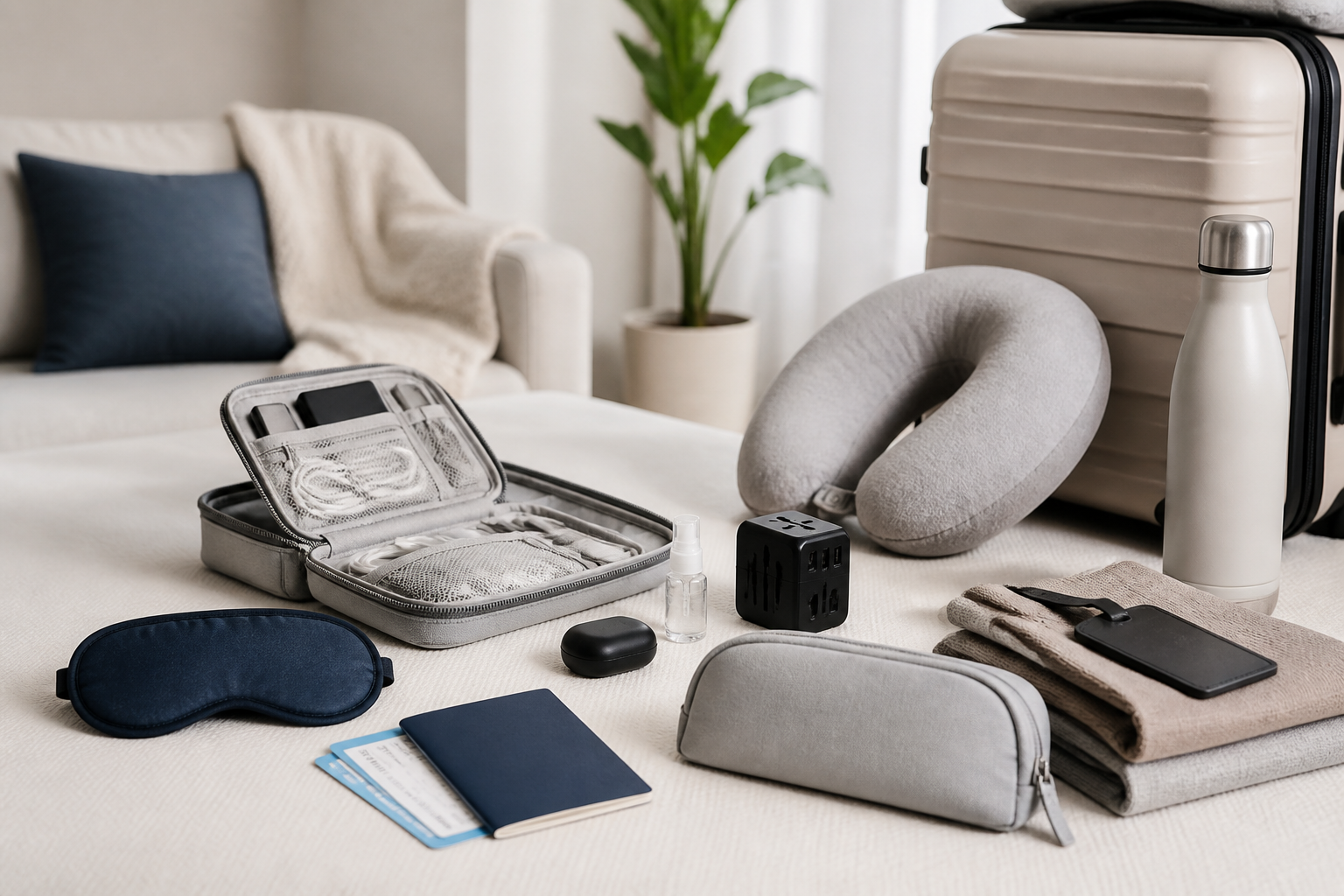
Travel accessories are often seen as optional extras, but the right ones can have a meaningful effect on how smoothly a trip goes. A compact organizer can prevent cable tangles. A passport holder can keep documents easy to reach. A neck pillow or compression socks may improve comfort on long journeys. Packing cubes can make it easier to separate clean clothes from worn items. Even a simple reusable water bottle can reduce the need to keep buying drinks on the move.
The best accessories save time, reduce stress, and make your essentials more accessible. They also help you travel in a more intentional way, because everything in your bag has a purpose. That matters whether you are traveling for business, taking a family vacation, or planning a backpacking trip with multiple stops.
Must-Have Travel Accessories for Comfort and Organization
Packing Cubes
Packing cubes are among the most practical travel accessories for organization. They let you separate clothing by category, outfit, or traveler, which makes packing and unpacking much simpler. Many people use one cube for tops, one for bottoms, one for underwear and socks, and another for items that should stay separate, such as activewear or formal clothing.
When buying packing cubes, look for durable zippers, lightweight fabric, and a range of sizes. Mesh panels can help you identify contents without opening every cube. Compression-style cubes may save more space, but they are not always necessary for every traveler. If you prefer easy access and flexibility, standard cubes may be the better option.
Packing cubes are especially useful for people who move between several hotels or who like to unpack into drawers when they arrive. They also suit families, since they help keep each person’s items distinct.
Travel Toiletry Bag
A well-designed toiletry bag can prevent leaks, clutter, and last-minute digging through a suitcase. The best options usually include internal pockets, a water-resistant lining, and a shape that opens wide enough to let you see what is inside. Hanging toiletry bags can be particularly useful in small hotel bathrooms or shared spaces where counter space is limited.
Consider the size of your typical toiletries before choosing one. A bag that is too small can become overstuffed, while one that is too large may waste space. If you carry liquids, choose a design that helps keep them upright. If you travel often with only a carry-on, make sure the bag is easy to pack within airline restrictions and security routines.
Passport Holder or Travel Wallet
A passport holder or travel wallet is useful for keeping essential documents in one place. It can hold your passport, boarding passes, ID, travel cards, insurance information, and sometimes cash or coins. This reduces the chance of misplacing items at checkpoints, ticket counters, or hotel check-in desks.
When comparing options, focus on layout and accessibility. Too many compartments can make the wallet bulky, while too few can make it hard to stay organized. A slim design that fits easily into a bag or jacket pocket is often a smart choice. If you travel internationally, choose a model that keeps documents secure without making them difficult to retrieve when needed.
Electronics Organizer
Chargers, cables, earbuds, power banks, and adapters can quickly turn into a tangled mess. An electronics organizer creates one dedicated place for these items, which helps protect them and makes packing easier. This is one of the most underrated accessories for organized travel because it reduces daily frustration.
Look for elastic loops, zippered compartments, and enough room for the devices you actually carry. If you travel with a laptop, tablet, camera gear, or multiple charging cables, make sure the organizer can handle the amount of equipment you bring. For minimalist travelers, a compact pouch may be enough.
This category is particularly useful for business travelers, digital nomads, students, and anyone who relies on multiple electronic devices during a trip.
Travel Pillow
A travel pillow can improve comfort during flights, train rides, bus journeys, and long car trips. The best choice depends on how you sleep while traveling and how much space you want to devote to comfort items. Some travelers prefer memory foam support, while others want a softer or more adjustable design.
Pay attention to shape, support, and portability. A pillow that is comfortable at home may not be practical for transit if it is too large or awkward to attach to a bag. Some designs offer better neck support, while others can be folded or compressed when not in use. If possible, choose one that balances comfort with easy storage.
Reusable Water Bottle
A reusable water bottle is a simple but highly useful travel accessory. It helps you stay hydrated during long travel days and can reduce the need to search for drinks in airports or unfamiliar places. Many travelers also appreciate the convenience of filling up before boarding or after security when permitted.
Look for a bottle that is easy to carry, fits in side pockets or cup holders, and is made from materials you are comfortable using on the road. Leak resistance matters, especially if the bottle will be stored in a backpack or carry-on with electronics or documents. If you travel frequently, a design with a secure lid and a practical opening size may be more important than brand name or appearance.
Day Bag or Packable Tote
A day bag or packable tote is useful once you reach your destination. It gives you a place for essentials such as a wallet, water bottle, phone, snacks, sunscreen, or a light jacket. A compact foldable design can be especially helpful if you want an extra bag without committing to a larger daypack.
Think about how you will use it. City travelers may prefer a secure crossbody or lightweight backpack. Beach travelers may want something sand-friendly and easy to rinse. Shoppers may benefit from a tote that folds small in the main luggage but expands when needed. The key is to choose something that complements your trip rather than adding unnecessary bulk.
Comfort Accessories Worth Considering
Eye Mask and Earplugs
If you are sensitive to light or noise, an eye mask and earplugs can make a noticeable difference on planes, trains, in shared hotel rooms, or when adjusting to a new time zone. These are small items, but they can help you rest more effectively during transit or in unfamiliar sleeping environments.
When buying an eye mask, consider softness, fit, and whether it blocks light without pressing uncomfortably on your face. For earplugs, comfort and a secure fit matter more than one-size-fits-all claims. Some travelers prefer disposable options, while others like reusable versions with a carrying case.
Compression Socks
Compression socks are commonly used by travelers on long flights or extended periods of sitting. They are designed to feel snug around the lower leg and may help reduce discomfort from inactivity during travel. If you plan to use them, choose a pair that fits properly and feels comfortable for several hours at a time.
Because fit matters, it is worth checking sizing information carefully. Materials should be breathable and suitable for the climate and journey length. Travelers with specific medical concerns should speak with a qualified health professional about whether compression socks are appropriate for them.
Lightweight Blanket or Scarf
A lightweight blanket or large travel scarf can be useful when temperatures fluctuate during flights, bus rides, or train travel. It can also double as an extra layer once you arrive. This kind of item is particularly helpful if you are sensitive to cold air conditioning or expect long stretches of transit.
If you choose a scarf-style accessory, look for something that folds compactly and feels comfortable against the skin. The best option is one you are likely to carry without hesitation.
Organization Accessories That Make Packing Easier
Laundry Bag
A separate laundry bag helps keep worn clothing apart from clean items. This is one of the simplest ways to keep a suitcase orderly during a trip. It is especially useful for longer vacations, active trips, or family travel where clothing changes frequently.
Mesh, fabric, or waterproof styles can all work well depending on your preferences. A lightweight bag that folds flat is usually easy to carry and store. If you like to stay organized while traveling, consider using one bag for dirty clothes and another for shoes or wet swimwear.
Shoe Bags
Shoes can transfer dirt and odors to clothes if they are packed loosely. Shoe bags create a barrier and help preserve order inside your luggage. They are particularly helpful if you bring more than one pair or if you travel with shoes that should not contact other items directly.
Look for bags that are the right size for your footwear and made from material that is easy to clean. If you are trying to maximize space, choose flexible designs that do not add unnecessary bulk.
Cable Ties and Small Pouches
Small accessories often make the biggest difference in keeping your bag tidy. Cable ties, reusable straps, and mini pouches can prevent cords, adapters, lip balm, headphones, and other small essentials from disappearing into the bottom of your bag.
These items are especially useful if you pack from the same suitcase for multiple trip types. Rather than mixing everything together, separate categories so you can find what you need quickly. Travelers who value a minimal, neat setup often appreciate having several small containers instead of one large catch-all pocket.
How to Choose the Right Travel Accessories
Match Accessories to Your Travel Style
The best travel accessories depend on how you travel. Business travelers often prioritize document organization, electronics storage, and wrinkle management. Families may need packing cubes, extra pouches, and easy-to-clean items. Backpackers may want lightweight, multipurpose accessories that take up very little space. Leisure travelers often benefit from comfort items such as pillows, eye masks, and compact day bags.
Before buying anything, consider how often you travel, how long your typical trips are, and whether you usually carry on or check luggage. This helps you avoid buying items that look useful but do not fit your routine.
Prioritize Weight and Packability
Travel accessories should solve problems without creating new ones. If an item is bulky, heavy, or awkward to pack, you may be less likely to bring it. Lightweight and packable designs are often the most practical because they fit easily into limited luggage space and can be used on more than one type of trip.
This is especially important if you travel with carry-on luggage only. In that case, every item should justify the space it occupies.
Think About Durability and Ease of Cleaning
Travel accessories experience a lot of handling. Zippers are opened repeatedly, pouches are packed tightly, and bags are placed on different surfaces. Durable materials and good stitching often matter more than decorative features. If an accessory will hold toiletries, shoes, or frequently used items, it should also be easy to clean or wipe down.
Choosing well-made items can save money over time because you are less likely to replace them after a few trips. That said, the most durable item is not always the most practical if it is too rigid or heavy for your needs.
Consider Security and Accessibility
Some travel accessories are meant to protect valuables or important documents. In those cases, security and ease of access should be balanced carefully. A bag with too many hidden compartments may slow you down. A wallet that opens too widely may be less convenient in crowded places. Choose designs that help you stay organized while still allowing quick access to the items you need most often.
Common Buying Mistakes to Avoid
- Buying too many accessories at once. Start with the essentials and add items only if you know they solve a real problem.
- Choosing style over function. A sleek item is not useful if it is hard to pack, clean, or access.
- Ignoring size and compatibility. A travel pouch or organizer should fit the devices, toiletries, or documents you actually carry.
- Overpacking comfort items. Comfort matters, but too many extra items can make luggage heavier and harder to manage.
- Forgetting about trip type. A business trip, beach holiday, and backpacking route each call for different accessories.
- Assuming one product solves everything. A good travel system is usually a combination of several practical items rather than a single all-purpose item.
Practical Tips for a More Comfortable and Organized Trip
Pack the same core items in the same place every trip so you can check your bag quickly before leaving. Keep travel documents together in one easy-to-reach section. Use one pouch for electronics and another for toiletries to reduce confusion. If you are traveling with family, assign a color or label to each person’s cubes or bags. That small step can make unpacking much easier.
It also helps to build a short pre-departure checklist for your most-used accessories. Include items such as charger, passport, wallet, medications if applicable, reusable bottle, and any comfort item you rely on. A consistent routine can save time and reduce the chance of forgetting something important.
Finally, remember that your travel setup should be adjustable. A weekend trip may require only a few compact items, while a long international journey may justify more organization tools. There is no single ideal setup, only the one that matches your needs well.
Frequently Asked Questions
What are the most useful travel accessories for most people?
For many travelers, the most useful items are packing cubes, a toiletry bag, a passport holder or travel wallet, an electronics organizer, and a reusable water bottle. Comfort items such as an eye mask, earplugs, and a travel pillow can also be helpful on longer journeys.
Are packing cubes really worth it?
They can be, especially if you like your luggage to stay organized. Packing cubes make it easier to separate clothing, unpack quickly, and keep items from shifting around during transit. They are particularly useful for longer trips and shared luggage.
What should I carry in my travel wallet?
A travel wallet usually holds the essentials you need to access quickly, such as a passport, ID, boarding passes, travel cards, and some cash. Some travelers also keep insurance details or printed reservations inside it.
How do I choose a travel pillow?
Choose based on support, size, and how you sleep. A pillow that feels comfortable in a store may not be practical if it is too bulky for your bag. Look for a design that offers the right balance of comfort and portability for your trips.
What is the best way to stay organized while traveling?
Use dedicated pouches or organizers for different categories: documents, electronics, toiletries, and clothing. Keep frequently used items easy to reach and make a simple packing checklist so you can repack consistently between trips.
Conclusion
The best travel accessories for a comfortable and organized trip are the ones that solve real problems in a simple, practical way. Packing cubes can keep clothing tidy. A good toiletry bag can prevent mess. A travel wallet can keep documents secure and accessible. Electronics organizers, day bags, reusable bottles, and comfort items can all make travel easier when chosen with care.
Rather than buying every accessory available, focus on the items that fit your routine, luggage size, and travel style. Look for packable, durable, easy-to-use designs that make your journey smoother without adding clutter. With the right setup, traveling becomes less about managing chaos and more about enjoying the experience.