Introduction
Packing for a trip is easier when every item has a place. The best travel organizers for clothes, electronics and documents help reduce clutter, make security checks smoother, and save time when you arrive at your destination. Instead of digging through a suitcase for a charger, a passport, or a clean shirt, you can separate essentials into categories and access them quickly.
This guide focuses on practical organizer options for three common travel needs: clothing, electronics, and important documents. Whether you travel often for work, plan family holidays, or prefer to pack light, the right organizers can make your luggage more efficient and your travel routine more predictable.
Because there is no single organizer that fits every traveler, the best choice depends on the length of your trip, the type of luggage you use, and how much structure you want in your bag. Below, you will find the main organizer styles, the features worth comparing, common mistakes to avoid, and useful tips for choosing a setup that works in real life.
Why travel organizers matter
Travel organizers do more than make a bag look neat. They help you group items by purpose, reduce the chance of forgetting small essentials, and keep delicate items from shifting around during transit. When selected carefully, they can also help you pack more efficiently without overstuffing your suitcase.
For many travelers, the biggest benefit is speed. Separate compartments mean you can locate a document, a cable, or a change of clothes without unpacking everything. This is especially useful when you are moving between airports, hotels, trains, or multiple destinations on one trip.
Another advantage is protection. Clothes stay cleaner when they are separated from shoes or toiletries. Electronics are easier to manage when cords, power banks, and adapters are stored in dedicated pouches. Documents are less likely to bend, spill on, or disappear if they have a specific place in your carry-on.
Best travel organizers for clothes
Clothing organizers are designed to keep apparel compact, separated, and easy to find. They are especially helpful for longer trips, shared luggage, and travelers who like to keep clean and worn items apart.
Packing cubes
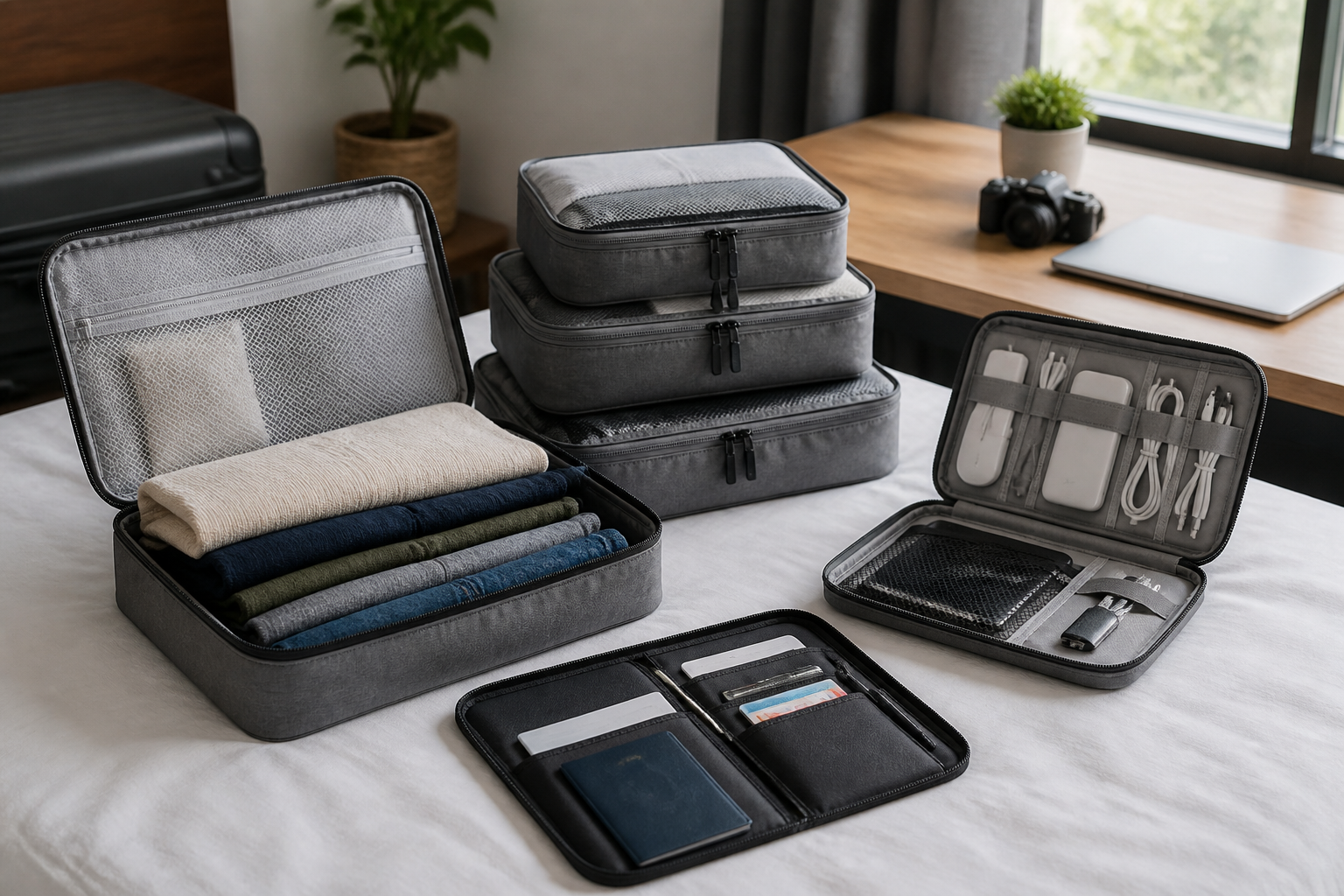
Packing cubes are among the most versatile clothing organizers. They come in different sizes and are used to separate shirts, pants, underwear, sleepwear, or outfits by day. Many travelers like them because they turn a messy suitcase into organized sections.
When comparing packing cubes, look at shape, zipper quality, and material thickness. Lightweight mesh panels can make it easier to identify contents, while more structured cubes may help clothing hold its shape. Some sets include compression zippers that reduce bulk, though they work best when you avoid overfilling the cube.
Packing cubes may suit travelers who pack for several days, families sharing one suitcase, or anyone who likes to keep items sorted by category. They are also useful for return trips, when clean and worn clothes need to stay separate.
Garment folders and clothing folders
Garment folders are designed to keep shirts, trousers, and formalwear flatter than standard packing cubes. They often include folding boards or structured panels that help limit wrinkles during transit. While they do not eliminate creasing entirely, they can help keep clothing more orderly.
These organizers may be a smart choice for business travelers, event attendees, or anyone packing dress shirts and presentation outfits. They work best when paired with careful folding and when the suitcase has enough room to avoid crushing the folder.
Shoe bags and laundry bags
Although not clothing organizers in the strictest sense, shoe bags and laundry bags support better clothing organization. Shoe bags help keep dirt away from clean garments, and laundry bags give worn clothes a separate place so they do not mix with fresh items.
For many travelers, these simple accessories are worth including because they solve common packing problems. A washable laundry bag is especially helpful on longer trips or family vacations, where worn clothing can build up quickly.
Best travel organizers for electronics
Electronics often involve small, easy-to-lose parts. Chargers, cords, earbuds, adapters, memory cards, and power banks can tangle or disappear in a hurry if they are not stored properly. A good electronics organizer keeps everything visible and prevents cable knots before they start.
Tech pouches
Tech pouches are compact organizers with multiple pockets, elastic loops, and zippered sections for small devices and accessories. They are one of the most practical solutions for travelers who carry several cables or adapters.
Key features to compare include pocket layout, internal padding, and how the pouch opens. A pouch that opens wide can make it easier to reach items quickly. A structured interior can help protect delicate accessories from being crushed in a backpack or carry-on.
Tech pouches may suit business travelers, digital nomads, students, and anyone who uses multiple charging accessories. They are also useful for day trips when you only want to carry a few essential items.
Cable organizers
Cable organizers come in different forms, from simple cord wraps to zip cases with dedicated loops. Their main purpose is to keep charging cables from tangling and to make them easier to identify. Some travelers use them to separate cables by device, such as phone, laptop, camera, or tablet.
When choosing a cable organizer, consider whether you prefer a minimalist wrap or a case with compartments. Wraps are compact and light, while cases offer more structure and protection. If you travel with several cables, a compartmented case may be the more practical option.
Device sleeves and padded pouches
For tablets, e-readers, cameras, and small laptops, padded sleeves and pouches can add a useful layer of organization. They help prevent scratches and make it easier to store devices separately from heavier items.
These organizers are especially helpful if your luggage has one large main compartment rather than multiple pockets. They also suit travelers who want to move their electronics between a suitcase, hotel desk, and personal bag without repacking everything each time.
Best travel organizers for documents
Travel documents are often the items people need fastest, which makes organization especially important. Passports, boarding passes, reservation confirmations, IDs, visas, insurance papers, and printed itineraries should be stored where they are easy to access but still protected.
Travel document wallets
A travel document wallet is a compact organizer designed to hold passports, cards, tickets, and travel paperwork. Many include slots for multiple items, which can be helpful for families or travelers handling several forms of identification.
When choosing one, think about capacity, closure style, and ease of access. A secure zipper or snap can help keep items from slipping out, while a slim design is useful if you plan to carry it in a personal item. If you often move through airports or border checkpoints, a layout that allows fast retrieval is particularly helpful.
Passport holders
Passport holders are a more focused option for travelers who want to protect one or two passports and a few cards. They may be made from leather, fabric, or synthetic materials, and some include RFID-blocking features. Since RFID-blocking claims vary by product, it is wise to treat this as one possible feature rather than the main reason to buy.
Passport holders may suit frequent flyers, solo travelers, and anyone who likes a slim organizer for essential documents. Families may prefer a larger travel wallet that can hold passports for several people together.
Document envelopes and flat folders
Document envelopes and flat folders work well for printed confirmations, visas, destination paperwork, and hotel reservations. They are especially useful for travelers who like paper backups even when most details are stored digitally.
A folder with clear sections can help separate pre-trip documents from in-trip receipts or post-trip records. This can be useful for work travel, expense tracking, or trips that involve multiple bookings.
How to choose the right travel organizer
The best travel organizers for clothes, electronics and documents are the ones that match how you actually pack. A compact organizer with many compartments may be ideal for one person but unnecessary for another. Before buying, consider these practical factors.
Trip length and travel style
Short trips usually call for fewer organizers. A small packing cube, a tech pouch, and a document wallet may be enough for a weekend away. Longer trips often require more separation, especially if you need clean clothes, workout clothing, or different electronics.
Your travel style also matters. If you pack once and stay in one place, structured organizers can work well. If you move between several hotels or cities, lightweight organizers that are easy to repack may be more convenient.
Luggage type
Not every organizer works equally well in every bag. A large suitcase may handle packing cubes and garment folders easily, while a backpack may benefit from slimmer pouches and flatter document holders. If your carry-on is compact, bulky organizers may waste valuable space.
Check the shape of your luggage before buying. Rectangular organizers often fit suitcases better, while softer pouches can be easier to compress into irregular spaces.
Material and durability
Durability matters because organizers are opened, zipped, folded, and moved constantly. Look for stitching that appears even, zippers that glide smoothly, and materials that seem appropriate for the type of use you expect. Water-resistant fabrics can be helpful, especially for toiletries-adjacent packing or travel in changing weather.
For clothing organizers, breathable mesh panels can improve visibility and reduce the feeling of bulk. For electronics, padding and structured sides may matter more. For documents, a smoother inner lining can help prevent wear on paper items.
Ease of access
Some organizers are excellent for storage but awkward in real use. If you frequently need access during a flight, at a checkpoint, or in a taxi, choose organizers with straightforward openings and sensible layouts. Wide zippers, clear sections, and easy-to-see labels can save time.
Think about how often you will open each organizer. Clothes may stay packed for days, but documents and charging accessories may be used several times a day. That difference should influence the style you choose.
Weight and portability
Organizers should help you stay organized without adding unnecessary bulk. Lightweight designs are better for carry-on travelers and people who want to keep packing simple. At the same time, very thin materials may be less protective, so it is worth balancing portability with structure.
Common buying mistakes to avoid
One common mistake is buying a set with too many pieces. Large organizer sets can seem useful, but they may include sizes you never use. It is often better to choose a few pieces that fit your actual packing routine.
Another mistake is ignoring dimensions. A tech pouch or document wallet that looks ideal online may be too large for your personal item or too small for your passport plus boarding paperwork. Checking measurements before buying helps prevent disappointment.
Travelers also sometimes focus too much on appearance. While style matters, practical details such as zipper reliability, compartment count, and how the organizer opens are usually more important for daily use.
Finally, some buyers mix too many categories into one organizer. A pouch filled with chargers, receipts, passports, keys, and loose coins can become just as messy as having no organizer at all. Separate categories usually work better and make travel less stressful.
Practical packing tips
Good organizers work best when paired with good packing habits. These simple approaches can make your luggage easier to manage.
- Group items by purpose: Keep clothing, electronics, and documents in separate organizers so you do not have to search through one large pouch.
- Use the same system every trip: Repeating the same layout helps you remember where items are stored.
- Keep essentials accessible: Place documents and key electronics in the easiest-to-reach part of your carry-on.
- Separate clean and worn clothes: Use a laundry bag or a designated cube for items you have already worn.
- Label when helpful: Small labels or color coding can help if multiple people share luggage.
- Leave some room: Overpacked organizers are harder to zip and less effective at keeping items neat.
Who may benefit most from travel organizers
Frequent business travelers may appreciate document wallets, slim tech pouches, and garment folders that keep essentials easy to access. Families often benefit from packing cubes and larger document organizers because multiple people need separate items stored in one bag or several bags.
Backpack travelers may prefer soft, compact organizers that adapt to limited space. Vacation travelers may find that a few well-chosen organizers reduce the stress of unpacking and repacking at each stop.
If you travel only occasionally, you may not need a large system. A small collection of practical organizers can still improve packing without adding much cost or complexity.
Frequently asked questions
Are packing cubes worth it?
For many travelers, yes. Packing cubes help sort clothing, simplify repacking, and make it easier to keep clean and worn items apart. They are especially useful if you travel for more than a couple of days or share luggage with someone else.
Should electronics and documents be stored together?
It is usually better to keep them separate. Documents need quick access and may be used at checkpoints, while electronics benefit from pockets and padding. Separate organizers reduce clutter and help you find items faster.
What size travel document wallet is best?
The best size depends on how many items you carry. Solo travelers may prefer a slim wallet for a passport, ID, and a few cards. Families or business travelers may want a larger folder that can hold multiple passports, tickets, and printed papers.
Do I need compression packing cubes?
Not always. Compression cubes can save space, but they are most useful if you pack light to moderate layers. If you overpack them, they may be harder to zip and less effective. Standard cubes are often sufficient for many trips.
What is the best organizer for a carry-on only trip?
For carry-on travel, a compact set usually works best: one or two packing cubes for clothing, a small tech pouch for electronics, and a slim document holder for travel papers. This keeps the bag organized without taking up too much space.
Conclusion
The best travel organizers for clothes, electronics and documents are the ones that make your packing system clearer, faster, and easier to maintain. Packing cubes and garment folders help with clothing, tech pouches and cable organizers reduce electronics clutter, and document wallets or passport holders keep essential papers within reach.
Instead of buying the largest or most feature-packed option, focus on what fits your luggage, your trip length, and the way you travel. A simple, well-matched organizer setup can make a noticeable difference in how smoothly your trip begins and how easily you stay organized along the way.
By choosing practical organizers and using them consistently, you can spend less time searching through your bag and more time focusing on the journey itself.