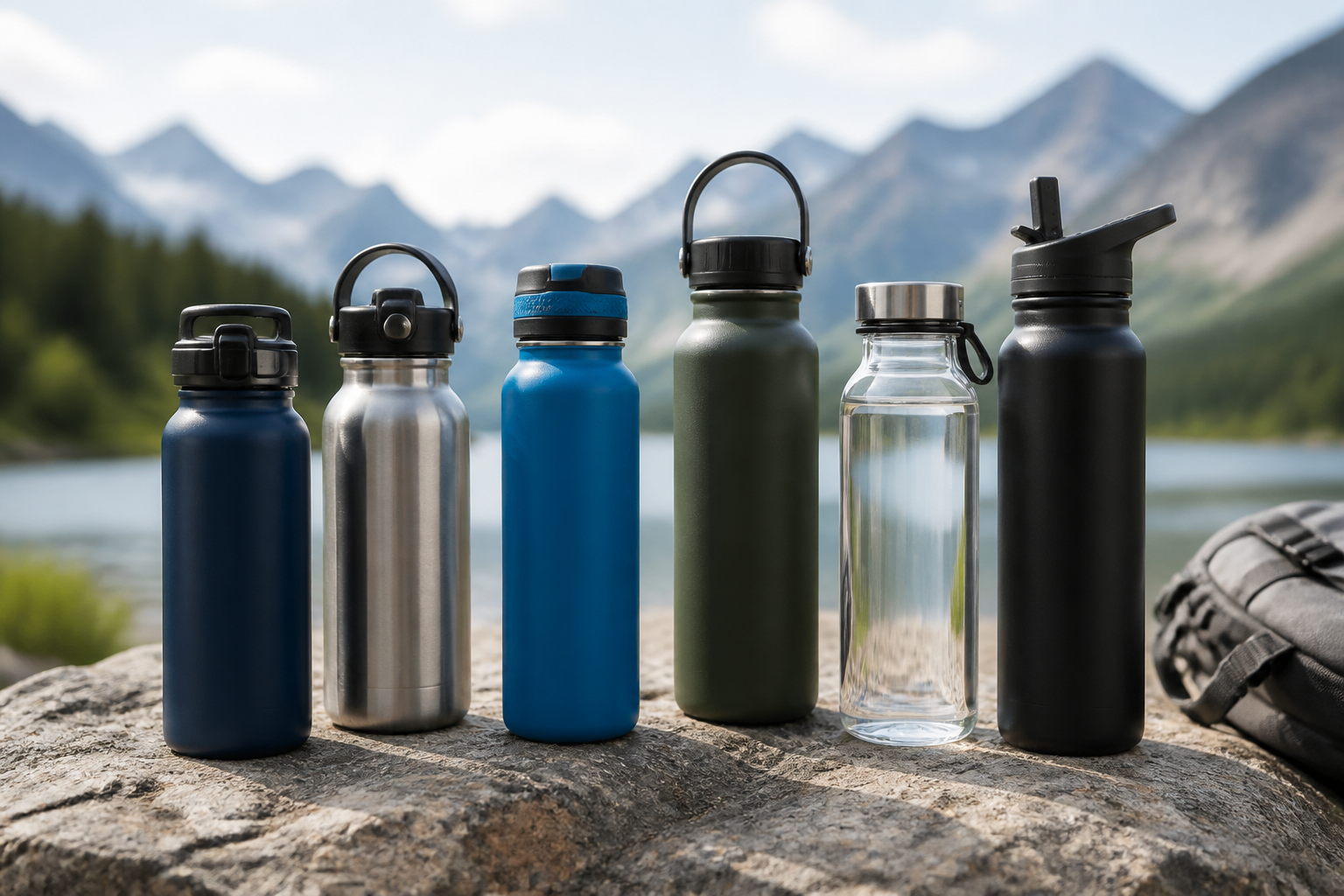
Choosing the best water bottles for workouts and outdoor activities can make hydration easier, more convenient, and more consistent. The right bottle is not just a container for water. It can affect how often you drink, how easy it is to carry, how well your drink stays cold or warm, and how well the bottle fits your routine.
Because workout and outdoor needs vary, there is no single water bottle that suits everyone. A gym bottle may need fast one-handed sipping and a secure lid. A hiking bottle may need durability and a light carry weight. A bottle for cycling or running may need to fit in a pack, cage, or belt. If you choose based on the activity first, it becomes much easier to narrow down the options.
This guide explains the main bottle types, the features that matter most, and the common mistakes buyers make. It is designed to help you choose a bottle that fits real use, whether you are lifting weights, training outdoors, walking trails, commuting, or spending long days away from home.
What makes a good water bottle for workouts and outdoor activities?
A good bottle should support easy hydration without getting in the way. That means it should be simple to carry, easy to clean, and comfortable to use while you are moving. For workouts, speed and convenience matter. For outdoor activities, durability and capacity often matter more.
The best choice usually depends on a balance of five factors: material, lid style, size, portability, and insulation. Some people also need leak resistance, measurement markings, wide mouths for ice, or compatibility with bags and cup holders. Before looking at specific bottle styles, it helps to think about how and where you will use it.
Match the bottle to the activity
Different activities place different demands on a bottle. A general-purpose bottle may work fine for casual use, but a more specialized design can be better for demanding routines.
- Gym and strength training: Quick access, easy grip, and a leak-resistant lid are often the most useful features.
- Running and walking: Lightweight construction and easy one-handed drinking matter most.
- Hiking and camping: Durability, capacity, and compatibility with packs or filters may be important.
- Cycling: A bottle that fits a cage securely is often the priority.
- Travel and commuting: A bottle that seals well in bags and fits in cup holders can be especially helpful.
Main types of water bottles to consider
Water bottles come in several common styles, and each has strengths. Understanding the differences helps you avoid buying a bottle that looks good but does not suit your habits.
Stainless steel bottles
Stainless steel bottles are often chosen for durability and temperature retention. Many insulated versions help keep drinks cold for longer periods and can also help maintain warmth for hot beverages. They are a strong option for outdoor use, commuting, and long training sessions where drink temperature matters.
These bottles can be heavier than plastic options, but they are usually more robust. They are a good fit for people who want a long-lasting bottle and do not mind carrying a little extra weight. If you are going on a hike or spending time outdoors in warm weather, insulation may be especially useful.
Plastic bottles
Plastic bottles are often lighter and more affordable than steel ones. They can be a practical choice for gym bags, runs, and everyday carry. Many are available with squeeze tops, flip lids, or wide mouths, which can be useful during exercise.
When considering plastic, look closely at the overall build quality, the lid seal, and whether the bottle is designed for repeated use. Some users prefer plastic because it keeps weight low, but it may not offer the same level of insulation as stainless steel. For outdoor activities where you need to keep gear light, a well-designed plastic bottle can still be a very practical choice.
Glass bottles
Glass bottles appeal to people who want a clean taste and a simple drinking experience. They are easy to rinse and do not usually hold odors the way some other materials can. However, they are generally less suitable for rough outdoor use because they can break if dropped.
For workouts, glass is usually best only in controlled environments such as a home gym or office workout area. For hiking, cycling, or travel, a more durable material is usually the safer and more convenient choice.
Collapsible bottles
Collapsible bottles are designed to pack down when empty, which makes them useful for travel, minimalist outdoor kits, and backup hydration. They can save space in a backpack or suitcase.
They are not always the best option for every user, because some people prefer the more rigid feel of a standard bottle. Still, if portability and compact storage are your top priorities, collapsible designs are worth considering.
Important features to look for
Once you know the type of bottle you want, the next step is comparing features. Small differences in design can greatly affect day-to-day use.
Capacity
Capacity affects how often you need to refill. A smaller bottle can be lighter and easier to carry, while a larger bottle can be more convenient for longer workouts or extended outdoor trips.
- Small to medium sizes: Often useful for gym sessions, short walks, and everyday carry.
- Medium to large sizes: Often better for hikes, long training sessions, and days spent outdoors.
Think about how long you are usually away from a water source. If refilling is easy, a smaller bottle may be fine. If you spend long periods outdoors, a larger bottle may be more practical.
Lid style and drinking method
The lid has a major impact on convenience. It can determine how quickly you drink, whether the bottle leaks, and whether you can use it with one hand.
- Flip-top lids: Convenient for quick sips during exercise.
- Screw-top lids: Simple and secure, often used on wide-mouth bottles.
- Spout lids: Useful for quick drinking without fully removing a cap.
- Squeeze tops: Common in sports-style bottles and helpful for rapid hydration.
If you plan to drink while moving, a one-handed lid can be especially helpful. If leak prevention is your top concern, a secure sealing lid may be more important than speed.
Insulation
Insulated bottles are often preferred for outdoor activities and longer workout sessions. They can help keep water colder in hot conditions and may improve comfort when you are active for extended periods. For many people, the main benefit is simple: cold water is easier to enjoy after a sweaty session or during a warm day outdoors.
That said, insulation adds weight and bulk. If you want the lightest possible bottle for running or fast-paced training, a non-insulated bottle may be a better fit.
Ease of cleaning
A bottle that is difficult to clean is less likely to be used regularly. Wide-mouth openings can make washing easier and can also simplify adding ice. Bottles with many small parts may offer convenience, but they can also take more effort to maintain.
For frequent use, it is wise to choose a bottle you can clean without frustration. If you plan to use it for sports drinks, flavored water, or protein shakes, easy cleaning becomes even more important.
Grip and carry comfort
Comfort matters more than many buyers expect. A smooth bottle that is hard to hold when wet may be annoying at the gym or on a trail. Look for textured surfaces, ergonomic shapes, handles, loops, or bottle sleeves if grip is important to you.
Carrying comfort also includes weight. A large insulated bottle may be convenient, but if it feels too heavy in your pack or hand, you may end up leaving it behind.
Leak resistance
Leak resistance is especially important for anyone who carries a bottle in a gym bag, backpack, or car. Even a minor spill can damage gear or create a mess. No bottle is useful if you cannot trust the lid.
When comparing options, look for lids designed to seal securely and for bottles intended to handle movement. If you plan to use the bottle while traveling or commuting, leak resistance should be near the top of your checklist.
Best bottle features for specific users
Different users often need different feature combinations. Thinking in terms of use case can make the decision easier.
For gym users
Gym users often benefit from a bottle that is easy to open quickly, does not leak in a bag, and is simple to refill between sets. A moderate capacity is often enough unless you train for long periods. Many gym users prefer a bottle with a comfortable grip and a lid that allows quick drinking without slowing down the workout.
For runners and walkers
Light weight usually matters most here. A bottle that is too bulky can become annoying to carry. If you run outdoors, a secure seal and easy access matter as well. Some people prefer a bottle that fits into a belt, vest, or hand carrier.
For hikers and campers
Hikers and campers often need a bottle that is rugged and easy to use in changing conditions. A larger capacity may be useful on longer trails, and insulation can be helpful in hot or cold weather. If your route includes remote areas, you may also want a bottle that is easy to refill from water sources or compatible with filtration systems.
For cyclists
Cyclists often need a bottle that fits securely in a cage and can be accessed quickly while riding. Lightweight construction and a stable shape are important. A bottle that is too bulky or hard to insert and remove may be frustrating on the road or trail.
For travel and commuting
For travel, the best bottle is often the one that seals reliably and fits in bags or cup holders. A bottle with a secure lid is useful if it will be packed beside electronics, books, or clothes. If you spend time between home, work, and the gym, a versatile bottle with balanced size and durability may be the best all-around choice.
Common buying mistakes to avoid
Many people choose a bottle based on appearance alone. While style can matter, it should not be the deciding factor.
- Buying a bottle that is too large: If it feels heavy or awkward, you may not carry it consistently.
- Ignoring the lid design: A poor lid can make an otherwise good bottle inconvenient or messy.
- Choosing insulation you do not need: Insulation can add bulk if you mainly want a light bottle for short workouts.
- Overlooking cleaning needs: Complex lids and narrow openings can be harder to maintain.
- Forgetting activity fit: A bottle that works well for the gym may not suit hiking or cycling.
The best purchase is usually the one that fits your routine with the least friction. If a bottle is awkward to carry, hard to open, or inconvenient to clean, you may stop using it regularly.
Practical tips for choosing the right bottle
When shopping, it helps to compare bottles with real use in mind. Ask yourself where the bottle will go, how often you will refill it, and whether you prefer cold water or a lightweight design.
- Choose the simplest bottle that meets your needs: Fewer unnecessary features often mean easier use.
- Think about your bag or holder: Make sure the shape fits your gym bag, cup holder, bike cage, or backpack pocket.
- Consider your cleaning routine: If you want low-maintenance hydration, prioritize easy access and fewer small parts.
- Match the bottle to the season: Insulation can be more useful in extreme heat or cold.
- Look for a comfortable mouth and lid: Small usability details matter when you use the bottle every day.
If possible, imagine the bottle in a normal day rather than in a product photo. Will it fit in your hand while walking? Can you open it quickly after a set at the gym? Will it survive a backpack on a trail? These practical questions often lead to better choices than appearance alone.
Frequently asked questions
What is the best material for a workout water bottle?
The best material depends on your priorities. Stainless steel is often a strong choice for durability and temperature control. Plastic is often lighter and easier to carry. Glass can offer a clean drinking experience but is usually less suitable for rough outdoor use.
Should I choose an insulated bottle?
An insulated bottle is useful if you want to keep drinks colder or warmer for longer. It is often a good choice for outdoor activities, commuting, and long sessions. If you want the lightest possible bottle, a non-insulated version may be better.
What size bottle is best for workouts?
There is no single best size. A smaller bottle may be easier to carry during shorter workouts, while a larger bottle may be better for longer sessions or outdoor activities. Choose a size that matches how often you can refill and how much you like to carry.
Are wide-mouth bottles better?
Wide-mouth bottles are often easier to clean and can make it easier to add ice. They can be especially useful for people who use their bottle daily. However, some users prefer narrower openings for easier drinking or better spill control.
How important is leak resistance?
Very important for most buyers. If your bottle will go in a bag, car, or backpack, reliable sealing can prevent mess and protect your belongings. A bottle that leaks can quickly become frustrating, even if it otherwise looks great.
Can one bottle work for both the gym and outdoor activities?
Yes, many bottles can handle both. A durable, mid-size bottle with a secure lid and comfortable grip can serve as a versatile everyday option. If your activities vary a lot, look for a balanced design instead of one built only for a single use case.
Conclusion
The best water bottles for workouts and outdoor activities are the ones that fit your routine, not just your style. A good bottle should be easy to carry, simple to clean, dependable against leaks, and suited to the way you move. For some people, that means a lightweight plastic sports bottle. For others, it means an insulated stainless steel bottle that keeps water cold on long hikes or hot training days.
Start by deciding where you will use it most often. Then compare material, capacity, lid style, insulation, portability, and ease of cleaning. By focusing on practical features instead of appearance alone, you are more likely to find a bottle you will use consistently. That consistency is what makes the right water bottle a worthwhile part of workouts, outdoor adventures, and everyday life.