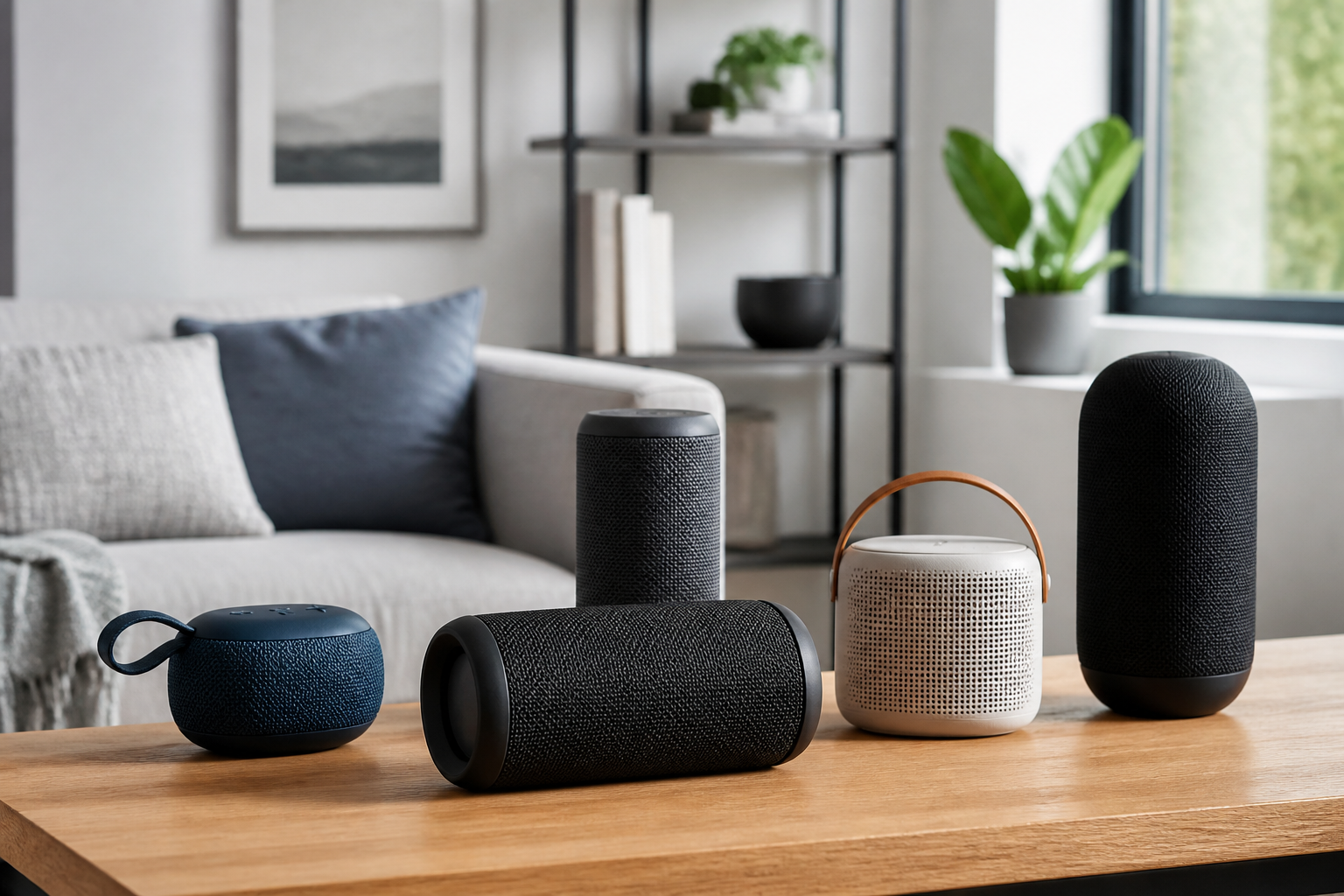
Bluetooth speakers come in many shapes, sizes, and feature sets, which can make shopping feel more complicated than it should be. For everyday use, the best speaker is not always the loudest, the smallest, or the one with the longest spec sheet. It is the one that fits your routine with the least friction.
If you plan to use a Bluetooth speaker at home, at work, in the kitchen, on a desk, in a bag, or outdoors, your priorities may shift a little. Some people want easy background music. Others want clearer voices for podcasts, stronger bass for casual listening, or a speaker that can survive trips and spills. This buying guide breaks down the practical factors that matter most so you can choose a Bluetooth speaker with confidence.
Start with how you will use the speaker
The most important step is to think about where and how often you will use the speaker. A good everyday speaker should match your habits, not just look attractive on a product page.
Home use
If the speaker will stay mostly in one room, sound quality and convenience may matter more than compact size. You may want a fuller sound, simple pairing, and controls that are easy to reach. A larger speaker can make sense if you want better volume and more balanced audio for music, TV audio in a pinch, or background listening while cooking or cleaning.
Portable use
If you plan to move the speaker from room to room or take it with you often, weight and battery life become more important. A portable model should be easy to carry, quick to connect, and durable enough to handle regular handling. A speaker that is a little smaller may be more useful every day than a larger one that sounds better but stays on a shelf.
Outdoor and travel use
For parks, patios, trips, or weekends away, focus on battery life, toughness, and weather resistance. Outdoor use usually benefits from a speaker that is easy to pack, can handle a few bumps, and maintains decent volume without sounding strained. If you expect occasional rain, poolside use, or damp environments, water resistance is worth paying attention to.
Sound quality: what actually matters for daily listening
Sound quality is the feature many buyers care about most, but the terms on spec sheets can be confusing. For everyday use, think in terms of balance rather than chasing the most dramatic sound profile.
Balanced sound is often best
A speaker with balanced sound usually performs well across music, podcasts, and spoken audio. That means voices should be clear, mids should not disappear, and bass should not overpower everything else. If you listen to many different types of audio, a balanced speaker is often the safest choice.
Bass should fit your habits
Some speakers emphasize bass to make music feel bigger and more energetic. That can be appealing, especially for casual listening. However, too much bass can muddy voices or make some tracks feel less natural. If you listen mostly to podcasts, audiobooks, news, or acoustic music, clarity may matter more than heavy bass.
Loudness is not the same as quality
A speaker can play loudly and still sound harsh or thin. For everyday use, it is usually better to choose a speaker that stays clear at moderate volume. If you need it for a larger room or outdoors, enough volume is important, but the sound should remain usable rather than distorted or shrill.
Practical tip: If the product description mentions tuning for voice clarity, full-range sound, or multi-driver design, those details may be more useful than marketing language that only promises “extra deep bass” or “super powerful audio.”
Size, weight, and portability
The right size depends on where the speaker will live. A compact speaker is easier to carry, but a larger one may provide better battery capacity, stronger volume, and a fuller sound. Everyday use usually favors a middle ground.
Choose a size that matches your routine
- Small speakers work well for desks, bathrooms, travel, and quick listening sessions.
- Medium speakers often offer a strong balance of portability and sound quality.
- Larger speakers may suit home use, shared spaces, or outdoor gatherings where volume matters more than pocketability.
Think about whether you will carry the speaker by hand, throw it into a backpack, or mostly leave it in one place. If you need it only occasionally on the move, a slightly larger model may still be easy enough to use every day.
Shape and grip matter too
A speaker that is easy to hold, has a sturdy loop or strap, or sits securely on a shelf will feel more convenient day to day. Rounded designs can be attractive, but practical features such as stable feet and easy-to-see buttons may matter more over time.
Battery life and charging convenience
Battery life is one of the most important everyday features because it affects how often you have to think about charging. A speaker that dies in the middle of a listening session becomes annoying quickly, even if it sounds great.
Look beyond the largest battery number
Battery claims can vary depending on volume level, connection type, and lighting or extra features. A speaker may last much longer at low volume than at high volume. Instead of focusing only on the biggest number, think about your real routine. If you listen for a few hours at a time, you may not need extreme battery life. If you use the speaker all day or forget to charge often, longer runtime becomes more valuable.
Charging type matters
Many everyday users appreciate simple, common charging options. A speaker that charges through a widely used cable is easier to live with than one that requires a less common accessory. Fast charging can also be helpful if you often top up the battery in short bursts.
Indicators and alerts help
A clear battery indicator can prevent surprises. Some speakers show battery status through lights or voice prompts. That small detail can make a big difference if you rely on the speaker often.
Bluetooth connection and ease of use
For everyday use, a speaker should connect quickly and stay connected without fuss. Wireless convenience is one of the main reasons people buy Bluetooth speakers, so a frustrating connection experience can ruin the appeal.
Stable pairing is essential
Look for a speaker that supports straightforward pairing and reconnects easily to your devices. If several people in a household may use the speaker, simple switching between devices can be useful. Some speakers remember multiple devices, which can reduce repeated setup.
Button layout should be simple
Controls that are easy to understand make a speaker much more pleasant to use every day. Volume, play and pause, pairing, and power buttons should be clearly marked or easy to recognize by touch. Complicated controls can become frustrating if you use the speaker frequently.
App features are optional, not mandatory
Some Bluetooth speakers include companion apps for equalizer settings, firmware updates, or device management. These can be helpful, but they should not be the only way to use basic features. If you prefer a simple experience, a speaker with physical controls and no app dependence may be the better fit.
Durability and water resistance
Daily use often means occasional bumps, crowded bags, kitchen splashes, or outdoor exposure. A speaker does not need to be rugged for everyone, but durability can be a smart priority if you plan to use it often.
Build quality affects long-term convenience
Materials, button feel, and overall sturdiness can influence how long a speaker seems useful. A well-built speaker may hold up better to repeated carrying and regular use. If the speaker feels flimsy in the hand, it may not inspire confidence for daily life.
Water resistance can be valuable
If you want to use the speaker near sinks, in bathrooms, by the pool, or outdoors, water resistance is worth considering. It may not make the speaker fully waterproof, so always check the product details carefully. Still, a bit of protection can reduce worry in typical everyday situations.
Dust and impact resistance may also matter
For people who travel often or use speakers in busy homes, some level of dust or impact resistance can be helpful. Even if you do not need heavy-duty protection, a speaker that feels secure and closed up is usually easier to trust day after day.
Where you will place it affects the best choice
One easy way to narrow your search is to imagine the exact places where the speaker will sit.
- Desk or office: Choose clear vocals, compact size, and easy controls.
- Kitchen: Focus on volume, easy cleaning, and splash resistance.
- Bedroom: Look for modest size, comfortable sound at low volume, and simple pairing.
- Living room: Consider fuller sound and stronger battery life if you move it around.
- Bag or suitcase: Prioritize lightweight design, battery life, and durability.
A speaker that suits a specific place well is often more satisfying than a “do everything” model that compromises too much in every direction.
Extra features that can be useful, but should not distract you
Bluetooth speakers often come with extra functions. Some are helpful, while others are mainly nice to have. For everyday use, choose features that support your routine instead of paying more for things you may never use.
Speakerphone function
A built-in microphone can be useful if you take calls at home or in a small office. Quality varies, so it is best considered a convenience feature rather than a core buying reason.
Stereo pairing or multi-speaker linking
Some speakers can connect to another speaker for wider sound. This may be useful if you plan to expand your setup later. If you only need one speaker, do not let this feature become the deciding factor.
Voice assistant support
Voice assistant compatibility can be convenient for some users, but it may not be essential. Check whether it works in the way you expect and whether you actually want to use it.
EQ controls
Simple equalizer settings can help adjust sound for podcasts, music, or room acoustics. This is useful if you like a bit of customization without needing technical knowledge.
Common buying mistakes to avoid
Many shoppers focus on a single feature and ignore the rest. That can lead to disappointment once the speaker is in daily use.
- Choosing by size alone: The smallest model is not always the most practical, and the largest is not always the best sounding.
- Overvaluing bass claims: Strong bass can be fun, but it should not come at the cost of clear voices and balanced sound.
- Ignoring battery reality: A long spec-sheet battery can still feel short if you use high volume or extra features often.
- Forgetting about controls: A speaker with confusing buttons may annoy you more than you expect.
- Not matching the speaker to the environment: A speaker meant for a quiet bedroom may not be ideal for a patio or kitchen.
- Skipping durability considerations: If the speaker will be moved around often, a sturdier model may be worth it.
How to compare speakers before buying
When you are deciding between several models, use a short checklist based on your daily routine:
- Will this speaker fit the space where I use it most?
- Is the sound profile suitable for music, podcasts, or both?
- Will the battery last long enough for my normal day?
- Is it easy to carry, hold, and control?
- Does it reconnect easily to my phone or laptop?
- Do I need water resistance or just basic durability?
- Are the extra features actually useful to me?
Answering these questions usually reveals which speaker is the more sensible choice, even if another one looks more impressive on paper.
Who different Bluetooth speakers may suit
Different buyers have different priorities, and that is normal. Here is a simple way to think about matching the speaker to the user.
- Students: May prefer compact size, decent battery life, and easy portability between rooms or dorm spaces.
- Remote workers: Often benefit from clear voices, dependable pairing, and a size that fits a desk.
- Families: May want a durable, simple speaker that multiple people can use without much setup.
- Frequent travelers: Usually need lightweight design, solid battery life, and a shape that packs easily.
- Outdoor listeners: May prioritize volume, sturdiness, and water resistance.
- Casual home listeners: Often do best with balanced sound and easy controls over flashy extras.
Practical tips for getting more value from your speaker
Once you buy the right speaker, a few simple habits can help it feel better to use every day.
- Keep it charged before long outings or busy days.
- Store it in a consistent place so you can find it quickly.
- Clean the exterior gently if dust or kitchen residue builds up.
- Use a moderate volume when possible to preserve battery life.
- Check whether software updates or app settings improve connection stability.
- Protect it in a bag or case if you move it around often.
These small habits can make an ordinary Bluetooth speaker much more convenient in everyday life.
Frequently asked questions
How loud should a Bluetooth speaker be for everyday use?
That depends on where you plan to use it. For a bedroom or desk, moderate volume may be enough. For a kitchen, patio, or shared room, you may want more headroom. A speaker that stays clear at the volume you actually use is usually more important than maximum loudness.
Is waterproof the same as water-resistant?
No. Water-resistant usually means the speaker can handle some exposure to moisture, while waterproof suggests stronger protection. Always read the product details carefully and avoid assuming a speaker can handle any condition simply because it has a protective rating.
Do I need a large speaker for good sound?
Not necessarily. Larger speakers often have more room for fuller sound, but well-designed smaller speakers can still be very good for everyday listening. Choose based on your space and usage, not size alone.
Are extra features worth paying for?
Sometimes, but only if you will use them. Features such as speakerphone support, app controls, or stereo pairing can be helpful, but they should not replace the basics: sound, battery, portability, and easy operation.
What matters more, battery life or sound quality?
Both matter, but the better choice depends on your routine. If you use the speaker often away from a charger, battery life may be more important. If you mostly keep it at home, sound quality and ease of use may deserve more weight.
Conclusion
Choosing a Bluetooth speaker for everyday use is easier when you focus on practical needs instead of marketing claims. Start with where you will use it, then think about sound quality, size, battery life, connection reliability, and durability. Extra features can be useful, but only when they support your daily routine.
The best everyday Bluetooth speaker is the one you will actually enjoy using regularly. If it is easy to carry, easy to connect, clear enough for your audio, and sturdy enough for your life, it will likely feel like a good purchase long after the unboxing is over.