Introduction
A good desk lamp does more than brighten a workspace. It can help make reading easier, reduce visual strain in dim rooms, improve focus during long study sessions, and create a more comfortable setup for work. But with so many styles and features available, choosing the right one is not always simple.
The best desk lamp for work and study depends on how you use your desk, how much space you have, what kind of tasks you do, and how much control you want over brightness and direction. A lamp that works well for paperwork may not be ideal for drawing, computer use, or late-night reading. Likewise, a lamp that looks attractive on a desk may not provide practical light where you need it most.
This buying guide explains the main factors to consider before choosing a desk lamp. It focuses on practical features, common mistakes, and simple ways to match a lamp to your workspace. If you want a lamp that supports productivity without being distracting, these are the details that matter most.
Why the Right Desk Lamp Matters
Lighting affects how comfortable and efficient a workspace feels. When a desk is too dim, it can be harder to read, write, or see small details. When light is too harsh or poorly aimed, it can create glare on screens and reflective surfaces. A well-chosen lamp helps balance the room lighting and directs illumination where it is needed.
For students, a desk lamp can make late study sessions more manageable. For office use, it can supplement overhead lighting and help create a more focused area. For creative work, the right lamp can provide consistent illumination for sketching, crafting, or reviewing materials.
Rather than choosing based on appearance alone, it helps to think about how the lamp will function in your daily routine. The most useful desk lamps are usually the ones that combine adjustable light, stable design, and a size that fits the desk without getting in the way.
Start with Your Main Use Case
Before comparing lamp features, decide what you need the lamp to do most often. The best choice for you will depend on the type of work or study you do at your desk.
For reading and note-taking
If your desk lamp will mainly be used for reading textbooks, marking papers, or writing notes, look for a lamp that provides broad, even light across the work surface. A flexible arm or adjustable head can help aim the light onto books and notebooks without forcing you to move everything around.
For computer work
If you use a monitor or laptop at your desk, avoid lamps that create reflections on the screen. In this case, the ability to direct light precisely is especially important. A lamp positioned to the side of the monitor often works better than one placed directly behind or in front of it. Soft, controlled light is usually more comfortable than a bright beam that can wash over the screen.
For art, drafting, or detailed tasks
Tasks that involve fine detail often benefit from stronger, more adjustable lighting. A lamp with a movable head and consistent brightness can help make lines, shapes, and small text easier to see. In these settings, stability matters too, since frequent repositioning can become frustrating if the base is too light or the joints are too loose.
For shared spaces or multipurpose desks
If your desk also serves as a homework area, home office, or hobby station, versatility becomes important. A lamp with multiple brightness settings and a design that can adapt to different tasks may offer more value than a highly specialized model.
Choose the Right Brightness
Brightness is one of the most important features to consider. A lamp should provide enough light for your tasks without feeling overwhelming. The right level depends on room lighting, desk size, and how closely you work to the surface.
Instead of focusing only on appearance, look for a lamp that offers practical control over light output. Dimmable options are often useful because they allow you to adjust the lamp for different times of day and different tasks. A lower setting may be enough for casual reading, while a higher setting may be better for detailed study or paperwork.
Think about whether you want a lamp that supports one primary brightness level or one that allows several. If your workspace lighting changes often, more flexibility is usually better.
Why adjustable brightness helps
A lamp with adjustable brightness can be more comfortable in both bright and dim rooms. During the day, you may only need a small amount of extra light. In the evening, you may want stronger illumination to help compensate for a darker room. A dimming feature can make one lamp useful in more situations, which is especially helpful if your desk setup changes over time.
Consider Color Temperature and Light Tone
Desk lamps are available in different light tones, often described as warm, neutral, or cool. The right choice depends on the feel you want and the type of task you do.
Warm light
Warm light has a softer, more relaxed look. It may suit reading in the evening or creating a comfortable atmosphere in a bedroom or home office. For some people, warm light feels less intense during long study sessions.
Neutral light
Neutral light is often a balanced choice for work and study. It usually looks clean and clear without feeling overly harsh. Many buyers prefer this range because it works well for general desk use and does not strongly alter the appearance of paper or objects.
Cool light
Cool light can appear brighter and more crisp. It may be helpful for tasks that require attention to small details. However, if the light feels too stark, it may be less comfortable for extended sessions. The best option often depends on personal preference and how sensitive you are to bright light in your workspace.
If you are unsure, a lamp with adjustable color temperature can offer more flexibility. That way, you can change the light tone to better suit studying, computer work, or evening reading.
Look for Adjustable Positioning
One of the most useful features in a desk lamp is the ability to direct light exactly where you want it. A fixed lamp may be fine for simple ambient lighting, but a desk lamp for work and study usually benefits from adjustability.
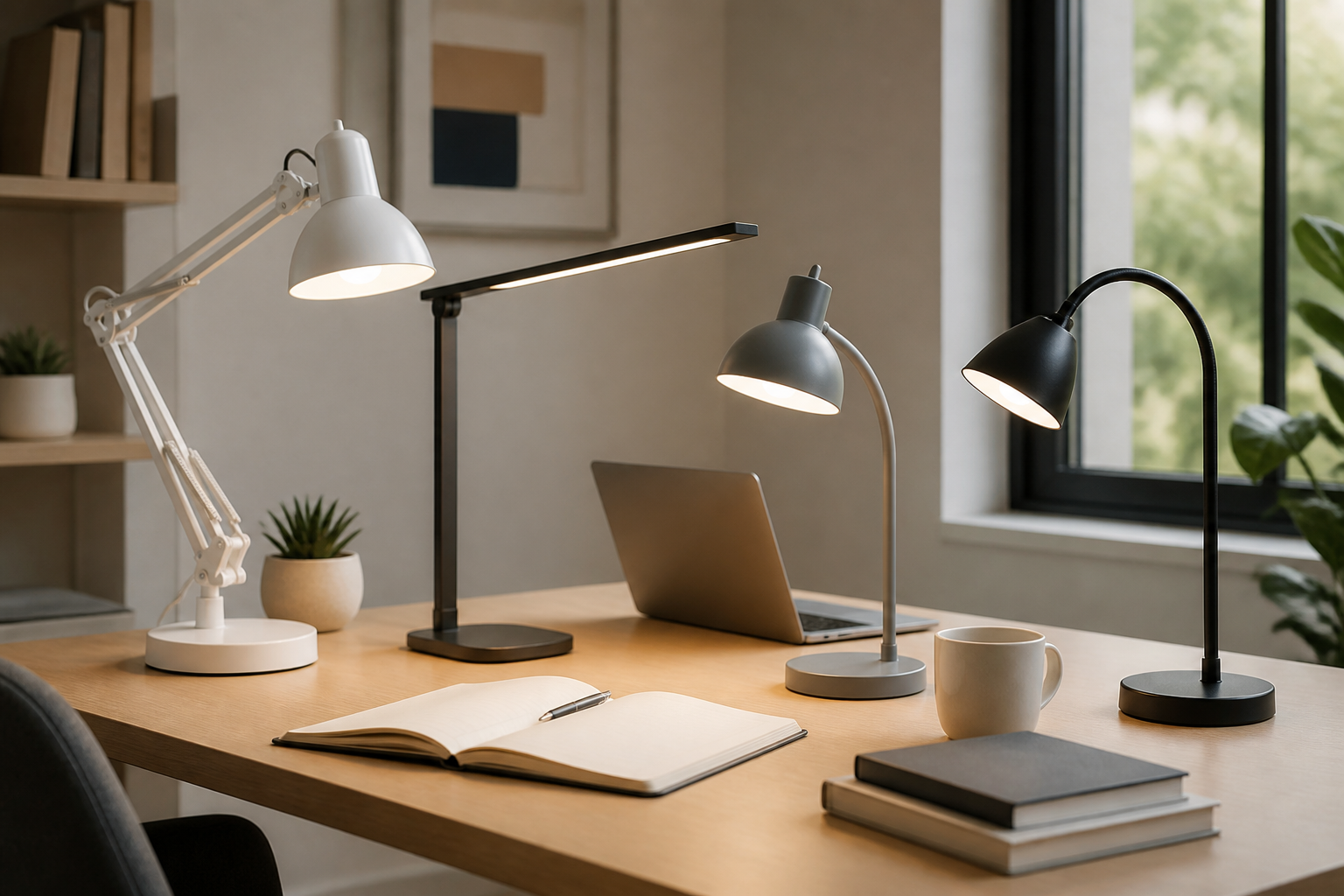
Common adjustable features include a swiveling head, a flexible neck, pivoting joints, or an articulated arm. These allow you to move the light source without moving the whole lamp. This is particularly helpful when switching between tasks like writing, reading, and typing.
Adjustability also affects comfort. If light is aimed too directly into your eyes or onto a shiny surface, it can become distracting. Being able to change the angle helps reduce those issues and makes the lamp more practical day to day.
How much movement is enough?
The right amount of adjustability depends on how often you change your setup. If you always work in one position, a simpler lamp may be enough. If you regularly shift between books, laptop use, and paper documents, greater flexibility is often worth it. Look for smooth movement that stays in place after adjustment, rather than a lamp that drifts or sags.
Pay Attention to Glare and Light Quality
Desk lamps should help you see more clearly, not make the workspace harder to use. Glare can be a problem when light reflects off glossy pages, tablet screens, photo paper, or polished desk surfaces. The shape and direction of the lamp can make a big difference.
A lamp with a well-designed shade or controlled beam can help keep light focused on the work area instead of spreading everywhere. This is often useful in shared rooms or small spaces where you do not want to light up the entire room. For computer work, the ability to position the lamp away from the screen can reduce distracting reflections.
Light quality also matters. Even lighting is generally more useful than a lamp that creates uneven bright spots and shadows. If possible, choose a lamp that feels steady and comfortable rather than overly intense.
Select a Size That Fits Your Desk
Desk lamps come in many shapes and sizes, from compact clip-on lamps to larger swing-arm designs. The right size depends on how much surface space you have and how you want the lamp to sit relative to your workspace.
Small desks
If your desk is compact, choose a lamp with a small base or a clamp-style design. This can help preserve room for notebooks, a keyboard, and other essentials. A lamp that folds or folds partially can also be useful where space is limited.
Medium to large desks
Larger desks may benefit from a lamp with a broader reach. A longer arm or larger head can help cover more of the work area without needing to be repositioned constantly. Just make sure the lamp does not overwhelm the desk or block your line of sight.
Cluttered workspaces
If your desk tends to hold many items, a simple, streamlined lamp may work better than a bulky one. The goal is to add helpful lighting without making the space feel crowded. Before buying, think about where the lamp will sit when not in use and whether it will interfere with bookshelves, monitors, or storage organizers.
Choose the Right Power and Controls
Desk lamps can use a variety of power and control styles. Some plug into a wall outlet, while others are USB-powered or rechargeable. Each option has trade-offs.
A plug-in lamp is often convenient for a permanent desk setup. It is usually ready to use whenever you need it, as long as there is an available outlet. USB-powered lamps can be useful for desks near a computer or charging station. Rechargeable lamps may offer more flexibility if you want a cordless setup, but they require periodic charging.
Controls matter too. Some lamps use touch controls, while others use buttons, switches, or dials. Touch controls can feel modern and easy to use, though some users prefer a physical switch that is simple and direct. The best control style is the one that feels intuitive in daily use.
Useful control features
Consider whether you want memory settings, multiple brightness levels, or one-touch switching between light tones. These features are not essential for everyone, but they can make a lamp more convenient if you use it often.
Think About Build Quality and Stability
A good desk lamp should feel sturdy enough to stay in place during normal use. If the base is too light or the joints are too loose, the lamp may shift when you adjust it. That can become annoying, especially if you move it several times a day.
Look for a stable base, solid joints, and a design that matches your usage style. A heavier base may be ideal for a lamp that sits on the desk full time. A clamp lamp may be better if you need to save surface space, as long as the clamp grips securely.
Build quality also affects long-term satisfaction. A well-made lamp is usually easier to position and more dependable over time. While style is important, the practical feel of the lamp often matters more once you start using it every day.
Match the Lamp to Your Room and Decor
Although function should come first, appearance still matters. A desk lamp becomes part of the room, so it is worth choosing one that fits the style of your workspace. Some people prefer a minimalist lamp with a clean profile. Others want a more traditional look with a fabric or metal shade.
The finish, color, and shape can affect how the lamp feels in the room. A lamp that blends in may help keep the workspace calm and uncluttered. A lamp with a stronger visual design may serve as a decorative accent as well as a practical tool. Either can work, as long as the lamp still performs well for daily work and study.
Common Mistakes to Avoid
Many buyers focus on one feature and overlook the others. Avoiding these common mistakes can help you choose a lamp that is actually useful.
- Choosing by appearance alone: A lamp may look elegant, but if it cannot direct light properly, it may not suit a study or work desk.
- Ignoring desk size: A lamp that is too large can crowd the workspace, while one that is too small may not reach far enough.
- Overlooking glare: Bright light that reflects off a screen or shiny pages can be more distracting than helpful.
- Skipping adjustability: Fixed lamps may not work well if your tasks change during the day.
- Forgetting power access: A lamp is less convenient if the cord, outlet, or charging setup does not fit your desk layout.
- Buying too much brightness without control: A very bright lamp can feel uncomfortable if it lacks dimming or tone adjustment.
Who Different Desk Lamps May Suit
Different lamp styles suit different users. Thinking about who the lamp is for can make the decision easier.
- Students: Often benefit from adjustable brightness, flexible positioning, and a compact design for shared or smaller desks.
- Office workers: May want a lamp that reduces glare, fits beside a monitor, and provides comfortable light during long sessions.
- Readers: May prefer soft, even lighting and a shade or head that spreads light across pages.
- Creative users: Often need precise positioning, stable construction, and reliable illumination for detailed work.
- Small-space users: May benefit from clamp lamps, foldable designs, or narrow bases that preserve desk room.
Practical Tips for Better Desk Lighting
Even a good lamp works better when it is placed thoughtfully. A few simple setup choices can improve the result without buying extra equipment.
- Place the lamp to the side of your dominant hand if possible, so your hand does not cast a shadow while writing.
- Aim the light at the work surface rather than directly at your eyes or screen.
- Use the lamp to supplement, not fight, room lighting so the workspace feels balanced.
- Check how the light looks at different times of day because natural light can change how bright the lamp feels.
- Keep reflective objects away from the beam if glare becomes a problem.
Small adjustments to placement and brightness often make a noticeable difference in comfort. You may not need the brightest lamp available; you may simply need the one that fits your desk and tasks best.
Frequently Asked Questions
What is the best type of desk lamp for studying?
The best desk lamp for studying is usually one with adjustable brightness, comfortable light tone, and a head or arm that can be positioned over books and notes. A lamp that reduces glare and fits your desk size is often more practical than a decorative model.
Should a desk lamp be warm or cool?
Either can work, depending on preference and task. Warm light often feels softer, while cool light can appear crisper. Many buyers prefer a neutral or adjustable option for work and study because it offers more flexibility.
Is a dimmable desk lamp worth it?
For many people, yes. Dimming gives you more control over comfort in different rooms and at different times of day. It can be especially useful if you switch between reading, computer work, and general desk use.
Are clamp lamps better than desk-base lamps?
Neither is universally better. Clamp lamps save surface space and can work well on smaller desks, while base lamps are often easier to move and may feel more stable on a wide workspace. The best choice depends on your desk layout.
How important is lamp adjustability?
Very important for many work and study setups. Adjustability helps you direct light where you need it and reduce glare. If you only use the lamp in one fixed position, a simpler design may be enough.
Conclusion
Choosing a desk lamp for work and study is about more than finding a light that turns on. The right lamp should match your tasks, your desk size, and your preferred lighting style. Brightness control, light tone, adjustability, glare reduction, and build quality all play a role in how useful the lamp will be day after day.
If you want a practical choice, start with how you use your desk most often. Then compare lamps based on the features that matter in real use rather than the ones that only look appealing online. A well-chosen desk lamp can make reading easier, study sessions more comfortable, and your workspace more functional overall.
For shoppers comparing options, the smartest approach is usually to choose a lamp that offers enough flexibility for changing tasks while still fitting neatly into the space you already have.