Introduction
A good car phone holder can make everyday driving simpler, more organized, and less distracting. Whether you use your phone for navigation, hands-free calls, music, or traffic updates, the right holder keeps it visible and accessible without forcing you to hold it or search around the cabin. But with so many styles on the market, choosing one can feel surprisingly confusing.
The best choice depends on your car, your phone, your preferred mounting location, and how often you remove your device. Some holders are designed for vents, others for dashboards, windshields, cup holders, or CD slots. Some focus on fast one-handed use, while others prioritize a very stable grip. A good option for one driver may be frustrating for another.
This guide explains how to choose a good car phone holder based on practical features, fit, convenience, and day-to-day usability. It is written to help you compare options with a clear head and avoid common buying mistakes.
Start With How You Plan to Use It
Before comparing products, think about how the holder will fit into your routine. Different drivers value different things, and the “best” holder is usually the one that matches your habits.
For navigation-focused drivers
If you rely heavily on maps, a holder with a stable, adjustable viewing angle is especially important. You will want a position that makes the screen easy to glance at without blocking your view of the road or forcing awkward neck movement.
For frequent phone calls
If you use your phone mainly for hands-free calls, convenience and easy insertion or removal may matter more than a highly adjustable arm. A simple holder that keeps the phone secure but lets you grab it quickly can be ideal.
For drivers who switch phones often
If multiple people use the same car or you upgrade phones regularly, look for a holder with a broad size range and a fastening mechanism that does not depend on exact phone dimensions. Spring-loaded clamps and adjustable arms can be useful here.
For rough roads or longer trips
If your driving includes bumpy roads, frequent stops, or long highway journeys, prioritize a holder that resists shaking and remains in place over time. A stable mount is more important than a flashy design.
Choose the Right Mount Type
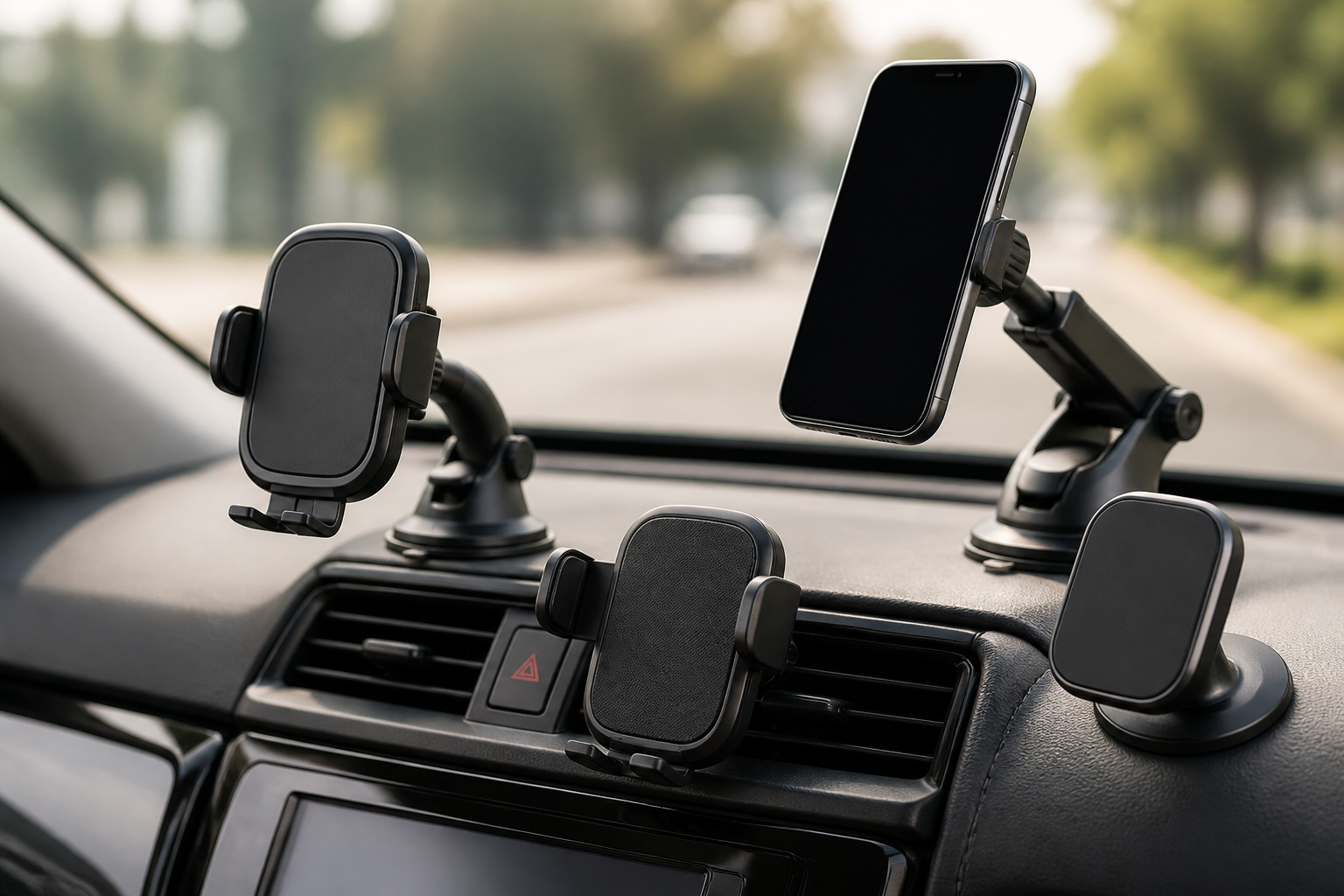
The mount type affects comfort, stability, visibility, and how much dashboard space you give up. There is no universal best design, but there are clear tradeoffs.
Vent mounts
Vent mounts attach to an air vent blade or grille. They are often compact, easy to install, and less visually intrusive than larger mounts. They can be a good choice if you want a simple setup that does not use adhesives or suction cups.
However, vent mounts are not ideal for every car. Some vents are too fragile, too shallow, or shaped in ways that make attachment difficult. They may also block airflow and can be less stable on rough roads depending on the vent design.
Dashboard mounts
Dashboard mounts usually offer a good balance of visibility and stability. They are often placed where the driver can see the screen with minimal movement. Many use adhesive pads or reusable mounting surfaces.
When considering a dashboard mount, think carefully about surface texture and heat exposure. Curved, dusty, or heavily textured dashboards can reduce adhesion. If you prefer a semi-permanent setup, this style may be worth considering.
Windshield mounts
Windshield mounts are popular because they place the phone high and easy to see. They often use suction cups and adjustable arms, giving a broad range of positioning options.
Still, some drivers prefer not to place anything on the windshield, especially if it may affect visibility or be subject to local legal restrictions. In many vehicles, the ideal placement is one that keeps the phone visible without crowding the driver’s line of sight.
Cup holder mounts
Cup holder mounts fit into a drink holder and usually offer strong stability. They can be useful in cars with limited dashboard space or if you prefer not to attach anything to vents or glass.
The tradeoff is that they may take up a cup holder you would otherwise use. They also sit lower, so the phone may be less convenient to glance at while driving.
CD slot mounts
CD slot mounts are a niche option for vehicles with unused CD players. They can provide a secure fit and keep the dashboard uncluttered. If your car has a CD slot you no longer use, this type may be worth exploring.
That said, they are only suitable if the slot is accessible and sturdy. They are not as universal as some other mount types.
Check Phone Compatibility Carefully
A car phone holder should fit your phone with room to spare. It sounds obvious, but compatibility is one of the most common reasons people end up dissatisfied with a purchase.
Phone size and weight
Make sure the holder can accommodate your phone’s width, height, and weight, especially if you use a larger device or a thick case. A holder that works well with compact phones may feel cramped with a modern large-screen model.
Weight matters because larger phones create more leverage when the car moves. If the mounting arm is weak or the grip is shallow, the phone may slip or wobble more than expected.
Case compatibility
Many people use protective cases, and not every holder handles them equally well. Check whether the clamp opens wide enough for a case, whether wireless charging works through the case if relevant, and whether thick or textured cases reduce grip.
If you tend to swap cases often, a holder with adjustable arms or a generous cradle is usually safer than one with tight tolerances.
One-handed use
A good car phone holder should be easy to use with minimal fuss. One-handed insertion and removal can make daily use much more convenient, especially if you enter and exit the car often. Look for a mechanism that feels intuitive rather than overly stiff or complicated.
Pay Attention to Stability and Grip
Stability is one of the most important qualities in a car phone holder. A holder that slips, tilts, or rattles can quickly become annoying. More importantly, constant adjustment can become distracting.
Clamping strength
The holder should grip the phone securely without making removal difficult. A strong clamp is helpful, but overly aggressive tension can be inconvenient and may make single-handed use harder. The ideal balance is secure hold with smooth operation.
Mount attachment strength
Equally important is how the mount attaches to the car. A solid suction cup, firm vent clip, or well-designed adhesive base can make a major difference. If the base is unstable, even a strong phone cradle will not solve the problem.
Resistance to vibration
Road vibration can reveal weak points in a mount. Look for designs that minimize wobble in the arm, pivot joint, and base. Shorter arms often feel more stable than very long ones, though longer arms may offer better positioning flexibility.
Think About Placement and Visibility
The best car phone holder should place the phone where it is useful but not intrusive. Position matters as much as the product itself.
Keep the screen easy to glance at
If you use navigation, the screen should be easy to read without forcing you to reach too far or look away from the road for long. A holder that sits too low, too far to the side, or at an awkward angle may be less comfortable even if it is technically secure.
Avoid blocking controls or vents you need
Some holders interfere with climate controls, radio buttons, hazard lights, or important vent airflow. Before buying, consider how the holder will affect the usability of nearby features. A convenient phone position should not create daily frustration elsewhere in the cabin.
Consider left-hand and right-hand use
Depending on the car’s layout, you may prefer a mount that places the phone closer to one side. Think about whether you primarily use your right hand, whether the holder will be shared with another driver, and how easy it is to adjust from the driver’s seat.
Look for Easy Adjustability
Adjustability can greatly improve comfort, especially if you use the holder for more than one purpose. A model that tilts, rotates, and extends can help you find a better angle for both portrait and landscape use.
Portrait and landscape support
Navigation apps often look best in landscape, while some drivers prefer portrait for calls or simpler layouts. If you switch between orientations, choose a holder that can rotate smoothly and stay in position once adjusted.
Arm length and range of motion
An adjustable arm can help you position the phone around dashboard features or closer to your line of sight. However, longer arms may flex more. If you want maximum stability, a shorter, more direct design may be better.
Ball joints and pivot points
These are useful for fine-tuning the viewing angle. The key is whether they hold their position after adjustment. A joint that loosens too easily may require constant readjustment, which reduces convenience.
Evaluate Build Quality and Materials
Build quality often determines whether a holder feels solid after a few weeks or frustrating after a few days. While product descriptions can be helpful, look at material choices and construction details closely.
Plastic versus reinforced construction
Many holders use plastic components, which can still be perfectly adequate if they are well designed. The concern is not plastic itself, but flimsy joints, weak clips, or thin stress points. Reinforced parts often last better in regular use.
Soft contact surfaces
Padded grips or silicone contact points can help protect the phone and reduce slipping. They may also make the holder feel more refined. If you use a case with a slippery finish, these details can be especially helpful.
Heat and sun exposure
Inside a parked car, temperatures can rise significantly. A holder should be able to tolerate regular temperature changes without losing adhesion, warping, or becoming brittle too quickly. This is especially relevant for windshield and dashboard models.
Consider Charging Features Carefully
Some car phone holders include built-in wireless charging or cable management. These features can be convenient, but they are not always necessary. It helps to judge them as practical extras rather than automatic advantages.
Wireless charging
If you often drive long distances or use navigation for extended periods, wireless charging can be useful. It reduces cable clutter and keeps the phone topped up while mounted. That said, compatibility with phone models and cases matters, and the charging alignment must be reliable.
Cable access
If the holder does not charge the phone, make sure it still allows comfortable cable routing. A good design should leave space for a charging cable without bending it sharply or making the connection awkward.
Match the Holder to Your Car Interior
Cars differ in dashboard shape, vent design, and available space. A holder that works beautifully in one vehicle may be a poor fit in another.
Vent style compatibility
If you want a vent mount, look at the shape and strength of your vents. Horizontal and vertical blades can behave differently, and some decorative or rounded vent styles are harder to clamp securely.
Surface texture
Dashboard adhesives and suction cups perform differently depending on the surface. Smooth, flat areas are usually easier to work with than textured or curved ones. Before buying, think about where the mount would realistically sit in your car.
Cabin layout
Some interiors have large screens, unusual console shapes, or limited open space. In those cases, a compact mount may be easier to live with than an oversized model with a long arm.
Common Mistakes to Avoid
Many buyers run into the same problems when choosing a car phone holder. Avoiding these mistakes can save money and frustration.
- Choosing by appearance alone: A sleek design is nice, but performance, stability, and compatibility matter more.
- Ignoring your car’s interior: A mount that does not fit your vents or dashboard surface will not be practical.
- Buying a holder that is too small: Larger phones and thicker cases need more generous sizing.
- Overlooking adjustability: A fixed-angle holder may be uncomfortable if your seating position changes or the car is shared.
- Forgetting about removal: If you plan to move the holder often, choose one that is easy to detach and reattach.
- Prioritizing maximum grip only: A strong clamp is useful, but not if it makes everyday use awkward.
Who Each Type May Suit Best
Different holder styles fit different driving habits. Here is a simple way to think about the category.
- Vent mounts: Good for drivers who want a compact, quick-install solution and have suitable vents.
- Dashboard mounts: Useful for people who want a balanced viewing position and a more permanent setup.
- Windshield mounts: Suitable for those who want high visibility and flexible positioning, where permitted and practical.
- Cup holder mounts: A smart option for cars with limited dash space or drivers who prefer a lower-mounted phone.
- CD slot mounts: Best for vehicles with unused CD players and owners who want to keep the dashboard uncluttered.
Practical Tips Before You Buy
Use these simple checks to narrow your options:
- Measure your phone with its case on: This gives a more realistic fit check.
- Look at your car’s likely mounting spots: Decide where the holder would truly be used, not just where it looks best online.
- Think about winter and summer conditions: Temperature changes can affect suction, adhesives, and some plastics.
- Prioritize easy access: If placing or removing the phone feels clumsy, you may stop using the holder regularly.
- Choose the simplest design that meets your needs: Fewer moving parts often means fewer things to loosen or break.
Frequently Asked Questions
What is the safest place to put a car phone holder?
The safest placement is usually the one that keeps the phone visible without blocking your view, controls, or driving essentials. Many drivers prefer positions that allow a quick glance rather than a long look. The right choice depends on your vehicle and local regulations.
Are vent mounts better than dashboard mounts?
Neither is always better. Vent mounts are compact and convenient, while dashboard mounts can offer a more stable and visible position. The better option depends on your car’s vent design, dashboard surface, and how you plan to use the phone.
Will a car phone holder fit any phone?
Not automatically. You should check the supported size range and whether the holder works with your phone case. Large phones and bulky cases need more room than compact devices.
Do I need wireless charging in a car phone holder?
Not necessarily. Wireless charging is convenient, but it is an extra feature rather than a requirement. If you already use a charging cable comfortably, a simpler holder may be all you need.
How do I know if a holder will stay in place?
Look for a mount style that suits your car’s surfaces and a design with secure attachment points, sturdy joints, and a stable cradle. The more moving parts a holder has, the more important overall build quality becomes.
Conclusion
Choosing a good car phone holder is mostly about matching the product to your vehicle, your phone, and your daily driving habits. The best holder is not just the one with the most features. It is the one that fits securely, keeps the phone easy to see, and feels simple to use every time you get in the car.
Focus first on mount type, compatibility, stability, and placement. Then consider adjustability, build quality, and extras like charging. If you compare those factors carefully, you can find a holder that makes driving more convenient without becoming a distraction or an annoyance.