Introduction
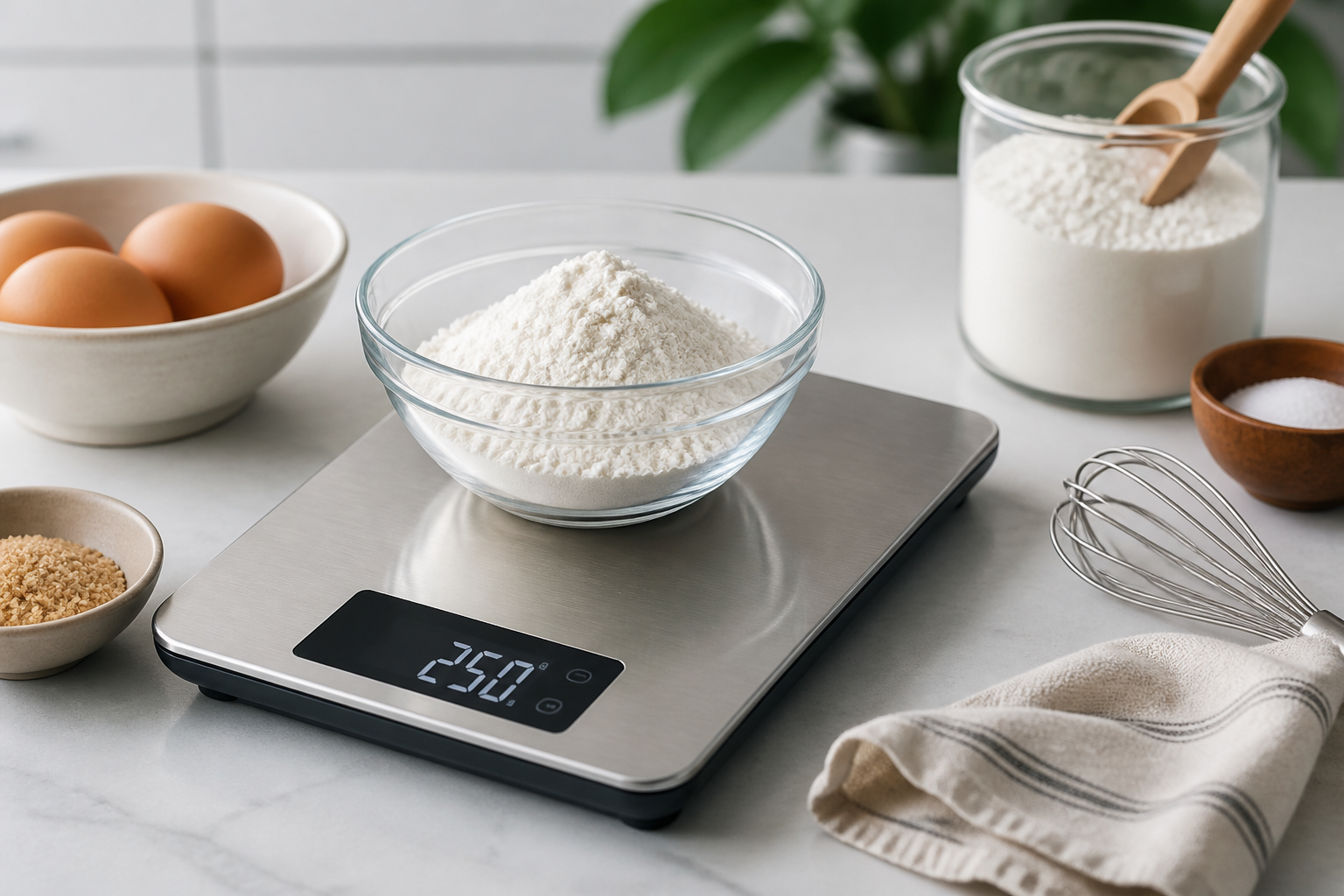
A good digital kitchen scale can make cooking and baking easier, more consistent, and less messy. Whether you are measuring flour for bread, portioning ingredients for meal prep, or following a recipe that uses grams instead of cups, the right scale helps you work more accurately and with less guesswork.
Not all digital kitchen scales are built the same. Some are designed for simple everyday use, while others offer finer precision, higher capacity, or extra functions that are helpful in specific kitchens. If you are trying to choose one, it helps to focus on the features that actually affect day-to-day use rather than flashy extras you may never need.
This guide explains how to choose a good digital kitchen scale based on the features that matter most: accuracy, capacity, readability, build quality, ease of cleaning, unit conversion, tare function, power source, and more. It is written to help home cooks, bakers, meal preppers, and anyone who wants a practical scale that suits their needs.
Why a Digital Kitchen Scale Is Worth Considering
A digital kitchen scale measures ingredients by weight instead of volume. That difference matters because weight is usually more consistent. Measuring a cup of flour, for example, can vary depending on how it is scooped and packed. A scale helps reduce that variation, which is especially useful in baking and in recipes where precision matters.
Digital scales are also convenient for portion control, recipe scaling, and reducing the number of measuring cups and spoons you need to wash. Many models are compact, easy to store, and simple enough for beginners to use without much learning curve.
Even if you do not bake often, a scale can be helpful for pasta portions, coffee, spices, and meal prep. The best choice depends on how often you cook, what you measure most often, and how much precision you expect.
Start With Your Main Use Case
The first step in choosing a good digital kitchen scale is deciding what you want it to do most often. A scale for occasional home use does not need the same features as one for frequent baking or high-volume meal prep.
For everyday cooking
If you mostly need a scale for general cooking, a simple model with standard gram and ounce measurements, a clear display, and a reliable tare button may be enough. Ease of use matters more than advanced precision for many home cooks.
For baking
Bakers often benefit from a scale with finer increments and a stable, easy-to-read display. If your recipes use small ingredient amounts, such as yeast, salt, or coffee, look for a scale that can measure small weights accurately and quickly.
For meal prep and portioning
If you want to weigh proteins, grains, or produce, consider a scale with a larger capacity and a platform that can support bowls or containers comfortably. A hold function or larger display may also be useful if you work with bigger items.
For specialty ingredients
If you often measure coffee, spices, herbs, or other small quantities, fine resolution becomes more important. Some scales are better suited to small increments than others, so check the minimum measurement steps before buying.
Accuracy and Precision Matter Most
When people compare digital kitchen scales, accuracy is usually the feature that matters most. Accuracy refers to how close the reading is to the real weight, while precision refers to how consistently the scale repeats the same measurement. In a kitchen, both can matter, especially for baking.
Look for a scale that provides stable readings without jumping around too much. A good display should settle quickly and stay readable while you are adding ingredients. Some scales are more sensitive to movement, vibration, or uneven surfaces than others.
It is also wise to think about the smallest amount the scale can measure reliably. A scale that only makes sense at larger quantities may not be ideal if you regularly weigh small ingredients. If you are a baker, pay special attention to the increment size and whether the scale can handle very light ingredients clearly.
Check the Capacity and Measurement Range
Capacity is the maximum weight the scale can handle. This is one of the easiest features to overlook, but it can affect how useful the scale is in real life. A small-capacity scale may work well for spices and baking ingredients but struggle with heavy bowls or large batches.
For most home kitchens, a moderate capacity is enough. If you often weigh large mixing bowls, bulk ingredients, or meal-prep portions, choose a scale that can handle a higher maximum weight without losing readability or convenience.
At the same time, avoid choosing a scale based only on maximum capacity. A high-capacity scale that is less sensitive at small weights may not be the best fit for baking. Try to balance the maximum load with the level of precision you actually need.
Look for a Clear, Easy-to-Read Display
A digital kitchen scale should be easy to read from a normal standing position. Display quality may seem minor, but it affects how comfortable the scale is to use every day.
Display size and visibility
A larger display can be easier to read, especially if you are measuring ingredients in a bowl that may partially cover the screen. A backlit display can also improve visibility in dimmer kitchens.
Button layout
Simple, clearly marked buttons make the scale easier to use. If the buttons are cramped, overly sensitive, or hard to distinguish, the scale may be annoying during busy cooking sessions.
Readability with containers on top
When using a bowl or container, the display should remain visible. Some scales place the screen farther out on the front edge, which can help. Others have screens that are easier to block with larger containers.
Choose the Right Platform Size and Shape
The weighing platform should fit the kinds of containers and ingredients you use most often. A platform that is too small can make larger bowls unstable, while one that is too large may take up unnecessary counter or storage space.
Flat, compact designs are often best for small kitchens. If you use large mixing bowls or trays, choose a scale with a wider platform and enough stability to support them safely. The scale should feel balanced when a container is placed on top, not top-heavy or awkward.
Shape matters too. A rectangular scale may provide more usable space for bowls and containers, while a round model may be compact but less flexible. The best design is usually the one that works with your common cookware rather than against it.
Make Sure It Has a Reliable Tare Function
The tare function is one of the most useful features on a digital kitchen scale. It lets you place a container on the scale, reset the reading to zero, and then add ingredients without counting the container’s weight. This is especially helpful if you want to measure multiple ingredients in one bowl.
A good tare function should be quick and responsive. If the scale takes too long to reset or behaves inconsistently, it becomes frustrating to use. For everyday cooking, this feature can save time and reduce the number of dishes you need.
If you plan to measure ingredients one by one in the same bowl, the tare function is almost essential. It is also useful for dividing recipes into portions or weighing ingredients as you build them into a single mixture.
Check the Available Units of Measurement
A practical digital kitchen scale should offer the units you actually use. Most people want grams and ounces at minimum, but some scales include additional options such as pounds, milliliters, or fluid-related settings.
For international recipes, grams are often the most convenient unit. If you use recipes from different regions, a scale that switches between metric and imperial units easily can save time and reduce confusion. The button to change units should be simple to find and not easy to press by mistake.
Some people look for milliliter settings, but it is worth checking how the scale interprets them. Weight-based measurements are generally more reliable than volume-based conversions for dry ingredients, so a simple grams-and-ounces scale may be enough for most kitchens.
Think About Material and Build Quality
The material and build quality of the scale affect durability, cleaning, and stability. A well-built scale should feel solid enough to stay put on the counter and handle regular use without wobbling.
Common surface materials
Many kitchen scales use stainless steel, glass, or plastic platforms. Stainless steel is often popular because it is durable and easy to wipe clean. Glass can look sleek and also clean easily, but it may show fingerprints or require a bit more care. Plastic models can be lighter and more affordable, though quality can vary.
Stability on the counter
Feet or grips on the underside can help the scale stay steady during use. This matters because an unstable scale may give less consistent readings and feel less convenient when you are adding ingredients quickly.
Cleaning considerations
Kitchen scales are exposed to flour, sugar, oil, and spills, so a surface that wipes down easily is valuable. If the scale has grooves, seams, or hard-to-reach areas, it may take more effort to keep clean.
Consider Power Source and Battery Life
Most digital kitchen scales run on batteries, while some may offer rechargeable power. Either approach can work well, but the best choice depends on your habits.
If you use the scale often, a long battery life or rechargeable model can be convenient. If you use it only occasionally, a simple battery-powered scale may be perfectly suitable. What matters most is reliability and ease of replacement or charging.
It is also helpful if the scale includes an automatic shut-off feature to preserve power. That said, shut-off timing should be practical. A scale that turns off too quickly can interrupt cooking, while one that stays on reasonably long enough for normal use is generally more convenient.
Look for Useful Convenience Features
Some extra features can make a kitchen scale noticeably easier to use, but they are not equally important for everyone. Consider them based on how you cook.
- Automatic zeroing: Helpful if you want the scale to reset quickly when a container is placed on it.
- Hold function: Useful when large bowls or items make the display hard to see.
- Backlit screen: Helpful in low-light kitchens.
- Compact storage: Important if you have limited drawer or cabinet space.
- Non-slip feet: Can improve stability on smooth counters.
These features are nice to have, but they should not replace the basics. A scale with many extras but weak core performance is usually a worse choice than a simple model that is accurate, stable, and easy to use.
Match the Scale to Your Kitchen Space
Storage space is an important practical factor. A scale that is technically excellent may still be inconvenient if it is too bulky for your drawers or too awkward to leave on the counter.
If you cook in a small kitchen, a slim profile and lightweight body can make a big difference. If you have more space, you may prefer a sturdier model with a wider platform and larger display. Think about where the scale will live when it is not in use, and make sure it fits your routine.
Some buyers focus only on function and forget the physical size. A compact scale that is easy to grab and store often gets used more regularly than a larger one that feels like a hassle to move around.
Common Buying Mistakes to Avoid
When choosing a digital kitchen scale, it is easy to focus on a single feature and ignore the rest. A few common mistakes can lead to disappointment later.
- Choosing only by capacity: A high maximum weight is not enough if the scale is poor at measuring small amounts.
- Ignoring readability: A scale that is hard to read is less useful in daily cooking.
- Overlooking tare performance: This feature is essential for many real-world kitchen tasks.
- Buying a scale that is too small: Large bowls may block the display or reduce stability.
- Forgetting storage needs: If a scale is awkward to store, you may stop using it.
- Assuming extra features equal better quality: Simple, well-designed models often perform better than complicated ones.
Who a Digital Kitchen Scale May Suit Best
A digital kitchen scale may be especially useful for:
- Home bakers who want more consistent ingredient measurements.
- People following recipes by weight instead of volume.
- Meal preppers who portion ingredients or track serving sizes.
- Small-space kitchens where compact tools are preferred.
- Coffee and tea users who measure small quantities carefully.
- Beginners who want a simple, practical tool that removes guesswork.
If you only cook occasionally and rarely follow precise recipes, a scale may be less essential, but it can still be useful enough to justify a simple model.
Practical Tips Before You Buy
Before purchasing, it helps to think through a few real-life scenarios. Ask yourself what types of ingredients you will weigh most often, whether you need metric units, and whether you want to use the scale with bowls, trays, or plates.
It is also useful to think about the kitchen environment. If your counters are busy and cluttered, a slim scale may be more practical than a large one. If you often cook with wet hands or in a hurry, simple controls and a clear display become even more important.
If possible, compare product descriptions carefully. Look for information about unit options, minimum increments, maximum capacity, and overall size. These details tell you far more than a generic label such as “accurate” or “premium.”
Finally, choose the simplest model that meets your actual needs. In kitchen tools, ease of use often matters more than an impressive list of features.
Frequently Asked Questions
What is the most important feature in a digital kitchen scale?
For most people, the most important features are accuracy, a reliable tare function, and a clear display. If those are weak, the scale is likely to be frustrating to use even if it has many extras.
Do I need a high-capacity kitchen scale?
Not always. A high-capacity scale is helpful for large bowls and bigger batches, but it may not be necessary for everyday baking or small ingredient measurements. Match the capacity to your usual tasks.
Are grams better than cups?
For many recipes, especially baking, grams are often more consistent because they measure by weight rather than volume. Cups can still be useful, but a scale helps reduce variation.
Is a stainless steel scale better than plastic?
Not automatically. Stainless steel is often valued for durability and easy cleaning, while plastic can be lighter and more affordable. The best material depends on your priorities and how the scale is built overall.
Do I need a scale with many measurement units?
Usually not. Most users need grams and ounces at minimum. Extra units can be helpful, but they are not as important as accuracy, readability, and convenience.
Conclusion
Choosing a good digital kitchen scale is mostly about matching the right features to the way you actually cook. A strong model should be accurate, easy to read, simple to tare, comfortable to store, and large enough for the bowls and ingredients you use most often. Extra features can be helpful, but they should not come at the expense of the basics.
If you focus on capacity, precision, display quality, build, and ease of cleaning, you will be much more likely to choose a scale that feels useful every day. For many kitchens, the best digital kitchen scale is not the most complicated one. It is the one that makes measuring fast, clear, and dependable.