Introduction
Shopping online can feel simple until you are faced with two products that seem almost the same. The photos look similar, the descriptions overlap, and the price difference may be small or surprisingly large. In that moment, it is easy to second-guess yourself: Which one is actually better? Which one gives more value? Which one is the safer choice for your needs?
Knowing how to choose between similar products online is a useful skill because online listings often highlight the strongest points of each item while leaving out the trade-offs. A product may look like a perfect match on the surface, but the small details can affect comfort, durability, convenience, compatibility, and long-term satisfaction. The good news is that you do not need to be an expert to make a smart decision. You just need a clear process.
This guide walks through a practical way to compare similar products online. It focuses on what matters most: your needs, the features that influence real use, the quality signals worth checking, and the mistakes that often lead people to buy the wrong option. Whether you are shopping for electronics, kitchen tools, home goods, accessories, or everyday essentials, these steps can help you narrow your choice with confidence.
Start with your actual use case
The first step is not comparing product pages. It is understanding how you plan to use the item. Two products may look nearly identical, but one may fit your situation much better than the other.
Ask what problem you are trying to solve
Be specific. Instead of thinking “I need a blender,” think “I need a blender for quick smoothies, easy cleaning, and limited counter space.” Instead of “I need headphones,” think “I need headphones for commuting, long listening sessions, and a comfortable fit.” The more clearly you define the task, the easier it becomes to ignore features that sound impressive but do not matter to you.
Separate must-haves from nice-to-haves
Create two simple lists in your mind or in a note:
- Must-haves: features you genuinely need for the product to work for your situation
- Nice-to-haves: features that would be helpful but are not essential
This helps prevent feature overload. Online listings often include many extras, but not every extra improves your experience. A product with fewer features can be the better choice if it does the core job well.
Compare the core features first
When products appear similar, begin with the features that affect everyday performance. Fancy packaging and marketing language can distract from the practical differences that matter most.
Look at functionality, not just feature count
More features do not automatically mean a better product. A better approach is to ask whether each feature will actually be used. For example, a device with ten settings may sound more advanced than one with three, but the simpler option may be easier to use and just as effective for your needs.
Check dimensions, capacity, and compatibility
For many product categories, size matters more than it first appears. A bag might be stylish but too small for daily use. A storage container might fit the right volume but not the shelf space you have. An accessory may be well made but incompatible with your device or setup. Always verify measurements, supported sizes, connection types, or fit details before comparing anything else.
Pay attention to materials and construction
Materials often tell you more about quality than product photos do. Read the product details carefully. Is it plastic, metal, glass, fabric, leather, or a blend? Is it described as lightweight, reinforced, water-resistant, or scratch-resistant? These details can affect comfort, appearance, maintenance, and durability. Also look for clues about construction such as stitching, seams, joints, closures, and finish quality.
Evaluate quality signals beyond the product photo
Online photos are useful, but they can also be misleading. A product may be photographed in flattering lighting or from angles that hide weak points. That is why you should look for signs that go beyond appearance.
Read the product description carefully
The description often contains the most useful clues. Look for details about materials, dimensions, included parts, care instructions, and intended use. If a listing is vague, that may be a sign that the product is more generic than it appears. Clear, specific descriptions are usually easier to trust because they show the seller understands the product well.
Study the specifications, not just the headline claims
Marketing headlines are designed to grab attention, but specifications are where comparisons become meaningful. For example, two products may both be described as “premium” or “high performance,” yet their specs may differ in capacity, weight, power, size, or feature set. Specifications help you compare like with like.
Look for consistency across the listing
A good listing usually matches itself. The title, photos, description, and specs should all tell the same story. If the title says one thing, the description says another, and the specs are incomplete, treat that as a warning sign. Inconsistency can create confusion after purchase, especially if you are comparing two otherwise similar products.
Use reviews carefully and strategically
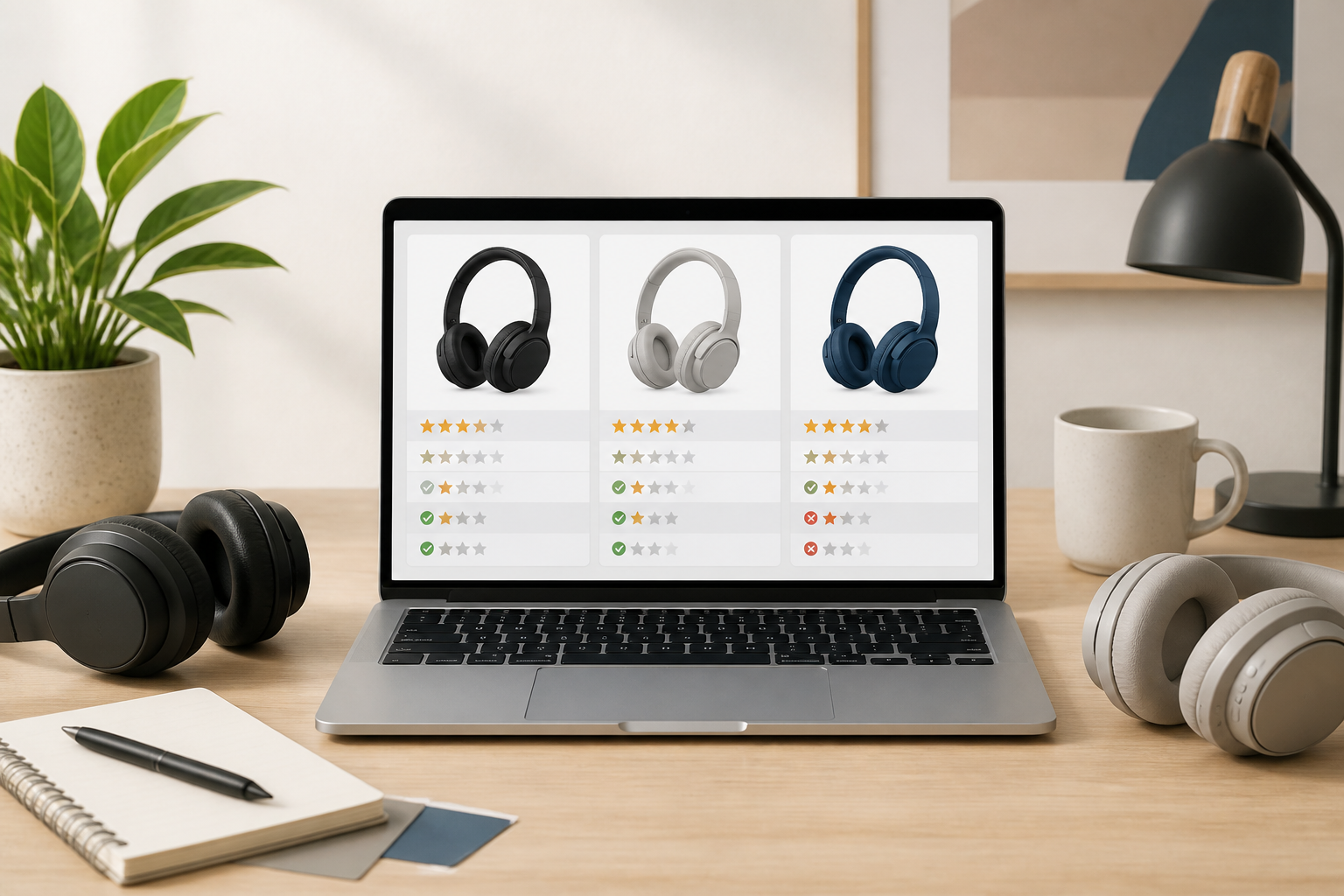
Reviews can be helpful, but they work best when you read them with a clear purpose. Do not use star ratings alone to decide. Instead, look for patterns in the comments and pay attention to what reviewers actually say about use, comfort, durability, and fit.
Search for repeated themes
If many people mention the same strengths or weaknesses, that pattern is more useful than a single extreme opinion. Repeated comments about ease of use, breakage, sizing, noise, texture, or setup can reveal practical differences between similar products.
Focus on reviews from people with similar needs
A product may be great for one type of user and less ideal for another. A compact item might be perfect for travel but too small for family use. A highly advanced product may be great for experienced users but unnecessarily complex for beginners. Look for reviews that match your situation, not just general praise.
Be cautious with overly vague reviews
Short comments like “great product” or “did not like it” do not provide much useful information. More helpful reviews usually explain why the product worked or did not work, what it was used for, and what trade-offs were noticed. The goal is not to find a perfect review, but to gather enough real-world context to support your choice.
Compare value, not just price
Price matters, but it should not be the only factor. A lower-priced product is not automatically the better deal, and a higher-priced product is not automatically better quality. Value comes from how well the product meets your needs over time.
Think about total value over time
Ask yourself which product is likely to be more satisfying in everyday use. A slightly more expensive item may offer better fit, easier cleaning, better materials, or more reliable performance. On the other hand, a lower-cost option may be the smarter choice if you only need the item occasionally or want something simple and basic.
Consider maintenance and replacement
Some products are cheap to buy but expensive or inconvenient to maintain. Others may have replaceable parts, easy cleaning, or durable construction that saves time later. When comparing similar products, think beyond the upfront cost and consider how much effort the product will require after purchase.
Watch for hidden trade-offs
A lower price may come with smaller capacity, fewer accessories, less durable materials, or a shorter expected lifespan. A higher price may include features you never use. The goal is not to buy the cheapest or the most expensive product, but the one that gives you the best match for your needs.
Check the seller, return policy, and support options
When two products appear similar, the buying experience around the product can become a deciding factor. Seller reliability, return terms, and support can make a difference if the item arrives damaged, does not fit, or simply does not meet expectations.
Review the return policy before you buy
Read the return window, refund terms, and any conditions that might apply. Some products are harder to return than others, especially if they are used, personalized, or opened. Knowing the policy in advance helps you avoid surprises if the product is not quite right.
Consider shipping details
Shipping time, packaging quality, and delivery options may matter more than you think. If you need the product soon, delivery speed may influence your decision. If the item is fragile, good packaging can matter as much as the product itself. Even when listings are similar, shipping details may tip the balance.
Look at seller communication and listing clarity
A seller that provides complete information, clear photos, and responsive customer support can offer a smoother shopping experience. This does not guarantee a better product, but it can reduce uncertainty and make future issues easier to resolve.
Use comparison points that actually matter
When products are close in price and appearance, the best comparison points are the ones that affect daily satisfaction. Not every detail deserves equal weight.
Match the product to your environment
Think about where and how the item will be used. Will it stay in one place or move around often? Will it be used indoors or outdoors? Will it need to fit in a small space, travel often, or handle frequent use? Environment can influence which product is more practical, even when the feature list looks similar.
Match the product to your skill level
Some products are designed for simple use, while others require learning or setup. If you prefer convenience, choose the option that is easier to understand and maintain. If you enjoy customization or advanced control, a more feature-rich product may be worthwhile. The best option is not always the most advanced one; it is the one you will actually enjoy using.
Match the product to your long-term plans
Ask whether this is a short-term purchase or something you want to use for a long time. If you expect your needs to change, flexibility may matter more than a specific feature. If you are buying something temporary or occasional, simplicity may be the better path.
Common mistakes people make when choosing between similar products
Many shoppers run into the same problems when comparing products online. Avoiding these mistakes can make your decision much easier.
Choosing based on one impressive feature
A single standout feature can distract from the rest of the product. One item may have a flashy add-on, but if the core performance is weaker, the extra feature may not make up for it.
Ignoring size and fit details
Size is one of the most common reasons a product disappoints after purchase. Always check measurements, compatibility, and capacity carefully. A product that looks ideal in photos may not suit your actual space or usage.
Assuming the higher price means better quality
Price can reflect many things, including branding, packaging, seller positioning, or included accessories. It does not always tell you which product will perform better for your needs.
Skipping the return policy
Even a well-chosen item can turn out to be wrong for personal reasons. If you skip the return details, you may have fewer options later.
Not comparing the same category of product
Sometimes products seem similar but are actually built for different use cases. Make sure you are comparing truly comparable items before drawing conclusions.
A practical method for comparing two similar products
If you want a simple process, use this order:
- Step 1: Define your needs and the main job the product must do
- Step 2: Identify must-have features, size limits, and compatibility requirements
- Step 3: Compare materials, construction, and specifications
- Step 4: Read the product description for clarity and consistency
- Step 5: Check reviews for repeated patterns and relevant user experiences
- Step 6: Compare value, not just listed price
- Step 7: Review the seller, shipping, and return policy
Using the same process every time makes comparison shopping less overwhelming. Over time, you will become faster at noticing which details matter and which ones can be ignored.
Who this approach may suit
This method is useful for everyday shoppers, first-time buyers, and anyone who feels stuck between products that look nearly identical. It is especially helpful if you:
- Want to avoid buying based on marketing alone
- Need to compare features without getting lost in jargon
- Are choosing between a budget option and a premium option
- Want a product that fits your space, routine, or skill level
- Prefer careful decisions over impulse purchases
If you regularly shop online, learning how to evaluate similar products can save time and reduce regret. It can also help you focus on the things that really matter in daily use rather than the details that only sound impressive.
Frequently Asked Questions
How do I know which similar product is better?
The better product is the one that best matches your needs, fits your space or compatibility requirements, and offers the strongest value for the way you plan to use it. Start with your must-haves, then compare the features that affect performance and convenience.
Should I always choose the product with more features?
Not necessarily. More features can mean more complexity, more maintenance, or a higher price. If you will only use a few core functions, a simpler product may be the better choice.
Are reviews enough to make a decision?
Reviews are helpful, but they should be only one part of the process. Use them alongside product details, specifications, return policy, and your own needs. Reviews work best when they reveal recurring patterns.
What if two products are almost identical?
If two products are truly close in quality and features, smaller factors may decide it: return policy, shipping time, seller clarity, included accessories, or which one better matches your preference for size, style, or simplicity.
Is the cheaper product usually the smarter choice?
Not always. A cheaper product can be a great value if it fits your needs well, but a low price should not override important differences in materials, durability, or compatibility. Think in terms of overall value, not just upfront cost.
Conclusion
Choosing between similar products online becomes much easier when you move beyond surface-level comparisons. Instead of focusing only on photos, price, or a single feature, look at the full picture: your needs, the core specifications, the materials and construction, the quality of the listing, the patterns in reviews, and the practical details around shipping and returns.
The best choice is rarely the most hyped one. It is usually the product that fits your situation most cleanly and gives you confidence after purchase. By using a simple, repeatable comparison process, you can shop more efficiently, avoid common mistakes, and choose with less stress. That approach works across many categories and can make online shopping feel much more manageable.
When two products seem nearly identical, the right answer is often hidden in the details. Take your time, compare thoughtfully, and choose the option that serves your needs best.