A cutting board is one of the most frequently used tools in any kitchen, yet it is often chosen quickly without much thought. The right board can make everyday prep smoother, protect your knives, give you more stable cutting space, and fit the way you cook. The wrong one may feel too small, slip around, wear out too fast, or be difficult to clean and maintain.
If you are trying to choose the right cutting board for your kitchen, the best place to start is not with style alone, but with how you actually cook. Do you chop vegetables every day? Break down large cuts of meat? Need something lightweight for quick tasks? Want a board that is easy to sanitize or one that looks good enough to leave on the counter? Different materials, sizes, and shapes serve different needs, so a good buying decision depends on balancing convenience, durability, and care.
This guide walks through the main factors to consider before buying a cutting board, along with practical tips and common mistakes to avoid. The goal is to help you choose a board that matches your kitchen, your habits, and the kinds of food you prepare most often.
Start With How You Use Your Kitchen
Before comparing materials, think about your cooking routine. The best cutting board is the one that fits your preparation style, not necessarily the one with the most features.
Consider the foods you prepare most often
If you regularly slice fruit, herbs, bread, or vegetables, you may want a board that feels comfortable for everyday prep and is easy to move or wash. If you often cut meat or work with juicy ingredients, a board with a juice groove or a larger surface may be helpful. Bakers may prefer a board that stays steady for rolling dough or portioning pastries.
Think about how many boards you need
Many kitchens benefit from more than one cutting board. A single board can work for light use, but separate boards for produce, raw meat, and bread can make meal prep more efficient and easier to organize. If space allows, keeping a few boards in different sizes is often more practical than relying on one all-purpose option.
Match the board to your storage space
A large, heavy board may be excellent for chopping but inconvenient if you have limited cabinet or counter space. If your kitchen is small, a slimmer board or a pair of medium boards may be more realistic than one oversized model. Storage matters as much as cutting performance because a board that is awkward to store may not get used regularly.
Understand the Main Cutting Board Materials
Material has the biggest impact on how a cutting board performs, how it feels under a knife, and how much care it needs. Each option has strengths and trade-offs, so the best choice depends on your priorities.
Wood cutting boards
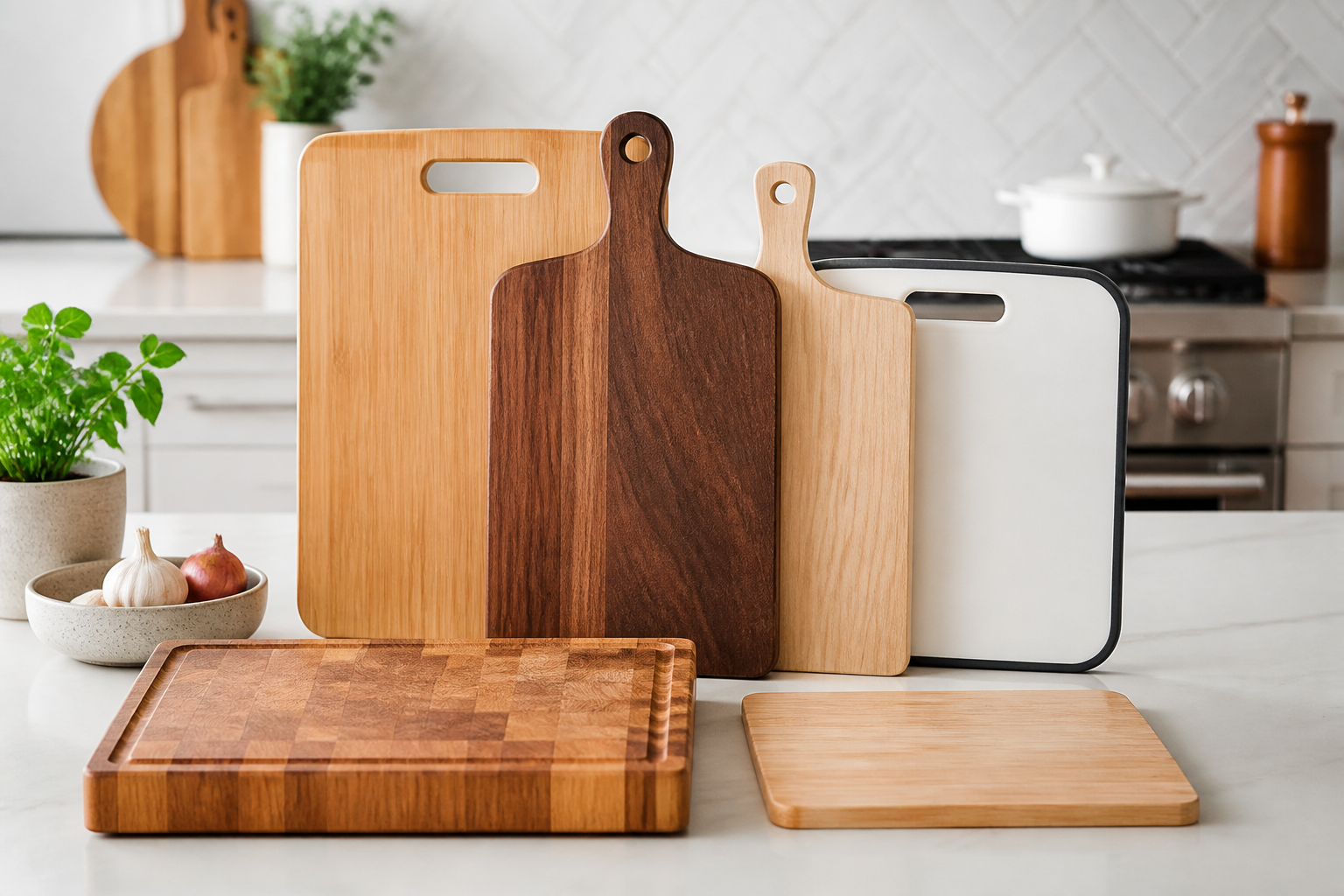
Wood is a classic choice for many home cooks. It is often valued for its knife-friendly surface, natural appearance, and solid feel during prep. Wood boards can be made from different species and constructions, and their quality varies widely.
Wood boards are often appealing if you want a board that feels stable and looks attractive enough for serving as well as prep. They may need periodic oiling or other care depending on the type of wood and construction. Because they are not as simple to maintain as some other materials, they suit cooks who are comfortable with routine upkeep.
Bamboo cutting boards
Bamboo is a popular alternative for shoppers who want a natural-looking board with a lighter feel. It is generally harder than many traditional woods, which can make it durable in some settings, but that hardness may feel less gentle on knives than softer wood boards.
Bamboo can be a good option if you want an affordable and lightweight board and do not mind some maintenance differences. It is worth noting that not all bamboo boards are made the same way, so finish quality and construction matter.
Plastic cutting boards
Plastic boards are widely used because they are lightweight, affordable, and easy to handle. They are often a practical choice for quick prep tasks and for households that want separate boards for different food types. They are usually easy to wash and replace when worn.
Plastic boards may show knife marks more quickly than some other materials, so they can develop grooves over time. Those grooves can make the surface harder to keep looking clean, which is one reason many people replace them periodically. For shoppers who want convenience and low maintenance, however, plastic remains a very practical option.
Composite and resin boards
Composite boards are made from mixed materials designed to balance durability, stability, and ease of care. These boards can feel substantial and may hold up well for frequent use. Some have a sleek appearance that works well in modern kitchens.
Because construction varies, it is wise to look closely at the product description and care instructions. Composite boards may appeal to people who want a more premium feel than basic plastic but less maintenance than some wood boards.
Glass and stone boards
Glass, marble, and other stone-like boards are often chosen for appearance or serving rather than everyday chopping. They can be easy to wipe clean, but they are usually harder on knives and may be more prone to slipping unless used carefully.
If your main goal is a prep surface for regular cutting, these materials are usually not the first choice. They may work better as serving platters or specialty surfaces than as your primary board.
Choose the Right Size and Shape
Size has a direct effect on comfort and efficiency. A board that is too small forces you to stop and clear space constantly, while one that is too large may be cumbersome to move or store.
Small boards
Small cutting boards are useful for quick tasks like slicing a lemon, chopping a few herbs, or cutting a sandwich. They are easy to wash and store, but they do not offer much room for larger ingredients or more involved prep.
Medium boards
Medium boards are often the most versatile choice for typical home kitchens. They provide enough space for everyday chopping while still being manageable for cleaning and storage. If you are buying your first board or replacing an old one, a medium size is often a safe starting point.
Large boards
Large boards are helpful when you cook often, work with multiple ingredients at once, or want plenty of landing space for chopped items. They can also help prevent ingredients from spilling over the edges. The trade-off is that they take up more counter space, can be heavier, and may require more care when washing and drying.
Consider shape and edge design
Most cutting boards are rectangular, and that shape is practical for most kitchens. Some boards have rounded corners, handles, or built-in grips, which can make lifting and carrying easier. Reversible boards can offer two usable sides, while boards with juice grooves may help contain liquid from meats, tomatoes, fruit, or other juicy ingredients.
The best shape is usually the one that gives you enough room without getting in the way. A board should feel stable and convenient, not decorative at the expense of practicality.
Pay Attention to Knife Friendliness
A cutting board should support your knives rather than wear them down unnecessarily. Some surfaces are gentler on blades, while others are harder and may dull knives more quickly over time.
Why surface feel matters
When you cut repeatedly on a board, the surface contact between blade and board matters. A board that is too hard may feel less comfortable and may create more resistance. A board with some give can make slicing feel smoother and more controlled.
When knife care and board choice go together
If you invest in good knives, it makes sense to choose a board that supports them. Many cooks prefer wood or certain composite boards for that reason. If convenience matters more and you use basic knives, a plastic board may still be a perfectly reasonable choice. The key is to align the board with the tools you already use.
Think About Cleaning and Maintenance
Maintenance is often overlooked until after the purchase, but it can determine whether a board is pleasant to own long term. A board that is easy to clean is more likely to be used regularly and kept in good condition.
Daily cleaning routine
Ask yourself how much cleanup you are willing to do after prep. Some boards can be washed quickly with soap and water and dried right away. Others need gentler handling or more careful drying. If you cook on busy weeknights, low-maintenance options may be more realistic than boards that require frequent conditioning or special treatment.
Long-term care
Wood boards may need periodic oiling to help them stay in good condition. Some boards should not be soaked for long periods, and some may be more sensitive to moisture changes. Plastic boards may be easier to care for day to day but might need replacement sooner if they become heavily scored. Composite boards often sit somewhere in between.
Match maintenance to your routine
If you enjoy caring for kitchen tools and do not mind an occasional upkeep task, a wood board may fit nicely. If you want something simple and low-fuss, a plastic or easy-care composite board may be a better match. Choosing a board that fits your habits is usually better than buying a high-maintenance option that you will later avoid using.
Look for Stability and Safety Features
A cutting board should stay in place while you work. Movement on the counter can make prep awkward and may lead to messy or uncomfortable cutting.
Non-slip design
Some boards include rubber feet, textured bases, or other features that improve grip. These can be especially helpful on smooth counters. If a board does not have built-in grip, many people use a damp cloth or towel underneath, but a purpose-built non-slip design is often more convenient.
Weight and balance
Heavier boards can feel more stable, while very light boards may slide around more easily. That said, a board should not be so heavy that it becomes difficult to lift, wash, or store. The ideal balance depends on how often you move it and how much prep space you have.
Thickness and rigidity
A board should feel sturdy enough to resist bending or flexing during use. Thin boards may be easier to store, but if they warp or feel flimsy, they can be frustrating. Thickness matters particularly for larger boards and for anyone who wants a reliable prep surface for heavier chopping tasks.
Decide Whether You Want One Board or Several
For many households, the smartest setup is not a single universal board but a small collection of boards chosen for different jobs. This approach can improve workflow and help you keep tasks organized.
Common board combinations
- A large board for vegetables, meat, and general meal prep
- A smaller board for quick fruit, cheese, or snack tasks
- A separate board for bread or baked goods
- A lightweight board that is easy to grab for fast jobs
Why multiple boards can help
Different boards reduce the need to wash one surface constantly during cooking. They also let you match the board to the task, which can improve comfort and efficiency. For example, a board used mainly for onions and garlic may not need the same presentation qualities as one used for serving cheese or sliced bread.
Common Buying Mistakes to Avoid
Choosing a cutting board is easy to do in a hurry, but a few common mistakes can lead to regret later.
Buying based on looks alone
A board may look elegant online or in a store, but if it is too small, too slippery, or hard to clean, it will not be satisfying in daily use. Appearance matters, especially if the board will be visible on the counter, but function should come first.
Ignoring storage and cleaning needs
Some buyers choose a large board without thinking about where it will go after use. Others overlook whether they are willing to hand-wash, dry, or condition it. A board that does not fit your cleanup routine often becomes an inconvenience instead of a helper.
Choosing the wrong material for the task
Not every board is ideal for every use. A board chosen mainly for decorative serving may not be the best everyday prep surface. Likewise, a very hard surface may be less suitable if you value knife care. Matching the material to your main cooking habits is one of the simplest ways to make a better purchase.
Using one board for everything without a plan
One board can work, but using the same board for every task without cleaning between uses is not a practical habit for most kitchens. A better approach is to decide how you will separate tasks and where each board will be used.
Practical Tips for Choosing the Right Board
These simple tips can help narrow your options and make the buying process easier.
- Choose a medium board first if you are unsure; it is often the most versatile size.
- Pick a material based on maintenance tolerance as well as appearance.
- Look for a board that stays stable on your countertop.
- Consider buying more than one board for different food prep tasks.
- Check whether the board is easy to store vertically or flat.
- Think about whether you want reversible use or a juice groove.
- Make sure the board feels comfortable to lift, wash, and carry.
If you often prep large meals, a larger board may be worth the extra space. If you cook in short bursts and want easy cleanup, a smaller or lighter option may be more practical. The goal is not to find a perfect board for everyone, but a good fit for your routine.
Who Each Type of Cutting Board May Suit
Different buyers have different priorities, and that makes some boards a better match than others.
Wood boards may suit
Home cooks who want a classic look, a stable feel, and a surface that is often considered gentle for knives. They may also appeal to people who do not mind routine care and want a board that can double as a serving piece.
Plastic boards may suit
Busy cooks who want a lightweight, affordable, easy-to-clean board for everyday use. They can also work well for shoppers who like to keep separate boards for different ingredients.
Bamboo boards may suit
Buyers who want a natural-looking, relatively lightweight board and prefer a straightforward option with a lower-maintenance feel than some wood boards.
Composite boards may suit
People looking for a more durable, modern-feeling board that balances stability and ease of care without moving fully into specialty territory.
Frequently Asked Questions
What is the best material for a cutting board?
There is no single best material for every kitchen. Wood, bamboo, plastic, and composite boards each have different strengths. The best choice depends on how you cook, how much maintenance you want, and whether you care most about knife feel, easy cleaning, or long-term durability.
What size cutting board should I buy first?
If you are buying just one board, a medium or medium-large board is often the most practical starting point. It gives enough working space for everyday prep without being too difficult to store or wash.
Do I need separate cutting boards for different foods?
Many households choose to keep more than one board because it makes prep easier and helps organize tasks. Separate boards can be especially convenient when you are cooking several ingredients at once or want a dedicated board for bread, produce, or raw meat.
Are expensive cutting boards always better?
Not necessarily. A higher price may reflect better materials, construction, or finish, but the most expensive board is not always the best fit. A well-chosen mid-range board that suits your habits may be more useful than a premium board that is difficult to maintain or too large for your kitchen.
How do I know if a cutting board is good quality?
Look for a board that feels stable, has a well-finished surface, fits your storage space, and matches your cleaning routine. Good quality is not only about appearance; it is also about how comfortably the board works in everyday use.
Conclusion
Choosing the right cutting board for your kitchen comes down to understanding how you cook, how much space you have, and how much care you are willing to give the board over time. Material, size, stability, maintenance, and knife friendliness all matter, but the best option is usually the one that fits your real habits instead of your idealized kitchen.
If you want a simple all-purpose choice, start with a medium-sized board that feels stable and is easy to clean. If you cook often or prepare many different foods, consider adding a second or third board for specific tasks. By matching the board to your cooking style, you can make daily prep more comfortable, more efficient, and better organized.
For shoppers comparing options, it helps to keep your priorities clear: convenience, durability, appearance, and maintenance. Once you know which of those matters most, finding the right cutting board becomes much easier.