Choosing the right water bottle for everyday use sounds simple until you start comparing materials, sizes, lid styles, insulation, and features that all seem useful in different ways. A good bottle should fit your routine, be comfortable to carry, easy to clean, and suitable for the places you use it most. The best choice for a commuter may not be the best choice for someone who works at a desk, goes to the gym, or spends long hours outdoors.
This guide breaks the decision into practical parts so you can narrow down what matters most before buying. Instead of focusing on trends, the goal here is to help you choose a water bottle that feels convenient in daily life and supports consistent hydration without becoming annoying to carry, wash, or refill.
Start with how you plan to use the bottle
The most important question is not which bottle looks best, but where and how you will use it. Everyday use can mean very different things depending on your routine. A bottle that works well on a desk may be awkward in a backpack. A bottle that is excellent for long car rides may be too bulky for a small purse or gym bag.
Think about your main situations:
- Office or desk use: You may want a bottle that is quiet, stable, and easy to sip from repeatedly.
- Commuting: A bottle should fit in a bag or cup holder and ideally not leak if tipped over.
- Gym or exercise: Fast access, one-handed drinking, and a secure lid often matter most.
- School or campus: Durability and portability are usually more important than advanced features.
- Travel or errands: A lightweight bottle that is easy to refill and carry tends to work best.
Once you know the main scenario, it becomes easier to judge which features are helpful and which are unnecessary. The right bottle is often the one that disappears into your routine instead of forcing you to adapt around it.
Choose the right material for your needs
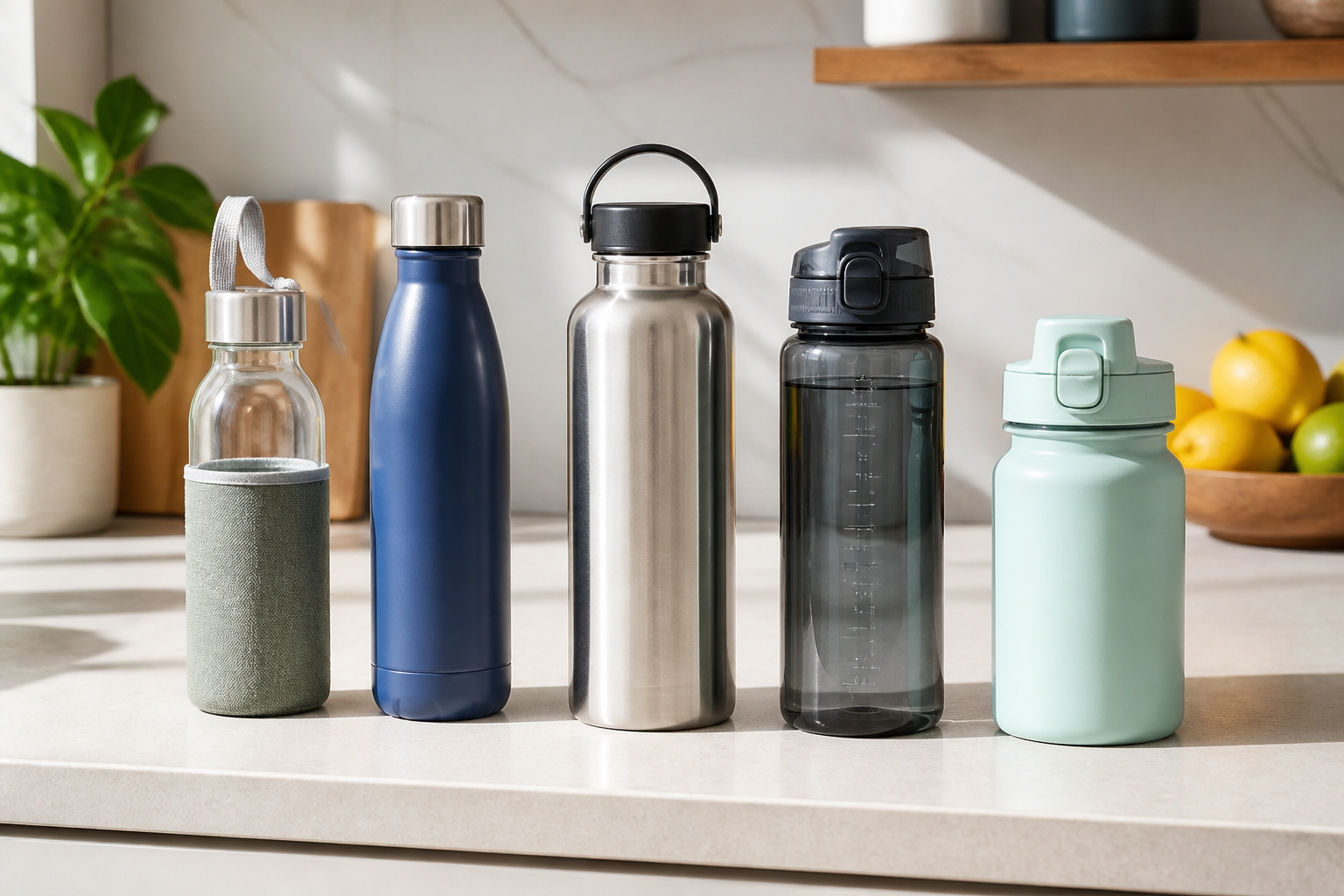
Water bottles are commonly made from stainless steel, plastic, glass, or silicone. Each material has tradeoffs, and the best one depends on your priorities. There is no single “best” material for everyone.
Stainless steel
Stainless steel is a popular choice for everyday bottles because it is generally durable and can hold up well to repeated use. Many stainless steel bottles are insulated, which can help keep drinks colder or warmer for longer periods compared with non-insulated options. They also tend to resist odors and staining better than some other materials.
Potential drawbacks include added weight and a higher price in some cases. If you prefer a lightweight bottle for a small bag, stainless steel may feel heavier than desired. It is also worth checking whether the bottle’s interior is easy to clean, especially if it has a narrow mouth.
Plastic
Plastic water bottles are often lighter and more affordable, which makes them convenient for everyday carry. They can be a practical choice for people who want a simple bottle that does not add much weight to a bag or backpack. Many plastic bottles also come in a wide variety of shapes and colors.
When considering plastic, look for a bottle designed for repeated use and easy cleaning. It is also helpful to choose one that feels sturdy enough for daily handling. Plastic bottles may show wear more quickly than other materials, and some people prefer other materials for taste, odor, or long-term durability reasons.
Glass
Glass bottles appeal to people who want a clean taste and a premium feel. They are often easy to rinse and do not retain odors as easily as some other materials. For desk use or home use, glass can be a good choice if you are careful with breakage.
The main limitations are weight and fragility. Glass may be less practical for commuting, travel, or active use unless it has a protective sleeve or another design feature that improves grip and durability.
Silicone
Silicone bottles are often chosen for portability because some designs can collapse or fold down when not in use. This makes them appealing for travel, occasional outings, or situations where storage space matters. They are also generally lightweight and flexible.
However, silicone designs vary widely, and some may not feel as rigid or stable as other materials. If you prefer a bottle that stands firmly on a desk or in a car cup holder, make sure the design is suitable for that use.
Select a size that fits your hydration habits
Size matters more than many buyers expect. A bottle that is too small may need constant refilling, while one that is too large may be heavy and inconvenient to carry. The ideal size depends on how much you drink, how often you can refill, and where you carry the bottle.
For everyday use, a mid-range size is often the easiest starting point because it balances portability and convenience. If you know you drink frequently and have easy access to refill stations, a smaller bottle may be enough. If you spend long hours away from a sink or refill point, a larger bottle may make more sense.
Here are useful factors to think about:
- Carry comfort: Will the bottle feel manageable in your hand or bag?
- Refill frequency: Do you want to refill once, several times, or as rarely as possible?
- Storage space: Does it need to fit in a car holder, backpack pocket, or office drawer?
- Daily routine: Are you drinking at a desk, during workouts, or while moving around all day?
A bottle that matches your habits is more likely to be used consistently. If a bottle feels too cumbersome, it may stay on the counter instead of going with you.
Pay attention to lid style and drinking method
The lid affects everyday convenience more than many shoppers realize. A bottle can have an excellent body design but still feel frustrating if the lid is awkward, difficult to open, or hard to clean. Think about how you prefer to drink and whether you need one-handed use, fast sips, or a fully sealed design.
Twist caps
Twist caps are simple and common. They can be secure and easy to understand, and some people like the straightforward design. However, they may require two hands to open, which can be less convenient when you are driving, walking, or carrying other items.
Flip-top lids
Flip-top lids can be useful for quick access and frequent sipping. They are often practical for the gym, school, or work. If you choose this style, check that the latch feels secure and that the opening is comfortable for your drinking style.
Straw lids
Straw lids are often preferred by people who like to sip without tilting the bottle. This can be convenient at a desk or during activities where you want an easy, controlled drinking motion. Straw-style lids may also be helpful for one-handed use.
Consider whether the straw is removable and easy to clean, because lid complexity can affect maintenance. A convenient lid is only valuable if you can keep it clean without much hassle.
Wide-mouth openings
Wide-mouth bottles are often easier to fill, clean, and add ice to. They can be a good option if you want a versatile bottle that is simple to maintain. On the other hand, some people prefer narrower openings for smoother drinking or less splashing.
The best choice depends on whether you value easy cleaning and refilling more than a specific drinking feel.
Consider insulation based on your routine
Insulated bottles are designed to help maintain drink temperature longer than non-insulated ones. For some people, this is a major convenience. For others, it is unnecessary extra weight and cost. The right answer depends on how you use the bottle and what you expect from it.
If you often like cold water throughout the day, work in a warm environment, or spend time outside, insulation may be worth considering. It can also be helpful if you prefer drinks to stay at a consistent temperature during a commute or long workday.
If your main goal is simply carrying water from one place to another, a non-insulated bottle may be enough. These bottles are often lighter and simpler. They may also be easier to pack if you want a minimal everyday carry setup.
A useful way to decide is to ask whether temperature retention is a “nice to have” or an important part of your routine. If you regularly refill from a cold source and finish your water quickly, insulation may not be necessary.
Look for easy cleaning and low-maintenance design
A bottle only works well in daily life if you are willing to clean it. Some designs are simple to wash quickly, while others have more parts that can trap residue or require careful attention. Since water bottles are used repeatedly, cleaning convenience is worth considering before purchase.
Helpful cleaning features include:
- Wide openings: Easier to rinse, scrub, and dry.
- Simple lid construction: Fewer parts usually mean less hassle.
- Removable components: Good for thorough cleaning if the design is still easy to reassemble.
- Smooth interior surfaces: Often easier to maintain than complicated interiors.
If you dislike cleaning complicated parts, choose a bottle that stays simple. A design that seems impressive on the shelf may become inconvenient after a few weeks if it takes too long to maintain.
Check portability and everyday comfort
Since this is an everyday bottle, comfort matters. Portability is not just about weight; it also includes grip, shape, balance, and how easy it is to carry throughout the day. A bottle that is technically practical can still be annoying if it does not fit well in your routine.
Think about the following:
- Shape: Does it fit in your hand comfortably?
- Grip: Is it easy to hold when wet or when your hands are full?
- Carry loop or handle: Helpful if you move around a lot.
- Base stability: Important if you place it on desks, counters, or in vehicles.
- Bag compatibility: Will it fit in pockets or compartments you already use?
If you commute or move between tasks often, a bottle with a practical handle or a shape that is easy to grab can make daily use smoother. If you mostly keep the bottle at a desk, stability and ease of sipping may matter more than carry features.
Think about leak resistance and reliability
Leak resistance is one of the most important practical features in an everyday bottle. Even a small leak can create inconvenience in a backpack, work bag, or car. A secure lid is especially important if you carry the bottle horizontally, toss it into a bag, or travel regularly.
Look for a design that is intended to close securely and make sure the lid seems straightforward to tighten or latch properly. If a bottle has multiple moving parts, it may require more attention each time you close it. That is not necessarily a problem, but it does mean the bottle depends more on careful use.
If you often place your bottle next to electronics, documents, or fabric items, prioritize a design that feels dependable. Everyday convenience is not just about drinking water quickly; it is also about avoiding small disruptions.
Match the bottle to your personal preferences
After covering the practical basics, narrow your choices with your personal preferences. These details do not matter to everyone, but they can make a bottle feel much better in daily use.
- Taste preference: Some people prefer the feel of one material over another.
- Appearance: If you like the bottle, you may be more likely to use it consistently.
- Noise level: Consider whether the bottle makes noise when set down or opened.
- Color or label style: Can help you identify it quickly.
- Minimal vs. feature-rich: Decide whether you want simplicity or added functionality.
These preferences may seem minor, but daily use is shaped by small comfort factors. A bottle that suits your habits and your taste is more likely to become a regular part of your routine.
Common mistakes to avoid when buying a water bottle
Many shoppers focus on one feature and overlook the rest. A well-rounded decision usually prevents regret later.
- Choosing size without thinking about carrying: A large bottle is not helpful if it is too bulky to take with you.
- Prioritizing looks over cleaning: A stylish bottle can become inconvenient if it is difficult to wash.
- Ignoring lid design: The lid often determines how easy the bottle is to use every day.
- Buying insulation when you do not need it: This can add weight and cost without improving your routine.
- Overlooking fit: A bottle that does not fit in your bag or cup holder may be left behind more often.
- Choosing too many features: More features can mean more parts to manage and clean.
A simple rule is to choose the most practical bottle you will actually carry and clean. Convenience usually matters more than novelty.
Who different bottle types may suit
Different shoppers tend to benefit from different bottle styles. Use this as a rough guide rather than a strict rule.
- Stainless steel insulated bottles: Often a good fit for people who want temperature retention and a durable everyday option.
- Lightweight plastic bottles: Often suited to people who want a simple, portable, budget-friendly bottle for frequent carrying.
- Glass bottles: Often suited to desk use, home use, or anyone who prefers a clean-tasting drinking experience and does not mind extra care.
- Collapsible silicone bottles: Often suited to travel or storage-conscious users who value space-saving convenience.
If you are unsure, start with the bottle type that best matches your main environment. A bottle used mostly at home can prioritize comfort and style, while a bottle used outside the home should prioritize portability and durability.
Practical tips for getting the most from your bottle
Once you choose a bottle, a few simple habits can make it more useful in everyday life.
- Keep it where you can see it: A visible bottle is easier to remember.
- Refill at regular points in your day: For example, when arriving at work or returning home.
- Clean it consistently: Regular cleaning helps keep daily use pleasant.
- Use the right size for the outing: You may want a different size for travel than for desk use.
- Check the lid before packing: This reduces the chance of leaks or spills.
Small routines make a big difference. A good bottle is most valuable when it is easy to integrate into your day without much thought.
Frequently asked questions
What is the best type of water bottle for everyday use?
The best type depends on your routine. Stainless steel is often a strong all-around choice, plastic can be good for lightweight convenience, glass can suit desk use, and silicone can be useful for portability. The right bottle is the one that matches how and where you actually use it.
Is a larger water bottle always better?
Not necessarily. A larger bottle reduces refill frequency, but it can also be heavier and less portable. The best size balances how much water you want on hand with how comfortable it is to carry.
Do I need an insulated bottle for daily use?
Only if temperature retention matters to your routine. If you like cold water for long periods or want a bottle for commuting or outdoor use, insulation may help. If you mainly need a simple bottle for nearby refills, it may not be necessary.
Which lid is easiest for everyday use?
That depends on how you drink. Straw lids and flip-top lids can be convenient for frequent sipping, while twist caps are simple and secure. The easiest lid is usually the one that fits your habits and is easy to clean.
How important is cleaning when choosing a bottle?
Very important. A bottle that is hard to clean may become inconvenient quickly. Look for a design with a simple opening, manageable lid parts, and a shape you can maintain without much effort.
Conclusion
Choosing the right water bottle for everyday use is mostly about matching the bottle to your real routine. Start with how you plan to use it, then compare materials, size, lid style, insulation, cleaning ease, and portability. When those factors line up with your day-to-day habits, the bottle becomes much easier to carry, refill, and use consistently.
If you want the simplest approach, focus on four basics: a size you will comfortably carry, a lid you enjoy using, a material that suits your environment, and a design that is easy to clean. With those priorities in mind, you can choose a bottle that feels practical every day instead of only looking good on the first day.