Wireless earbuds are one of the most convenient audio accessories you can buy, but the number of options can make the decision feel overwhelming. Some models focus on portable comfort, others emphasize sound quality, and many are built around special features such as active noise cancellation, workout-ready water resistance, or strong battery life. The best choice is not simply the most expensive pair or the one with the longest feature list. It is the pair that fits your listening habits, your device, and your daily routine.
This guide explains the most important factors to compare before buying wireless earbuds. Whether you want earbuds for commuting, workouts, video calls, travel, or everyday listening, understanding these features will help you narrow your options and avoid common mistakes.
Start with How You Plan to Use the Earbuds
The first step in choosing wireless earbuds is identifying the main way you will use them. Different use cases prioritize different features, and the right pair for one person may be a poor match for someone else.
Everyday listening
If you mainly listen to music, podcasts, and videos at home or on the go, comfort, reliable connection, and balanced sound may matter most. A compact charging case and simple controls can also make daily use easier.
Commuting and travel
For trains, buses, flights, and noisy public environments, look for strong passive fit and features such as noise cancellation or a well-designed seal. Long battery life and a comfortable fit for extended wear are especially useful here.
Work and calls
If you use earbuds for meetings, calls, or online classes, microphone quality, stable Bluetooth performance, and clear voice pickup become more important. Some earbuds include multiple microphones or voice-focused processing to improve call clarity.
Exercise and outdoor activity
For workouts, choose earbuds that stay secure during movement and offer appropriate water or sweat resistance. Physical controls may be easier to use than touch controls when you are moving quickly or wearing gloves.
Understand the Fit and Comfort First
Fit is one of the most important factors in any wireless earbud purchase. Even excellent sound quality will not matter much if the earbuds feel uncomfortable or fall out during use.
Earbud shape and size
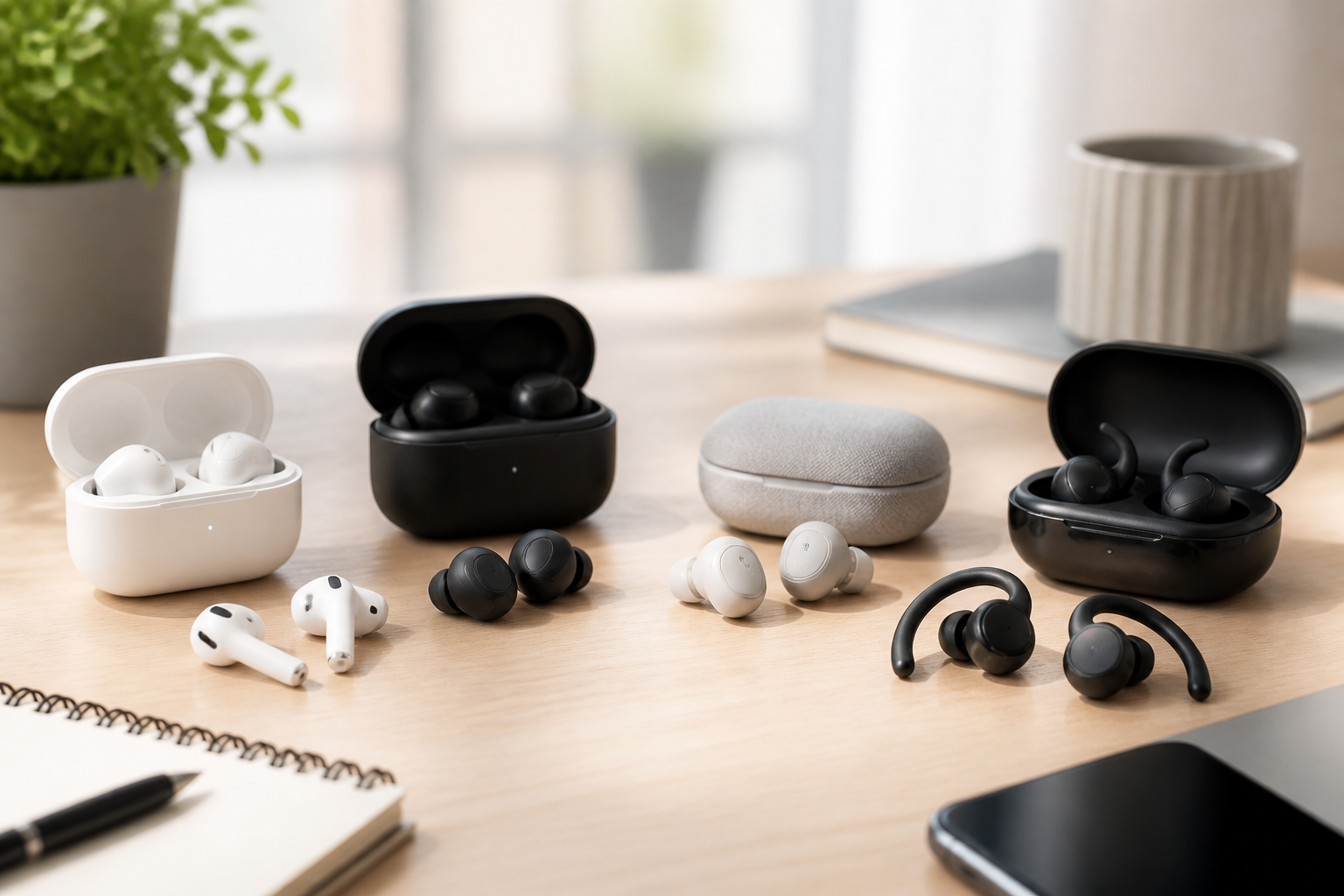
Wireless earbuds come in many shapes, from small stem designs to more rounded in-ear models. The best shape depends on your ear anatomy and comfort preferences. A secure but gentle fit is usually better than a tight fit that causes pressure over time.
Ear tip options
Many in-ear models include multiple ear tip sizes. This matters because the right tip can improve both comfort and sound. A proper seal may help bass response and may also reduce outside noise. If the included tips do not fit well, replacement tips can sometimes improve the experience.
Stability during movement
If you plan to wear earbuds while walking, exercising, or commuting, look for designs that feel stable when you move your head. Some earbuds include wing tips or ear fins for added security. Others depend mostly on the ear tip seal and earbud shape.
Pay Attention to Sound Quality, but Keep Expectations Realistic
Sound quality is a major reason people buy wireless earbuds, but it can be hard to judge from product pages alone. Marketing terms may sound impressive, yet they do not always tell you how the earbuds will actually sound.
Balanced sound versus bass-heavy sound
Some earbuds are tuned for a balanced sound, where vocals, instruments, and bass are all relatively even. Others emphasize deeper bass for a more energetic presentation. There is no single correct choice; it depends on the genres you listen to and your taste.
Detail and clarity
If you listen to podcasts, acoustic music, or spoken-word content, clarity may matter more than boosted bass. For these uses, look for reviews or product descriptions that mention clear mids and good voice reproduction.
App-based sound customization
Many earbuds come with companion apps that offer equalizer controls or listening presets. This can be useful if you want to adjust the sound for different music styles or if the default tuning is not exactly right for you.
Check Battery Life and Charging Options
Battery life is another key factor, especially if you use earbuds throughout the day or travel often. It helps to think about both the earbud battery and the charging case battery.
Single charge playback time
The playback time per charge tells you how long the earbuds last before they need to return to the case. If you only use earbuds for short sessions, modest battery life may be enough. If you plan long flights, workdays, or extended commuting, longer runtime is more useful.
Charging case capacity
The case can recharge the earbuds multiple times. This means the total listening time may be much longer than a single charge suggests. A larger case may offer more backup power, though it can also be less pocket-friendly.
Fast charging
Fast charging can be very helpful when you are in a hurry. A brief charge may give you enough listening time for a commute or workout, which reduces the stress of running low on battery.
Wireless charging
Some models support wireless charging, which may be convenient if you already use a compatible charging pad. This is not essential for everyone, but it can add convenience to daily use.
Look at Bluetooth Performance and Device Compatibility
Wireless earbuds depend on Bluetooth connection quality, and this can affect how reliable they are in daily use. A strong connection is important for music, video playback, and calls.
Connection stability
Stable Bluetooth performance helps reduce dropouts, delays, and interruptions. This is especially important if you listen in places with many wireless signals, such as gyms, offices, or busy transport hubs.
Multi-device pairing
Some earbuds can connect to more than one device or switch between devices easily. This is useful if you regularly move between a phone, tablet, and laptop. If you work across multiple devices, this convenience can matter as much as sound quality.
Operating system compatibility
Many earbuds work with both iPhone and Android devices, but some features may be more polished on one platform than another. For example, app functions, quick pairing, or voice assistant access can vary depending on the brand and device ecosystem.
Decide Whether You Need Noise Cancellation or Transparency Mode
Noise control features are helpful for many buyers, but they are not necessary for everyone. Understanding the difference between active noise cancellation and transparency mode can help you choose wisely.
Active noise cancellation
Active noise cancellation, often called ANC, is designed to reduce background noise so your audio is easier to hear. This is especially useful in planes, offices, and other loud spaces. ANC can improve focus and listening comfort, but its effectiveness varies by model and fit.
Transparency mode
Transparency mode allows outside sound to come through more naturally so you can stay aware of your surroundings. This can be useful when walking outdoors, talking with someone briefly, or listening in situations where full isolation is not practical.
When noise control matters most
If you mostly listen in quiet rooms, you may not need advanced noise control. If your daily routine includes loud environments, though, it may be worth prioritizing. Choosing between better sound quality and stronger noise control is often part of the buying process, so think about which matters more to you.
Review Water and Sweat Resistance
If you will wear wireless earbuds during exercise or in unpredictable weather, water resistance is worth checking carefully. This feature is usually described with an IP rating.
Why the IP rating matters
An IP rating gives a general indication of how well the earbuds resist dust and moisture. For workouts, sweat resistance is useful. For outdoor use, light rain protection may also matter. The rating does not make earbuds invincible, but it helps you compare models more confidently.
Match resistance to your activity
Casual listeners may not need a high level of resistance. However, if you run, cycle, or train regularly, choosing earbuds with better moisture protection can reduce worry and improve longevity.
Compare Controls and Ease of Use
The way you control your earbuds affects everyday convenience. Some people prefer touch-sensitive controls, while others want buttons or physical stems they can press with certainty.
Touch controls
Touch controls can look sleek and feel modern, but they may be easier to trigger accidentally. They can work well for volume, playback, and call management if the controls are responsive and clearly mapped.
Physical buttons
Physical buttons or pressable stems can be easier to use during workouts or in cold weather. They provide a more definite action, which some buyers find more reliable than touch surfaces.
Voice controls and app settings
Some earbuds support voice assistants or allow custom button assignments through an app. This can improve convenience if you want to adjust controls to match your habits.
Think About Call Quality and Microphones
Call quality is often overlooked until it becomes a problem. If you take a lot of calls, it is worth paying attention to microphone design and voice clarity.
Microphone placement
Earbuds with well-placed microphones may pick up your voice more clearly. Some designs use multiple microphones to better isolate speech from surrounding noise.
Background noise handling
If you plan to use earbuds in busy streets, offices, or public places, look for models that mention noise reduction for calls. This can improve how clearly other people hear you, though performance can vary.
Use case matters
For light calling, basic microphone performance may be enough. For frequent work calls, online meetings, or remote learning, better microphone quality is a more important purchase factor.
Do Not Ignore the Charging Case
The earbuds themselves get the attention, but the charging case affects daily convenience too. A good case should be easy to carry, easy to open, and dependable for recharging.
Size and portability
If you carry earbuds in a pocket or small bag, compact size matters. A smaller case is usually more convenient, while a larger case may offer more battery reserve.
Build quality
The case should feel sturdy enough for regular use. Since it will be opened and closed often, weak hinges or flimsy construction can become frustrating over time.
Pairing and storage convenience
Some cases make it very easy to store and retrieve the earbuds quickly. If you use earbuds throughout the day, this small detail can become a major part of the ownership experience.
Set a Realistic Budget and Prioritize Features
Wireless earbuds cover a wide price range, so it helps to prioritize what matters most before comparing models. More features do not always mean better value if you will not use them.
Budget models
Lower-cost earbuds can be a good choice for casual listening, backup use, or first-time buyers. In this range, focus on comfort, connection reliability, and acceptable battery life rather than expecting advanced extras.
Mid-range models
Many buyers find the best balance in the middle of the market. This range often offers a stronger mix of comfort, sound quality, battery life, app support, and useful features without pushing into premium pricing.
Premium models
Higher-end earbuds may offer more refined sound, better noise cancellation, stronger microphone systems, and more polished apps. These extras can be worth it if you use earbuds heavily every day, but they are not necessary for every buyer.
Common Mistakes to Avoid When Buying Wireless Earbuds
A few simple mistakes can lead to disappointment, even when the earbuds themselves are decent.
- Choosing based on brand alone: Brand reputation can help, but it does not guarantee the right fit or feature set for your needs.
- Ignoring comfort: Earbuds that sound great but feel uncomfortable will likely be used less often.
- Overvaluing long spec sheets: A long list of features does not always translate to better real-world use.
- Forgetting about your device: Make sure the earbuds work well with your phone, tablet, or laptop setup.
- Buying noise cancellation you will not use: If you listen mostly in quiet places, that feature may not be worth paying extra for.
- Skipping battery considerations: Short battery life can become frustrating quickly if you listen for long stretches.
Practical Buying Tips
To make a smarter purchase, compare a few key points side by side rather than focusing on only one feature.
- Match the earbuds to your daily routine: Travel, exercise, calls, and casual listening all have different priorities.
- Check the fit options: Multiple tip sizes or secure designs can improve comfort and stability.
- Look for app support if customization matters: An app can help with sound tuning, control settings, and firmware updates.
- Compare total battery life, not just one charge: The charging case can make a big difference.
- Consider whether you need ANC: Only pay for it if you will use it often.
- Read specifications carefully: Details like water resistance, device compatibility, and charging type affect everyday convenience.
Who Wireless Earbuds May Suit Best
Wireless earbuds are flexible enough to suit many kinds of users, but certain types of buyers benefit especially from them.
- Commuters: Useful for portable listening and noise reduction in transit.
- Students and remote workers: Handy for calls, classes, and switching between devices.
- Fitness-focused users: Convenient when paired with secure fit and moisture resistance.
- Casual listeners: Good for podcasts, videos, and daily listening with minimal setup.
- Frequent travelers: Helpful for portability, battery life, and noise control on the move.
Frequently Asked Questions
What is the most important factor when choosing wireless earbuds?
For many buyers, fit is the most important factor because it affects comfort, stability, and even sound quality. After that, consider battery life, sound tuning, and any special features you actually plan to use.
Do expensive wireless earbuds always sound better?
Not always. Higher-priced earbuds may offer more refined performance or extra features, but the sound signature still comes down to tuning and personal preference. A mid-range model may be a better fit for your listening style.
Is active noise cancellation worth it?
It can be worth it if you often listen in noisy places such as planes, trains, offices, or city streets. If you mostly listen in quiet environments, you may not need to pay extra for it.
How do I know if earbuds will fit me well?
Look for models with multiple ear tip sizes, secure earbud shapes, or sport-focused stabilizers. Since fit is highly personal, flexibility in sizing is a helpful sign.
Should I choose earbuds with touch controls or buttons?
That depends on your preference. Touch controls can feel sleek, while physical buttons may be more reliable during exercise or in challenging conditions. Choose the option that feels easiest for you to use consistently.
Conclusion
Choosing wireless earbuds becomes much easier when you focus on the features that actually affect your daily listening. Start with fit and comfort, then consider sound quality, battery life, Bluetooth reliability, noise control, water resistance, and controls. From there, narrow your choices based on how you plan to use them most often.
The best wireless earbuds are not simply the ones with the most features. They are the ones that feel comfortable, work well with your devices, and match your routine without unnecessary compromises. By comparing the right details before buying, you can choose a pair that delivers a better experience every day.