A comfortable study space at home can make a real difference in how long you can focus, how organized your materials feel, and how likely you are to return to your desk each day. Whether you are setting up a full home office, a student study corner, or a small tabletop workspace, comfort is not just about soft chairs or attractive decor. It is about building a space that supports concentration, reduces distractions, and feels easy to use for everyday study sessions.
The best home study spaces are usually simple, practical, and tailored to the person using them. A room does not need to be large, expensive, or perfectly styled to work well. What matters most is that the essentials are chosen thoughtfully: a suitable surface, a supportive seat, enough light, a manageable level of noise, and a layout that keeps your most-used items within reach. When these pieces come together, studying at home becomes less tiring and more consistent.
This guide walks through the main elements to consider when creating a comfortable study space at home, with buying tips and practical ideas you can adapt to your own room, budget, and routine.
Start with the right location
The first step is deciding where the study space should go. In many homes, the ideal spot is not necessarily the quietest room available, but the one that offers the best balance of privacy, light, and convenience. If possible, choose an area with some separation from the busiest parts of the home, especially if other people may be talking, cooking, or moving around nearby.
When comparing possible locations, think about how often you will use the space and what kind of study you do there. If you need long, focused sessions, a more secluded area may help reduce interruptions. If you mainly use the space for reading, laptop work, or homework, a corner of a bedroom or living room may be enough. The key is to make the location feel intentional, even if it is small.
Things to look for in a study location
- Natural light: A spot near a window can feel more pleasant during daytime study, though you will still need lamp light for darker hours.
- Low traffic: Areas with fewer passersby usually make it easier to concentrate.
- Enough wall or surface space: You do not need a large room, but you do need enough room to place a desk or table without feeling cramped.
- Access to power: If you use a laptop, printer, lamp, or charging devices, nearby outlets can make the space more practical.
- Comfortable temperature: A room that is too warm, cold, or drafty can make it harder to stay focused.
If you are working with a small home, consider using a foldable desk, a wall-mounted surface, or a dedicated corner that can still feel separate through lighting, storage, or a small rug. Even a compact area can become a reliable study zone when it is clearly defined.
Choose a desk or surface that suits your study habits
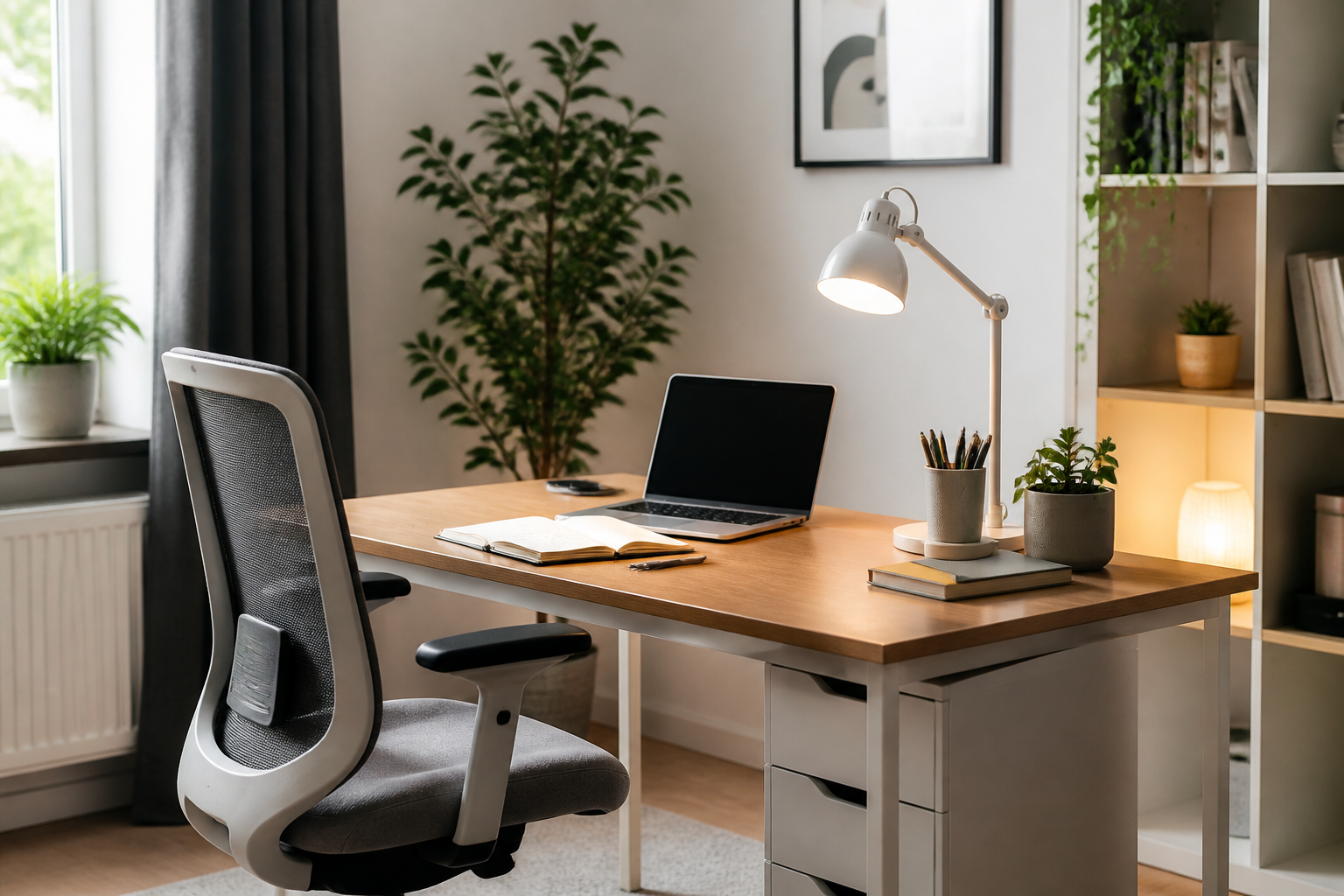
The desk or work surface is one of the most important parts of a comfortable study space. It should provide enough room for your main tasks without forcing you to crowd everything together. If you primarily use a laptop and notebook, a smaller desk may be enough. If you spread out textbooks, art supplies, or multiple devices, you may want a larger surface.
Comfort is often improved by choosing a desk height that allows your arms to rest naturally while you work. The goal is to avoid feeling hunched, stretched, or squeezed into an awkward position. If you are buying a new desk, look at the dimensions carefully and compare them with your chair height and the type of work you do.
Helpful desk features to consider
- Surface size: A wider desk can help if you need room for books, writing, and a computer at the same time.
- Stability: A sturdy desk is usually more comfortable to use because it reduces wobbling and makes writing or typing easier.
- Storage: Drawers, shelves, or an under-desk shelf can help keep small supplies organized.
- Material and finish: Smooth, easy-to-clean surfaces are practical for everyday use.
- Cable management options: Openings or channels for cords can help reduce clutter.
If a traditional desk is not possible, a sturdy table may work well as long as it gives you a consistent surface. What matters most is that the setup feels usable and repeatable, not temporary and improvised every day.
Pick a chair that supports long study sessions
A comfortable chair can make a major difference in how long you can stay focused. Since people often sit for extended periods while studying, it helps to choose seating that provides both support and flexibility. The chair does not need to be expensive, but it should feel appropriate for the amount of time you expect to use it.
Look for a chair that lets you sit with your feet flat on the floor or on a footrest, while your elbows can rest comfortably near desk height. If the chair is too low, too high, too deep, or too rigid, you may end up shifting constantly. Small discomforts can become distracting over time.
Important chair features
- Seat height adjustment: Useful if more than one person may use the space or if you need to match the chair to a specific desk.
- Back support: A backrest that feels supportive may help the chair feel more comfortable over longer sessions.
- Seat depth: A seat that is too deep or too shallow can feel awkward, especially during long study periods.
- Armrests: These can be helpful for some people, but they may also get in the way if the desk is small.
- Easy-to-clean fabric or surface: Practical for everyday use in shared homes or student rooms.
If you already have a chair, you may not need to replace it right away. A cushion, small footrest, or chair adjustment can sometimes improve comfort enough to make the setup more workable. The goal is not perfection; it is creating a seat you can actually use for a full study session without feeling distracted by discomfort.
Get lighting right for focus and comfort
Good lighting is essential in a study space because it affects both visibility and overall feel. A dim area can strain the eyes and make work feel more difficult, while overly harsh light can feel tiring in a different way. The most practical setup often combines natural daylight when available with a dependable task lamp for focused work.
If your study area has a window, consider how daylight changes through the day. Glare on a screen or direct sunlight on papers can be distracting, so blinds, curtains, or a changed desk angle may help. For evening study, a desk lamp or other task lighting can provide direct light where you need it most.
Lighting features to consider
- Adjustability: A lamp with a movable head or brightness settings can be more versatile.
- Color and tone: Some people prefer softer light for comfort, while others prefer brighter light for detailed work.
- Placement: Light should fall on your work area without creating shadows from your hand or body.
- Screen balance: If you work on a laptop, try to keep the light balanced so the screen does not feel too bright or too dim compared with the room.
Lighting is one of the easiest ways to make a study space feel more inviting. A small adjustment, such as changing lamp position or adding a second light source, can make reading and writing feel less tiring.
Reduce clutter with practical storage
A comfortable study space is usually easier to maintain when everything has a place. Clutter can make a room feel smaller and make it harder to begin work, especially if you need to clear items away before each study session. Good storage does not have to mean a large shelving system. Often, the most useful setup is simply the one that helps you keep frequently used items close at hand without covering the main work surface.
Start by deciding what you actually use every day. Pens, notebooks, chargers, headphones, sticky notes, folders, and reference books are common items to keep nearby. Less frequently used materials can be stored elsewhere so your desk stays clear enough for active work.
Simple storage ideas that work well at home
- Desk drawers or organizers: Helpful for small stationery items and cables.
- Vertical shelves: Good for books, binders, and storage baskets when floor space is limited.
- Desktop trays or caddies: Useful for keeping pens and daily essentials grouped together.
- Labels: Can make shared or multi-use spaces easier to keep organized.
- Closed storage: Helpful if you want the room to look calmer when not studying.
When choosing storage products, avoid buying too many containers before you know what you need. A common mistake is overcomplicating a simple setup with bins and organizers that do not match the actual amount of stuff you own. Start with the essentials and add more only if the space needs it.
Manage noise and distractions
Noise is one of the biggest obstacles to a comfortable home study space. While complete silence is not always realistic, you can often improve the environment by reducing predictable distractions and preparing for the ones you cannot control. The right approach depends on your home layout and how sensitive you are to sound.
If you are easily distracted, it may help to choose a location away from common activity areas. If that is not possible, consider strategies such as closing the door, studying during quieter hours, or using soft background sound that helps mask household noise. Some people prefer silence, while others focus better with light instrumental music or ambient sound.
Ways to make a space feel calmer
- Use soft furnishings: Rugs, curtains, and fabric items can make a room feel less echoey.
- Keep notifications under control: Silence nonessential alerts during study periods.
- Use headphones if helpful: Especially in shared homes or apartment settings.
- Set boundaries with others: Let household members know when you need uninterrupted time.
For many people, managing distractions is less about buying one special item and more about creating consistent habits around the space. A comfortable study area should support focus, not demand constant willpower.
Add comfort without creating clutter
Once the basics are in place, a few thoughtful comfort details can make the study space more pleasant to use. The trick is to choose items that improve the experience without making the area crowded or difficult to clean. Comfort should support study habits, not distract from them.
Small additions such as a cushion, wrist support, footrest, or desk mat may help the setup feel more usable. If you spend long periods reading, a book stand can reduce the need to hold materials at an awkward angle. If you work with a laptop, a stand or riser may help raise the screen, though you should still ensure your keyboard setup remains comfortable.
Comfort items worth considering
- Desk mat: Can make the surface feel nicer and help define the work area.
- Footrest: Useful when a chair is slightly too high or when your feet do not rest comfortably on the floor.
- Cushion or lumbar support: May improve chair comfort in a simple, affordable way.
- Monitor or laptop stand: Can help create a more organized layout for screen-based work.
- Water bottle or small side tray: Helps keep essentials nearby without cluttering the desk.
When adding comfort items, think about whether each one solves a real problem. A comfortable study space feels better when every object has a purpose.
Personalize the space so you want to use it
A study space is more effective when it feels inviting. Personal touches can make the area easier to return to day after day, especially if studying at home sometimes feels repetitive. Simple decor choices can improve the mood of the space without distracting from the main task.
You might use a favorite color, a small plant, a framed note, a tidy pinboard, or a minimal arrangement of items that you find calming. The best additions are usually those that help you feel settled rather than overstimulated. If you are prone to distraction, keep decoration restrained and practical.
Personalization can also be functional. A calendar, whiteboard, to-do list, or project tracker may make the area feel more purposeful. These items support planning while also giving the space a sense of identity.
Common mistakes to avoid when setting up a study space
It is easy to focus on appearance and forget how the space will actually be used. Some of the most common setup mistakes are simple to avoid once you know what to look for.
- Choosing style before function: A beautiful desk is not helpful if it is too small or uncomfortable.
- Ignoring chair height: A chair that does not fit the desk can create ongoing discomfort.
- Overcrowding the surface: Too many items on the desk can make work feel stressful.
- Skipping lighting: A well-designed setup can still feel frustrating if the lighting is poor.
- Buying storage too early: It is often better to understand your real needs before adding multiple organizers.
- Not considering household routines: Even the best study area may not work well if it sits in a busy part of the home.
A comfortable study space should be easy to keep usable. If setup and cleanup take too much effort, the area may slowly become less practical over time.
Who may need different study space setups
Not every home study area needs to look the same. The ideal setup depends on age, study habits, room size, and the type of work being done.
- Students: May need space for textbooks, notebooks, and school supplies, plus a layout that supports homework sessions and exam preparation.
- Remote workers or adult learners: Often benefit from a cleaner, more desk-focused setup with room for technology and documents.
- Shared households: May need portable or foldable solutions that can be put away after use.
- Creative users: Might need extra table space, storage for tools, and better surface organization.
- Minimalist users: May prefer a simple desk, one lamp, and a few essential organizers.
The best setup is the one that fits your actual routine. A study area designed around real use will usually feel more comfortable than one created mainly for looks.
Frequently asked questions
How can I make a small room feel like a study space?
Use a clearly defined corner, small desk, good lighting, and limited storage. Even a compact area can feel separate if it has its own purpose and a consistent setup.
What is the most important item in a home study space?
For most people, the chair, desk, and lighting matter the most because they affect comfort and usability every day. If those basics are right, the rest of the space is easier to improve.
How do I keep my study space from getting messy?
Keep only daily essentials on the desk, use simple storage, and clear the surface at the end of each study session if possible. A few minutes of routine cleanup can make the space easier to use later.
Should my study area be in my bedroom?
It can be, especially if you have limited space. If possible, separate the study zone from your sleep area using a desk corner, lighting, or storage so the room still feels organized.
Do I need expensive furniture to study comfortably at home?
No. A comfortable study space is more about fit, layout, and practical choices than price. Many useful improvements, such as better lighting or simpler storage, can be made without a large budget.
Conclusion
Creating a comfortable study space at home is about making a setup that supports your attention, your posture, and your daily habits. Start with a workable location, then build around the essentials: a suitable desk, a supportive chair, good lighting, manageable storage, and a layout that reduces distractions. Once the foundation is in place, add only the comfort and personalization details that truly help you study better.
The most successful study spaces are not the most elaborate ones. They are the spaces that feel easy to return to, simple to maintain, and comfortable enough to use for real work. With a few thoughtful choices, you can turn almost any part of your home into a place that helps you focus and stay organized.