Creating a simple home workout space does not require a full home gym, a large budget, or specialized equipment. For many people, the best setup is a small, practical area that makes exercise easier to start and easier to maintain. The goal is not to build the most impressive room in the house. It is to create a space that feels clear, functional, and ready to use whenever you are.
This guide walks through the main choices involved in setting up a home workout space, from picking the location to choosing floor protection, storage, and a few versatile pieces of equipment. It is designed to help you make sensible decisions based on your room, your routine, and your available space.
Start with the purpose of the space
Before buying anything, decide what you want this area to do. A home workout space can support many kinds of movement, but it does not need to do all of them at once. Your setup may be for bodyweight exercises, yoga, strength training, cardio intervals, mobility work, or a mix of several types. Knowing the main purpose helps you avoid spending money on items that do not match your routine.
If your workouts are mostly short and simple, you may only need enough room for a mat, a pair of dumbbells, and storage for a few accessories. If you plan to lift weights, you may need stronger flooring, more open clearance, and sturdier storage. If you prefer stretching or low-impact training, comfort and easy cleanup may matter more than heavy-duty equipment.
A useful approach is to answer three questions first:
- What types of exercises will I do most often?
- How much space can I realistically keep clear?
- What do I need in order to start quickly and stay consistent?
Choose the right location in your home
The best home workout space is often not the largest room available. It is the one that is easiest to use regularly. A small spare room, bedroom corner, living room section, garage corner, basement area, or even a cleared section of a hallway can work if it is safe and practical.
When choosing a spot, think about noise, privacy, ventilation, floor type, and access. A place near a window may feel more comfortable. A room with doors that close may help if you want fewer distractions. A spot with enough ceiling height is important for overhead movements, jumps, or using resistance tools that extend upward.
Look for clear movement space
Even if the area itself is compact, you should be able to move your arms and legs without hitting furniture or walls. A simple test is to lay out a mat and perform a few basic movements such as squats, lunges, or arm reaches. If the space feels cramped during these motions, it may become frustrating over time.
Try to leave some extra room around the main workout area. That buffer makes it easier to move safely and to store items without cluttering the floor.
Consider noise and neighbors
If you live in an apartment or share walls with others, noise control matters. Dropping weights, jumping, or using equipment that vibrates can create problems. In that case, softer flooring, lower-impact exercise choices, and careful equipment selection can make your setup more practical. Even if you do not need silence, choosing a space that naturally limits noise can improve your experience and reduce interruptions.
Plan the layout before buying equipment
One of the most common mistakes in home workout setup is buying equipment first and figuring out placement later. A better method is to sketch the layout in simple terms. You do not need exact interior design plans. You just need a rough idea of where the main workout zone, storage, and any non-exercise items will go.
Start by marking the active area. This is the space you need when you are actually exercising. Then decide where smaller items will live between workouts. Ideally, storage should be close enough to access easily but not so close that it creates clutter or tripping hazards.
Try to keep the central workout zone as open as possible. If the area becomes a catch-all for shoes, laundry, boxes, or cables, it becomes harder to use consistently. A simple, clean layout often matters more than the total square footage.
Choose flooring that supports your routine
Flooring is one of the most practical parts of a home workout space. It affects comfort, safety, noise, and protection for your home. The right option depends on the kind of exercise you plan to do.
Exercise mats
A good mat can work well for yoga, stretching, floor exercises, and light strength training. It provides a defined workout area and some cushioning for joints. If your sessions are mostly bodyweight-based, a mat may be the only floor covering you need.
Interlocking foam or rubber tiles
Tiles can be helpful if you want more coverage than a single mat provides. They are often easier to expand in stages, which makes them useful for growing setups. They may also reduce impact and help protect the floor underneath. For heavier equipment, sturdier materials are generally more appropriate than very soft foam.
Protective flooring for weights
If your workout space includes dumbbells, kettlebells, a bench, or other heavier items, floor protection becomes especially important. The goal is to create a stable surface that can handle repeated use and help reduce wear on the floor below. Stability matters because a soft or uneven surface can make some movements feel less secure.
When comparing flooring options, think about three things: comfort, durability, and how easy it is to clean. A surface that feels good but wears out quickly may not be the best long-term choice. A surface that is durable but difficult to maintain may also become frustrating.
Select a few versatile pieces of equipment
A simple home workout space usually works best when it starts with a small, flexible equipment list. Too many items can create clutter, while too few can make workouts feel repetitive. The best choices are often ones that support multiple exercise styles.
Essential starter items
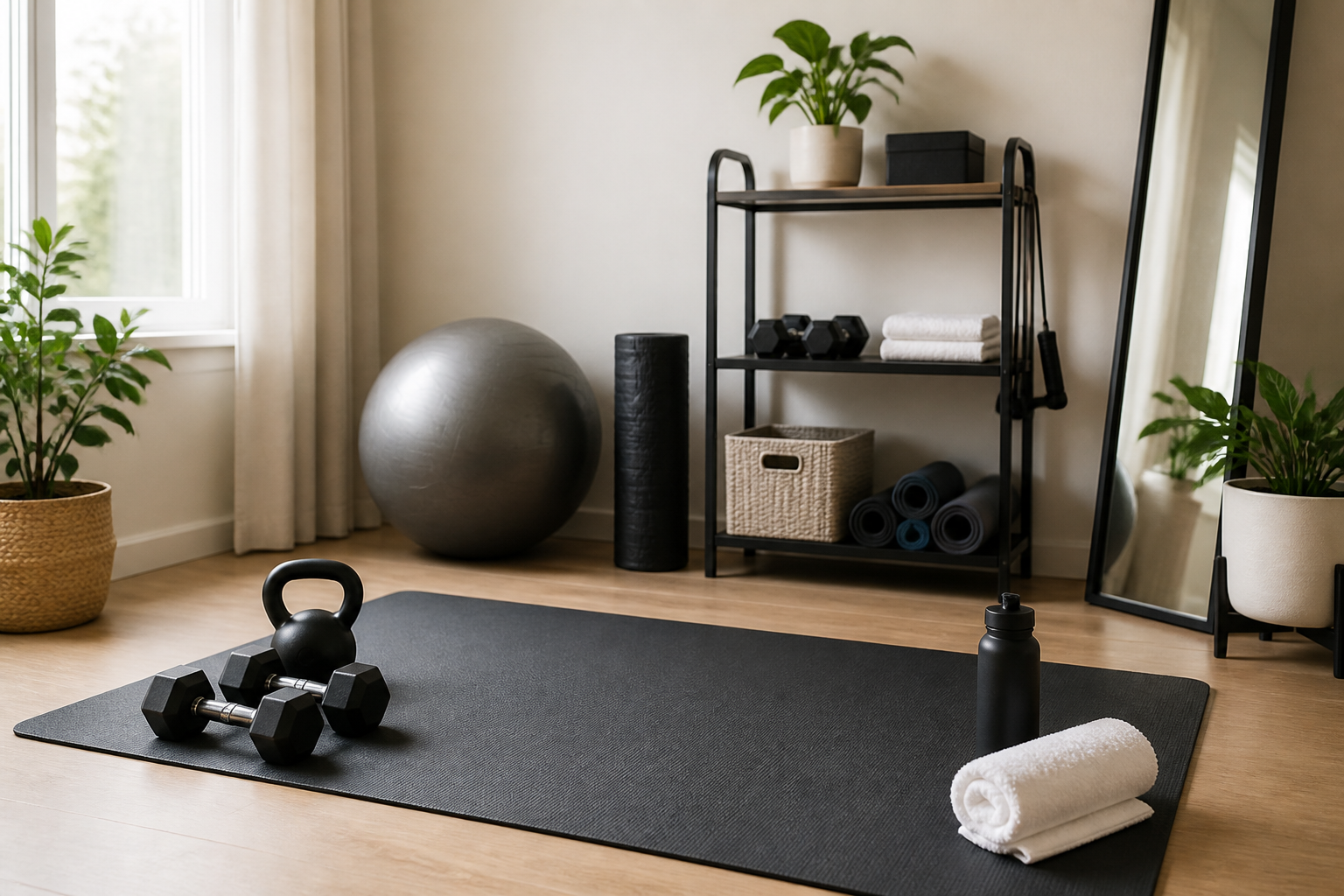
Many people can begin with a mat, a resistance band set, and a pair of adjustable or fixed dumbbells. These three categories can support strength work, mobility, warm-ups, and accessory exercises. A stability ball, bench, kettlebell, or jump rope may make sense depending on your goals and available space.
It helps to think in terms of function rather than trend. For example, if you mostly want full-body strength training, dumbbells and bands may be more useful than a large machine. If you focus on low-impact fitness, an exercise mat and mobility tools may be enough for a while.
Adjustable versus fixed equipment
Adjustable equipment can be helpful in small spaces because it reduces the number of items you need to store. However, fixed equipment may feel simpler, faster to use, or more comfortable for some routines. The right choice depends on how much space you have and how often you are willing to change settings between exercises.
If storage is limited, prioritize tools that can serve more than one purpose. Compact, multipurpose items often fit better in real homes than large equipment that requires a dedicated room.
Use storage to keep the space easy to maintain
A home workout space is easier to use when everything has a place. Storage does not need to be elaborate. In many cases, a simple shelf, basket, hook, or small rack can reduce clutter enough to make the area feel organized.
The most useful storage solutions are the ones that make cleanup quick. If putting equipment away takes too long, it may stay on the floor, which makes the space less inviting. Choose storage that matches the size and shape of your items. Bands, mats, towels, and smaller accessories can often be stored very differently from dumbbells or larger tools.
If your workout area is shared with another part of the home, storage becomes even more important. Closed bins or a cabinet can help keep exercise gear from visually taking over the room. Open shelves may work if you want fast access and do not mind a more visible setup.
Pay attention to lighting, ventilation, and comfort
Comfort can affect how often you use a home workout space. Good lighting helps the area feel more usable and can make it easier to see your form, follow a workout, or move equipment around safely. Natural light may make the space feel more inviting, but a well-placed lamp or overhead light can also work well.
Ventilation is another important factor. Exercise can make a room feel warmer quickly, especially in smaller spaces. A fan, open window, or existing airflow path can improve comfort. If the room tends to feel stuffy, you may find it harder to stay consistent with longer sessions.
Temperature and humidity also matter. Extremely hot, cold, or damp conditions may make the area less pleasant to use. You may not be able to control every environmental factor, but small improvements can make a meaningful difference.
Make the space easy to start using
A good home workout space is not only functional; it is also easy to begin using. The more steps required to get started, the less likely you may be to work out on busy days. This is why simple setup matters so much.
Try to keep the essential items visible and accessible. If you use a mat regularly, do not bury it under stacks of other things. If you rely on bands or light weights, keep them close together so setup feels quick. Small convenience changes can reduce friction and support a more consistent routine.
It can also help to define the space visually. A mat, rug, wall mirror, or a dedicated storage zone can make the area feel intentional even if it is small. That sense of a designated workout spot may help separate exercise time from the rest of the day.
Common mistakes to avoid
People creating a home workout space often run into similar problems. Avoiding them can save money and make the area more useful from the start.
- Buying too much equipment too early: Start with the items you will use regularly before expanding.
- Ignoring floor protection: The right surface can improve comfort and help protect your home.
- Underestimating storage needs: Even a few items can create clutter without a clear place to keep them.
- Choosing a space that is hard to access: If the setup is inconvenient, workouts may feel harder to start.
- Forgetting comfort factors: Lighting, airflow, and noise can affect how usable the space feels.
- Making the area too complicated: A simple setup is often easier to maintain than an overly ambitious one.
Who a simple home workout space may suit
A simple setup may be especially useful for beginners, busy adults, apartment dwellers, parents with limited free time, or anyone who prefers privacy while exercising. It can also suit people who want a flexible fitness area without committing to a large dedicated gym room.
This kind of space is often best for people who value convenience over variety. If the workout area is easy to use, you may be more likely to stay consistent. For many households, that practical benefit is more important than having every possible machine or accessory.
How to expand gradually over time
You do not need to complete your workout space in one purchase. In fact, building it gradually is often the smartest way to avoid waste. Start with the foundation: a clear location, suitable floor protection, and a few items that match your training style. Then evaluate what is missing after several weeks of regular use.
If you notice that you are often wishing for more resistance, better storage, or a more comfortable surface, that can guide your next purchase. This method is more efficient than guessing in advance. It also makes it easier to stay within your budget and avoid clutter.
As your routine grows, you can add items one at a time. That might mean a bench, a larger storage solution, a mirror, or more specialized tools. The key is to keep the space practical and focused on the workouts you actually do.
Frequently asked questions
How much space do I need for a simple home workout area?
The exact amount depends on your routine, but many people can begin with enough room for a mat and basic movement. If you plan to use weights or larger equipment, you will need more clearance. The important part is not the square footage alone, but whether you can move safely and comfortably.
What is the best floor for a home workout space?
The best floor depends on the type of exercise. Mats work well for floor-based workouts, while tiles or protective flooring may be more appropriate for heavier equipment. The right choice should balance comfort, durability, and ease of cleaning.
Do I need a separate room?
No. A separate room can be helpful, but it is not required. Many effective workout spaces are built in corners of bedrooms, living rooms, basements, or garages. What matters most is that the area is usable, safe, and easy to keep clear.
What equipment should I buy first?
For many people, a mat and a small set of versatile resistance tools are a good starting point. From there, add items that match your actual routine. It is usually better to start simple and expand later than to buy a large collection upfront.
How do I keep a workout space from becoming cluttered?
Use simple storage, keep only the items you use often, and make cleanup easy. A small dedicated shelf, basket, or rack can help. Regularly removing unused items also keeps the space functional.
Conclusion
How to create a simple home workout space comes down to a few practical decisions: choose a location that is easy to use, define the space clearly, protect the floor, select versatile equipment, and keep storage simple. When these basics are in place, the area becomes much easier to use consistently.
The best setup is not always the biggest or most expensive one. It is the one that fits your routine, your room, and your daily life. By starting with a clear purpose and adding only what you need, you can create a home workout space that supports steady exercise without unnecessary complexity.