Introduction
A small bedroom can quickly feel crowded, especially when it needs to hold clothes, shoes, bedding, books, charging cables, and everyday essentials in one limited space. The good news is that a room does not need expensive furniture or a full makeover to become calmer and more functional. With a few thoughtful decisions, you can make a small bedroom work better, look cleaner, and feel more spacious without spending too much.
The best approach is to focus on organization before shopping. In many cases, the biggest improvements come from removing items you do not need, using vertical space better, and choosing low-cost storage pieces that serve more than one purpose. If you buy anything at all, it should solve a specific problem in the room rather than simply adding more things to store.
This guide walks through practical ways to organize a small bedroom on a budget, including what to prioritize, what to avoid, and which kinds of storage products are usually worth considering.
Start with a simple reset before you buy anything
One of the most effective ways to organize a small bedroom is to reduce what is competing for space. Before looking at bins, shelves, or new furniture, spend time sorting the items already in the room. This does not have to be a full weekend project. Even a single focused session can reveal how much storage you truly need.
Sort by category
Group items into basic categories such as clothing, shoes, accessories, books, electronics, toiletries, and seasonal items. This makes it easier to see where clutter is coming from. If one category takes over a drawer or floor area, that is often the clearest sign that the current storage system is not working.
Decide what should stay in the bedroom
A small bedroom should not store everything you own. Items that are used elsewhere in the home, or only occasionally, may belong in another closet, under-bed container, or storage area. The less the room has to handle, the easier it becomes to keep organized.
Remove duplicates and rarely used items
Extra blankets, old chargers, unused decor, spare hangers, and clothing that no longer fits or gets worn can take up valuable room. The goal is not to create a perfect minimalist space. The goal is to keep only what supports daily use and comfort.
Use vertical space more effectively
When floor space is limited, the walls become some of the most valuable storage real estate in the bedroom. Vertical organization can make a room feel less crowded because it lifts items off surfaces and uses space that often goes untouched.
Consider wall shelves
Simple wall shelves can hold books, small baskets, personal items, or decor without taking up floor space. Open shelves are useful when you want easy access, but they work best when kept tidy. If you choose shelves, think about what they will actually hold so they do not become a dumping ground for random items.
Use over-the-door storage carefully
Over-the-door organizers can be helpful for shoes, accessories, cleaning supplies, or small everyday items. They are often budget-friendly and easy to install. However, it is worth checking the door clearance before buying one, since some organizers can make a door harder to close or create a cluttered look if overfilled.
Try hooks and wall-mounted hangers
Hooks are one of the cheapest ways to add storage. They can hold bags, hats, scarves, robes, headphones, or tomorrow’s outfit. Wall-mounted hangers or peg rails are especially useful in rooms where there is not enough closet space for frequently used items.
Choose furniture that does more than one job
In a small bedroom, every furniture purchase should earn its place. Multi-purpose furniture often costs less than buying separate pieces for each storage need, and it can reduce visual clutter as well.
Look for beds with built-in storage
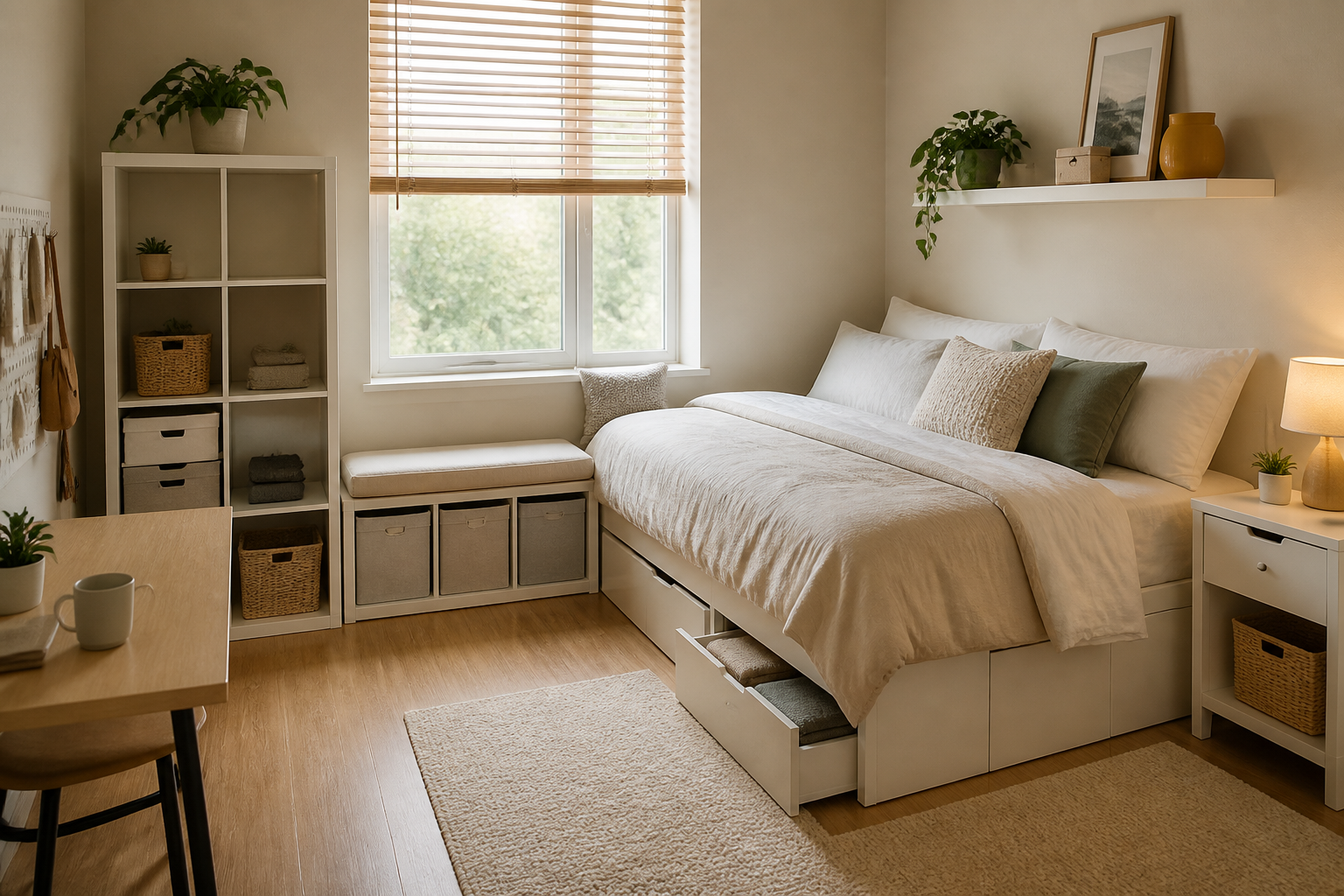
Storage beds, platform beds with drawers, or beds that allow containers underneath can be excellent choices when closet space is limited. These options are especially helpful for storing bedding, off-season clothing, or items you do not need every day. If a new bed is not in the budget, bed risers can create extra space underneath an existing frame for storage bins.
Use a storage bench or ottoman
A bench at the foot of the bed or an ottoman with hidden storage can serve as seating, a place to lay out clothes, and a spot to keep extra blankets or accessories. This kind of furniture is practical because it reduces the need for separate storage containers.
Consider a compact nightstand alternative
Traditional nightstands can be bulky. In a very small room, a floating shelf, narrow table, or wall-mounted ledge may be enough for a lamp, phone, water glass, and alarm clock. The right option depends on how much surface space you actually use at night.
Make the closet work harder
If your bedroom has a closet, it may already be the best storage area in the room. The challenge is using it in a smarter way so that space is not wasted. Small improvements inside the closet often deliver bigger results than buying more bedroom furniture.
Use matching slim hangers
Bulky hangers take up more room than necessary. Slim, uniform hangers can help clothing hang more neatly and make the closet look less crowded. The visual difference may seem small, but it often improves access and makes it easier to fit everything inside.
Add a second hanging level or shelf divider
Some closets have unused vertical space below hanging clothes. A hanging organizer, shelf divider, or tension rod can create a second row for shorter items like shirts, folded pants, or bags. This is a practical option when you want more storage without major installation.
Store seasonal items higher up
Things used less often, such as winter accessories or seasonal bedding, can be moved to the top shelf or upper closet area. Keep daily-use items at eye level so the closet remains easy to maintain.
Use under-bed space wisely
Under-bed storage is one of the most budget-friendly ways to organize a small bedroom, but it works best when used intentionally. It should help you store items neatly, not become a hidden pile of forgotten belongings.
Choose low-profile containers
Shallow bins, rolling drawers, or soft storage bags can fit neatly under many bed frames. Before buying, measure the height and width of the space so you know what will fit without scraping the frame or blocking access.
Group similar items together
Use under-bed storage for clearly defined categories such as spare sheets, guest bedding, off-season clothes, or special occasion shoes. Labeling the containers can save time later and prevent the “out of sight, out of mind” problem.
Avoid overstuffing
If containers are packed too tightly, they become hard to move and hard to close. Leaving a little room inside each bin can make the storage more useful and less frustrating over time.
Keep surfaces clear on purpose
In a small room, every flat surface can become a landing zone for clutter. Dressers, desks, and nightstands often fill up because they are convenient, not because they are the best place for items. A cleaner room usually starts with setting limits on what is allowed to stay visible.
Use trays to create a “home” for small items
A small tray or dish can help gather everyday items like jewelry, keys, lip balm, or earbuds in one place. This keeps them from spreading across the room while still keeping them easy to reach.
Keep only daily-use items out
If something is used only occasionally, it does not need to live on top of a dresser or desk. Rotate items in and out of visible storage based on how often you use them.
Limit decorative clutter
Decor can make a bedroom feel personal, but too many decorative objects can make a small room feel busier. A few meaningful pieces usually have more impact than several small items competing for attention.
Shop smart when buying budget storage products
There are many inexpensive organization products available, but not all of them are worth the money. The best budget purchases are simple, durable, and suited to the specific problem you are trying to solve.
Important features to look for
- Appropriate size: Measure available space before buying bins, shelves, or drawer inserts.
- Simple construction: Basic designs are often more affordable and easier to adapt.
- Stackability: Stackable bins or boxes can help maximize vertical storage.
- Clear labels or visibility: Being able to see what is inside makes storage easier to maintain.
- Lightweight materials: Lighter products are often easier to move and rearrange in a small room.
- Easy cleaning: Smooth surfaces and washable materials help keep storage pieces practical.
Categories that are often useful
Budget-friendly items such as fabric bins, drawer dividers, shoe racks, closet organizers, hooks, under-bed containers, and hanging shelves can all help in a small bedroom. The best choice depends on whether the main issue is clothing, accessories, shoes, or general clutter. If you are choosing between several items, select the one that solves the most pressing problem first.
Common mistakes to avoid
Buying organization products can be helpful, but it is easy to spend money in ways that do not actually improve the room. A few common mistakes account for many disappointing purchases.
Buying storage before measuring
One of the fastest ways to waste money is to choose organizers that do not fit the space. Measure shelves, closet openings, under-bed clearance, and drawer depth before shopping. A few simple measurements can prevent avoidable returns and frustration.
Choosing the cheapest item without thinking about use
Very low-cost products can be tempting, but if they collapse, fit poorly, or make access difficult, they may end up unused. It is usually better to buy one item that solves a real problem than several cheap items that create new ones.
Adding more containers without reducing belongings
Storage products do not replace decluttering. If the room already contains too much, more bins and boxes may only hide the issue temporarily. Focus on items you use regularly and let the rest go where appropriate.
Ignoring access
Storage should make daily life easier. If an organizer is hard to reach, too deep, or annoying to open, you may stop using it. Convenient storage is more likely to stay organized.
Simple habits that keep a small bedroom organized
A budget-friendly organization project works best when it is easy to maintain. The room will stay neater if the system is simple enough to use every day.
Do a five-minute reset
Set aside a few minutes each day to put items back where they belong. This small habit prevents clutter from building up and helps the room stay manageable.
Use the one-in, one-out approach
When possible, try to remove or donate one item when bringing in something new. This is especially useful for clothing, books, and small decor items that can accumulate quickly.
Put similar items in the same place
Keep accessories together, store chargers together, and give each category a defined home. When items have a place, cleanup becomes much faster and easier to repeat.
Who budget bedroom organization is best for
Organizing a small bedroom without spending too much may suit students, renters, first-time apartment dwellers, shared bedroom setups, or anyone trying to improve a tight space on a limited budget. It is also a good approach for people who do not want a major redesign and prefer practical improvements they can make gradually.
This style of organization is especially useful if you want a room that feels calmer, but you are not ready to replace all your furniture. Small steps can still make a meaningful difference when they are chosen carefully.
Frequently Asked Questions
What is the first thing to do when organizing a small bedroom?
Start by decluttering. Before buying storage products, sort what you own and remove anything that does not belong in the room or is no longer needed.
How can I organize a small bedroom on a very tight budget?
Focus on free or low-cost changes first, such as decluttering, rearranging furniture, using hooks, repurposing boxes or bins you already own, and taking advantage of under-bed or vertical space.
Is it worth buying storage furniture for a small bedroom?
It can be, if the furniture solves a clear problem and fits the room well. Multi-use pieces such as storage beds, benches, or compact nightstand alternatives are often more practical than bulky single-purpose furniture.
How do I keep a small bedroom from looking cluttered?
Keep surfaces clear, store similar items together, limit decorative objects, and use closed storage for things that do not need to stay visible. Consistent habits matter as much as storage products.
What should I store under the bed?
Under-bed space is often best for off-season clothing, spare bedding, guest items, or other things you do not need every day. Use labeled containers to keep the space organized and easy to manage.
Conclusion
Organizing a small bedroom without spending too much is mostly about making thoughtful choices rather than buying a lot of new products. Start by reducing what you keep in the room, then use vertical space, closet space, and under-bed storage more effectively. Choose furniture and organizers that serve more than one purpose, and avoid products that look useful but do not match your actual habits.
The most successful small-bedroom organization systems are simple, affordable, and easy to maintain. If a solution saves time, clears visible clutter, or makes daily routines easier, it is usually a worthwhile upgrade. With a few practical changes, even a small bedroom can feel more open, more useful, and much less stressful to live in.