Introduction
Organizing dry food and kitchen staples is one of the simplest ways to make a kitchen feel calmer, cleaner, and easier to use. When ingredients such as rice, pasta, flour, oats, cereal, beans, snacks, tea, and baking supplies are stored in a thoughtful way, it becomes easier to see what you have, avoid duplicate purchases, and keep shelves from turning into a cluttered catch-all.
A good pantry system does not need to be expensive or complicated. The most effective setup is usually the one that matches your cooking habits, the size of your kitchen, and the kinds of foods you buy most often. Some people need a compact cabinet solution for a small apartment. Others need a large pantry with clear containers, bins, and shelf labels for a busy family kitchen. In every case, the goal is the same: make dry goods easier to find, easier to access, and easier to keep fresh within the limits of the container and storage environment you choose.
This guide explains how to organize dry food and kitchen staples in a practical way, what storage features matter most, common mistakes to avoid, and how to choose containers and organizers that fit your routine.
Start by Sorting What You Already Have
Before buying containers or dividers, take a full inventory of your dry food and staples. Pull everything from shelves, cabinets, and drawers so you can see it all at once. This helps you separate the useful items from the forgotten ones and gives you a realistic sense of how much space you need.
Group Similar Items Together
Sorting by category makes the organization process easier and keeps things intuitive later. Common categories include:
- Grains and pasta: rice, quinoa, couscous, pasta, noodles
- Baking supplies: flour, sugar, baking soda, baking powder, chocolate chips
- Breakfast foods: oats, cereal, pancake mix, granola
- Canned or jarred staples: tomato sauce, broth, beans, peanut butter
- Snacks: crackers, chips, pretzels, dried fruit, nuts
- Seasonings and cooking basics: salt, vinegar, oils, spice blends, bouillon
Once items are grouped, you can decide which categories belong in easy-reach zones and which can be stored higher, lower, or in secondary containers.
Check What Needs to Be Used First
When sorting, look for items that are approaching their best-by date or those you already opened and may have forgotten. Put these in a visible spot so they get used sooner. This is not about strict rules for every item, but about reducing waste and making it easier to rotate older products forward.
Choose Storage That Matches the Food, Not Just the Shelf
One of the biggest mistakes in pantry organization is buying containers before understanding how your food is used. The best storage choice depends on the ingredient, the amount you keep on hand, and how often you access it.
When Clear Containers Are Helpful
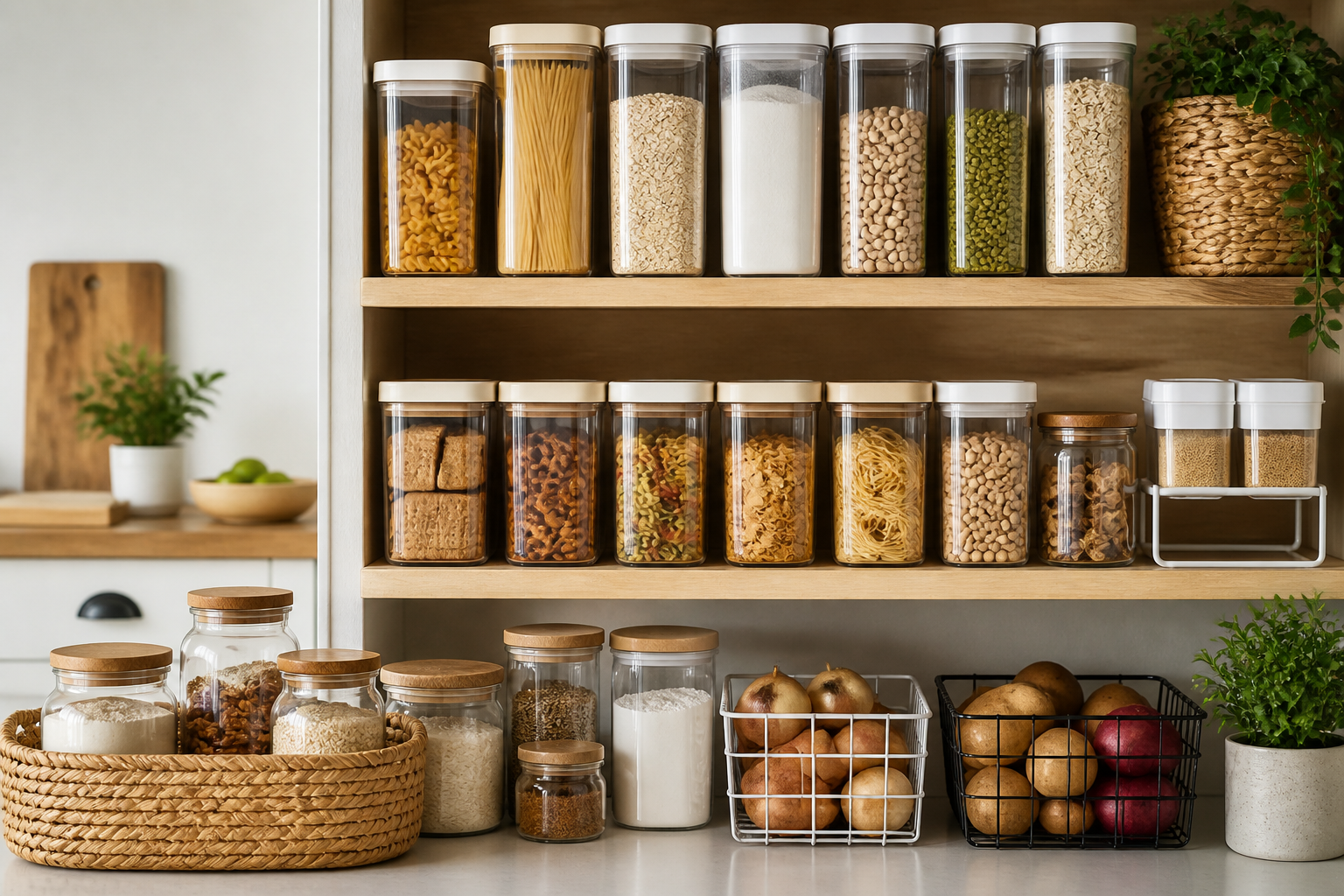
Clear containers are useful for foods you use often and want to identify at a glance. They work well for items like pasta, rice, oats, flour, sugar, cereal, and dried beans. The main benefit is visibility, which can help reduce duplicate purchases and make pantry shelves look more orderly.
When considering clear containers, look for practical details such as:
- A secure lid: helps keep contents contained and reduces accidental spills
- Wide opening: makes scooping and pouring easier
- Stackability: helps maximize vertical space
- Uniform shape: creates a more efficient layout on shelves
Clear containers are most helpful when you want a repeatable system and can commit to refilling them consistently.
When Opaque Bins or Baskets Make More Sense
Opaque bins can be better for less attractive packaging, bulky snack items, backup ingredients, or mixed products that do not need to be seen constantly. They are also useful when your pantry shelves are visually busy and you want to hide loose packaging.
Look for bins that are easy to pull out and that fit the shelf depth well. A bin that is too deep can become a catch-all for forgotten items, while one that is too shallow may not hold enough to be useful.
When Original Packaging Is Fine
Not every dry food must be transferred into a container. Some items are easier to keep in original packaging, especially if they are used infrequently or come in resealable bags. This can be a practical choice for households that want simple upkeep without transferring everything into matching jars or canisters.
Original packaging can work well for backup ingredients, specialty grains, seasonal baking items, and snacks that come in sturdy bags or boxes. In those cases, simple bins or shelf dividers may be enough.
Build a Pantry System Around Zones
Instead of arranging food randomly, divide your pantry or cabinet into zones based on use. A zone-based system makes it easier to find items and helps every category stay in the same place over time.
Everyday Zone
Keep the foods you reach for most often at eye level and within easy reach. This may include breakfast items, sandwich basics, cooking staples, and frequently used snacks. If several people cook in the same kitchen, placing common items in a predictable spot reduces confusion.
Cooking and Baking Zone
Store flour, sugar, oils, vinegars, baking ingredients, and commonly used spices together if possible. Many people like to keep baking supplies in one section and everyday cooking ingredients in another so the kitchen workflow feels more natural.
Backup and Overflow Zone
Extra packages, bulk purchases, and reserve items can go on higher shelves or in less accessible areas. Keeping backups separate from everyday supplies makes it easier to know what is active and what is still waiting to be opened.
Snacks and Grab-and-Go Zone
If children, roommates, or busy adults use the pantry frequently, set aside a specific space for snacks and portable items. A clearly defined snack area can reduce rummaging and help keep the rest of the pantry in order.
Labeling Makes a Bigger Difference Than Many People Expect
Labels are a simple tool, but they can greatly improve long-term organization. A good label helps everyone in the household know where things belong and what is inside each container.
What to Put on a Label
For dry food and staples, useful label information may include:
- Food name: such as “brown rice” or “rolled oats”
- Refill date: helpful if you rotate ingredients regularly
- Use-by or best-by date: when useful for your household
- Allergy or family note: if you need to avoid confusion between similar items
Labels are most effective when they are consistent. If some containers are labeled and others are not, the system may feel less reliable.
Label Types to Consider
Choose a labeling method that fits your style and maintenance habits. Simple adhesive labels are easy to use, while reusable tags or clip-on labels can be helpful if you change contents often. Handwritten labels are perfectly acceptable if they are legible and durable enough for the storage area.
Practical Buying Considerations for Pantry Organizers
If you are shopping for pantry organizers, kitchen storage bins, or food containers, consider how each item will function in a real kitchen rather than focusing only on appearance. The best choice is usually the one that is practical, easy to clean, and sized correctly for your shelves.
Measure Before You Buy
Measure shelf height, shelf depth, and cabinet opening width before choosing containers. A container that looks ideal online may not fit well in your actual pantry. Even a small difference in size can affect whether drawers open smoothly or whether bins can be removed without tilting.
Think About Capacity
It helps to estimate how much of each staple you usually keep at home. For example, a household that buys rice in large bags may need a deeper container than someone who only keeps a small amount on hand. Matching container capacity to shopping habits prevents overfilling and reduces wasted space.
Look for Easy Cleaning
Dry food storage containers should be easy to clean when they are emptied or when spills happen. Smooth surfaces, simple shapes, and removable lids are often easier to maintain than complicated designs with many corners or small parts.
Consider Accessibility
Storage should make everyday use easier, not harder. If a container is difficult to open, too heavy when full, or awkward to pour from, you may stop using it consistently. The most practical organizer is the one that fits your routine without adding extra steps.
Choose Stackable or Nestable Options Carefully
Stackable containers can save space, but only if they remain stable and easy to access. Nesting bins can be helpful when you want flexible storage, but they should still be sturdy enough to hold their shape when filled. Balance space-saving design with everyday usability.
How to Keep Dry Food Fresh and Organized
Organization is not only about appearance. It also helps support better food management by making it easier to store ingredients in appropriate conditions. Dry foods generally do best when they are kept in a cool, dry area away from moisture and excess heat, within the storage limits recommended for the product itself.
Transfer Only What You Will Use
There is no need to decant everything into a decorative jar. Many households do better by transferring only the foods they use most and leaving less-used items in their original packaging. This keeps the system manageable and reduces the number of containers to maintain.
Use Smaller Containers for Frequent Openings
If a food is opened often, a smaller container may be better than one large bin. Smaller containers can reduce repeated exposure during daily use and make the pantry easier to keep tidy. They can also make portioning and restocking more straightforward.
Rotate Older Items to the Front
When restocking, place older items in front of newer ones. This simple habit can help you use ingredients in a more logical order and avoid letting older packages get buried behind fresh ones.
Common Mistakes to Avoid
Even well-intentioned pantry systems can become frustrating if the setup is not realistic. These common mistakes often cause organization to break down over time.
Buying Too Many Matching Containers at Once
A fully matching pantry can look appealing, but starting with too many containers may create unnecessary expense and clutter. It is usually better to begin with the categories you use most and expand gradually if the system proves useful.
Ignoring the Way Your Household Actually Shops
If you shop in bulk, buy sale items, or keep multiple cooking styles in the same kitchen, your storage needs may be different from a minimal pantry setup. Choose organizers that fit your shopping habits rather than a generic ideal.
Making Containers Too Hard to Access
If lids are fiddly, bins are too heavy, or containers are stacked too tightly, the system may be ignored. Good organization should save time and energy, not create barriers.
Filling Every Inch of Space
An overpacked pantry can be harder to maintain than a simpler one with a little room to breathe. Leave space for new groceries, easy visibility, and comfortable movement of containers.
Not Creating a Return Spot for Loose Items
Loose tea packets, spice backups, sauce sachets, and opened snacks often drift around the pantry. A small “miscellaneous” bin or drawer can keep these items from spreading across the shelves.
Tips for Small Kitchens and Limited Storage
Small kitchens need organization that is especially efficient. The key is to use every area thoughtfully without overcrowding it.
Use Vertical Space
Shelf risers, stacked bins, and narrow storage solutions can help you use height more effectively. Vertical organization is especially useful when cabinet space is limited but shelf height is available.
Choose Multi-Purpose Containers
In small kitchens, it helps to choose organizers that can serve more than one purpose. A bin that holds breakfast foods today might later be used for snacks or baking packets. Flexible containers are often a better investment than very specialized storage pieces.
Keep High-Turnover Items Front and Center
When space is tight, prioritize easy access for the foods you use every week. Reserve less accessible spaces for backup ingredients or occasional baking supplies.
Who This Kind of Organization May Suit
A thoughtful pantry organization system can help many different households, including:
- Busy families: who need quick access to snacks and meal basics
- Home bakers: who want flour, sugar, and baking tools grouped together
- Meal preppers: who stock grains, beans, and other staples in regular rotation
- Small-space households: who need compact storage with minimal waste of shelf space
- Shared homes: where clear labels and defined zones reduce confusion
In each case, the best approach is the one that makes it easy to put groceries away and even easier to find them later.
Frequently Asked Questions
What is the best way to organize dry food in a pantry?
The best way is to sort items by category, store frequently used foods at eye level, and use containers or bins that fit your shelves and habits. A zone-based system is usually easier to maintain than a purely decorative arrangement.
Do I need clear containers for pantry organization?
Not necessarily. Clear containers are helpful for visibility, but original packaging or opaque bins can work well too. The best choice depends on how often you use the item and how much visual simplicity you want.
How do I keep kitchen staples from getting lost?
Keep similar items together, label containers clearly, and designate one location for each category. A consistent home for each staple makes it easier to maintain order after shopping.
Should I store flour and sugar in separate containers?
Many people do, because they are used differently and may need separate scoops or measuring routines. Separate containers can also make it easier to identify each ingredient quickly.
How often should I reorganize my pantry?
A quick check every few weeks and a deeper reset every few months is often enough for many households. The right schedule depends on how quickly you go through groceries and how often you buy in bulk.
Conclusion
Organizing dry food and kitchen staples works best when the system is practical, easy to maintain, and matched to how your household actually cooks and shops. Start by sorting what you have, then decide which items deserve the most accessible space. Choose containers and bins based on fit, capacity, visibility, and ease of cleaning rather than appearance alone. Add labels, create simple pantry zones, and keep a little room for restocking so the system stays usable over time.
Whether you have a large pantry or a few crowded cabinets, a good organization plan can save time, reduce waste, and make everyday cooking smoother. The best setup is not the most complicated one. It is the one you will keep using.