Short trips are supposed to feel easy, but packing can quickly become the most stressful part of the journey. When the trip is only a weekend away or just a few days long, the challenge is not bringing everything you own. It is bringing the right things in the right amount, without wasting space or making your bag harder to carry than it needs to be.
Learning how to pack smarter for a short trip is less about strict rules and more about having a simple system. A good system helps you avoid last-minute overpacking, reduce clutter, and make sure the items you actually need are easy to find. It also makes unpacking quicker when you return home.
This guide walks through practical packing strategies for short trips, including how to choose luggage, build a flexible packing list, select useful travel gear, and make better decisions about clothing, toiletries, and accessories. Whether you are heading out for a weekend city break, a family visit, or a short work trip, these tips can help you travel with less stress.
Start with the purpose of the trip
The smartest way to pack for a short trip is to begin with the reason you are traveling. The best packing list for a business trip will look different from the list for a casual weekend getaway, and both will differ from what you need for a wedding, outdoor event, or beach stay.
Before putting anything into your bag, ask a few basic questions:
- What will I be doing each day?
- Will I need one type of outfit or several different outfit styles?
- Is the weather likely to change?
- Will I have access to laundry?
- Are there any dress codes or special items I must bring?
Answering these questions first helps you pack with intention. It is much easier to pack five useful items than ten uncertain ones.
Think in outfits, not individual pieces
One of the biggest packing mistakes is choosing items one by one without considering how they work together. A smarter approach is to build outfits. This means selecting tops, bottoms, shoes, and layers that can be mixed and matched instead of packed as separate “just in case” items.
For example, a neutral pair of pants can work with multiple shirts. A lightweight jacket may suit both daytime and evening plans. Shoes that match more than one outfit can save a surprising amount of space. When you pack by outfit, you reduce the chance of bringing items that never get worn.
Choose the right bag before you pack
Your bag affects how much you bring and how easy your trip feels. A bag that is too large invites overpacking, while a bag that is too small can leave you frustrated and disorganized. For short trips, a compact carry-on, weekender bag, or small backpack is often enough, depending on your travel style and transportation needs.
Consider how you will move through the trip. If you will be walking between stations, hotels, and appointments, a bag with comfortable straps or wheels may matter more than extra capacity. If you are taking a road trip, you may have more flexibility, but a smaller bag can still help keep things tidy.
Important bag features to look for
- Easy access: A bag with separate compartments can help you reach essentials quickly.
- Comfort: Padded straps, a structured handle, or smooth wheels can make a difference if you will carry it often.
- Size that matches your trip: Choosing a bag sized for a short trip helps prevent overpacking.
- Durability: Strong zippers, sturdy fabric, and reliable stitching matter if the bag will be used often.
- Organization: Interior pockets, divider sections, or a sleeve for documents can keep items from shifting around.
The best bag is not necessarily the biggest one. It is the one that fits your trip, your transport, and the amount you actually need to carry.
Build a simple packing list
A packing list is one of the most effective tools for a short trip. It prevents memory-based packing, where you toss items into a bag at the last minute and hope for the best. A list also helps you notice duplicates, such as packing several similar tops or more toiletries than you need.
Your list does not need to be long or complicated. In fact, a short and repeatable list is often best. Divide it into a few categories:
- Clothing: tops, bottoms, underwear, socks, sleepwear, outerwear
- Toiletries: toothbrush, deodorant, skin care, travel-size basics
- Electronics: phone charger, cables, headphones, power bank if needed
- Documents: ID, tickets, reservation details, travel confirmation
- Extras: medications, reading material, reusable water bottle, snacks, or event-specific items
For repeat travel, keep a master list on your phone or in a notes app. Then customize it based on each trip’s length, weather, and purpose.
Use a “must-have” and “nice-to-have” system
It can help to separate items into two groups: things you truly need and things that would simply be convenient. Must-have items include identity documents, daily medication, travel tickets, and essential chargers. Nice-to-have items might include an extra sweater, a book, or a second pair of shoes.
If your bag starts filling up too quickly, cut from the nice-to-have category first. This approach keeps your packing practical without making it feel overly restrictive.
Pack fewer clothes, but make them work harder
Clothing usually takes up the most room, so it is the best place to simplify. For a short trip, you often need fewer garments than you think. The key is to choose items that are easy to wear in more than one setting.
Neutral colors, simple patterns, and versatile layers make packing easier. A shirt that works for daytime and dinner is more useful than one that only fits a single outfit. The same idea applies to shoes and outerwear.
Practical clothing tips for short trips
- Choose tops and bottoms that can mix and match.
- Bring one layer that can adapt to cooler indoor or evening temperatures.
- Limit yourself to one or two pairs of shoes if possible.
- Pack an extra outfit only if the trip is active, formal, or weather-sensitive.
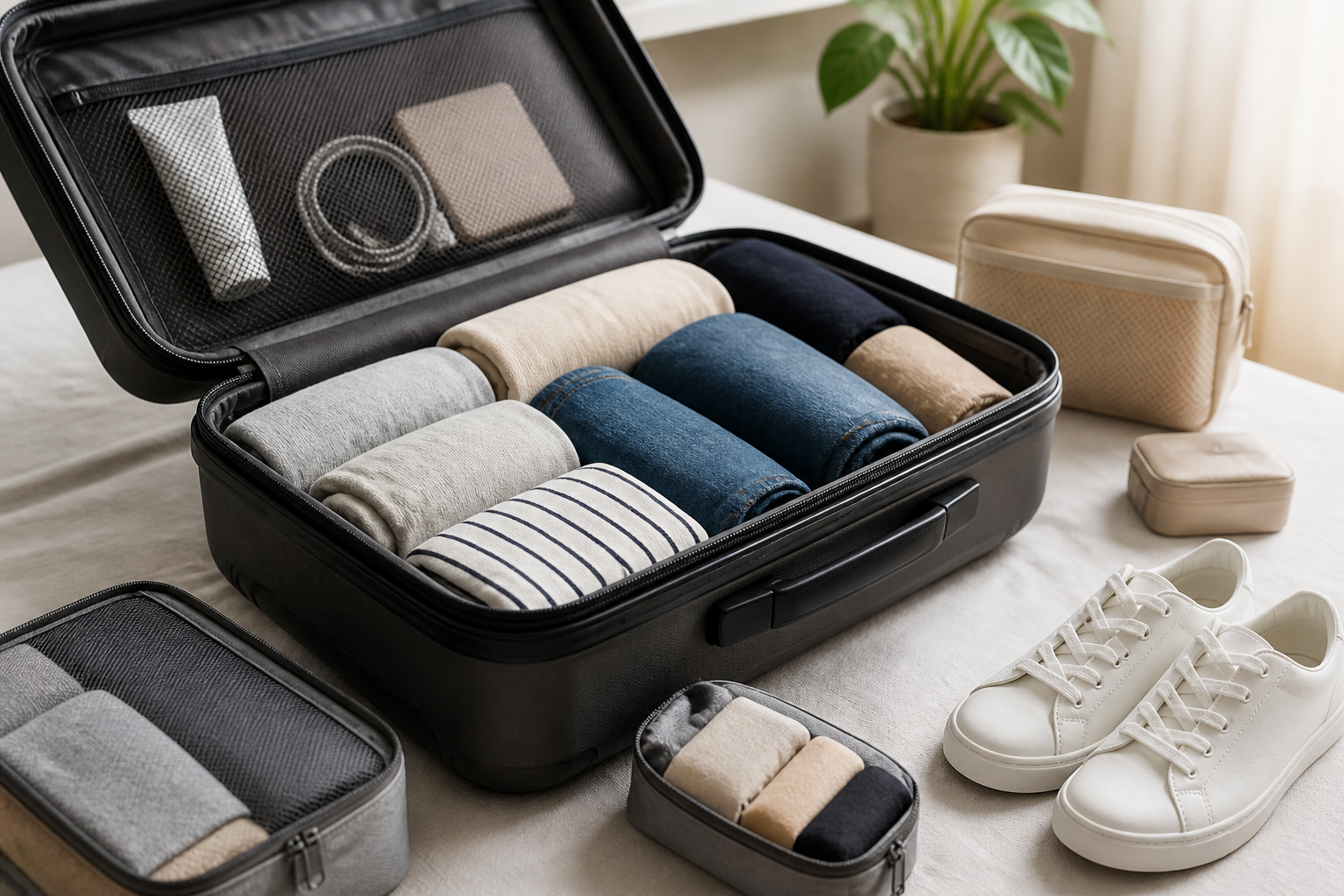
- Roll or fold clothing in a way that suits your bag and helps reduce wrinkling.
If you are unsure whether you need an item, ask whether it serves more than one purpose. A jacket that works as both warmth and style may be worth bringing. A highly specific item worn only once is less likely to earn its place in a short-trip bag.
Use travel-size toiletries wisely
Toiletries can quietly take over a small bag if you are not careful. The goal is not to bring a full bathroom shelf with you. Instead, pack the basics you use every day in compact amounts that suit the length of the trip.
If you travel often, it may help to keep a ready-to-go toiletry kit with travel-size containers or mini versions of your most-used products. That way, you only need to top it up before leaving.
Toiletry packing considerations
- Use containers that are secure and unlikely to leak.
- Choose multi-use products when appropriate, such as a moisturizer that also suits hands and face if that matches your routine.
- Pack only what you know you will use during a short trip.
- Store liquids or creams in a separate pouch to reduce mess.
- Keep essential items easy to reach when going through security or checking in at a hotel.
A small toiletry pouch can be more useful than a large cosmetic bag because it encourages discipline. The more room your toiletry kit has, the easier it is to add unnecessary items.
Plan for charging, documents, and small essentials
Some of the most important travel items are also the easiest to forget. Chargers, cables, travel confirmations, keys, and IDs may not take up much space, but losing track of them can create unnecessary stress.
A good habit is to create a small “departure zone” near your door or on a table where you place critical items the night before you leave. This reduces the chance of leaving behind something important in the morning rush.
Small items to keep together
- Phone charger
- Charging cable or adapter
- Power bank if you expect long periods away from outlets
- ID or passport, depending on the trip
- Travel tickets or booking confirmations
- Wallet, cards, and necessary cash
- Headphones or earbuds
These items are often most useful when they are stored together in one pocket or pouch. That way, you do not have to search through clothing or toiletries to find them.
Follow the one-extra rule carefully
Many travelers overpack because they fear running short on something. A helpful compromise is the one-extra rule. For certain categories, you can bring one extra item beyond the minimum if it truly adds flexibility. For example, you might bring one extra top, one extra pair of socks, or one extra snack option.
This rule works best when used selectively. If every item gets an “extra” version, the bag grows quickly. The idea is to create a small buffer without turning your short-trip bag into a long-term suitcase.
It also helps to be honest about whether an extra item solves a real problem. If not, leave it out.
Use packing accessories only when they help
Packing cubes, small pouches, toiletry bags, and compression-style organizers can improve a short trip packing system, but they are only useful if they match your needs. These accessories are not essential for everyone. Some travelers like them because they separate clothing, keep items visible, or make unpacking easier. Others find that too many organizers add bulk.
If you are considering packing accessories, look for features such as:
- Simple organization: Clear separation between clothing, toiletries, and electronics
- Appropriate size: Accessories that fit your bag without wasting space
- Lightweight design: Organization should not create unnecessary weight
- Easy cleaning: Helpful for toiletries or shoes
For many short trips, one or two small organizers are enough. You do not need to compartmentalize every category unless it improves your routine.
Avoid common short-trip packing mistakes
Even experienced travelers make packing mistakes when they are in a hurry. Knowing the common ones can help you avoid them.
1. Packing for every possible scenario
It is tempting to prepare for rain, heat, cold, formal events, and spontaneous workouts all in one bag. But short trips rarely require that level of flexibility. Check the forecast, review your itinerary, and pack for the most likely conditions rather than imaginary extremes.
2. Bringing too many shoes
Shoes are bulky and take up valuable room. For short trips, one versatile pair may be enough, with a second pair only if the trip calls for it. If you need special shoes for an event or activity, make sure they genuinely have a clear purpose.
3. Forgetting that laundry is not always necessary
Some travelers pack extra clothing because they assume they need a fresh outfit for every day. For a short trip, that is not always practical. If the trip is only a few days, you may not need a large selection of clothes. Packing with the actual number of days in mind can prevent overpacking.
4. Leaving essential items in different places
Charging cables in one bag, toiletries in another, and documents in a jacket pocket can lead to confusion. Group essentials in predictable places so you can find them quickly.
5. Not checking bag restrictions or trip conditions
If you are flying, a carry-on bag may need to meet size rules. If you are traveling by train or car, accessibility may matter more than strict size. Matching your packing plan to the travel method helps avoid last-minute problems.
Pack in stages to reduce stress
If you usually pack at the last minute, try a staged approach instead. Packing in stages gives you time to think, adjust, and remove unnecessary items before the trip begins.
A simple method is:
- Day before: lay out clothing and key accessories
- Several hours before leaving: pack toiletries and electronics
- Just before departure: add documents, wallet, phone, and travel essentials
This approach also gives you a chance to check whether your outfit choices are realistic. If something feels uncertain, change it before it ends up in your bag.
Who benefits most from smarter short-trip packing?
Smarter packing is useful for almost anyone, but it is especially helpful for travelers who want a faster routine or who move between multiple places in a short period of time. It can be useful for:
- Weekend travelers who want to avoid overstuffed bags
- Business travelers who need a neat, efficient setup
- Students and visitors taking quick family trips
- Travelers who prefer carry-on-only packing
- People who feel overwhelmed by last-minute preparation
Even if you do not travel often, building a simple packing habit can make every short trip easier. The goal is not perfection. It is consistency and convenience.
Frequently asked questions
How many outfits do I need for a short trip?
That depends on the length of the trip, your activities, and whether laundry is available. For many short trips, a small number of mix-and-match outfits is enough. Focus on versatility rather than packing a separate outfit for each day.
Should I always pack a carry-on for a short trip?
Not always, but a carry-on or similarly compact bag is often enough for a short trip. Smaller luggage can reduce carrying effort and help prevent overpacking. Choose the bag that fits your needs and travel method.
What is the easiest way to avoid forgetting essentials?
Use a repeatable checklist and pack critical items in a dedicated spot. Documents, chargers, and daily-use items are often easiest to remember when you keep them together and check them before leaving.
How do I stop overpacking?
Start with the purpose of the trip, build outfits instead of packing random items, and limit yourself to essentials first. If you want to add extras, make sure they serve a clear purpose. A smaller bag can also help keep your packing realistic.
Are packing cubes worth it for short trips?
They can be, if they help you stay organized and make unpacking easier. They are not required for every traveler. If you prefer a simple setup, a few pouches or compartments may be enough.
Conclusion
How to pack smarter for a short trip comes down to a few practical habits: start with the trip’s purpose, choose the right bag, build a clear checklist, and pack only items that earn their place. When clothing is versatile, toiletries are compact, and essentials are kept together, the whole travel experience becomes easier to manage.
Smart packing does not mean packing less for the sake of it. It means packing better, with more intention and less stress. Once you build a repeatable system, short trips become simpler to prepare for, easier to carry, and more enjoyable from the start.