Introduction
Everyday essentials are easy to overlook because they feel routine. Household paper goods, pantry staples, toiletries, laundry supplies, and basic cleaning products are things most people buy again and again. That familiarity can make spending less noticeable, which is exactly why overspending happens so often. Small price differences, unnecessary extras, and unplanned purchases can quietly raise your total without improving your day-to-day life.
Shopping for essentials wisely does not mean buying the cheapest option every time. It means finding the right balance between cost, quality, quantity, and convenience. A good buying habit helps you avoid waste, reduce repeat trips, and choose products that fit your household’s actual needs. If you shop with a plan, everyday purchases can become more predictable and far less stressful.
This guide explains how to shop for everyday essentials without overspending. It focuses on practical buying considerations, common mistakes, and simple strategies you can use whether you shop in-store or online.
Start With a Clear Definition of “Essential”
Before comparing prices, it helps to define what truly belongs on your essentials list. Not everything marketed as a must-have is actually necessary for your household. Essentials are the items you use regularly and would realistically need to replace soon if they ran out.
Examples of everyday essentials
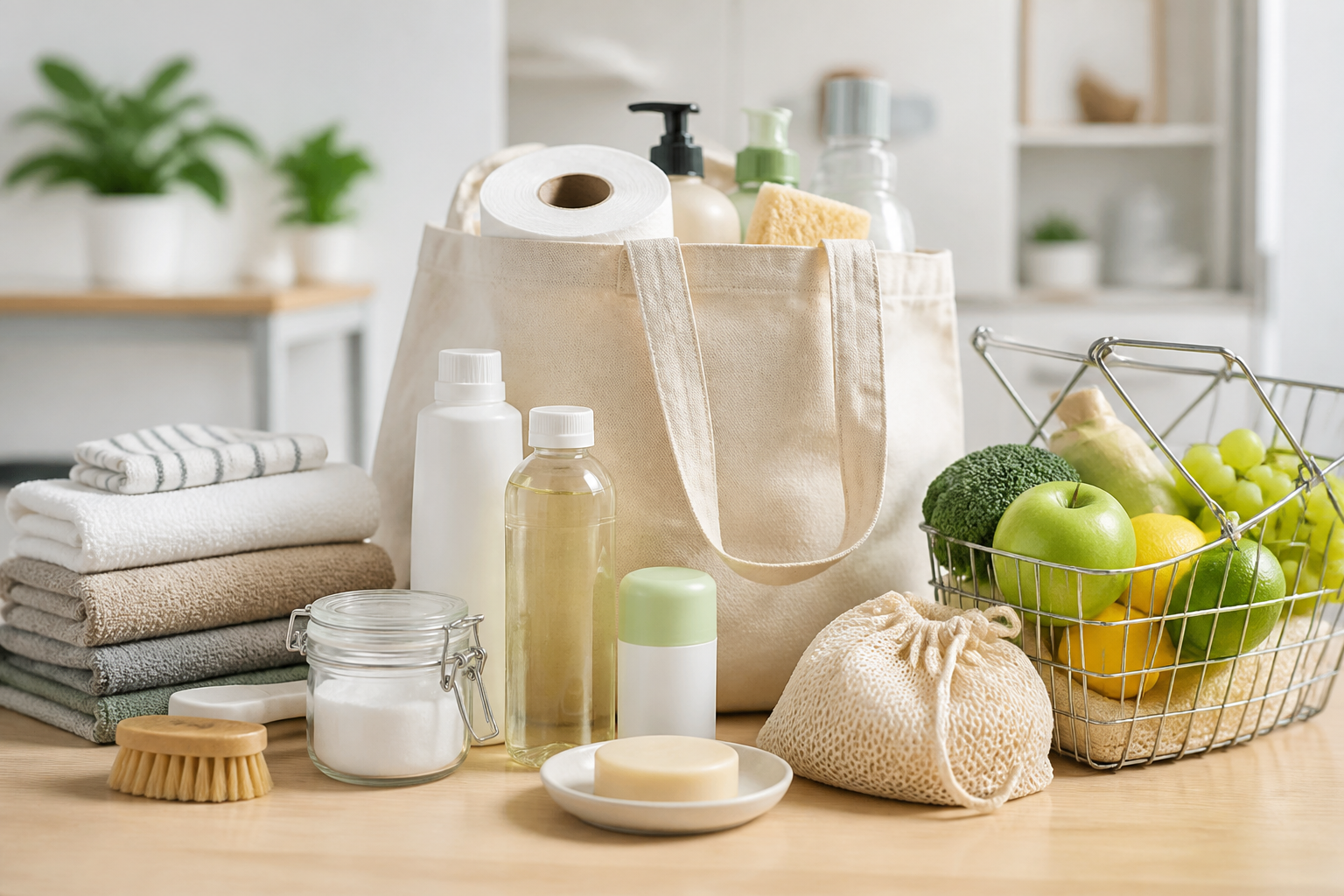
- Household basics: toilet paper, paper towels, tissues, trash bags, dish soap, laundry detergent, cleaning sprays
- Personal care items: toothpaste, shampoo, soap, deodorant, razors, feminine hygiene products
- Pantry staples: rice, pasta, cooking oil, canned goods, coffee, tea, flour, shelf-stable snacks
- Home and kitchen basics: sponges, storage bags, batteries, light bulbs, basic utensils
Once you separate essentials from convenience purchases, your budget becomes easier to manage. A product can be useful without being urgent. The more clearly you define your actual needs, the less likely you are to spend on items that do not meaningfully improve daily life.
Build a Spending Plan Before You Shop
One of the most effective ways to avoid overspending is to decide in advance how much you want to spend on essentials. A budget does not need to be complicated. Even a basic category-by-category plan can help you stay focused and reduce impulse purchases.
How to organize a simple essentials budget
- Estimate your regular categories: group items by household, personal care, pantry, and cleaning supplies
- Review what you already have: check under sinks, in cabinets, and in storage before buying more
- Set a rough limit: decide how much you want to spend this trip or this month
- Leave a small cushion: a little flexibility helps when prices vary or one item runs out early
If you shop without a budget, it becomes easy to add extra items because each one feels small on its own. A plan gives you a benchmark. When you know what your spending target is, you can make faster decisions and compare options more clearly.
Use a Shopping List and Stick to It
A shopping list is one of the simplest tools for controlling spending. It keeps you focused on replacement purchases instead of browsing for ideas. This matters because many overspending habits start with “while I’m here” shopping.
To make your list more effective, write it by category rather than by store aisle. That makes it easier to spot duplicates and prioritize what you actually need. You can also mark items as urgent or flexible. Urgent items are must-buys because you are nearly out. Flexible items can wait if the price is not right.
Helpful list habits
- Check what you already own before adding anything
- Separate “need now” from “need soon”
- Keep a running list on your phone or on paper
- Remove items that are still available at home
Lists work best when they are specific. Instead of writing “cleaning supplies,” list the exact products you actually need. That reduces the chance of buying duplicates or overestimating what you must replace.
Compare Value, Not Just Price
A low shelf price is not always the best deal. The smarter comparison is cost per unit or cost per use. Bigger packages can be cheaper per ounce, per sheet, per roll, or per count, but not always. Sometimes a smaller item is the better choice if it gets used before it expires or goes stale.
What to compare before buying
- Unit price: useful for most packaged goods
- Package size: make sure you are comparing the same measurement
- Number of uses: especially helpful for soaps, detergent, and cleaning supplies
- Storage space: bulk savings are less helpful if the item becomes inconvenient to store
- Product lifespan: important for perishable pantry items and personal care products with limited shelf life
Value shopping is not about buying the largest package every time. It is about finding the option that serves your household efficiently. If a large pack of something goes to waste before you can use it, then the savings were only on paper. The real value is the total cost of what you actually consume.
Choose Store Brands When They Make Sense
Store brands are often worth considering for everyday essentials. In many categories, the main difference between a store brand and a national brand is packaging and marketing rather than usefulness. That does not mean store brands are always the better choice, but they are often a strong starting point when you want to control costs.
Categories where store brands are often worth comparing
- Paper goods
- Trash bags
- Basic cleaning supplies
- Pantry staples
- Simple over-the-counter household items, where appropriate
When comparing brands, look at the ingredients, size, features, and intended use rather than assuming one label is automatically superior. Some products may differ in texture, scent, durability, or convenience. The best choice is the one that fits your needs without paying extra for features you will not use.
Buy in Bulk Carefully
Bulk buying can save money, but only when it matches your household’s usage patterns. The main advantage of bulk purchases is often a lower unit cost. The downside is that you pay more upfront and risk waste if the item is not used quickly enough.
When bulk buying may be helpful
- You use the item consistently and frequently
- The product stores well without losing quality quickly
- You have enough space to keep it organized
- The item is truly less expensive per unit than smaller options
When bulk buying can backfire
- You are trying a product for the first time
- You are not sure how quickly your household will use it
- The item has a short shelf life
- You need to carry it long distances or store it in limited space
A large pack is not a bargain if it causes clutter or goes unused. For many households, the better strategy is moderate quantity, not maximum quantity. Buy enough to cover real consumption, not imagined savings.
Avoid Paying for Convenience You Do Not Need
Convenience features can be useful, but they can also inflate the cost of an item without adding much value. The trick is to identify which convenience upgrades genuinely matter and which ones simply make the product look more appealing.
Examples of convenience costs
- Fragrance-heavy versions when a basic formula would work just as well
- Special packaging that adds cost but not usefulness
- Single-use products that can be replaced by reusable options
- “Extra” features that do not fit your household habits
If an item saves time, reduces waste, or improves consistency in a meaningful way, that convenience may be worth paying for. But if it only feels more polished or premium, it may be adding cost without real benefit. Everyday essentials should support your routine, not strain your budget.
Watch for Common Overspending Triggers
Many overspending habits are less about the item itself and more about the shopping situation. Stores and online marketplaces are designed to encourage extra spending. Recognizing the most common triggers helps you stay in control.
Common mistakes to avoid
- Shopping hungry or rushed: you are more likely to make impulsive choices
- Buying without checking inventory: this leads to duplicate purchases
- Choosing based on packaging alone: attractive packaging can distract from value
- Ignoring unit price: the sticker price can be misleading
- Falling for “deal” language: a promotion is only useful if you actually need the item
- Overbuying storage items: extra bins, baskets, and organizers can become unnecessary expenses
It is also easy to spend more by treating every shopping trip like a chance to stock up on everything. A more disciplined approach is to separate routine replacements from optional purchases. That keeps essentials from turning into a catch-all spending category.
Shop With Your Household in Mind
The best essentials are not the same for everyone. A single person, a couple, and a family with children may all need different quantities, package sizes, and product types. Your shopping habits should match how your household actually functions.
Questions to ask before buying
- How quickly do we use this item?
- Do we prefer smaller packages for freshness or larger packages for savings?
- Do we have enough storage space?
- Are we buying for convenience, or because we truly need it?
- Will this item replace something we already own?
Shopping for essentials becomes easier when you understand your own consumption patterns. If you track what runs out most often, you can plan purchases more accurately and reduce emergency buying, which tends to be more expensive.
Use Timing to Your Advantage
Timing matters, especially for non-urgent essentials. If you know what your household uses regularly, you can often buy before you run out, rather than waiting for a last-minute trip when you have fewer choices and more pressure to spend.
Practical timing strategies
- Reorder basics before they become emergency purchases
- Buy flexible items when you see a genuinely good unit price
- Keep track of seasonal needs such as tissues, sunscreen, or home cleaning products
- Plan purchases around your actual usage cycle rather than impulse
This approach helps you avoid convenience spending. Emergency purchases are rarely the cheapest purchases because urgency limits comparison shopping. A small amount of planning can make a meaningful difference over time.
Make Online Shopping Work in Your Favor
Online shopping can be useful for comparing prices and avoiding unnecessary store browsing, but it can also encourage overbuying. The convenience of a few clicks makes it easy to add extras. To keep online shopping under control, use the same discipline you would use in person.
Helpful online shopping habits
- Search with a specific list instead of browsing categories
- Compare unit prices across similar listings
- Check shipping costs before assuming a product is cheaper
- Remove items that were added “just in case”
- Review your cart once before checkout
If you already know exactly what you need, online shopping can save time and reduce distractions. If you tend to browse and add extras, it may be better to shop with a strict list and a clear budget cap.
Build a Simple Restock System
One of the best ways to avoid overspending is to reduce guesswork. A simple restock system tells you what is running low before you make a purchase. That way, you are buying because of need, not because of uncertainty.
Ways to track essentials
- Keep a small note of items that need replacing soon
- Check important categories on a weekly or biweekly basis
- Store extra items together so you can see what you already have
- Use a first-in, first-out approach for pantry goods
This does not need to become complicated inventory management. The goal is simply to avoid buying more than you need and to reduce the chance of duplicate purchases hidden in the back of a cabinet.
Who This Approach May Suit
Shopping for everyday essentials without overspending is useful for nearly everyone, but it may be especially helpful if you are:
- Trying to reduce recurring household expenses
- Managing a tight budget
- Shopping for a family or shared household
- Looking to reduce waste from overbuying
- Trying to make more intentional buying decisions
It is also a good approach for people who feel overwhelmed by store choices. A simple framework can make routine shopping feel more manageable and less reactive.
Frequently Asked Questions
How do I stop overspending on essentials?
Start with a list, set a budget, compare unit prices, and avoid shopping when you are rushed or distracted. Checking what you already have at home can also prevent duplicate purchases.
Is it always cheaper to buy the biggest size?
Not always. Larger sizes may have a lower unit price, but only if you use the product before it becomes stale, expires, or sits unused. The cheapest option is the one that fits your real usage.
Are store brands worth buying?
Often, yes. Store brands can be a smart choice for many everyday essentials, especially when the product is straightforward and you mainly care about function rather than branding.
How can I tell if a bulk deal is worth it?
Compare unit prices, consider how fast you will use the item, and think about storage space. If the product is likely to go unused or be inconvenient to store, the bulk deal may not be a true savings.
What is the biggest shopping mistake with essentials?
One of the biggest mistakes is buying based on impulse or convenience instead of planned need. Small extra purchases can add up quickly when they happen often.
Conclusion
Shopping for everyday essentials without overspending is mostly about habits, not sacrifice. When you define what you actually need, make a list, compare value carefully, and buy in quantities that match your household’s use, you can keep routine purchases under control. The goal is not to chase the absolute lowest price at all times. It is to make steady, thoughtful choices that give you useful products without unnecessary cost.
With a clearer budget, better timing, and a more disciplined approach to value, everyday shopping becomes less stressful and far more efficient. Over time, those small decisions can make a real difference in how much you spend and how well your household runs.