Introduction
Keeping fitness equipment organized at home can make a surprising difference in how often you use it. When weights, resistance bands, yoga mats, jump ropes, and other gear are spread across the floor or hidden in different rooms, workouts can feel less inviting before they even begin. A simple organization system can reduce clutter, save time, and make your space feel more functional.
The good news is that organizing home workout equipment does not require a full renovation or a large budget. In many homes, the best solutions are straightforward: a few storage bins, a wall rack, a shelf, a basket, or a dedicated corner that keeps everything visible and easy to access. The key is choosing a setup that matches your equipment, your available space, and how often you exercise.
This guide explains simple ways to organize your fitness equipment at home, along with practical buying considerations for storage products and common mistakes to avoid. Whether you work out in a spare bedroom, garage, living room, or apartment corner, these ideas can help you create a cleaner and more usable fitness area.
Start by Sorting Your Equipment by Type
Before buying storage products or rearranging a room, take time to sort your fitness gear into groups. This makes it easier to see what you actually own and what kind of storage each item needs. It also helps prevent buying containers or racks that do not fit your equipment well.
Common categories to organize
- Small accessories: resistance bands, handles, gliders, ankle weights, yoga blocks, straps, gloves, and heart-rate monitors
- Medium items: dumbbells, kettlebells, medicine balls, foam rollers, balance discs, and stability balls
- Large items: yoga mats, adjustable benches, folding treadmills, exercise bikes, or compact rowers
- Soft goods: towels, workout clothes, jump ropes, and cleaning cloths
Once sorted, decide which items you use often and which items are occasional-use gear. The gear you use most should be the easiest to reach. Less frequently used items can go on higher shelves, in bins, or in more out-of-the-way storage areas.
Choose a Dedicated Fitness Zone
Even if you do not have a full home gym, it helps to create a dedicated zone for workout items. This can be a closet, a corner of a room, a section of the garage, or space under a staircase. A designated area reduces the chance that equipment gets scattered throughout the home.
A dedicated zone also supports better habits. If your mat rolls out from the same spot and your dumbbells are always in the same place, it becomes easier to start a workout and clean up afterward. The goal is not perfection; it is consistency.
What makes a good fitness zone
- Easy to access before and after workouts
- Enough room to move safely around larger equipment
- Storage that matches the types of gear you own
- Good airflow and lighting where possible
- A layout that is simple enough to maintain
For small homes, a fitness zone can be very minimal. A wall hook for a mat, a basket for bands, and a shelf for weights may be enough. The main advantage is that everything has one home.
Use Vertical Space to Save Floor Area
When floor space is limited, vertical storage is often the best solution. Walls, closet doors, and tall shelving units can hold a surprising amount of fitness equipment without taking up much room. This is especially useful in apartments, bedrooms, and multipurpose spaces where the workout area must also function as a living area.
Helpful vertical storage ideas
- Wall hooks: useful for yoga mats, jump ropes, jump rope cords, and some bands
- Wall-mounted racks: helpful for dumbbells, kettlebells, or resistance bands if the rack is designed for those items
- Over-the-door organizers: can hold light accessories, towels, gloves, and small tools
- Tall open shelving: works well for baskets, bins, and folded equipment
- Pegboards or slat walls: flexible options for hanging lightweight accessories and keeping them visible
When considering wall storage, pay attention to the weight rating and installation method. Heavy items should only be stored on products designed to handle that load and installed according to the manufacturer’s instructions. If you rent your home or prefer not to drill into walls, freestanding shelves and carts may be better choices.
Pick Storage Based on the Equipment You Own
There is no single storage system that works for every home gym. The best setup depends on the shape, weight, and frequency of use of your gear. A thoughtful approach can prevent clutter and keep items in better condition over time.
For dumbbells and kettlebells
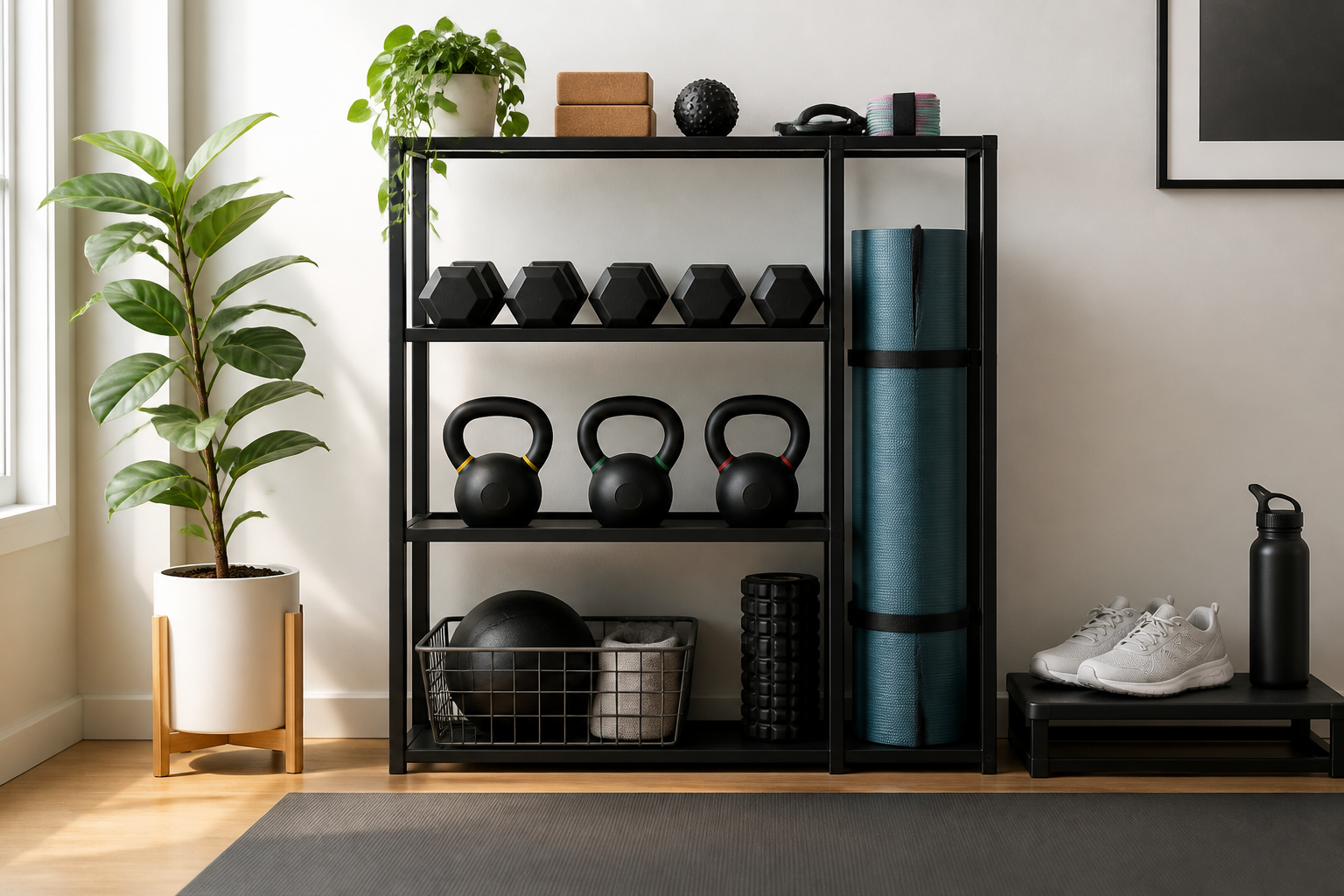
Dumbbells and kettlebells are often best stored on low, stable racks or shelves designed for weight-bearing use. They should not be stacked loosely, because that can make them harder to reach and may create unnecessary clutter. If you have a small collection, a sturdy floor rack or low shelf may be enough. If your collection is growing, a tiered rack can create more visibility and easier access.
For resistance bands and small accessories
Small items tend to disappear quickly if they are not placed in a defined container. Use bins, zip pouches, drawer organizers, or labeled baskets to keep resistance bands, ankle straps, and similar accessories together. Clear containers can help you see what is inside, while opaque containers may create a cleaner visual look if your workout area is part of a living room or bedroom.
For yoga mats and foam rollers
Yoga mats can be rolled and stored upright in a corner holder, wall-mounted rack, or tall basket. Foam rollers often fit well in vertical bins or open shelving. If you use these items frequently, make sure they do not need to be moved every time you want to exercise. Easy access is more important than hidden storage for the gear you use most.
For larger cardio equipment
Larger equipment such as treadmills, bikes, and rowers needs enough surrounding space for safe use and storage. Foldable models can help with organization, but they still need a planned place when folded. Before buying any organizer or adding new equipment, measure the area carefully and account for clearance around moving parts, pedals, and arms.
Use Bins, Baskets, and Labels for Small Items
Small accessories are usually the hardest to keep organized because they are easy to misplace. Bins and baskets are simple, affordable tools that can make a major difference. They are also flexible, which is helpful if your equipment collection changes over time.
How to use containers effectively
- Group similar items together, such as bands, straps, or recovery tools
- Label each bin so gear is easy to find and return
- Keep frequently used items in front or on top
- Use separate containers for clean towels and used items if needed
- Choose bins that fit your shelf or closet measurements before buying
Stackable bins can be useful in closets and garages, but avoid overstacking if it makes items hard to reach. Open baskets are often better for frequently used gear because they make cleanup quick. Closed bins may be better if you want to reduce visible clutter.
Make Safety and Stability a Priority
Fitness equipment organization is not just about appearance. It also affects how safely you can use your space. A cluttered workout area can make it harder to move freely, and poorly stored equipment may shift, fall, or get damaged. A stable setup is especially important in homes with children, pets, or limited square footage.
Keep heavy items low to the ground whenever possible. This makes them easier to lift and lowers the chance of tipping. Avoid placing weights where they can roll, slide, or block walkways. Make sure shelves and racks are level and firmly assembled. If a product looks unstable when loaded, it may not be the right choice for that equipment or location.
Also consider the floor surface. Rubber mats, low-profile flooring, or a non-slip base can help protect floors and make cleanup easier. In garages or basements, moisture resistance may matter more than appearance. In bedrooms or shared living areas, quiet storage and a cleaner visual profile may be more important.
Consider Folding and Multi-Purpose Furniture
For smaller homes, furniture that serves more than one purpose can be a smart storage solution. A bench with internal storage, a rolling cart, or a fold-down shelf can help reduce clutter without adding bulky furniture. These options are especially helpful when a fitness area has to share space with other daily activities.
Examples of multi-purpose ideas
- A storage bench that holds bands, towels, or smaller accessories
- A rolling utility cart for items used during circuit workouts
- A foldable mat storage system for quick setup and cleanup
- A narrow cabinet that stores gear but also functions as a side table
When choosing multi-purpose furniture, check how easy it is to move and whether it can support the items you plan to store. A stylish solution is not useful if it becomes difficult to open, clean, or rearrange.
Keep Frequently Used Equipment Easy to Reach
One of the simplest organization rules is to make the most-used items the easiest to access. If you exercise three or four times a week, you should not have to move several bins just to get a mat or a pair of dumbbells. Convenience often determines whether a system gets used consistently.
A practical access strategy
- Store daily-use items at eye level or waist height
- Keep occasional-use items on upper shelves or in secondary bins
- Separate workout gear from seasonal or backup items
- Return items to the same place after each workout
This approach is simple, but it works. People are more likely to maintain organization when clean-up takes only a minute or two. The easier the system, the more likely it is to stay in place.
Buying Considerations for Home Fitness Storage Products
If you are shopping for storage products, focus on practical details rather than looks alone. A storage item should fit your equipment, your room, and your habits. The following considerations can help you choose more useful products.
Size and dimensions
Measure your space before you buy. Check width, height, and depth, and think about how much room you need to open doors, pull out bins, or place equipment on shelves. A product that is slightly too large can create new clutter instead of solving it.
Weight capacity
Always check how much weight a shelf, rack, or cart is designed to hold. This matters most for dumbbells, kettlebells, and other dense items. When in doubt, choose a product with clear weight guidance and leave some room between the product’s limit and your actual load.
Material and maintenance
Materials affect durability and cleanup. Metal racks may be suitable for heavier equipment, while plastic bins can work well for lighter accessories. Wood can look attractive in shared spaces, but it may not be ideal where moisture, sweat, or garage conditions are common. Pick materials that fit the room where they will be used.
Mobility
Rolling carts and portable bins can be useful if you move your workouts from room to room. On the other hand, fixed shelving may be better if you want a more permanent, tidy setup. The best choice depends on how flexible you need the area to be.
Visibility
Clear containers and open racks make it easier to see what you own, which can reduce duplicate purchases and help with cleanup. Closed storage may look neater, but it can also make gear easier to forget. Choose the balance that matches your space and habits.
Ease of installation
Some wall-mounted products require drilling or assembly. If you want a quick setup, look for freestanding options. If you want to maximize space, wall storage can be excellent, but only if you are comfortable with the installation process and your wall type supports it.
Common Mistakes to Avoid
Organizing fitness equipment gets much easier when you avoid a few common mistakes. These issues often cause clutter to return, even after a room has been cleaned up.
- Buying storage before sorting: You may end up with the wrong size or type of organizer.
- Overcrowding shelves or bins: Packed storage is harder to maintain and access.
- Choosing style over function: Attractive products are helpful only if they fit your gear.
- Ignoring accessibility: If setup takes too long, you may stop using the system.
- Forgetting labels: Labels save time, especially when multiple people use the same space.
- Storing heavy items in unstable places: Stability matters more than convenience for weighty gear.
A simple, realistic setup usually works better than a complicated one. If a solution takes too much effort to maintain, it is probably not the right fit for everyday use.
Simple Habits That Keep the Space Organized
Good storage products help, but habits matter just as much. A few small routines can keep your fitness area tidy without much effort.
Easy habits to build
- Put equipment back immediately after each workout
- Wipe down mats and handles before storing them if needed
- Review your gear monthly and remove items you no longer use
- Keep one empty basket or bin available for temporary overflow
- Reset the space once a week so clutter does not build up
It can also help to assign each person in the household their own gear or labeled space if multiple people share the same workout area. This reduces confusion and keeps equipment from getting mixed together.
Who These Organization Ideas May Suit
These simple organizing methods can help many different types of home exercisers. They are especially useful for people who want a cleaner, more efficient space without major remodeling.
- Apartment residents: need compact, vertical, and often renter-friendly storage
- Beginners: may only have a few items and want an easy system to maintain
- Families: benefit from labels, shared zones, and clearly separated equipment
- Frequent exercisers: need quick access to gear used several times a week
- Home gym builders: can use these ideas to keep growing equipment collections manageable
If your workout setup is evolving, start with simple storage and upgrade only when needed. That keeps the space practical and avoids unnecessary spending.
Frequently Asked Questions
What is the easiest way to organize fitness equipment at home?
The easiest method is to sort equipment by type, give each category a dedicated storage spot, and keep the most-used items close at hand. Bins, baskets, and a few shelves often solve most clutter problems.
How do I store workout equipment in a small space?
Use vertical storage, under-bed containers, wall hooks, and slim shelving. Choose foldable or stackable products when possible, and keep only the gear you use regularly in the most accessible spots.
Should I keep fitness equipment in one room?
Whenever possible, yes. Keeping equipment in one area makes cleanup faster and makes workouts easier to start. If that is not possible, create a consistent storage location for each item category so gear does not spread through the home.
Are open shelves or closed bins better?
Open shelves are often better for frequently used gear because they make items easy to see and reach. Closed bins are useful if you want a cleaner visual look or need to hide smaller accessories. Many homes use a mix of both.
How do I keep small workout items from getting lost?
Store them in labeled containers, drawer dividers, or small baskets by category. Keep similar items together and return them to the same place after each use.
Conclusion
Organizing your fitness equipment at home does not have to be complicated. The most effective systems are usually the simplest ones: sort your gear, choose a dedicated space, use storage that fits your equipment, and keep the most-used items easy to reach. Vertical storage, labeled bins, stable shelving, and multi-purpose furniture can all help create a workout area that feels more open and easier to use.
When shopping for storage products, focus on size, weight capacity, durability, and how well the item fits your routine. Avoid overcomplicating the setup, and build habits that make cleanup quick. With a practical organization plan, your home fitness space can stay functional, tidy, and ready whenever you are.