Introduction
Smart gadgets are no longer limited to tech enthusiasts or luxury homes. Many of today’s most useful devices are designed to remove small frictions from everyday life: waking up on time, keeping the house comfortable, reducing repetitive chores, organizing reminders, and making routine tasks more efficient. When chosen carefully, these gadgets can save time, help you stay consistent, and make daily routines feel more manageable.
The challenge is that not every smart product is genuinely useful. Some devices add complexity, require too much setup, or solve a problem you do not actually have. The best smart gadgets are the ones that fit naturally into your routine and make common tasks easier without demanding constant attention. This guide breaks down practical categories of smart gadgets, what features matter most, and how to choose devices that offer real everyday value.
What Makes a Smart Gadget Worth Buying?
A smart gadget should do more than connect to an app. It should save time, reduce effort, or improve consistency in a way that feels noticeable during normal daily use. The most helpful devices usually work well with your habits instead of forcing you to build your routine around the gadget.
Before buying, it helps to ask a few simple questions. Does this device solve a repeat problem? Will it be easy for everyone in the household to use? Does it require a subscription, hub, or ongoing maintenance? Can it still function well if the app is unavailable? Thinking through these questions can help you avoid purchases that look impressive but become unused after the first week.
Signs a smart gadget is truly useful
- It handles repetitive tasks: Automation is most valuable when it removes a task you do often.
- It is simple to set up: The easier it is to install and learn, the more likely you are to keep using it.
- It fits your routine: Good gadgets support your schedule instead of creating extra steps.
- It works reliably: Daily routine tools should be consistent, not occasionally impressive.
- It offers clear benefits: The value should be obvious, such as better organization, time savings, or less hassle.
Smart Gadgets for Easier Mornings
Mornings often set the tone for the rest of the day, which is why smart gadgets that streamline waking up and getting ready can be especially helpful. If your mornings feel rushed, tools that automate lighting, reminders, and coffee preparation may make the biggest difference.
Smart alarm clocks and sunrise lights
Smart alarm clocks can do more than sound an alarm. Some combine sound, light, and scheduling features that create a gentler wake-up routine. Sunrise-style lights can gradually brighten before your alarm time, which may make waking up feel less abrupt. For people who struggle with groggy mornings, this can be a practical upgrade.
When comparing options, look for adjustable brightness, custom alarm schedules, backup settings, and easy snooze controls. If multiple people wake at different times, a device with several alarms or profiles can be useful.
Smart coffee makers
For anyone who starts the day with coffee or tea, a smart coffee maker can remove one more task from the morning rush. Some allow scheduled brewing, remote start, or custom strength settings. The best models are the ones that let you prepare a cup with minimal friction while still matching your preferred routine.
Consider how much control you actually need. A full-featured app may be unnecessary if your main goal is simple scheduling. In many cases, a straightforward programmable machine is more practical than a more complicated connected model.
Smart plugs for morning routines
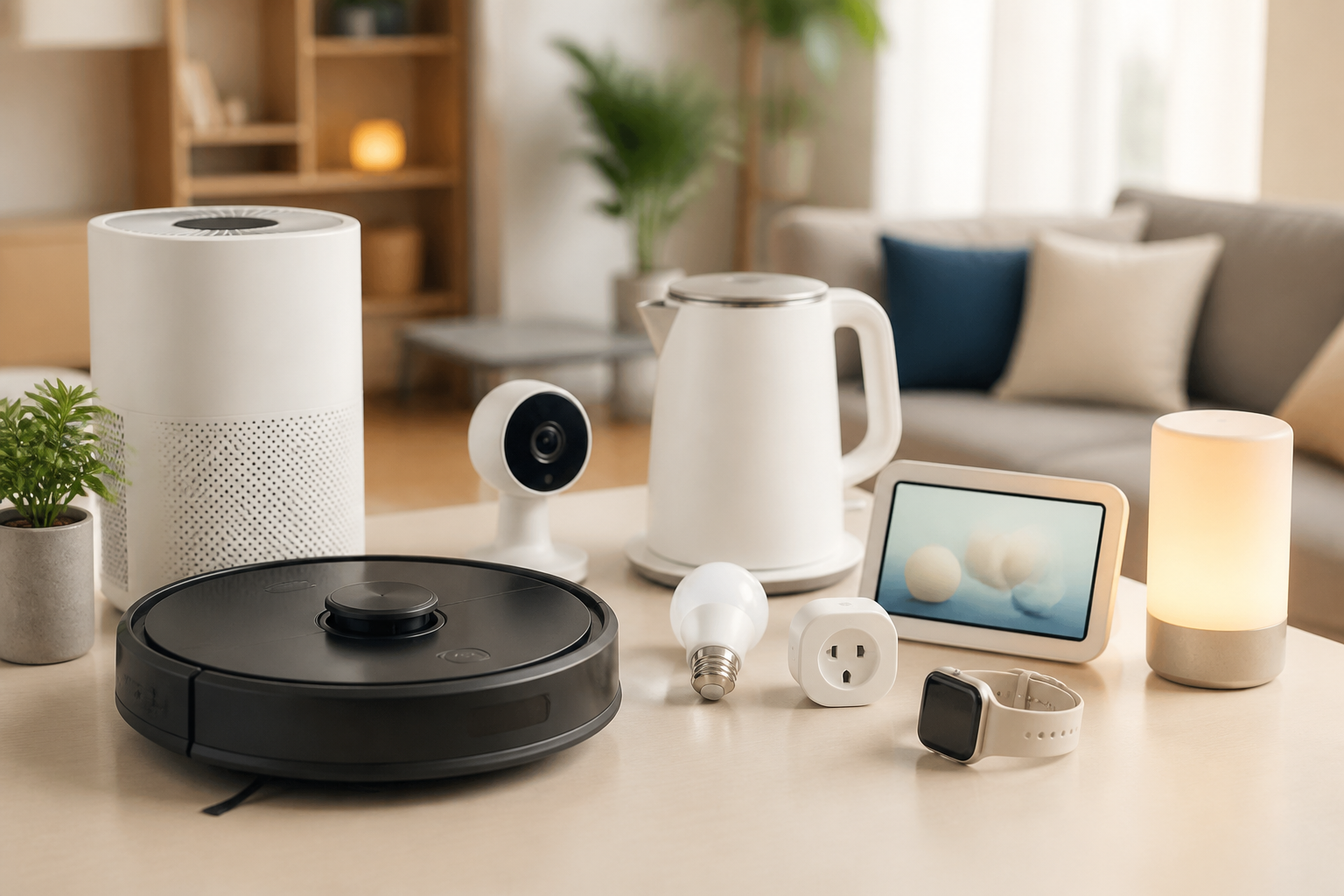
Smart plugs are among the most flexible gadgets for everyday use. They can turn ordinary appliances into scheduled devices, which makes them ideal for lamps, coffee makers, fans, or chargers. If you want a lower-cost way to start using smart home tools, smart plugs are a strong starting point.
Look for reliable scheduling, voice assistant compatibility if needed, and compact design so the plug does not block nearby outlets. Energy monitoring can be useful, but only if you will actually use the data.
Smart Gadgets That Help Keep You Organized
Daily routines often fall apart because of small forgetfulness rather than major problems. Smart gadgets that help with lists, reminders, and tracking can make your day feel more orderly without relying only on memory.
Smart speakers and voice assistants
Smart speakers can support everyday organization through hands-free reminders, timers, shopping lists, calendar prompts, and quick information checks. They can be especially helpful in kitchens, home offices, and shared family spaces where people often need fast answers or reminders while their hands are busy.
When choosing one, think about how it will be used most often. If your main need is playing music and setting timers, a basic model may be enough. If you plan to control multiple smart home devices, make sure the speaker is compatible with the devices you already own or plan to buy.
Digital note and task tools
Some smart devices are designed specifically to keep lists and notes visible. These can be useful for households that rely on grocery lists, shared to-do items, school reminders, or weekly planning. A good digital note device should be easy to update, readable at a glance, and simple enough that all household members will use it.
Before buying, consider whether you need a dedicated device or whether a shared phone app would do the job. The best choice often depends on how many people need access and whether you prefer something visible in a common area.
Smart trackers for everyday items
Item trackers can reduce the time spent searching for keys, bags, wallets, and other small essentials. These are especially helpful for busy mornings or for people who move between multiple locations during the day. The main buying considerations are range, battery life, app usability, and the ease of attaching the tracker to the item you want to monitor.
Trackers work best when attached to things you misplace often and truly need to find quickly. They are less helpful if you buy them as a novelty without a clear use case.
Smart Gadgets That Simplify Household Chores
One of the biggest advantages of smart technology is its ability to reduce repetitive household work. The right appliances can help with cleaning, vacuuming, lighting, and temperature management, making your home feel more organized with less manual effort.
Robot vacuums and smart cleaning devices
Robot vacuums are among the most popular smart home gadgets because they address a recurring chore. They can help maintain floors between deeper cleanings, especially in homes with hard floors, pets, or high foot traffic. Some models map rooms, avoid obstacles, and allow scheduled cleaning sessions.
When choosing one, pay attention to floor type, suction settings, bin size, brush design, and whether it can navigate your home layout. A model that works well in a simple apartment may not be the best choice for a cluttered multi-room home. If you have rugs, cords, thresholds, or pets, those details matter more than flashy app features.
Smart mops and floor tools
For homes where wet cleaning is needed regularly, smart mops and automated floor tools can reduce effort further. These devices can be helpful for kitchens, entryways, and homes with smooth flooring. However, they are usually best as part of a routine rather than a full replacement for manual cleaning.
Look at water tank capacity, pad replacement cost, cleaning modes, and how easy the device is to maintain. A gadget that is hard to clean can become a burden instead of a help.
Smart lights and switches
Smart lighting can improve daily convenience in small but noticeable ways. You can schedule lights to turn on in the morning, dim them in the evening, or create routines for reading, cooking, or relaxing. Motion-activated lighting can also be useful in hallways, closets, or bathrooms.
If you want simple convenience, smart bulbs may be enough. If you prefer to keep your current bulbs, smart switches can be a better long-term option. The best choice depends on whether you want control at the bulb level or the room level.
Smart Gadgets for Comfort and Energy Management
Comfort plays a large role in how easy a routine feels. If your home is too hot, too cold, too bright, or too noisy, even small tasks can feel more tiring. Smart gadgets that help regulate comfort may improve day-to-day life in a practical way.
Smart thermostats
Smart thermostats can help manage indoor temperature with schedules, learning features, and remote control. They are useful for people with predictable routines, frequent schedule changes, or a desire to better manage home comfort. Some models also provide usage insights that can help you understand your heating and cooling habits.
When buying, check compatibility with your current heating and cooling system, app usability, and whether the setup seems manageable. A thermostat should make temperature control simpler, not more confusing.
Smart fans and air quality devices
Smart fans, air purifiers, and humidifiers can support a more comfortable environment by adjusting settings based on timing or room conditions. These are especially useful in bedrooms, workspaces, or shared living areas where comfort affects focus and sleep quality.
Focus on practical features such as auto modes, timer settings, quiet operation, and maintenance requirements. Filters, water tanks, and cleaning needs should all be considered before purchase.
Smart blinds and shades
Smart window coverings can improve convenience by letting you schedule light control throughout the day. They may be useful in bedrooms, home offices, and living spaces where sunlight affects sleep, glare, or temperature. This category can be especially valuable for people who like waking up with natural light or reducing afternoon heat.
Because these products can be more complex than other smart gadgets, it is wise to check installation requirements, battery options, compatibility, and whether the system suits your window size.
Smart Gadgets for Busy Kitchens
The kitchen is one of the easiest places to benefit from smart technology because many tasks are repeated daily. Gadgets that support cooking, timing, and portion control can save time while reducing stress during meal prep.
Smart kitchen scales and thermometers
Smart kitchen scales can help with meal prep, baking, and portion awareness by offering precise measurements and app-based tracking. Smart thermometers can help you monitor cooking more consistently without constant checking. These are especially useful for home cooks who want more control and less guesswork.
Look for readable displays, quick response times, easy cleaning, and straightforward app functions. A tool should be useful even when you do not want to open the app.
Connected appliances
Some appliances, such as multicookers or ovens with smart features, can simplify common cooking routines by offering presets, remote monitoring, or guided programs. These can be helpful for families, meal preppers, and people who cook while multitasking.
Before buying, consider whether the connected features will genuinely change how you cook. If you mostly prefer basic operation, the smartest appliance may simply be one with good presets and easy controls rather than a complex app ecosystem.
Buying Considerations Before You Choose
Because smart gadgets vary widely in quality and usefulness, it helps to evaluate them with a practical checklist rather than shopping based on novelty alone. The best device for your routine is the one that fits your space, habits, and comfort level.
Compatibility and ecosystem
If you already use a voice assistant, phone platform, or home automation system, make sure the gadget works smoothly with what you have. Compatibility issues can turn a simple product into a frustrating one. It is usually better to buy a device that fits your existing setup than to build a whole new system for one gadget.
Ease of setup and daily use
Some smart gadgets are easy to install but difficult to use every day. Others require more setup but become effortless afterward. Read product details carefully to understand whether installation needs special tools, hubs, or wiring. For many buyers, daily simplicity matters more than advanced features.
Privacy and app requirements
Since smart gadgets often rely on apps and internet connectivity, it is worth reviewing what data the product may collect and whether the core functions work without a subscription. Devices that depend too heavily on cloud services can create frustration if an app changes or support ends.
Maintenance and long-term cost
Some gadgets require filter changes, batteries, cleaning accessories, or subscription services. These ongoing needs can affect whether a product stays convenient over time. A good purchase should remain practical after the first few months, not just feel exciting at the start.
Common Buying Mistakes to Avoid
Smart gadget shopping is easier when you know the most common mistakes. These devices can be very helpful, but only if they are chosen with a real routine in mind.
- Buying for features instead of needs: Fancy functions are less important than solving a real problem.
- Ignoring compatibility: A device that does not work with your existing setup can be hard to use.
- Overlooking maintenance: Replacement parts, cleaning, and charging schedules all matter.
- Choosing a complicated app experience: If the app is hard to navigate, the gadget may not get used.
- Expecting full automation: Many smart devices help best as assistants, not replacements for every task.
Practical Tips for Getting the Most Out of Smart Gadgets
Once you have chosen a device, the way you set it up can make a major difference in how useful it becomes. Start with one or two automations that clearly support your routine. Too many settings at once can make a gadget harder to adopt.
Keep your routines simple. For example, a smart plug might turn on a lamp at a set time, or a smart speaker might remind you to check your calendar every morning. Small automations are often more valuable than complicated ones.
It also helps to place gadgets where they naturally fit daily habits. A reminder device belongs where you will actually see it. A voice assistant should be in a room where you tend to ask questions or use timers. A robot vacuum is only useful if the floor is reasonably clear. Location and routine matter as much as the device itself.
Who These Gadgets May Suit
Smart gadgets can be useful for many types of households, but they are especially helpful for people who want to reduce repetitive tasks. They may suit busy professionals, families managing shared schedules, students balancing deadlines, older adults who prefer easy reminders, and anyone trying to create more structure in daily life.
They can also be a good fit for people who enjoy incremental improvement rather than major lifestyle changes. If you want to make mornings calmer, cleaning easier, or reminders more dependable, a few well-chosen gadgets can create noticeable convenience without requiring a complete home overhaul.
Frequently Asked Questions
Do smart gadgets really save time?
They can, but only if they address tasks you do repeatedly. The biggest time savings usually come from automation, reminders, scheduling, and reducing small daily interruptions.
Which smart gadget is best for beginners?
Smart plugs, smart speakers, and simple smart lights are often good starting points because they are generally easy to understand and can be used in many different ways.
Are expensive smart gadgets always better?
Not necessarily. Higher-priced products may offer more features, but the best choice depends on whether those features matter for your routine. A simpler device may be the better buy if it does the job well.
Do smart gadgets need Wi-Fi to work?
Some features usually do, but not all devices depend on Wi-Fi for every function. It is important to check which functions still work locally in case your internet connection is unavailable.
How many smart gadgets should I buy at once?
Starting with one or two practical devices is often the easiest approach. This gives you time to learn what actually improves your routine before committing to a larger setup.
Conclusion
Smart gadgets can make daily routines easier when they solve everyday problems in simple, dependable ways. The most useful options are not necessarily the most advanced. They are the ones that reduce friction in the moments that matter most, such as waking up, staying organized, handling chores, and keeping your home comfortable.
When shopping, focus on compatibility, ease of use, maintenance, and whether the device supports a real routine you already have. A good smart gadget should feel like a helpful upgrade, not another task to manage. By choosing carefully, you can build a practical setup that saves time and makes everyday life run more smoothly.