Introduction
Starting to bake at home can feel exciting and a little overwhelming at the same time. Recipes often assume you already know which tools matter, which ones are optional, and which gadgets are just taking up drawer space. If you are new to baking, the good news is that you do not need a professional kitchen to make cookies, muffins, cakes, quick breads, and other everyday treats. A small set of reliable baking tools can go a long way.
This guide focuses on useful baking tools every beginner should consider, with an emphasis on practical choices rather than specialty items you may only use once or twice a year. The goal is to help you build a starter collection that makes baking easier, more consistent, and more enjoyable. Instead of buying everything at once, it often makes sense to choose a few well-made basics and add more tools as your skills and interests grow.
For beginners, the best baking tools are usually the ones that improve accuracy, simplify mixing and measuring, and help with handling batter, dough, and finished bakes. They also tend to be durable, easy to clean, and versatile enough to use across many recipes. If you are setting up your kitchen or replacing cheap items that do not perform well, the sections below can help you decide what to buy first and what can wait.
Why the Right Baking Tools Matter
Good baking depends on more than just a recipe. Technique matters, but the right tools can make that technique easier to follow. Measuring ingredients properly, mixing without overworking batters, lining pans correctly, and cooling baked goods in the right way all become simpler when you have the right equipment.
For beginners, useful tools can reduce frustration in several ways. They can help you follow recipes more accurately, improve consistency from batch to batch, and make cleanup less stressful. They can also prevent common problems such as uneven cakes, cookies that spread too much, or muffins that stick to the pan. While skill matters, reliable tools give you a better starting point.
Another reason to focus on the basics is value. A beginner’s baking kit does not need to be large, but it should be thoughtful. A few strong essentials are usually more helpful than a basket full of novelty gadgets. That is especially true if your kitchen space is limited or you are still discovering what kinds of baking you enjoy most.
Essential Baking Tools for Beginners
Measuring Cups and Measuring Spoons
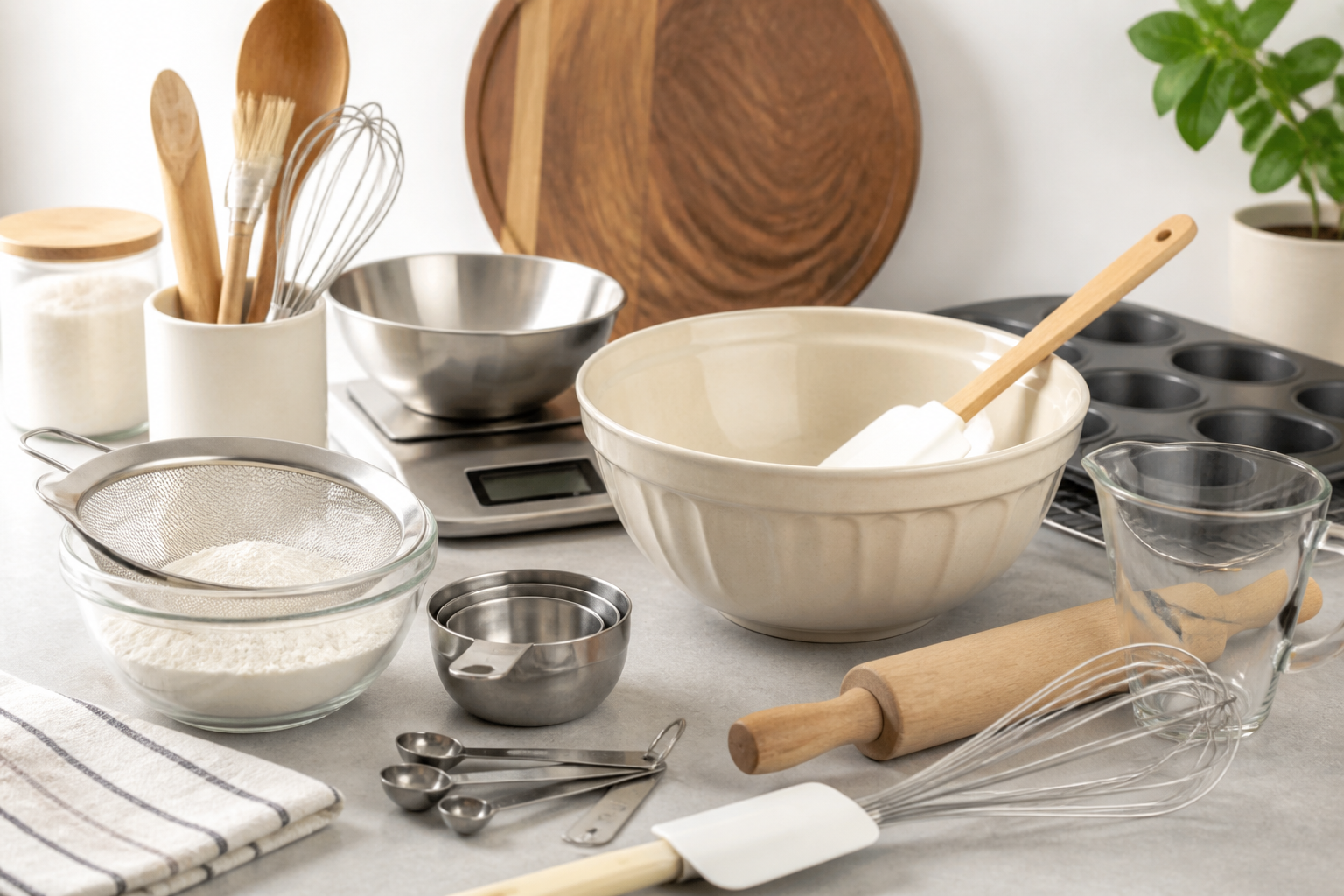
Accurate measuring is one of the most important habits in baking. Unlike many savory recipes, baking formulas often rely on specific ratios, so small changes can affect texture and structure. A set of measuring cups for dry ingredients, a set of measuring spoons, and ideally a liquid measuring cup are among the first items a beginner should own.
When choosing measuring tools, look for clear markings that are easy to read and handles that feel sturdy. Stainless steel is a common choice because it is durable and simple to clean, while plastic versions may be lighter and more affordable. Nested sets are convenient for storage, but make sure the cups and spoons fit together neatly and do not bend easily. A liquid measuring cup with a spout is especially useful for batters, milk, water, and oils.
Who they suit: Anyone baking from recipes that use volume measurements, which includes many home baking recipes. Even if you later move toward weighing ingredients, measuring tools still remain useful.
Kitchen Scale
A kitchen scale is one of the most helpful tools a beginner can add, even though it is often overlooked. Weighing ingredients can improve consistency and reduce the guesswork that sometimes comes with scooping flour or brown sugar. Some bakers prefer scales because they help make recipe results more repeatable across different batches.
For a beginner, a digital kitchen scale is usually the easiest option. Look for a model with a clear display, a tare function so you can reset the weight to zero, and a size that can comfortably hold a bowl or container. A flat, stable surface is useful for accuracy. If you are likely to bake often, a scale can become one of your most-used tools.
Buying consideration: If you choose only one upgrade beyond basic measuring cups, a digital scale may offer the biggest improvement in precision.
Mixing Bowls
A set of mixing bowls is a baking essential because nearly every recipe requires at least one bowl, and many require more than one. It helps to have different sizes so you can whisk dry ingredients, cream butter and sugar, or combine wet and dry mixtures without spills.
Stainless steel bowls are lightweight, durable, and easy to stack. Glass bowls let you see what is happening in the bowl and can work well for microwave use, while some bakers prefer them for their stability. Plastic bowls are often affordable and practical, though they may stain or absorb odors over time. For beginners, a nesting set with at least three sizes is usually a smart starting point.
Practical tip: Look for bowls with wide rims or non-slip bottoms if you often mix vigorously by hand.
Whisk
A whisk is useful for blending dry ingredients, incorporating air into eggs, and smoothing out batters and sauces. In baking, it is especially handy for combining flour, baking powder, and salt before they are added to wet ingredients. This helps distribute ingredients more evenly.
When shopping for a whisk, consider a balloon whisk for general mixing and aeration. A small whisk can also be useful for smaller batches or liquid ingredients. Stainless steel wires are common and durable, and a comfortable handle can make a noticeable difference if you use it often. A whisk may seem simple, but it is one of those tools you will reach for constantly.
Spatulas and Scrapers
Silicone spatulas are extremely useful in a beginner baker’s kitchen. They help scrape bowls clean, fold ingredients gently, and move batter without wasting much of it. Many beginners are surprised by how often they use a spatula, especially when making cakes, brownies, frostings, or quick breads.
There are a few types worth considering. A flexible silicone spatula is good for scraping and folding. A sturdy spoon-style spatula can help with thicker mixtures. A bowl scraper may also be useful if you want to gather batter cleanly from the sides of a mixing bowl. Heat-resistant silicone is a helpful feature, although the exact rating matters less for most beginner baking tasks than flexibility and comfort.
Buying consideration: Choose a spatula with a one-piece or well-secured head if you want easier cleaning and fewer places for batter to get trapped.
Measuring Sifter or Fine Mesh Sieve
Some recipes call for sifting flour, cocoa powder, or powdered sugar. While not every recipe requires it, a sifter or fine mesh sieve can help break up lumps and create a more even dry mixture. It can also be useful for dusting baked goods with powdered sugar or cocoa powder.
For beginners, a fine mesh sieve is often more versatile than a traditional sifter because it can handle many different jobs in the kitchen. Make sure the mesh is fine enough for your needs and the frame feels sturdy. This is one of those tools that may not be used daily, but it can be very useful when a recipe asks for a smooth, lump-free result.
Hand Mixer or Stand Mixer
A mixer is not absolutely required for every beginner, but it can save time and effort if you plan to bake regularly. A hand mixer is usually the more accessible starting point. It can cream butter and sugar, whip cream, and mix many batters without requiring much counter space. A stand mixer is more expensive and larger, but it can be helpful for frequent bakers or for recipes that involve heavier doughs.
When comparing options, consider how often you bake, how much storage space you have, and what kinds of recipes interest you. If you mostly plan to make cakes, cookies, and simple frostings, a hand mixer may be sufficient. If you enjoy making bread doughs or larger batches, a stand mixer may be worth considering later.
Who it suits: Beginners who want to reduce hand mixing, improve consistency, or bake more often.
Baking Pans and Sheet Trays
Round Cake Pans
If you want to bake layer cakes or simple round cakes, at least one or two round cake pans are useful. Beginners should pay attention to pan size because recipes often assume a specific diameter and depth. Using the wrong pan can change baking time and results.
Look for pans with even construction so heat distributes more consistently. Nonstick coating may help with release, though many bakers still prefer lining pans with parchment paper for extra insurance. Straight sides are often useful for layer cakes. If you are only building a modest starter collection, one standard size used in many recipes can be a good place to begin.
Rectangular Baking Pan
A rectangular baking pan, such as a 9-by-13-inch pan or a similar size, is one of the most versatile items a beginner can own. It works for cakes, bars, brownies, casseroles, and many family-style desserts. Because it is so adaptable, it often earns its place in a starter setup quickly.
Look for a pan with comfortable handles if possible, especially if it will be moved while full. A sturdy build helps reduce warping. Nonstick or light-colored metal pans are common options, and each has different heating behavior, so following recipe guidance matters. This kind of pan is especially useful for anyone who wants one tool that can do many jobs.
Cookie Sheet or Baking Sheet
A baking sheet is a must for cookies, roasted nuts, sheet cakes, and many other items. A rimmed baking sheet is usually the better beginner choice because the raised edges help contain drips, toppings, and thin batters. It can also be more versatile than an unrimmed cookie sheet.
When shopping, look for a pan that feels solid rather than flimsy. Thin sheets can warp under heat, which may affect browning and handling. A light-colored pan can sometimes help prevent over-browning, while darker pans may promote more browning. For beginners, a medium-weight rimmed baking sheet is often the safest all-around choice.
Muffin Tin
A muffin tin opens the door to muffins, cupcakes, mini quiches, and other single-portion bakes. It is a practical tool for beginners because many muffin recipes are straightforward and forgiving. A standard 12-cup tin is usually the most useful size to start with.
Look for a tin with a strong structure and cavities that are reasonably easy to clean. Nonstick surfaces can help, though paper liners may still be used depending on the recipe. If you like simple breakfasts or portioned desserts, this is a particularly worthwhile purchase.
Tools That Help with Preparation and Handling
Parchment Paper and Silicone Baking Mats
Parchment paper is one of the easiest ways to make baking more beginner-friendly. It helps reduce sticking, makes cleanup easier, and can simplify the transfer of cookies, bars, or cake layers. Many beginners find that using parchment improves confidence because fewer baked goods break during removal.
Reusable silicone baking mats are another option. They can be convenient if you bake often and want a reusable liner for cookie sheets. Each option has tradeoffs, so the best choice may depend on your routine. Parchment is flexible and disposable, while silicone mats are durable and reusable. Either one can be a useful addition.
Common mistake: Some beginners skip lining pans and assume nonstick coating alone will solve everything. That can lead to sticking, broken edges, or frustrating cleanup.
Cooling Rack
A cooling rack lets air circulate around baked goods after they come out of the oven. This helps cookies firm up, keeps bottoms from becoming soggy, and makes cakes cool more evenly. It is a simple tool, but a very practical one.
Choose a rack that is sturdy and flat, with a grid small enough that delicate baked goods will not fall through. Stackable racks can be useful if you bake multiple trays at once. If your baking sheets are hot and crowded, a cooling rack gives your bakes a proper place to finish.
Rolling Pin
If you plan to make pie dough, sugar cookies, or pastry, a rolling pin is worth considering. Beginners do not necessarily need a fancy version. A simple, easy-to-control rolling pin can be enough to get started.
Common options include straight wooden pins, French-style tapered pins, and pins with handles. The best choice often depends on comfort and preference. If you are just starting out, look for one that feels balanced in your hands and has a smooth surface that is easy to clean. It is a tool that can make dough preparation much more manageable.
Pastry Brush
A pastry brush is useful for applying egg wash, melted butter, glaze, or milk to doughs and pastries. It can also help distribute a light coating of oil or butter in pans. While not essential for every beginner, it is a handy tool if you make pies, rolls, or savory baked items.
Silicone brushes are easy to clean and often durable. Bristle brushes may feel softer for some tasks, though they may require more care. For a beginner, the most practical choice is usually the one that cleans easily and feels comfortable to use.
Important Buying Considerations for Beginners
When building a baking tool collection, it helps to think beyond the individual item and consider how it fits into your routine. The most useful tools are often the ones that match your cooking habits, storage space, and budget.
- Start with versatility: Choose tools that can be used in many recipes, such as measuring spoons, mixing bowls, a whisk, and a baking sheet.
- Prioritize durability: Tools that bend, warp, or wear out quickly can become frustrating. A few sturdy items are often better than many low-quality ones.
- Check storage needs: Some items, like stand mixers or large pan sets, require more space than beginners expect.
- Think about cleaning: Smooth surfaces, dishwasher-safe materials, and simple designs can save time and reduce hassle.
- Match the tool to your goals: If you mainly bake cookies, focus on sheets, spatulas, and measuring tools. If cakes interest you more, pans, mixers, and cooling racks may move higher on the list.
- Do not overbuy: Specialty gadgets can wait until you know you will use them. A small, well-chosen starter set is usually more helpful.
Common Mistakes Beginners Make When Buying Baking Tools
One common mistake is buying too many specialty tools before covering the basics. Another is choosing the cheapest option for every item, which can lead to poor results or items that do not last. Beginners also sometimes forget that pan sizes matter. A recipe written for one pan may not perform the same in another, even if the difference seems minor.
Another frequent mistake is assuming that a mixer or fancy gadget will replace good measuring habits. While some tools do make baking easier, accuracy and patience still matter. It is also easy to forget small but important items such as parchment paper, cooling racks, and spatulas, even though these often make the biggest difference in day-to-day baking.
A final mistake is choosing tools only by appearance. In baking, practical details such as comfort, stability, and easy cleaning usually matter more than style. That does not mean your tools must be plain, but function should come first.
How to Build a Smart Beginner Baking Kit
If you want a simple way to start, think in layers. First, gather the absolute basics: measuring cups and spoons, mixing bowls, a whisk, a spatula, one or two pans, and parchment paper. Then add a kitchen scale if you want better accuracy. After that, choose tools based on the recipes you enjoy most.
For example, if you love cakes, add cake pans, a cooling rack, and maybe a hand mixer. If cookies are your goal, focus on baking sheets, silicone mats or parchment, and a reliable spatula. If muffins and quick breads are your style, a muffin tin and loaf pan may be your next best purchases. This approach keeps your kitchen organized and your spending purposeful.
It can also help to choose a few tools that work well together. A scale and mixing bowls make dry ingredients easier to portion. A baking sheet and cooling rack support better cookie results. A spatula and parchment paper make cleanup easier. Thinking in combinations can be more useful than collecting isolated items.
Frequently Asked Questions
What baking tools should a beginner buy first?
Most beginners should start with measuring cups and spoons, mixing bowls, a whisk, a silicone spatula, one baking sheet, and either parchment paper or a silicone baking mat. A kitchen scale is also a very useful early purchase if you want more accurate results.
Do beginners need a stand mixer?
Not usually. A hand mixer is often enough for cakes, cookies, and simple batters. A stand mixer is more of a convenience tool and may be better suited to frequent bakers or those who want to make heavier doughs more often.
Is a kitchen scale necessary for baking?
It is not strictly necessary for every recipe, but it is very helpful. A scale can improve consistency and make it easier to measure ingredients accurately, especially when recipes list weights instead of volumes.
What is the most versatile baking pan for beginners?
A rimmed baking sheet and a rectangular baking pan are both highly versatile. A 9-by-13-inch pan is especially useful for bars, brownies, and sheet desserts, while a rimmed baking sheet works well for cookies and many other tasks.
How many mixing bowls do I need?
A small nesting set with at least three sizes is a practical starting point. That gives you enough flexibility for separate wet and dry mixtures without constant washing between steps.
Conclusion
Building a baking setup as a beginner does not have to be complicated. The most useful baking tools are usually the ones that help you measure accurately, mix efficiently, handle batter cleanly, and bake in pans that suit common recipes. Measuring cups, measuring spoons, a kitchen scale, mixing bowls, a whisk, a spatula, a cooling rack, and a few basic pans can support a wide range of recipes without overwhelming your kitchen.
As you gain confidence, you can add specialty tools based on what you actually enjoy baking. That approach is usually more practical than buying a large set all at once. Start with the essentials, choose durable and easy-to-use items, and let your baking habits guide future purchases. With a small but thoughtful collection of tools, beginners can make the baking process smoother and more enjoyable from the very beginning.