Introduction
Home workouts and daily exercise routines work best when the right accessories make movement easier, safer, and more consistent. You do not need a room full of equipment to stay active, but a small set of well-chosen fitness accessories can improve comfort, support better form, and make it simpler to fit exercise into a busy day. The most useful items are usually the ones that solve a real problem: slipping during floor exercises, needing more resistance for strength work, tracking progress, or staying organized enough to keep workouts realistic.
This buying guide focuses on useful fitness accessories for home workouts and daily exercise in a practical, neutral way. It covers what each accessory does, what features matter, who it may suit, and common mistakes to avoid when building a simple home fitness setup. Whether you are starting from scratch or upgrading a small workout corner, the goal is to help you choose accessories that genuinely support regular exercise rather than adding clutter.
How to Choose Fitness Accessories for Home Use
The best accessories are not always the most complex. A good home workout accessory should fit your space, your routine, and your goals. Before buying anything, it helps to think about how often you exercise, what kind of movement you prefer, and how much storage space you have. A compact apartment setup has different needs than a spare room, and a walking-and-mobility routine is different from strength training or HIIT.
It is also helpful to consider ease of use. The more convenient an accessory is, the more likely it is to become part of a daily routine. If setup takes too long or storage is awkward, even a useful item may go unused. Look for products that are durable, easy to clean, and simple enough to integrate into your current habits.
Key buying considerations
- Space: Choose items that match your available floor area and storage options.
- Versatility: Accessories that support multiple exercises usually offer better value.
- Comfort: Handles, grips, padding, and texture can make regular use more enjoyable.
- Durability: Materials should hold up to repeated use without stretching, cracking, or slipping too easily.
- Routine fit: The accessory should support the type of movement you already do or realistically plan to do.
Exercise Mats: The Foundation of Many Home Workouts
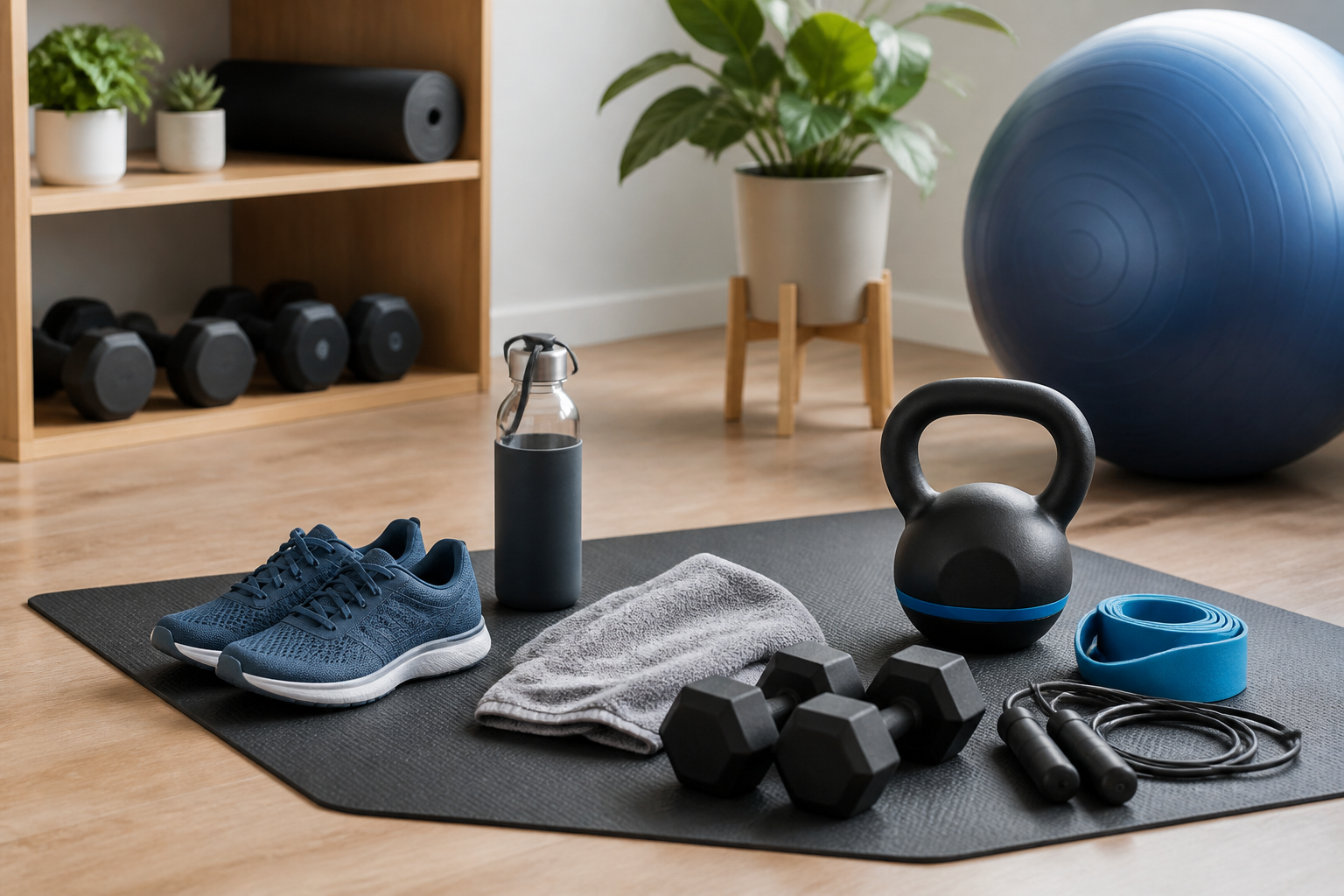
An exercise mat is one of the most practical accessories for home workouts. It creates a designated surface for stretching, core work, yoga, Pilates, mobility drills, and many bodyweight exercises. A good mat can also make floor exercises more comfortable on hard flooring and help define your workout space in a way that encourages consistency.
When comparing mats, thickness is only one factor. Too thin, and the mat may feel uncomfortable on knees or elbows. Too thick, and it may feel less stable for balance-based movement. Surface texture matters as well, since a mat that slides around or feels overly slick can be distracting. The right mat often depends on your routine: yoga and stretching may benefit from a grippy surface, while floor-based strength work may call for a slightly firmer, more cushioned option.
Who may benefit most
- People doing yoga, Pilates, or mobility work
- Anyone performing planks, sit-ups, push-ups, or glute exercises on hard floors
- Beginners creating a simple home workout area
- Users who want a clear, dedicated exercise zone
What to look for
- Grip: Helps reduce slipping during movement.
- Comfort level: Enough cushioning for your joints without feeling unstable.
- Easy cleaning: A surface that can be wiped down after use is practical for daily exercise.
- Size: Long enough for your height and the exercises you prefer.
Resistance Bands: Compact and Versatile Strength Tools
Resistance bands are among the most useful accessories for home strength training because they take up little space while offering a wide range of exercises. They can support warm-ups, lower-body work, upper-body training, mobility drills, and assisted stretching. For many people, they are a simple way to add resistance without needing large weights or a lot of storage.
Different band styles suit different needs. Loop bands are often used for glute and leg exercises, while long bands with handles can be useful for rows, presses, and full-body moves. Tube-style bands with handles may feel familiar to people transitioning from machines or cable systems. If possible, choosing a set with multiple resistance levels can make the accessory more useful over time.
Important features
- Resistance variety: Multiple levels help beginners start comfortably and allow gradual progression.
- Material quality: Bands should feel sturdy and consistent during use.
- Grip or anchor compatibility: Some sets are better suited to door anchors or handles.
- Portability: Useful for travel, small homes, or quick workouts.
Common buying mistakes
- Choosing only one resistance level and outgrowing it quickly
- Buying a style that does not match the intended exercises
- Ignoring comfort where handles or loops contact the body
- Assuming all bands offer the same level of durability
Dumbbells and Adjustable Weights for Progressive Training
Dumbbells remain a classic choice for home exercise because they are straightforward, effective, and adaptable. They support a wide range of movements, including presses, curls, rows, squats, lunges, and carry exercises. For people who want to increase training intensity gradually, dumbbells can be more flexible than many fixed accessories.
If you are setting up a home space, adjustable dumbbells may be worth considering because they reduce storage needs while offering multiple weight options in one pair. Fixed dumbbells, on the other hand, can be useful if you already know the weight range you prefer and want quick access without changing settings. The right option depends on how often you change loads and how much room you have.
Buying tips
- Choose a manageable starting weight: It is often better to begin with weights that allow controlled form rather than selecting something too heavy.
- Check the grip: A comfortable handle can matter a lot during longer sessions.
- Think about storage: Adjustable options save space, while fixed dumbbells may require racks or shelves.
- Match the accessory to your plan: Strength-focused routines may benefit more from dumbbells than from lighter, general-purpose items.
Jump Ropes for Efficient Cardio at Home or on the Go
A jump rope is a small accessory, but it can be a useful addition to daily exercise if your joints, space, and coordination levels make it a suitable choice. It is compact, easy to store, and can fit into short cardio sessions. Many people like it because it is portable and can be used indoors or outdoors, depending on the surface and available space.
The best jump rope for you will depend on your comfort and training goals. Some ropes are designed for speed, while others are easier for beginners. Handle comfort and rope length matter a great deal. A rope that is too long or too short can make the activity more frustrating than it needs to be.
Who it may suit
- People looking for a simple cardio option with minimal storage needs
- Users who prefer short, efficient exercise breaks
- Anyone who wants to combine cardio with coordination practice
Practical considerations
- Floor surface: Use a surface that is appropriate for repetitive impact.
- Handle comfort: Especially important for longer sessions.
- Length adjustability: Helps tailor the rope to your height.
- Skill level: Beginners may prefer a more forgiving rope before moving to speed-focused designs.
Yoga Blocks, Straps, and Support Accessories for Mobility
Support accessories such as yoga blocks and straps can make stretching, mobility work, and certain floor exercises more accessible. They are especially helpful when range of motion is limited, posture needs a little support, or exercises need to be modified for comfort. These accessories are not only for yoga routines; they can help with general flexibility work, warm-ups, cool-downs, and lower-intensity daily movement.
Yoga blocks can provide height and stability in seated stretches, standing poses, and balance work. Straps can assist with reaching, controlled stretching, and maintaining alignment without forcing the body into positions that feel uncomfortable. These tools are often appreciated by beginners because they make movements more approachable and easier to scale.
What to look for
- Firmness: Blocks should feel stable enough to support body weight where needed.
- Surface texture: Helps with grip during use.
- Strap length and adjustability: Useful for different stretches and body sizes.
- Lightweight design: Easy to move and store.
Foam Rollers and Massage Tools for Recovery
Recovery tools are often overlooked, but they can be useful for people who exercise regularly and want to maintain comfort between workouts. Foam rollers, massage balls, and similar accessories are commonly used to apply pressure to muscles after activity or during a warm-up routine. While these tools are not a substitute for professional care, they may help some users feel more prepared for movement or more comfortable after exercise.
Foam rollers come in different densities and textures. A smoother, less firm roller may suit beginners, while a firmer option may feel better for people who want deeper pressure. Massage balls can target smaller areas such as feet, glutes, or upper back muscles. The best choice depends on which body areas you want to focus on and how much pressure feels appropriate for you.
Helpful buying notes
- Density matters: Too firm can feel uncomfortable; too soft may not provide enough support.
- Size matters: Larger rollers suit broader areas, while smaller tools are more precise.
- Simple storage: Compact recovery tools are easier to keep within reach.
Hydration Bottles and Small Daily Essentials
Not every useful fitness accessory is directly related to exercise mechanics. Some of the most practical items support consistency and comfort. A reliable water bottle is a simple example. Staying hydrated during workouts and throughout the day is a basic habit that supports an active routine, and having a bottle that is easy to carry, refill, and clean can make that habit easier to maintain.
Other daily essentials may include a small towel, sweat-resistant headband, or a compact storage bag for accessories. These items seem minor, but they can reduce friction in your routine. If you do not have to search for a towel, tidy bands, or rinse a bottle every time you work out, your exercise habit may feel more manageable.
Good features to consider
- Leak-resistant design: Helpful for home storage and carrying in bags.
- Easy cleaning: Important for daily use.
- Appropriate capacity: Large enough for your routine without becoming bulky.
- Durable material: Useful for repeated use.
Fitness Trackers, Timers, and Simple Progress Tools
Tracking tools can make home workouts more structured and easier to repeat. A basic timer, smartwatch, or fitness tracker may help with interval training, step goals, workout duration, or reminders to move during the day. For some people, this kind of accessory adds accountability. For others, it helps establish a routine by making exercise feel more planned and measurable.
You do not need advanced technology to benefit from a progress tool. A straightforward stopwatch or phone timer may be enough for intervals, rest periods, and exercise circuits. More advanced devices may appeal to users who want heart-rate tracking, activity summaries, or daily movement reminders. The key is to choose a tool that supports your routine rather than distracting from it.
When this category may be useful
- People building consistent daily exercise habits
- Users who follow interval-based routines
- Anyone who benefits from reminders to stand, move, or train
- Beginners who like simple structure
Storage and Organization Accessories
One of the most underrated parts of a home workout setup is organization. If your accessories are easy to find and put away, you are more likely to use them often. Storage bins, hooks, wall organizers, and small shelving options can help keep fitness items visible but tidy. This is especially useful for households where workout gear competes with everyday living space.
Good organization also helps prevent a common problem: buying useful accessories and then forgetting where they are. A designated place for resistance bands, towels, weights, and recovery tools can make a home routine feel more intentional. In smaller homes, compact storage is often as important as the accessories themselves.
Practical organization tips
- Keep frequently used items within easy reach
- Store small accessories together in one container
- Use wall or vertical storage when floor space is limited
- Reassess unused items so clutter does not build up over time
How to Build a Simple Home Workout Accessory Set
If you are unsure where to start, a small but versatile set is often the best approach. Many people can build an effective home setup with just a few core accessories: a mat, resistance bands, and either dumbbells or a jump rope, depending on whether their priority is strength or cardio. From there, support items such as a water bottle, towel, or foam roller can make daily exercise easier to sustain.
A simple setup also helps you learn what you actually use. Instead of buying many accessories at once, it can be smarter to start with the essentials and add more only when a real need appears. This reduces waste, saves storage space, and makes it easier to maintain a routine that feels realistic.
Common Buying Mistakes to Avoid
Home fitness shopping is often most successful when it focuses on usefulness rather than trends. A few common mistakes can make accessories less helpful than they seem at first.
- Buying for a workout style you do not actually follow: Choose items that match your real routine.
- Ignoring storage needs: Even excellent accessories become inconvenient if they create clutter.
- Choosing one-size-fits-all products without checking dimensions: Fit and length matter for many accessories.
- Prioritizing appearance over comfort and function: Practical use matters more than looks for daily exercise.
- Overbuying too soon: Start with essentials and expand gradually.
Frequently Asked Questions
What are the most useful fitness accessories for beginners at home?
For many beginners, an exercise mat, a set of resistance bands, and a simple water bottle are practical starting points. These items support a wide variety of exercises and do not require much space.
Are expensive fitness accessories always better?
Not necessarily. Higher prices do not always mean better fit or usability. It is usually more important to choose accessories that match your space, comfort preferences, and workout style.
How many fitness accessories do I really need?
That depends on your routine. Some people only need a mat and resistance bands, while others may want dumbbells, recovery tools, or timers. A smaller, well-chosen set is often more useful than a large collection.
Should I buy adjustable or fixed dumbbells?
Adjustable dumbbells are often better for saving space and changing resistance levels. Fixed dumbbells may be more convenient if you want immediate access and already know the weights you use most often.
What accessory helps with consistency the most?
Often, the most helpful accessory is the one that removes friction from your routine. For some people that is a mat, for others it is storage, a timer, or a set of resistance bands that are easy to grab and use.
Conclusion
Useful fitness accessories for home workouts and daily exercise are usually simple, versatile, and easy to keep in routine. The best choices support the type of movement you already want to do, fit your available space, and make exercise more comfortable and consistent. Whether you choose a mat for floor work, resistance bands for compact strength training, dumbbells for progression, or small support tools for recovery and organization, the most effective setup is the one you can actually use regularly.
Start with a few essentials, focus on quality and practicality, and build slowly as your habits grow. A thoughtful home fitness setup does not need to be large to be useful; it only needs to support your goals in a way that feels realistic for everyday life.