Introduction
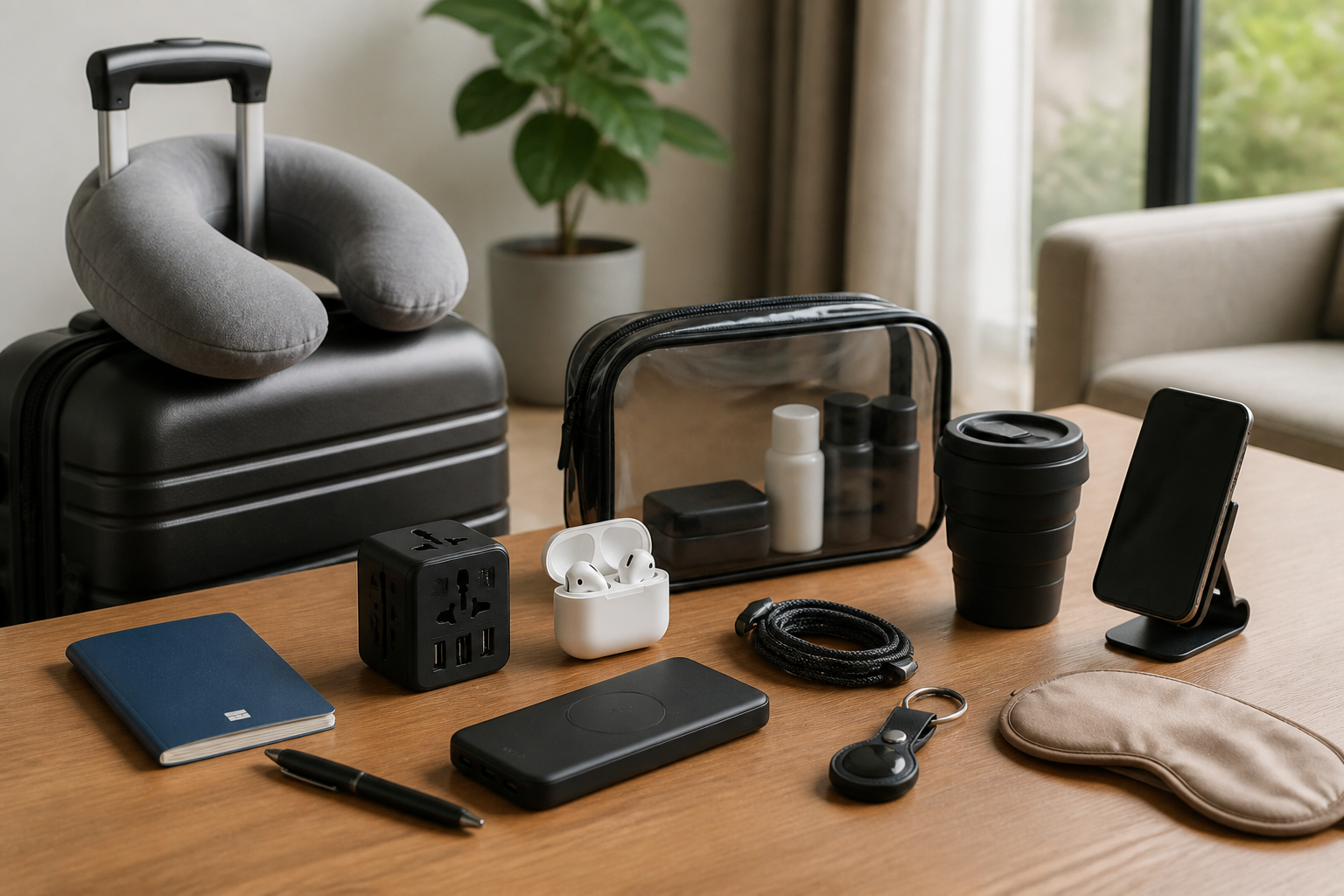
Frequent travel can be rewarding, but it also brings a familiar set of small frustrations: dead batteries, tangled cables, misplaced documents, overweight bags, uncomfortable flights, and the constant effort of keeping essentials organized. The right gadgets do not eliminate travel stress entirely, but they can make trips smoother, lighter, and easier to manage.
This guide focuses on useful gadgets for frequent travelers that solve real problems. Instead of chasing every new travel trend, it helps you think about what matters most: portability, battery life, compatibility, durability, and convenience. Whether you travel for work, family visits, or extended personal trips, choosing practical gear can save time and reduce hassle at the airport, in hotels, and on the road.
The best travel gadgets are usually not the flashiest ones. They are the items you reach for repeatedly because they help you stay powered, organized, and comfortable without adding much bulk. Below, you will find the most practical categories to consider, the features that matter, and the common mistakes to avoid when buying travel accessories.
Why the Right Travel Gadgets Matter
Travel gear should earn its place in your bag. Every item you carry has to justify its weight, size, and cost. For frequent travelers, that means choosing gadgets that do at least one of the following well: simplify packing, reduce dependence on airport or hotel amenities, improve comfort during transit, or protect valuable electronics and documents.
A useful gadget can also prevent small problems from becoming big ones. For example, a power bank may help you avoid a dead phone during a connection, while a compact organizer can keep charging cables and adapters from disappearing into the bottom of a backpack. A suitcase scale can reduce the risk of overweight luggage surprises. A universal adapter can make it easier to charge devices abroad without carrying several separate plugs.
The key is to buy for your actual travel pattern. A business traveler who takes short international flights needs different gear than someone who packs for long leisure trips with multiple destinations. The next sections break down the most useful gadget types and what to look for in each one.
Portable Chargers and Power Banks
One of the most practical gadgets for frequent travelers is a portable charger. Phones now handle boarding passes, maps, messaging, banking, entertainment, and work tools, so battery life matters more than ever. A dependable power bank can help you recharge on a long layover, during a train ride, or after a full day of navigation and photos.
What to look for in a power bank
- Capacity: Choose a capacity that fits your routine. Smaller models are easier to carry, while larger ones can recharge devices multiple times but may take more space.
- Output ports: Look for enough USB ports for your devices. If you travel with a phone, earbuds, and a tablet, multiple outputs can be useful.
- Charging speed: Fast-charging support can be helpful if your devices are compatible.
- Size and weight: A power bank should be easy to pack and comfortable to carry daily.
- Air travel compatibility: If you fly often, check airline rules before buying a high-capacity model.
Frequent travelers often benefit from a slim power bank that fits in a day bag or jacket pocket. If you prefer to pack one battery pack for many devices, a larger model may be better, as long as it remains practical to carry.
Who it may suit
Power banks are especially useful for business travelers, remote workers, commuters with long transit times, and anyone who relies heavily on a smartphone throughout the day.
Universal Travel Adapters
If you travel internationally, a universal travel adapter can be one of the most valuable items in your kit. Outlets vary by country, and a good adapter helps you plug in your devices without carrying multiple region-specific chargers. Some models also include USB ports, which can reduce the number of chargers you need.
Important features to consider
- Plug compatibility: Make sure the adapter supports the countries you visit most often.
- USB-C support: Many modern devices charge through USB-C, so this can be a useful feature.
- Build quality: A solid adapter should feel stable, with a secure fit in the outlet.
- Voltage awareness: An adapter changes plug shape, not necessarily voltage. Your devices must still be compatible with local power standards.
- Compact design: Travelers who move between cities or countries may prefer something small and easy to pack.
A universal adapter is not always the same as a converter. This is a common buying mistake. Before traveling, check whether your device can handle the local voltage. Many modern electronics can, but some tools and appliances cannot. Reading the device label is worth the extra minute.
Charging Cables and Cable Organizers
Cables are easy to overlook, yet they are among the most useful items in any travel setup. Frequent travelers often benefit from carrying a few carefully chosen cables rather than a drawer full of extras. The goal is to reduce clutter while making sure each cable serves a purpose.
Features that make travel cables better
- Durability: Reinforced ends and strong outer materials can help cables last longer.
- Length: Short cables are convenient in a plane or train seat, while longer ones can be better in hotel rooms.
- Compatibility: Match the cable type to your devices so you do not pack unnecessary extras.
- Easy storage: Tangle-resistant designs or included ties can make packing simpler.
Cable organizers are equally useful. A compact pouch, wrap, or small tech case can keep cords separate from chargers, earbuds, and memory cards. This may not seem essential until you are digging through a bag at a gate or in a taxi. For frequent travelers, reducing search time is a real convenience.
Common buying mistake
Buying too many “just in case” cables often creates more weight and confusion. A better approach is to choose a small, intentional set based on the devices you actually carry.
Noise-Reducing Headphones or Earbuds
Travel often involves unpredictable noise: engines, announcements, chatter, hotel hallways, and street traffic. Headphones or earbuds can improve the experience by making it easier to listen to music, podcasts, or calls in comfort. Noise-reducing models are especially helpful for long flights and busy terminals.
What to evaluate before buying
- Comfort: If you wear them for hours, fit matters as much as sound quality.
- Battery life: Longer battery life can be useful on long-haul travel days.
- Portability: Foldable headphones or a small charging case can be easier to pack.
- Connectivity: Stable wireless pairing is important if you switch between devices.
- Call quality: Frequent travelers who take work calls may value clear microphone performance.
There is no single best style for everyone. Over-ear headphones may be more comfortable for some travelers, while wireless earbuds are often easier to store and carry. Think about how you actually travel. If you pack light, small earbuds may be the better fit. If comfort on long flights is your priority, a larger set may make more sense.
Compact Travel Routers and Connectivity Tools
Reliable internet is important for many frequent travelers, especially those who work on the road. A compact travel router can help create a private connection from hotel Wi-Fi or other shared networks. Connectivity tools can also include hotspot devices, SIM organizers, and simple accessories that make mobile work easier.
When this category is useful
Travel routers and related tools may suit people who need to connect several devices, want a more organized setup in hotels, or prefer a consistent network experience while moving between locations. They can be especially helpful for digital nomads, consultants, and remote employees who use laptops, tablets, and phones during travel.
Buying considerations
- Setup complexity: Some devices are easier to configure than others.
- Compatibility: Make sure the device works with the networks and hardware you expect to use.
- Portability: A travel-friendly design should be compact enough to pack regularly.
- Security features: Basic security controls may matter if you connect in public places.
Not every frequent traveler needs a router, but for people who regularly work online away from home, it can be a practical upgrade.
Luggage Scales and Packing Helpers
One of the most annoying parts of travel is guessing whether your suitcase is too heavy. A luggage scale can help you avoid repacking at the airport and can make packing more predictable. For frequent travelers who fly often, this small gadget can save both time and stress.
Why luggage scales are worth considering
- Quick checks: You can weigh bags before leaving home or a hotel.
- Better packing decisions: Knowing the weight helps you adjust early.
- Less airport stress: You are less likely to be surprised at the counter.
Some travelers also like packing cubes, compression cubes, or small packing organizers. These are not electronic gadgets, but they function like travel tools that improve packing efficiency. Packing cubes can separate clothes by type or trip segment, making it easier to find what you need without unpacking everything.
A practical approach is to combine a luggage scale with a few packing organizers. This keeps your bag neat while helping you stay within baggage limits.
Document Organizers and RFID-Blocking Accessories
Travel involves more than electronics. Passports, boarding passes, ID cards, hotel confirmations, and payment cards all need a safe place. A well-designed document organizer can reduce the chance of losing important items during a busy travel day.
What a good organizer should do
- Keep essentials together: Passports, cards, and travel papers should be easy to reach.
- Fit your style of travel: Some travelers want a slim wallet; others prefer a larger organizer with more compartments.
- Stay durable: A travel wallet should hold up to frequent handling.
Some organizers include RFID-blocking material. Travelers often consider this feature for added peace of mind, especially when carrying contactless cards or passports with embedded chips. It is still wise to stay careful with all valuables, since no gadget replaces basic attention and secure storage.
A common mistake is choosing a document holder that is too bulky. If it does not fit comfortably in a coat pocket, personal item, or day bag, it may be inconvenient to use consistently.
Smart Luggage Tags and Trackers
Luggage trackers and smart tags can help travelers keep tabs on checked bags, carry-ons, or important gear. These gadgets are not a guarantee against loss, but they can make it easier to identify where an item is located. That can be reassuring when you travel often or connect through busy airports.
Things to check before buying
- Compatibility: Make sure it works with your phone or preferred ecosystem.
- Battery life: Consider how often you will need to replace or recharge it.
- Attachment method: A tracker should fasten securely to your bag.
- Privacy settings: Review how the device shares location information.
For frequent flyers, a tracker is most useful when paired with a clearly labeled bag and a strong travel routine. It is one more layer of organization rather than a substitute for careful packing.
Portable Comfort Gadgets for Transit
Comfort may not be the first thing people think about when shopping for travel gadgets, but it can make a major difference on long journeys. Small comfort items can help you feel more settled on planes, trains, and long car rides.
Examples of practical comfort items
- Travel pillows: Useful for rest during long trips, though fit and firmness vary.
- Eye masks: Compact and easy to pack for better light control.
- Small blankets or wraps: Helpful for chilly cabins or late-night transit.
- Seatback organizers: Can keep essentials within reach during a flight.
Choose comfort gear carefully. Large or overly specialized items can become clutter. The best options pack down well and are easy to use without effort.
How to Choose the Best Travel Gadgets for Your Needs
The most useful gadgets depend on how you travel. Before buying, think through the following questions:
- How often do you travel, and for how long?
- Do you usually fly, drive, take trains, or combine multiple modes?
- Do you travel mostly domestically or internationally?
- What causes the most frustration on your trips: battery life, organization, comfort, or luggage weight?
- How much room do you have in your personal item or carry-on?
These questions help you avoid buying novelty items that do not solve real problems. A frequent traveler who takes short business flights may prioritize power, cables, and a document organizer. Someone who spends weeks abroad may benefit more from a universal adapter, a packing system, and a reliable tracker.
It is also wise to consider maintenance. A gadget that requires frequent charging, complicated setup, or special accessories may be less practical than a simpler item that works right away.
Common Buying Mistakes to Avoid
Many travelers end up with gear they rarely use because they focus on features instead of fit. Here are some common mistakes:
- Buying for rare scenarios: If a gadget only helps once a year, it may not deserve space in your bag.
- Ignoring size and weight: Compact products are often better for frequent travel than larger versions with extra functions.
- Overlooking compatibility: Check plug types, device ports, and voltage requirements before purchasing.
- Choosing too many multi-use products: A gadget that does everything may do none of it especially well.
- Forgetting the packing system: Even great gadgets can be hard to use if they are buried in a messy bag.
A thoughtful travel setup is usually built from a few reliable essentials rather than a large collection of gadgets.
Practical Tips for Building a Better Travel Kit
If you travel regularly, build your kit gradually. Start with the items that solve your biggest daily pain points, then add only what you will use consistently. Keep a dedicated travel pouch for electronics, another for documents, and a simple routine for recharging and repacking after each trip.
Try to choose gadgets that are easy to replace if necessary and simple enough to use without reading a long manual. Frequent travel often involves time pressure, so convenience matters. A gadget that works immediately is usually more valuable than one with a long list of features you may never use.
It can also help to review your kit every few months. Devices change, charging standards evolve, and your own travel habits may shift. A small refresh can keep your setup relevant and prevent unnecessary clutter.
Frequently Asked Questions
What are the most useful gadgets for frequent travelers?
The most useful gadgets usually include a portable charger, universal adapter, quality cables, document organizer, luggage scale, and comfortable headphones or earbuds. The best choice depends on whether your biggest concern is power, organization, or comfort.
Are expensive travel gadgets always better?
Not always. Higher-priced items may offer better materials or more features, but the best choice is the one that fits your travel habits. A simple, reliable gadget is often more useful than a premium one with features you will not use.
Do frequent travelers need a power bank?
Many do, especially those who use phones heavily for navigation, communication, and travel documents. A power bank is particularly helpful during long transit days or when outlets are not easy to find.
What should I pack first when building a travel gadget kit?
Start with the essentials that solve immediate problems: charging, plug compatibility, organization, and luggage control. From there, add comfort items or connectivity tools based on how often you encounter those needs.
How do I avoid overpacking travel gadgets?
Focus on multi-purpose items that truly reduce stress. Keep a small, dedicated kit and remove anything you did not use on recent trips. Regularly auditing your travel gear helps keep it efficient.
Conclusion
Useful gadgets for frequent travelers are the ones that make trips more manageable without creating extra bulk or complexity. Portable chargers, universal adapters, durable cables, headphones, luggage scales, document organizers, trackers, and comfort items can all improve the travel experience when chosen carefully. The right combination depends on your itinerary, devices, and personal habits.
Instead of buying the most advanced option, aim for dependable gear that solves real travel problems. A smart, compact travel kit can help you stay powered, organized, and more comfortable wherever you go. That practical approach is what makes travel gadgets genuinely useful for frequent travelers.