Introduction
Rainy weather changes daily routines in ways that are easy to underestimate. A short commute can take longer, shoes get soaked more quickly, bags need better protection, and even small tasks at home become more inconvenient when moisture gets inside. That is why a thoughtful set of rainy season essentials can make a noticeable difference both at home and while traveling.
This guide focuses on useful, practical items that help with wet-weather comfort, organization, and convenience. Rather than treating rainy season shopping as a list of random purchases, it is better to think in terms of protection, drying, storage, and mobility. The right essentials can help reduce mess near the door, keep important belongings safer on the move, and make packing for trips easier when the forecast is uncertain.
If you are building a rainy season kit for your household or preparing for travel during wet months, the best approach is to choose items that fit your real routines. Some people need compact carry options and quick-dry clothing. Others may need better entryway storage, waterproof covers, or reliable gear for commuting. The sections below explain what to look for, who each item may suit, and common mistakes to avoid.
Why rainy season essentials matter
Rainy season shopping is most useful when it solves a specific problem. Wet shoes at the door, dripping umbrellas in the hallway, damp bags, and muddy floors are all common inconveniences that can be addressed with a few well-chosen products. Travel also becomes more complicated in the rain because you may need to protect electronics, documents, clothing, and footwear from unexpected showers.
A good rainy season setup does not have to be large or expensive. In many cases, a small collection of practical items will do more than one complicated solution. For example, a water-resistant backpack cover may help on a commute, while a compact umbrella and quick-dry towel may be enough for short trips. At home, a boot tray, absorbent mat, and a dedicated storage area for wet items can prevent the entryway from becoming cluttered.
The most helpful rainy season essentials usually share three qualities: they are easy to use, easy to store, and suited to repeated use. When shopping, prioritize items that are simple to maintain and appropriate for the climate and travel patterns you actually face.
Rainy season essentials for home
1. Reliable umbrellas for the entryway
An umbrella is one of the simplest rainy weather purchases, but it is still worth choosing carefully. For home use, it helps to keep at least one sturdy umbrella near the main entrance so that it is easy to grab when leaving quickly. Larger umbrellas offer more coverage, while compact folding umbrellas are easier to store in bags and drawers.
When comparing umbrellas, look for practical features such as a comfortable grip, a canopy size that suits your needs, and a closing mechanism that is easy to manage with one hand. A wind-resistant frame may also be helpful in areas where weather changes suddenly. Families often benefit from having more than one umbrella style available, since not every outing calls for the same size.
Who it may suit: daily commuters, households with a shared entryway, and anyone who often leaves home without much advance notice.
2. Boot trays and shoe organizers
Wet footwear can quickly spread dirt and water indoors, especially when several people come in at once. A boot tray or dedicated shoe mat creates a simple place to leave damp shoes near the door. This helps keep floors cleaner and gives shoes a designated drying area.
When choosing a boot tray, consider the size of your entryway and the number of pairs it should hold. Raised edges can help contain water, while durable materials are easier to wipe clean. A separate shoe organizer may be useful if your entryway is narrow or if you need a more compact setup.
Who it may suit: families, apartment residents, and anyone who wants a tidier, more organized entrance during wet weather.
3. Absorbent floor mats
An absorbent mat near the door is one of the most practical rainy season essentials for home. It gives people a place to wipe their feet and can help reduce moisture tracked through the house. In especially wet weather, a second mat inside the door can provide an extra layer of protection.
When buying a mat, consider the backing material, absorbency, and ease of cleaning. A non-slip backing may help the mat stay in place, and washable designs are often more convenient for repeated use. Size matters too: a larger mat can be helpful for high-traffic homes, while a smaller one may be enough for a single entrance or compact apartment.
Who it may suit: homes with regular foot traffic, households with children, and anyone looking to reduce indoor mess during the rainy season.
4. Waterproof storage for wet items
During rainy months, there is often a need to separate wet items from dry ones. Waterproof storage bags, bins, or pouches can help manage damp umbrellas, raincoats, shoe covers, or travel gear. This is especially useful if you want to prevent moisture from spreading to other belongings.
For home storage, look for containers that are easy to open and close, simple to clean, and sized appropriately for the items you need to store. Clear or labeled storage can make it easier to find things quickly when you are leaving in a hurry.
Who it may suit: households with limited storage space, frequent travelers, and anyone who likes to keep rainy season gear in one place.
5. Quick-dry towels and cloths
Quick-dry towels are not only useful for bath routines; they can also be handy during rainy weather for wiping off bags, footwear, or small spills caused by wet gear. A few absorbent cloths in the entryway, laundry area, or bathroom can make cleanup faster and more manageable.
When selecting quick-dry towels, look for a material that suits your intended use. Lightweight towels are easy to hang and store, while slightly thicker cloths may be better for more absorbent tasks. The main advantage is convenience: items that dry faster are easier to reuse during frequent rain.
Who it may suit: busy homes, people who do outdoor errands often, and those who prefer practical multi-use items.
6. Indoor drying solutions
Rainy weather often means there is less opportunity to dry shoes, jackets, and small accessories outdoors. An indoor drying rack, foldable hanger, or well-placed hook system can help manage damp items without cluttering the house. If space is limited, collapsible options may be especially useful.
When shopping for drying solutions, think about the item types you need to manage. A simple rack may be enough for lightweight clothing, while multi-hook systems can help with raincoats, umbrellas, and school bags. Good airflow is important, so do not overcrowd the area.
Who it may suit: apartments, small homes, and households that regularly deal with damp clothing or accessories.
Rainy season essentials for travel
1. Compact umbrellas and rain protection accessories
For travel, portability matters. A compact umbrella is often more practical than a large one because it fits inside a day bag, carry-on, or vehicle storage area. If you travel often, a lightweight option may be easier to keep with you at all times.
Besides umbrellas, simple rain protection accessories can be useful depending on your trip. A hooded rain jacket, packable poncho, or water-resistant hat may provide extra comfort when you are walking between transport stops or sightseeing outdoors. The best choice depends on how long you expect to be outside and how much storage space you have.
Who it may suit: commuters, city travelers, tourists, and anyone who wants a backup option when forecasts change.
2. Water-resistant bags and backpack covers
Protecting what you carry is often more important than protecting yourself from light rain. A water-resistant bag, or a backpack cover for an existing bag, can help reduce exposure to moisture during transit. This is especially useful for electronics, travel documents, snacks, and spare clothing.
When evaluating this category, consider closure style, storage capacity, and ease of access. Some bags are water-resistant rather than fully waterproof, which may be suitable for drizzle and short outdoor exposure but not for prolonged downpours. A backpack cover can be a flexible option if you already own a bag you like.
Who it may suit: students, business travelers, commuters, and travelers carrying devices or paperwork.
3. Waterproof pouches for documents and electronics
Small waterproof pouches are among the most practical rainy season essentials for travel because they help organize items that should stay dry. Passports, tickets, charging cables, and small electronics can be separated into different pouches for easier access and added protection.
When choosing pouches, think about the items you carry most often. Transparent designs can make identification easier, while zip closures and secure seals may offer better moisture protection. It is usually wise to keep particularly important items in more than one protective layer when traveling in very wet conditions.
Who it may suit: international travelers, business travelers, and anyone who prefers organized packing.
4. Quick-dry clothing and spare socks
Clothing choice matters in rainy weather because damp garments can make a trip uncomfortable even if you are not outside for long. Quick-dry clothing and a clean spare pair of socks can be very useful in a travel bag. If one part of your outfit gets wet, having a dry backup makes it easier to continue your day comfortably.
Look for fabrics that are easy to wash, comfortable to wear for long periods, and suitable for the climate where you are traveling. Packing a spare top or lightweight layer may also be helpful if your trip involves walking, public transport, or outdoor connections between terminals or stations.
Who it may suit: commuters, day-trippers, and travelers who spend a lot of time moving between different locations.
5. Travel-sized cleaning and drying items
A small pack of tissues, microfiber cloths, or compact wipes can be useful for rainy travel. These items help with wet hands, damp luggage handles, or minor moisture on surfaces. A travel towel may also be worth considering if you often need to dry off after unexpected showers.
The key buying consideration is size and portability. Travel-friendly items should fit easily into a bag without adding too much bulk. If you plan to use them repeatedly, choose materials that are durable and simple to wash or replace.
Who it may suit: families on the move, frequent travelers, and anyone who prefers to keep a small emergency kit in their bag.
6. Slip-resistant footwear and shoe care items
Rainy conditions can make some surfaces slick, so footwear choice becomes part of your travel planning. Shoes with better grip and faster drying properties are often more practical than shoes that are difficult to clean or take a long time to dry. Depending on your needs, waterproof or water-resistant shoes may be worth considering for regular wet-weather use.
Shoe care items also matter. A small brush, drying insert, or protective spray may help maintain footwear over time, although it is still important to follow the care instructions for each product. If you travel frequently in the rainy season, it can be helpful to keep a separate pair of shoes for especially wet days.
Who it may suit: walkers, commuters, school travelers, and people who spend time outdoors during wet months.
Practical buying considerations
When shopping for rainy season essentials, it is easy to focus only on whether an item is labeled waterproof or compact. Those features are useful, but they are not the whole story. The best product is the one that fits your environment, storage space, and daily routine.
- Size and portability: Home items can be larger, but travel items should be easy to carry and store.
- Material and maintenance: Choose materials that are simple to clean and suitable for repeated wet-weather use.
- Durability: Rain gear and storage items should hold up under frequent use, not just occasional showers.
- Ease of use: If an item is difficult to open, fold, or pack away, you may stop using it.
- Storage needs: Foldable or stackable items are often easier to manage in smaller homes and travel bags.
- Climate and routine: Light drizzle, heavy downpours, and daily commuting each call for different levels of protection.
It also helps to think in terms of layers. One solution may not be enough on its own. For example, a water-resistant bag can work better when paired with a waterproof pouch for documents, and a door mat works better when combined with a boot tray and drying area. Layered planning usually creates more reliable results than depending on a single product.
Common mistakes to avoid
One common mistake is buying items that are too specialized for occasional use. If you only need rain protection a few times a month, a bulky or complicated setup may not be worth the space it takes up. Another common issue is choosing products that are hard to dry, clean, or store once wet.
People also sometimes buy the wrong size. An umbrella that is too small may not offer enough coverage, while a bag that is too large may be awkward to carry. At home, a mat that is too narrow may not catch enough moisture near the entrance. Taking a few minutes to measure your space or consider your walking route can prevent these problems.
Another mistake is overlooking organization. Rainy season essentials are easier to use when they are stored together. Keeping a small kit by the door or in your travel bag reduces the chance of forgetting important items when the weather changes quickly.
How to build a simple rainy season kit
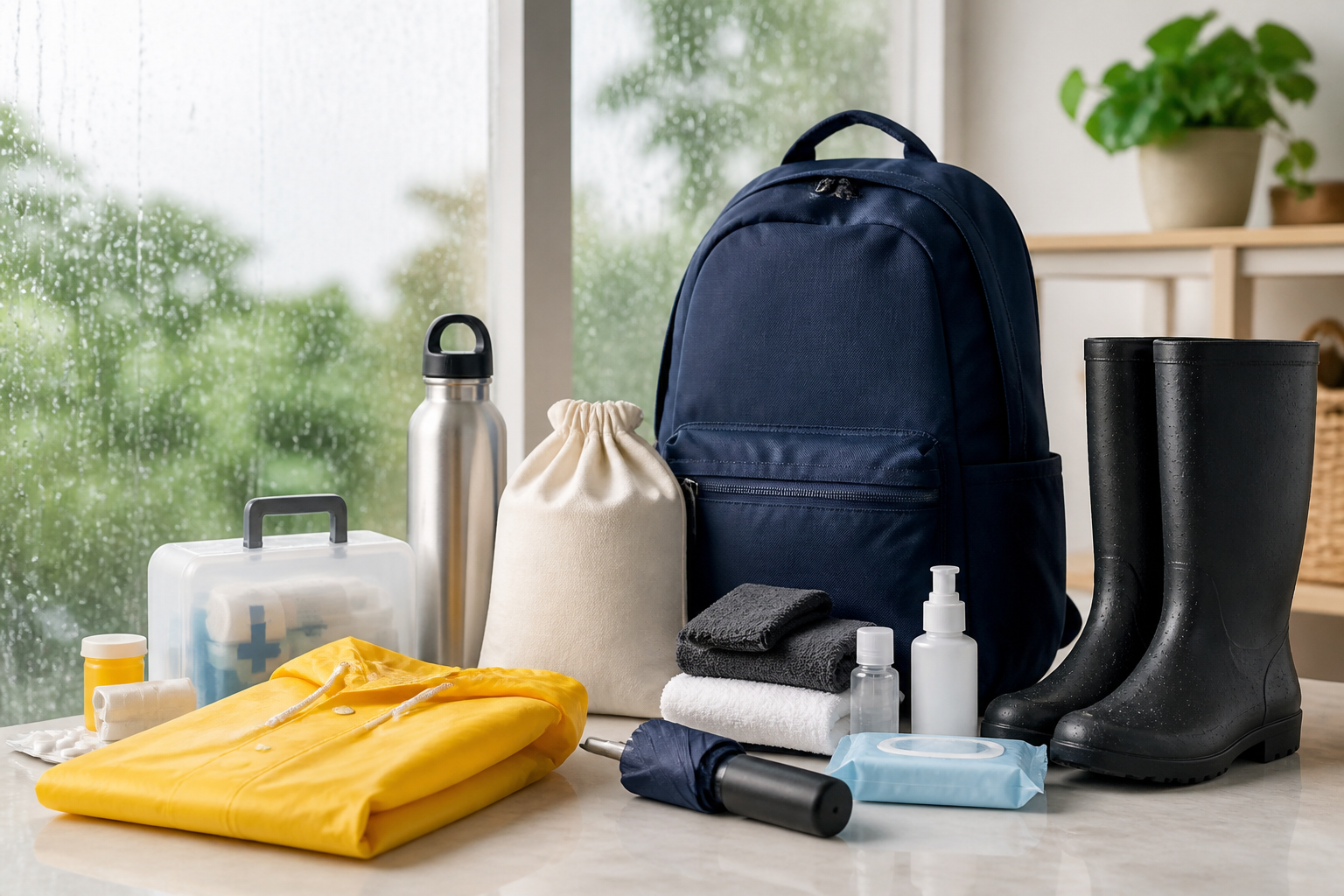
If you want a practical starting point, begin with a small kit that covers the basics. For home, that might include an umbrella holder or tray, an absorbent mat, a shoe-drying or storage solution, and a place to keep wet items separated from dry ones. For travel, the basics may include a compact umbrella, a water-resistant bag or cover, waterproof pouches, and a spare set of socks or a quick-dry cloth.
The goal is not to buy everything at once. Start with the items that solve your most frequent problems. If the entrance gets messy first, focus on home organization. If commuting in the rain is the bigger challenge, prioritize portable protection and storage. Over time, you can add more pieces based on what you actually use.
Frequently Asked Questions
What are the most useful rainy season essentials for home?
For most homes, the most useful items are a sturdy umbrella, an absorbent entrance mat, a boot tray or shoe organizer, and a place to store wet gear. These basics help control mess and make daily routines easier during wet weather.
What should I pack for rainy travel?
A compact umbrella, a water-resistant bag or backpack cover, waterproof pouches for documents, and a spare pair of socks are practical starting points. If you expect heavier rain, a lightweight rain jacket or poncho may also be useful.
Are waterproof and water-resistant the same thing?
No. Water-resistant items are generally designed to handle light moisture or short exposure, while waterproof items are intended to offer a higher level of protection. The right choice depends on how much rain you expect and how long the item will be exposed.
How can I keep wet shoes from making a mess indoors?
Use a boot tray or shoe mat near the door, and keep a designated drying area for damp footwear. If needed, place a second mat inside the entrance to help catch extra moisture.
What is the best way to organize rainy season gear?
Keep frequently used items together in one entryway area or travel pouch. A consistent storage system makes it easier to find what you need quickly when the weather changes suddenly.
Conclusion
Useful rainy season essentials do not have to be complicated. The best purchases are usually the ones that solve a real problem at home or on the move: wet floors, damp shoes, protected bags, and easier packing. By focusing on practical items such as umbrellas, mats, waterproof storage, quick-dry accessories, and portable travel protection, you can make rainy days feel more manageable.
Whether you are preparing your home entryway or building a travel kit, the smartest approach is to choose durable, easy-to-use items that match your routine. A few well-selected essentials can improve comfort, reduce mess, and help you stay organized throughout the rainy season.