Introduction
A well-organized wardrobe can make getting dressed easier, reduce clutter, and help you use your storage space more efficiently. Whether you have a large closet, a small wardrobe, or a shared storage area, the right wardrobe organizers can improve visibility, create order, and make it simpler to separate everyday clothing from accessories, seasonal items, and special pieces.
Useful wardrobe organizers for clothes and accessories come in many forms, from simple shelf dividers to hanging organizers, drawer inserts, hooks, boxes, and garment bags. The best choice depends on what you need to store, how much space you have, and how often you access the items. Some organizers are best for folded clothes, while others are better for belts, scarves, bags, ties, shoes, or jewelry.
This buying guide explains the most practical wardrobe organizers, the features worth considering, and the common mistakes to avoid. It is designed to help you choose storage solutions that are realistic, flexible, and suited to everyday use.
Why wardrobe organizers matter
Wardrobe organizers are not just about appearance. They can help you build a storage system that makes your clothes and accessories easier to find and keep in better condition. When items have a clear place, it is often easier to avoid overstuffing drawers, piling clothes in corners, or losing smaller accessories in a crowded closet.
For many people, the biggest benefit is convenience. A simple organizer can reduce the time spent searching for a matching belt, a folded shirt, or a pair of socks. It can also help separate clean clothes from items waiting to be worn or stored away for the season. In smaller homes, wardrobe organizers can make limited space feel more functional without requiring major changes to the closet itself.
They can also support better habits. When your storage setup is straightforward, it is easier to put things back in the right place. That matters because even a well-planned wardrobe can become messy if the storage tools do not match your routine.
Types of useful wardrobe organizers
1. Shelf dividers
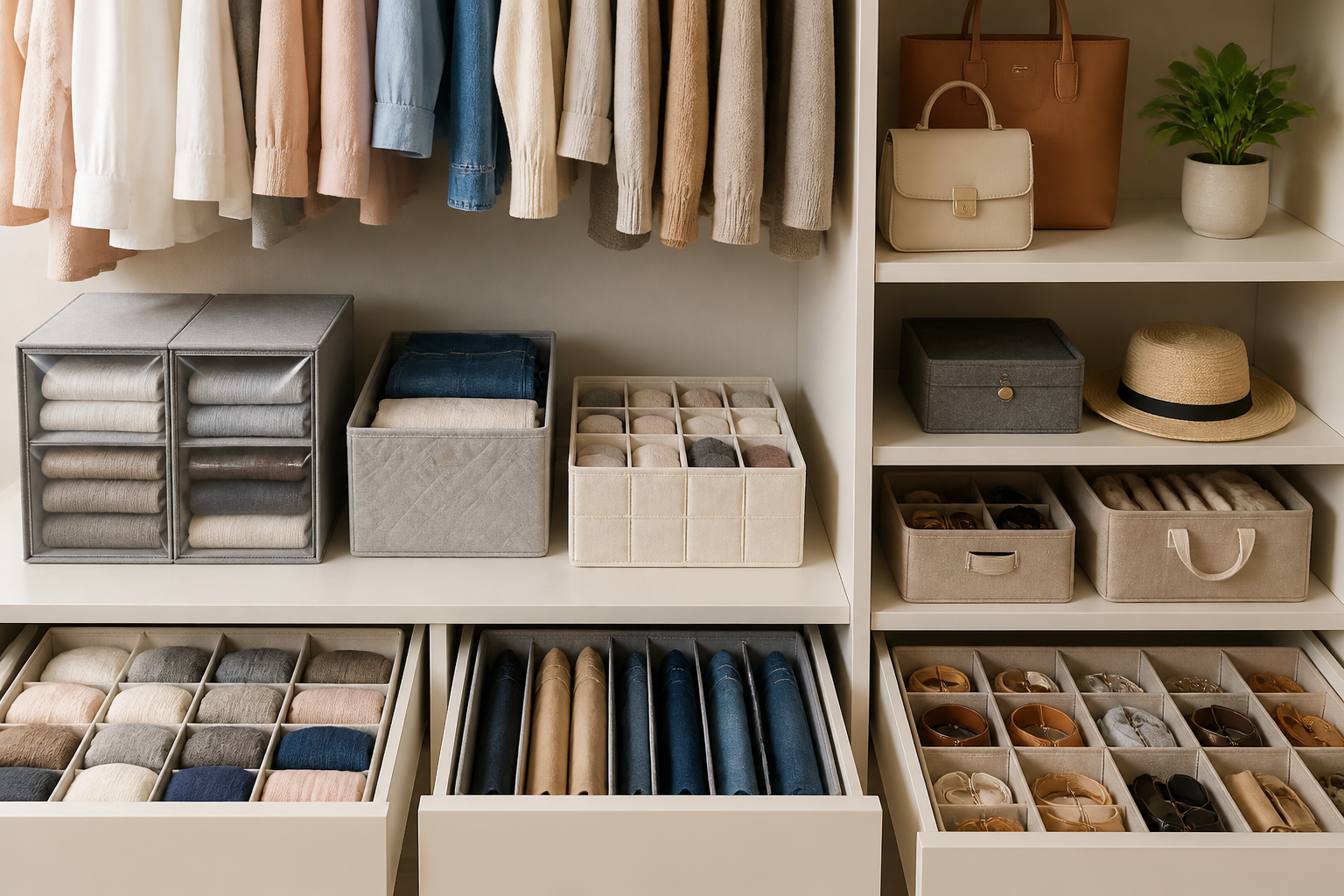
Shelf dividers help keep folded clothes stacked neatly and separated. They are useful for sweaters, jeans, T-shirts, or items that tend to topple when stacked too high. By creating visual and physical boundaries, they can make open shelving look tidier and more structured.
These organizers are often a good fit for shared wardrobes or family closets, where each section may need to stay distinct. They are especially helpful when you want to create categories such as workwear, casual wear, sportswear, or seasonal clothing.
2. Hanging closet organizers
Hanging organizers use vertical space and can be very useful when shelf space is limited. Many styles include multiple compartments for folded clothes, handbags, scarves, or shoes. Some hang from a closet rod, while others attach with hooks or straps.
They can suit people who want easy access to frequently used items without adding bulky storage furniture. They are also useful in wardrobes where the hanging rail is underused and there is extra space below clothing.
3. Drawer organizers and inserts
Drawer inserts help separate small items so they do not slide around or become mixed together. They are useful for underwear, socks, ties, accessories, and folded basics. This type of organizer is often one of the simplest ways to create order in a drawer that otherwise becomes cluttered quickly.
Divided inserts can make it easier to see what you own and can reduce the habit of overstuffing one section. They are especially helpful for people who prefer neat, shallow storage rather than tall stacks.
4. Fabric storage boxes and bins
Storage boxes and bins are practical for items that are not used every day. They can hold off-season clothing, spare accessories, special occasion pieces, or items that need protection from dust. Fabric boxes can be useful on shelves, while sturdier bins may work better in cupboards or under hanging clothes.
If you are organizing a wardrobe with both visible and hidden sections, bins can help you group similar items together. Labeling can also make them easier to use over time.
5. Hanging accessory organizers
Accessory organizers are designed to store smaller items such as belts, scarves, ties, hats, and bags. Some styles hang on a rail or hook, while others use pockets, loops, or clips. These organizers are especially useful when accessories are getting lost in larger storage areas.
They may be a smart choice if you want faster access to everyday accessories or if you prefer to keep items visible and easy to match with outfits.
6. Shoe organizers
Shoe organizers can free up floor space and help prevent pairs from becoming separated. Depending on the design, they may sit on the floor, hang from a door, or stack on a shelf. Some are intended for everyday shoes, while others are better for seasonal footwear or special pairs.
If your wardrobe shares space with shoes, an organizer can reduce clutter and make it easier to rotate pairs by season or frequency of use.
7. Closet hooks and over-door organizers
Hooks are a simple way to add storage without taking up much room. They can hold bags, hats, robes, belts, or clothing items you plan to wear again soon. Over-door organizers can offer additional storage pockets or hooks, which is useful in compact spaces where every area matters.
These solutions are often best when used as a supplement rather than the main storage system. They can be highly practical for items you need to access quickly.
8. Garment bags and clothing covers
Garment bags help protect coats, dresses, suits, or occasion wear from dust and friction. They are not only for travel; they can also be useful inside a wardrobe when certain pieces need extra protection or longer-term storage.
They are a sensible option for clothes that are worn less often and need to stay clean and ready for use.
How to choose the right wardrobe organizers
Start with the items you actually own
The best wardrobe organizers depend on what needs organizing. A closet filled mostly with folded clothing may benefit more from shelf dividers and drawer inserts. A wardrobe with lots of accessories may need hanging solutions, trays, and small compartments. Before buying anything, it helps to sort your clothes and accessories by type so you know where the biggest storage problems are.
Measure your available space
One of the most common mistakes is buying organizers that look useful but do not fit properly. Measure shelf depth, drawer height, hanging space, and door clearance before choosing storage products. This is especially important in small wardrobes, where even a few centimeters can affect how well an organizer works.
Also think about how much room the organizer itself will take up. Some products save space, while others create structure but slightly reduce capacity. That trade-off can still be worthwhile, but it should be deliberate.
Consider how often you use each item
Daily-use items should be easy to reach. Less frequently used items can go into boxes, upper shelves, or garment bags. Choosing organizers based on usage frequency helps prevent frustration later. For example, a drawer insert may be perfect for socks and underwear, while a storage bin is better for seasonal knitwear that stays packed away for months.
Choose a system you can maintain
A wardrobe organizer only works well if it fits your habits. If you do not like folding clothes into small compartments, a multi-section storage cube may not be practical. If you regularly reach for scarves or ties, a hanging organizer may be more useful than a closed box.
The simplest organization system is often the easiest to maintain. A neat setup should support your routine, not make it harder.
Important features to look for
Durability and structure
Some wardrobe organizers need to hold their shape under regular use. Look for products with stable frames, reinforced seams, or sturdy dividers if they will support heavier items such as jeans, bags, or shoes. Lightweight organizers can still be useful, but they may be better for soft accessories or occasional storage.
Breathability
For clothes stored for longer periods, breathable materials can be helpful. Fabric bins, mesh panels, or open shelving can improve airflow compared with completely sealed containers. This may be worth considering for items that are stored seasonally or remain packed away for some time.
Ease of access
An organizer should make items easier to retrieve, not harder. Clear compartments, open-front bins, or labeled boxes can reduce searching. If you need to remove several layers of storage before reaching an item, the system may become inconvenient over time.
Adjustability
Adjustable organizers can be useful if your wardrobe contents change often. Expandable dividers, modular bins, and flexible hanging systems make it easier to adapt storage as your needs change. This can be especially helpful for growing wardrobes, shared closets, or seasonal rotation.
Visibility
Seeing what you own can reduce duplication and waste. Clear boxes, open shelving, and divided compartments can make it easier to locate items quickly. However, not everyone wants visible storage all the time, so a balance between visibility and a tidy appearance may be ideal.
Cleaning and care
Wardrobe organizers should be easy to maintain. Dust-resistant surfaces, wipe-clean materials, and removable fabric inserts can make upkeep simpler. If an organizer is hard to clean, it may become less appealing to use consistently.
Organizing clothes by category
Different clothing categories often need different solutions. Matching the organizer to the item usually produces better results than using one storage type for everything.
Folded basics
For T-shirts, casual tops, and similar folded clothing, shelf dividers, drawer inserts, and stackable bins can work well. These items are usually easier to manage when grouped by type or frequency of use.
Bulky clothing
Sweaters, knitwear, and heavier items often benefit from wider shelves or bins that do not compress them too tightly. Overcrowded storage can make bulky pieces harder to access and less neat to maintain.
Formal and delicate pieces
Suits, dresses, blouses, and occasion wear often need hanging space or garment bags. These items may also benefit from having their own section so they remain easier to keep separate from everyday clothes.
Seasonal items
Seasonal clothing is often best stored in labeled boxes or bins on upper shelves or under hanging garments. Rotating these items as the weather changes can reduce clutter and improve access to current-season clothes.
Organizing accessories effectively
Accessories are often the hardest items to keep tidy because they are small, varied, and easy to misplace. The best solution is usually a combination of organizers rather than one single product.
Belts may work well on hooks or hanging loops. Scarves can be folded into drawers, rolled into bins, or hung on dedicated holders. Ties often benefit from slim hangers or hanging organizers. Handbags may need shelf dividers, bin storage, or upright storage so they keep their shape and remain visible. Jewelry and smaller items often need shallow trays or compartment inserts.
If you own many accessories, consider grouping them by category and how often you use them. Everyday pieces should be easy to grab quickly, while special-occasion items can be stored more securely or less prominently.
Common buying mistakes to avoid
- Buying before measuring: Even a helpful organizer can become useless if it does not fit your shelves, drawers, or hanging space.
- Choosing too many small containers: Excessive compartmentalizing can create more work if the system becomes overly complicated.
- Ignoring your routine: An organizer should match how you dress and put things away, not an idealized storage style.
- Overfilling storage: No organizer can work well if it is packed too tightly.
- Using the wrong organizer for the item: Delicate or bulky clothing often needs different storage from accessories or everyday basics.
Practical tips for a better wardrobe setup
Start small if your wardrobe is already full. Improving one section at a time can be more manageable than trying to reorganize everything at once. Begin with the problem area that causes the most frustration, such as cluttered drawers or mixed-up accessories.
Use labels when needed, especially for boxes and bins. Labels can be helpful in shared wardrobes or for items stored on higher shelves where visibility is limited. You do not need elaborate labeling; simple written tags can be enough.
Keep everyday items at eye level or within easy reach. Reserve harder-to-access spaces for items you use less often. This makes your wardrobe more efficient and reduces unnecessary reshuffling.
Consider rotating items seasonally. Moving out-of-season clothes into labeled storage can free space and make the wardrobe easier to use. Seasonal rotation is one of the simplest ways to maintain order over time.
Finally, leave a little spare capacity. A wardrobe that is completely full often becomes messy quickly. Some room for change makes it easier to put items back properly after use.
Who these organizers may suit
Wardrobe organizers can suit many types of users. They are useful for people living in apartments with limited storage, families who need to separate clothing by person or category, and anyone who wants a more manageable daily routine. They can also be helpful for students, renters, and people who prefer low-commitment storage solutions rather than built-in closet renovation.
If you are trying to create a neater wardrobe without replacing furniture, organizers are one of the most practical options. They are also useful for anyone who wants to reduce visual clutter and make getting dressed feel more straightforward.
Frequently asked questions
What is the best wardrobe organizer for a small closet?
In a small closet, the best option is usually something that uses vertical space efficiently, such as hanging organizers, hooks, or slim shelf dividers. The ideal choice depends on whether your biggest challenge is folded clothes, accessories, or lack of hanging space.
Are drawer organizers worth it?
Drawer organizers are often worth it if your drawers tend to become messy or if small items get mixed together. They are especially useful for socks, underwear, ties, and accessories that are easier to manage in separate sections.
How do I organize both clothes and accessories in one wardrobe?
A practical approach is to use different organizer types for different categories. Folded clothes can go in shelf dividers or bins, hanging clothes can stay on rails, and accessories can be stored with hooks, trays, or compartment inserts. Keeping categories separate usually makes the wardrobe easier to maintain.
Should I choose clear or fabric storage boxes?
Clear boxes make contents easy to see, while fabric boxes can create a softer, more uniform look. The better choice depends on whether visibility or appearance matters more to you. For seasonal items, labels can be useful with either option.
How can I stop my wardrobe from getting messy again?
Choose organizers that match your daily habits, avoid overfilling them, and keep a simple system for returning items after use. Periodic review also helps. If an organizer no longer fits your routine, it may be better to replace it with something simpler.
Conclusion
Useful wardrobe organizers for clothes and accessories can make a big difference in how easy your storage space is to use. The most effective solutions are not necessarily the most complex ones. In many cases, a combination of shelf dividers, drawer inserts, hanging organizers, storage boxes, and accessory holders can create a wardrobe that feels tidy, practical, and easier to maintain.
When choosing organizers, focus on fit, durability, access, and how well each product matches your routine. Start with the items you own, measure your space carefully, and choose solutions that help you store things in a way you can realistically keep up with. With the right setup, your wardrobe can become more organized, more efficient, and much easier to live with every day.